ब्रह्मानन्दवल्ली (आनन्दवल्ली) · ९ मन्त्राःBrahmānanda (Ānanda) Vallī · 9 mantras
'ब्रह्मानन्दवल्ली' (आनन्दवल्ली) इस उपनिषद् का हृदय है: 'ब्रह्म को जाननेवाला परम को पा लेता है — सत्यं ज्ञानम् अनन्तं ब्रह्म।' यहाँ पञ्चकोश का प्रसिद्ध नक्शा है — अन्नमय (देह), प्राणमय (श्वास), मनोमय (मन), विज्ञानमय (बुद्धि) और आनन्दमय (आनन्द) कोश — एक के भीतर एक, बाहर से भीतर की ओर ले जाते हुए, जहाँ 'ब्रह्म ही आधार है'। और वह ब्रह्म रस है, आनन्द है — 'रसो वै सः'; जिसे यह मिल जाए वह निर्भय हो जाता है।
The Brahmānanda (Ānanda) Vallī is the heart of the Upaniṣad: 'the knower of Brahman attains the Highest — Brahman is the Real, Knowledge, the Infinite.' Here is the celebrated map of the five sheaths — annamaya (body), prāṇamaya (breath), manomaya (mind), vijñānamaya (discernment), ānandamaya (bliss) — nested one within the next, drawing awareness from the surface inward, to where 'Brahman is the ground.' And that Brahman is rasa, bliss — 'raso vai saḥ'; whoever finds it becomes free of fear.
ॐ — वह ब्रह्म हम दोनों (गुरु और शिष्य) की साथ-साथ रक्षा करे, हम दोनों का साथ-साथ पालन करे; हम साथ मिलकर सामर्थ्य (वीर्य) अर्जित करें; हमारा पढ़ा हुआ तेजस्वी हो; हम परस्पर द्वेष न करें। ॐ शान्ति, शान्ति, शान्ति।
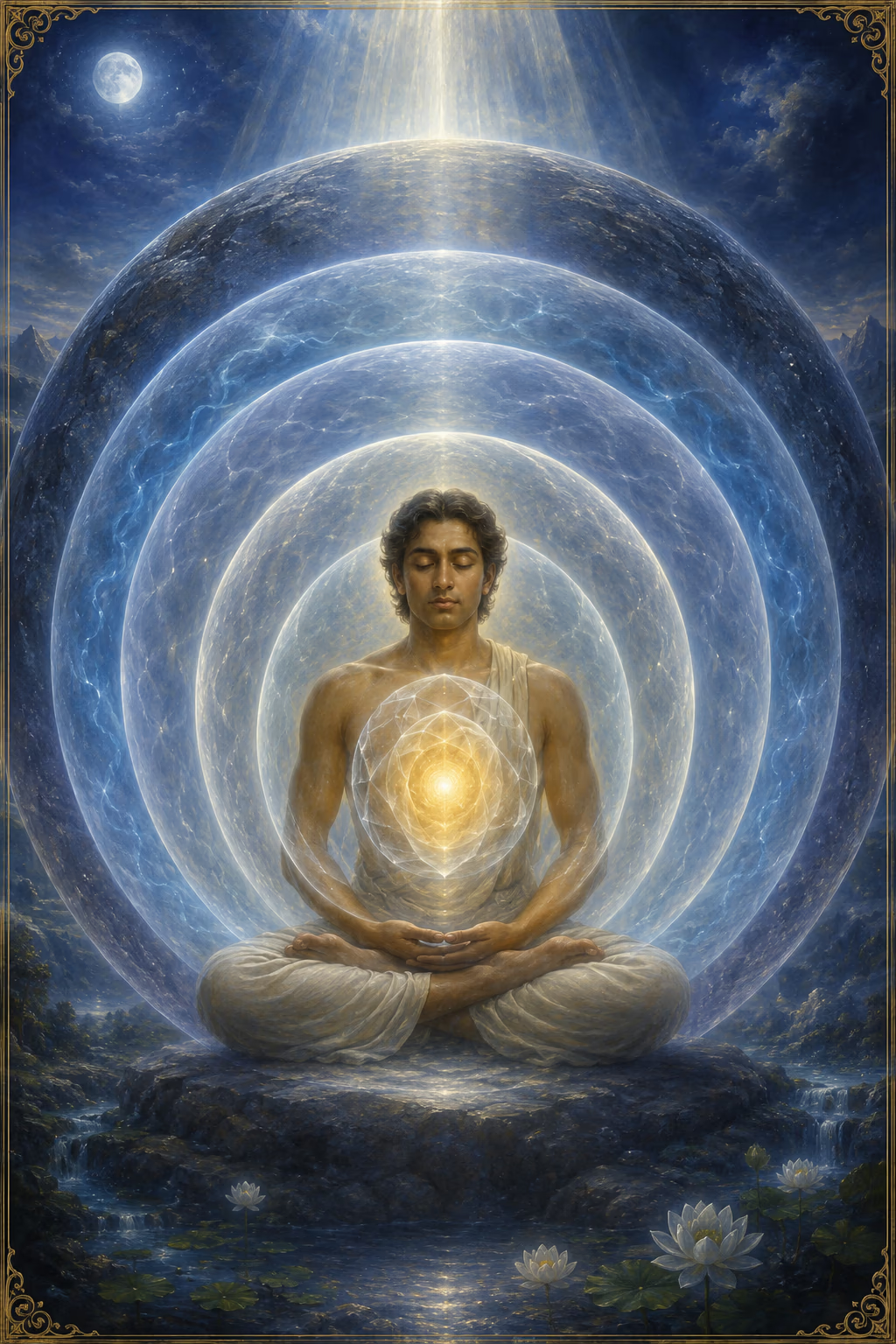
“पञ्चकोश — भीतर की ओर आनन्द तक” ॥ १–९ ॥ · मूल चित्र — इस परियोजना हेतु
एक के भीतर एक — देह, प्राण, मन, विज्ञान के पाँच कोश; और सबसे भीतर तप्त-स्वर्ण-सा आनन्दमय कोश, जहाँ ब्रह्म ही आधार है।
Five sheaths nested one within the next — body, breath, mind, intellect — and at the core the warm glow of bliss (ānandamaya), where Brahman is the ground.
ब्रह्मको जाननेवाला परम (ब्रह्म) को प्राप्त कर लेता है। इसी विषयमें यह ऋचा कही गयी है—'ब्रह्म सत्य, ज्ञान और अनन्त है।' जो पुरुष उसे बुद्धिरूप गुहामें, परम आकाश (हृदयाकाश) में निहित (छिपा हुआ) जानता है, वह सर्वज्ञ ब्रह्मके साथ एक ही साथ सम्पूर्ण कामनाओं (भोगों) को प्राप्त कर लेता है। उस इस आत्मासे ही आकाश उत्पन्न हुआ; आकाशसे वायु, वायुसे अग्नि, अग्निसे जल, जलसे पृथिवी, पृथिवीसे ओषधियाँ, ओषधियोंसे अन्न और अन्नसे पुरुष उत्पन्न हुआ। वह यह पुरुष अन्न-रसका विकार अर्थात् अन्नरसमय ही है। उसका यह (सिर) ही सिर है, यह दाहिना पक्ष है, यह बायाँ पक्ष है, यह (मध्यभाग) आत्मा है और यह (नाभिसे नीचेका भाग) पुच्छ-प्रतिष्ठा (आधार) है। उसीके विषयमें यह श्लोक (आगेका मन्त्र) है।
The knower of Brahman attains the Supreme. Regarding this the following verse is declared: 'Brahman is Truth, Knowledge, Infinite.' Whoever knows it as hidden in the cavity (of the heart-intellect), in the highest space, he, together with the all-knowing Brahman, enjoys all desires at once. From this very Self (Brahman) space arose; from space, air; from air, fire; from fire, water; from water, earth; from earth, plants; from plants, food; from food, man. This man is indeed made of the essence of food (annarasamaya). Of him this very (head) is the head, this the right side, this the left side, this the trunk (self), and this (the part below) the tail, the support. On this too there is this verse.
सरल अर्थ: ब्रह्मको जान लेना ही सबसे ऊँची उपलब्धि है — और वह ब्रह्म कहीं दूर नहीं, तुम्हारे अपने हृदयकी गुहामें छिपा है: सत्य, चेतन और अनन्त। उसी एकसे क्रमसे आकाश, वायु, अग्नि, जल, पृथ्वी, फिर अन्न, और अन्नसे यह शरीर बना — इसीलिए भीतरकी यात्रा सबसे बाहरी परतसे, इसी अन्नमय (भोजनसे बने) शरीरसे शुरू होती है।In simple words: To know Brahman is the highest thing a life can reach — and that Brahman is not far away but hidden in the cave of your own heart: real, aware, and endless. From that one Self the whole world unfolds step by step — space, air, fire, water, earth, then food, and out of food this very body — so the inward journey begins at the outermost layer: the body, literally made of the food you eat.
अन्नसे ही सारी प्रजा उत्पन्न होती है। जो कुछ प्राणी पृथिवीके आश्रित हैं वे सब अन्नसे ही उत्पन्न होते हैं, अन्नसे ही जीवित रहते हैं और अन्तमें अन्नमें ही लीन हो जाते हैं; क्योंकि अन्न सब भूतोंमें ज्येष्ठ (सबसे पहले उत्पन्न होनेवाला) है, इसीसे वह 'सर्वौषध' कहलाता है। जो 'अन्न ही ब्रह्म है' ऐसी उपासना करते हैं वे सम्पूर्ण अन्नको प्राप्त कर लेते हैं। अन्नसे ही भूत उत्पन्न होते हैं, उत्पन्न होकर अन्नसे ही बढ़ते हैं; यह अन्न प्राणियोंद्वारा खाया जाता है और स्वयं भी उन्हें खाता है, इसीसे इसका नाम 'अन्न' है। उस अन्नरसमय (पिण्ड) से भिन्न, उसके भीतर रहनेवाला दूसरा आत्मा प्राणमय है, जिससे यह (अन्नमय) परिपूर्ण है। वह भी पुरुषके ही आकारका है। उसका प्राण ही सिर है, व्यान दाहिना पक्ष, अपान बायाँ पक्ष, आकाश आत्मा (मध्यभाग) और पृथिवी पुच्छ-प्रतिष्ठा है। उसीके विषयमें यह श्लोक है।
From food indeed are all creatures born; whatever creatures rest upon the earth live by food alone, and at the end they pass into food; for food is the eldest of beings, therefore it is called the herb-of-all (sarvauṣadha). Those who worship food as Brahman obtain all food. From food beings are born; being born they grow by food; it is eaten by beings and it also eats them—therefore it is called 'food' (anna). Other than and within that self made of the essence of food is another self, made of breath (prāṇamaya), by which the former is filled. It too has the very shape of a person, conforming to the shape of the food-self. Of it, prāṇa is the head, vyāna the right side, apāna the left side, ether the trunk (self), and earth the tail, the support. On this too there is this verse.
सरल अर्थ: पहले अन्नकी महिमा: हर प्राणी अन्नसे ही जन्मता, जीता और अन्तमें उसीमें लौट जाता है — इसलिए अन्न सबका मूल है, उसका आदर करो। पर एक परत भीतर चलो: इस भोजनसे बने शरीरके भीतर उसे जिलानेवाला प्राण (श्वास) है — शव और जीवित देहका फर्क यही प्राण है, यही दूसरी और सूक्ष्मतर परत है।In simple words: First, the greatness of food: every creature is born from food, lives by food, and in the end returns to food — it is the root of all life, so honour it. But step one layer inward: within this food-built body is the breath that animates it — the difference between a corpse and a living body is exactly this life-breath, the second and subtler sheath.
prāṇaṁ devā anu prāṇanti । manuṣyāḥ paśavaśca ye । prāṇo hi bhūtānāmāyuḥ । tasmātsarvāyuṣamucyate । sarvameva ta āyuryanti ye prāṇaṁ brahmopāsate । prāṇo hi bhūtānāmāyuḥ । tasmātsarvāyuṣamucyata iti । tasyaiṣa eva śārīra ātmā yaḥ pūrvasya । tasmādvā etasmātprāṇamayādanyo'ntara ātmā manomayaḥ । tenaiṣa pūrṇaḥ । sa vā eṣa puruṣavidha eva । tasya puruṣavidhatāmanvayaṁ puruṣavidhaḥ । tasya yajureva śiraḥ । ṛgdakṣiṇaḥ pakṣaḥ । sāmottaraḥ pakṣaḥ । ādeśa ātmā । atharvāṅgirasaḥ pucchaṁ pratiṣṭhā । tadapyeṣa śloko bhavati ॥
देवगण प्राणके अनुगामी होकर प्राणन-क्रिया करते हैं, तथा जो मनुष्य और पशु आदि हैं वे भी (प्राणसे ही चेष्टावान् होते हैं)। प्राण ही प्राणियोंकी आयु (जीवन) है, इसीसे वह 'सर्वायुष' कहलाता है। जो प्राणकी ब्रह्मरूपसे उपासना करते हैं वे पूर्ण आयुको प्राप्त होते हैं। प्राण ही प्राणियोंकी आयु है, इसीसे वह 'सर्वायुष' कहलाता है—ऐसा (पुनः) कहा गया। यही उस पूर्वोक्त (अन्नमय) का देहस्थित शारीर आत्मा है। उस प्राणमय (पिण्ड) से भिन्न, उसके भीतर रहनेवाला दूसरा आत्मा मनोमय है, जिससे यह पूर्ण है। वह भी पुरुषाकार है। उसका यजुः ही सिर है, ऋक् दाहिना पक्ष, साम बायाँ पक्ष, आदेश (ब्राह्मणभाग) आत्मा और अथर्वाङ्गिरस पुच्छ-प्रतिष्ठा है। उसीके विषयमें यह श्लोक है।
The gods breathe after prāṇa (life-breath), as do men and beasts; for prāṇa is the life-span of beings, therefore it is called the life-of-all (sarvāyuṣa). Those who worship prāṇa as Brahman attain the full life-span; for prāṇa is the life of beings, therefore it is called the life-of-all. This is the embodied self of the former (food-self). Other than and within that self made of breath is another self, made of mind (manomaya), by which it is filled. It too has the very shape of a person. Of it, the Yajus is the head, the Ṛk the right side, the Sāman the left side, the Injunction (ādeśa/Brāhmaṇa) the trunk, and the Atharvāṅgirasa the tail, the support. On this too there is this verse.
सरल अर्थ: प्राण (श्वास) ही सबका जीवन है — देवता, मनुष्य, पशु, सब इसीसे चलते-फिरते हैं, इसीलिए इसे 'सबकी आयु' कहते हैं। पर श्वाससे भी भीतर एक और परत है: मन — जो केवल जिलाता नहीं, बल्कि अनुभव करता, चाहता और दिशा देता है; यह तीसरी, और सूक्ष्म परत है।In simple words: Breath is the life of all — gods, humans, and animals all move because of it, which is why it is called 'the life of everyone.' But deeper than breath lies another layer: the mind — which does not merely keep you alive but feels, wills, and gives direction; this is the third, subtler sheath.
जहाँसे मन-सहित वाणी उसे न पाकर लौट आती है, उस ब्रह्मके आनन्दको जाननेवाला (विद्वान्) कभी किसीसे भयभीत नहीं होता। यह (मनोमय) जो है वही उस अपने पूर्ववर्ती (प्राणमय) का शारीर आत्मा है। उस मनोमय (पिण्ड) से भिन्न, उसके भीतर रहनेवाला दूसरा आत्मा विज्ञानमय है, जिससे यह पूर्ण है। वह भी पुरुषाकार है। उसका श्रद्धा ही सिर है, ऋत दाहिना पक्ष, सत्य बायाँ पक्ष, योग (समाधान) आत्मा और महः (महत्तत्त्व) पुच्छ-प्रतिष्ठा है। उसीके विषयमें यह श्लोक है।
From whom words turn back, together with the mind, unable to reach him—the knower of that bliss of Brahman fears nothing at any time. This (mind-self) is the embodied self of the former (breath-self). Other than and within that self made of mind is another self, made of understanding (vijñānamaya), by which it is filled. It too has the very shape of a person. Of it, faith (śraddhā) is the head, the cosmic order (ṛta) the right side, truth (satya) the left side, yoga (concentration) the trunk, and the Great (mahaḥ) the tail, the support. On this too there is this verse.
सरल अर्थ: मनसे भी भीतर है विवेक — वह समझ जो सही-गलत परखती और निश्चय करती है; इसका 'सिर' श्रद्धा है, यानी यह पूरी समझ भरोसेपर टिकी है। और यहीं वह अभय-वचन है: ब्रह्मका आनन्द जिसने जान लिया वह फिर कभी किसीसे नहीं डरता — जहाँ शब्द और मन तक नहीं पहुँच पाते, वहीं यह निर्भयता मिलती है।In simple words: Deeper than the restless mind is discernment — the understanding that tells true from false and decides; its 'head' is faith, meaning this whole knowing rests on trust. And here comes the fearless promise: one who has known the bliss of Brahman fears nothing ever again — that freedom is found exactly where words and mind cannot reach.
विज्ञान (विज्ञानवान् पुरुष) यज्ञका विस्तार करता है और कर्मोंका भी विस्तार करता है। सम्पूर्ण देव विज्ञानरूप ज्येष्ठ ब्रह्मकी उपासना करते हैं। यदि कोई 'विज्ञान ब्रह्म है' ऐसा जान ले और फिर उससे प्रमाद न करे, तो वह शरीरके सारे पापोंको छोड़कर सम्पूर्ण कामनाओं (भोगों) को पूर्णतया प्राप्त कर लेता है। यह (विज्ञानमय) जो है वही उस अपने पूर्ववर्ती (मनोमय) का शारीर आत्मा है। उस विज्ञानमय (पिण्ड) से भिन्न, उसके भीतर रहनेवाला दूसरा आत्मा आनन्दमय है, जिससे यह पूर्ण है। वह भी पुरुषाकार है। उसका प्रिय ही सिर है, मोद दाहिना पक्ष, प्रमोद बायाँ पक्ष, आनन्द आत्मा और ब्रह्म पुच्छ-प्रतिष्ठा है। उसीके विषयमें यह श्लोक है।
Understanding (vijñāna) spreads out the sacrifice, and it also spreads out the works. All the gods worship understanding as the eldest Brahman. If one knows understanding as Brahman and does not swerve from it in negligence, then, having cast off all sins in the body, he attains all desires in full. This (understanding-self) is the embodied self of the former (mind-self). Other than and within that self made of understanding is another self, made of bliss (ānandamaya), by which it is filled. It too has the very shape of a person. Of it, the dear (priya) is the head, joy (moda) the right side, delight (pramoda) the left side, bliss (ānanda) the trunk, and Brahman the tail, the support. On this too there is this verse.
सरल अर्थ: विवेक सबसे आगे चलता है — देवता तक उसे श्रेष्ठ ब्रह्म मानकर पूजते हैं; पर एक अन्तिम परत और भीतर जाओ तो मिलता है आनन्दमय कोश: प्रेम, हर्ष, उल्लास, और बीचमें शुद्ध आनन्द। और इस आनन्दके भी नीचे, उसके आधाररूपमें, स्वयं ब्रह्म है — यानी सब परतोंके तलमें तुम्हारा अपना केंद्र आनन्द है, और उस आनन्दकी जड़ अनन्त ब्रह्म।In simple words: Discernment leads the way — even the gods revere it as the eldest Brahman; but go one final layer inward and you reach the sheath of bliss: love, joy, delight, and pure bliss at its centre. And beneath even this bliss, as its very ground, rests Brahman itself — so under all the layers your own core is joy, and the root of that joy is the infinite.
asanneva sa bhavati । asadbrahmeti veda cet । asti brahmeti cedveda । santamenaṁ tato viduriti । tasyaiṣa eva śārīra ātmā yaḥ pūrvasya । athāto'nupraśnāḥ । utāvidvānamuṁ lokaṁ pretya kaścana gacchatī3 । āho vidvānamuṁ lokaṁ pretya kaścitsamaśnutā3 u । so'kāmayata । bahu syāṁ prajāyeyeti । sa tapo'tapyata । sa tapastaptvā idaṁ sarvamasṛjata yadidaṁ kiṁca । tatsṛṣṭvā tadevānuprāviśat । tadanupraviśya sacca tyaccābhavat । niruktaṁ cāniruktaṁ ca । nilayanaṁ cānilayanaṁ ca vijñānaṁ cāvijñānaṁ ca । satyaṁ cānṛtaṁ ca satyamabhavat । yadidaṁ kiṁca । tatsatyamityācakṣate । tadapyeṣa śloko bhavati ॥
जो पुरुष 'ब्रह्म असत् है' ऐसा मानता है वह स्वयं भी असत् (नगण्य) हो जाता है; और जो 'ब्रह्म है' ऐसा जानता है उसे ब्रह्मवेत्ता लोग सत् (विद्यमान) समझते हैं। पूर्वोक्त विज्ञानमयका जो अन्तरतम आनन्दमय शरीरस्थ आत्मा है वही यह है। अब (शिष्यके) अनुप्रश्न हैं—क्या कोई अविद्वान् मरनेके बाद परमात्माको प्राप्त कर सकता है? अथवा कोई विद्वान् मरनेके बाद उसे प्राप्त होता है या नहीं? (उत्तरकी भूमिकारूपमें—) उस आत्माने कामना की—'मैं बहुत हो जाऊँ, उत्पन्न हो जाऊँ।' उसने तप किया और तप करके यह सम्पूर्ण जगत् रचा—जो कुछ भी है। उसे रचकर वह उसीमें अनुप्रविष्ट हो गया। अनुप्रवेश करके वह मूर्त और अमूर्त, निरुक्त (कहे जानेयोग्य) और अनिरुक्त, आश्रय और अनाश्रय, विज्ञान (चेतन) और अविज्ञान (अचेतन), सत्य और अनृत—सब कुछ हो गया; अर्थात् जो कुछ यह है वही सत्य हो गया। इसीको ब्रह्मवेत्ता 'सत्य' कहते हैं। इसी विषयमें यह श्लोक है।
If one regards Brahman as non-existent (asat), he himself becomes as nothing; but if he knows 'Brahman exists,' the wise recognize him as existent (real). This blissful Self dwelling within the body is the innermost of the aforesaid (vijñānamaya). Now come the questions: Does one who is ignorant, on departing this world, reach That? Or does the knower alone, on departing, attain it? (As a preamble:) That Self desired, 'May I become many, may I be born.' It performed tapas; having performed tapas it created all this—whatever exists. Having created it, It entered into it. Having entered, It became the formed and the formless, the defined and the undefined, the based and the baseless, the conscious and the unconscious, the true and the untrue—the Real became whatever is here. That the wise call 'the Real.' On this there is also this verse.
सरल अर्थ: जो सबके मूल ब्रह्मको 'कुछ नहीं' मान लेता है वह स्वयं भी नगण्य रह जाता है; जो 'वह है' ऐसा जानता है, उसे ज्ञानी सच्चा (विद्यमान) मानते हैं—यानी आप जिसे असली मानते हैं वैसे ही बन जाते हैं। फिर गहरी बात: वही एक आत्माने चाहा 'मैं अनेक हो जाऊँ', तप करके सब कुछ रचा और फिर स्वयं उसीके भीतर समा गया—इसीलिये मूर्त-अमूर्त, कहा-अनकहा, चेतन-अचेतन सब वही बन गया; जो कुछ यहाँ है वही सत्य है। सृष्टि किसी दूर बैठे रचयिताका खेल नहीं—वह अपनी ही रचनामें भीतर तक उतर आया है, इसलिये यहाँ कुछ भी उससे अलग नहीं।In simple words: Whoever takes Brahman, the ground of everything, to be nothing shrinks to nothing himself; whoever knows 'it IS' is counted by the wise as real—what you hold to be real is what you become. And that one Self wished 'let me be many', performed tapas, created all this, and then entered into the very thing it made—so it became the formed and the formless, the sayable and the unsayable, the conscious and the unconscious alike, and the Real became whatever is here. Creation is not a distant maker's game—he has climbed all the way inside his own handiwork, so nothing here stands apart from him.
पहले यह (जगत्) असत् (अव्याकृत ब्रह्मरूप) ही था; उसीसे सत् (नाम-रूपात्मक व्यक्त जगत्) उत्पन्न हुआ। उस असत्ने स्वयं ही अपनेको (जगद्रूपसे) रचा, इसलिये वह सुकृत (स्वयंकृत) कहलाता है। वह जो सुकृत है वही निश्चय रस (आनन्द) है; इस रसको पाकर ही पुरुष आनन्दी होता है। यदि हृदयाकाशमें स्थित यह आनन्द न होता तो कौन प्राण (श्वास) लेता और कौन अपान करता? यही सबको आनन्दित करता है। जब यह साधक इस अदृश्य, अशरीर, अनिर्वचनीय और निराधार ब्रह्ममें निर्भय प्रतिष्ठा प्राप्त कर लेता है, तब वह अभयको प्राप्त हो जाता है। किन्तु जब यह इसमें थोड़ा-सा भी भेद (अन्तर) कर लेता है, तब उसे भय होता है। वह ब्रह्म ही (उसमें) भेद माननेवाले विद्वान्के लिये भयरूप है। इसी विषयमें यह श्लोक है।
In the beginning this was non-existent (asat, the unmanifest Brahman); from that the existent (sat) was born. That made itself by itself; therefore it is called well-made (sukṛta). That which is well-made is indeed the essence (rasa, bliss); for having attained this essence one becomes blissful. Who could breathe out, who could breathe in, were this bliss not present in the space (of the heart)? It alone bestows bliss. When one finds fearless footing in that unseen, bodiless, undefined, baseless (Brahman), then he attains fearlessness. But when one makes even the least separation (interval) in it, then fear arises for him—that very Brahman becomes fear for the learned one who imagines (a difference). On this too there is this verse.
सरल अर्थ: ब्रह्म कोई सूखा तत्त्व नहीं—वह स्वयं रस है, आनन्द है; इसी रसको चखकर ही कोई प्राणी सुखी होता है। यदि हृदयके भीतर यह आनन्द धड़क न रहा होता तो कौन साँस तक ले पाता?—यही सबको जिलाता और आनन्दित करता है। और सबसे बड़ी बात: जब मनुष्य इस अदृश्य, निराकार, अनिर्वचनीय आधारमें अपने पैर जमा लेता है तब वह निर्भय हो जाता है; पर जैसे ही वह अपने और उसके बीच जरा-सा भी भेद (दूरी) खड़ा करता है, वहीं भय जन्म ले लेता है—भय अलगावका ही दूसरा नाम है।In simple words: Brahman is no dry principle—it is rasa itself, sheer delight; it is only by tasting this delight that any creature is ever happy at all. If this bliss were not pulsing in the space of the heart, who could so much as breathe?—it is what animates and gladdens everything. And here is the heart of it: when a person finds firm footing in that unseen, formless, indefinable ground he becomes fearless, but the instant he opens even the smallest gap between himself and it, fear is born—fear is only another name for separation.
bhīṣāsmādvātaḥ pavate । bhīṣodeti sūryaḥ । bhīṣāsmādagniścendraśca । mṛtyurdhāvati pañcama iti । saiṣānandasya mīmāṁsā bhavati । yuvā syātsādhuyuvādhyāyaka āśiṣṭho dṛḍhiṣṭho baliṣṭhastasyeyaṁ pṛthivī sarvā vittasya pūrṇā syāt । sa eko mānuṣa ānandaḥ । te ye śataṁ mānuṣā ānandāḥ ॥ sa eko manuṣyagandharvāṇāmānandaḥ । śrotriyasya cākāmahatasya । te ye śataṁ manuṣyagandharvāṇāmānandāḥ । sa eko devagandharvāṇāmānandaḥ । śrotriyasya cākāmahatasya । te ye śataṁ devagandharvāṇāmānandāḥ । sa ekaḥ pitṝṇāṁ ciralokalokānāmānandaḥ । śrotriyasya cākāmahatasya । te ye śataṁ pitṝṇāṁ ciralokalokānāmānandāḥ । sa eka ājānajānāṁ devānāmānandaḥ ॥ śrotriyasya cākāmahatasya । te ye śatamājānajānāṁ devānāmānandāḥ । sa ekaḥ karmadevānāṁ devānāmānandaḥ । ye karmaṇā devānapiyanti । śrotriyasya cākāmahatasya । te ye śataṁ karmadevānāṁ devānāmānandāḥ । sa eko devānāmānandaḥ । śrotriyasya cākāmahatasya । te ye śataṁ devānāmānandāḥ । sa eka indrasyānandaḥ ॥ śrotriyasya cākāmahatasya । te ye śatamindrasyānandāḥ । sa eko bṛhaspaterānandaḥ । śrotriyasya cākāmahatasya । te ye śataṁ bṛhaspaterānandāḥ । sa ekaḥ prajāpaterānandaḥ । śrotriyasya cākāmahatasya । te ye śataṁ prajāpaterānandāḥ । sa eko brahmaṇa ānandaḥ । śrotriyasya cākāmahatasya ॥ sa yaścāyaṁ puruṣe yaścāsāvāditye sa ekaḥ । sa ya evaṁvidasmāllokātpretya । etamannamayamātmānamupasaṁkrāmati । etaṁ prāṇamayamātmānamupasaṁkrāmati । etaṁ manomayamātmānamupasaṁkrāmati । etaṁ vijñānamayamātmānamupasaṁkrāmati । etamānandamayamātmānamupasaṁkrāmati । tadapyeṣa śloko bhavati ॥
इसके भयसे वायु चलती है, इसके भयसे सूर्य उदय होता है, इसीके भयसे अग्नि, इन्द्र और पाँचवाँ मृत्यु दौड़ते हैं (अपने-अपने कार्यमें प्रवृत्त रहते हैं)। अब उस ब्रह्मके आनन्दकी मीमांसा है—कोई साधु-स्वभाव, वेदाध्ययनसे सम्पन्न, अत्यन्त आशावान् (कभी निराश न होनेवाला), दृढ़ और बलिष्ठ युवक हो, तथा धन-धान्यसे पूर्ण यह सारी पृथिवी उसीकी हो—(उसका जो सुख है) वह एक 'मानुष आनन्द' है। ऐसे सौ मानुष आनन्द मिलकर मनुष्य-गन्धर्वोंका एक आनन्द है—और वही अकामहत (कामनासे अपीड़ित) श्रोत्रियको भी प्राप्त है। इसी क्रमसे सौ-सौ गुना बढ़ते हुए—मनुष्य-गन्धर्वोंसे देवगन्धर्वोंका, उनसे चिरलोकवासी पितरोंका, उनसे आजानज देवताओंका, उनसे (अग्निहोत्रादि) कर्मसे देवत्व-प्राप्त कर्मदेवताओंका, उनसे (जन्मसिद्ध) देवताओंका, उनसे इन्द्रका, उनसे बृहस्पतिका, उनसे प्रजापतिका और उनसे ब्रह्माका एक आनन्द है; और प्रत्येक स्तरपर वही आनन्द अकामहत श्रोत्रियको भी प्राप्त है। जो आनन्द इस पुरुषमें है और जो वह आदित्यमें है—वह एक ही है। जो ऐसा जाननेवाला है वह इस लोकसे प्रयाण करके इस अन्नमय आत्माको, फिर प्राणमय, मनोमय, विज्ञानमय और आनन्दमय आत्माको क्रमशः प्राप्त कर लेता है। इसी विषयमें यह श्लोक है।
Out of fear of It the wind blows, out of fear the sun rises; out of its fear Agni and Indra, and Death as the fifth, run (to their tasks). Now this is the inquiry (mīmāṃsā) into that bliss: Suppose there is a youth—of good character, a good student, most hopeful (never despairing), most firm and most strong—and this whole earth full of wealth were his: that is one unit of human bliss. A hundred such human blisses make one bliss of the human Gandharvas—and this too a desireless sruti-learned man attains. (Rising a hundredfold at each stage:) the bliss of the human Gandharvas... of the divine Gandharvas... of the Fathers who dwell in the long-enduring worlds... of the gods born by birthright (ājānaja)... of the karma-gods who won godhood by rites... of the (nature) gods... of Indra... of Bṛhaspati... of Prajāpati... and of Brahmā—each a hundredfold the last, and at every stage also attained by the desireless sruti-learned man. He who is here in the person and he who is there in the sun—he is one. He who knows thus, on departing this world, attains this Self made of food, then the Self made of breath, of mind, of understanding, and of bliss. On this too there is this verse.
सरल अर्थ: इसी परम सत्ताके भय-आदरसे वायु बहती है, सूर्य उगता है, अग्नि-इन्द्र और मृत्यु तक अपना काम करते हैं—सारा जगत् उसीके सामने नत होकर चलता है। फिर आनन्दकी एक सीढ़ी नापी जाती है: सबसे सुखी कल्पनीय मनुष्य (जवान, सच्चरित्र, विद्वान्, बलवान्, पूरी धनभरी पृथ्वीका स्वामी) का सुख एक इकाई है, और वहाँसे सौ-सौ गुना बढ़ते हुए गन्धर्व, देवता, इन्द्र, बृहस्पति, प्रजापति होते हुए ब्रह्माका आनन्द है—पर हर सीढ़ीका वही असीम आनन्द उस शास्त्रज्ञ श्रोत्रियको भी सहज मिला हुआ है जो कामनासे मुक्त है। मतलब आनन्दकी चोटी चढ़कर नहीं, इच्छा छोड़कर मिलती है; और जो आनन्द मनुष्यमें है वही सूर्यमें भी—दोनों एक ही हैं।In simple words: Out of awe of this supreme reality the wind blows, the sun rises, and even fire, Indra and Death go about their work—the whole universe runs bowed before it. Then bliss is measured out like a ladder: the joy of the happiest conceivable man (young, good, learned, strong, owning the whole wealth-laden earth) is one unit, and from there it multiplies a hundredfold at each rung—gandharvas, gods, Indra, Bṛhaspati, Prajāpati, up to Brahmā—yet at every rung that same measureless bliss is already within reach of the scripture-learned man who is free of craving. So the summit of joy is won not by climbing but by dropping desire; and the bliss within a human being and the bliss within the sun are one and the same.
yato vāco nivartante aprāpya manasā saha । ānandaṁ brahmaṇo vidvān na bibheti kutaścaneti । etaṁ ha vāva na tapati । kimahaṁ sādhu nākaravam । kimahaṁ pāpamakaravamiti । sa ya evaṁ vidvānete ātmānaṁ spṛṇute । ubhe hyevaiṣa ete ātmānaṁ spṛṇute । ya evaṁ veda । ityupaniṣat ॥
जहाँसे मनके सहित वाणी उसे प्राप्त किये बिना ही लौट आती है—ब्रह्मके उस आनन्दको जाननेवाला किसीसे भी भयभीत नहीं होता। उस विद्वान्को यह सन्ताप नहीं सताता कि 'मैंने शुभ कर्म क्यों नहीं किया' और 'मैंने पापकर्म क्यों कर डाला'। इस प्रकार जाननेवाला जो विद्वान् (पाप-पुण्य दोनोंको आत्मस्वरूप देखकर) अपने आत्माको प्रसन्न (सबल) कर लेता है, उसे ये दोनों (पाप और पुण्य) आत्मरूप ही प्रतीत होते हैं। जो ऐसा (पूर्वोक्त अद्वैत-आनन्दस्वरूप ब्रह्मको) जानता है (वही यह है)। यही यह उपनिषद् (परम रहस्यविद्या) है।
That from which words turn back, together with the mind, unable to reach it—one who knows that bliss of Brahman fears nothing whatever. Such a learned one is not tormented by the thoughts 'Why did I not do the good?' and 'Why did I do the evil?' He who knows thus strengthens (gladdens) his Self by these two; indeed to him both these (good and evil) appear as his very Self. He who knows thus—(this is he). This is the Upaniṣad (the supreme secret knowledge).
सरल अर्थ: जहाँ तक मन और वाणी पहुँचना चाहते हैं पर पहुँच नहीं पाते—उसी ब्रह्मके आनन्दको जो चख लेता है, वह किसीसे, कहीं भी भयभीत नहीं होता। ऐसे व्यक्तिको फिर वह भीतरका सन्ताप नहीं सताता—'मैंने भला काम क्यों न किया', 'मैंने बुरा काम क्यों कर डाला'—क्योंकि सबको आत्मस्वरूप देखकर उसके लिये पाप और पुण्य दोनों ही अपने आत्माके रूप हो जाते हैं, और वह इन दोनोंसे अपने आत्माको ही सबल-प्रसन्न करता है। यही इस उपनिषद्का अन्तिम रहस्य है: यह मुक्ति असलमें उस भीतरी पश्चात्ताप और काँटे-सी ग्लानिसे छुटकारा है जो 'अच्छे-बुरे' के हिसाबमें मनको बींधती रहती है।In simple words: Words and mind reach toward that bliss of Brahman and turn back, unable to grasp it—yet whoever has tasted it fears nothing, anywhere. Such a person is no longer gnawed by remorse—'why did I not do the good?', 'why did I do the wrong?'—because, seeing everything as the Self, both merit and demerit appear to him as his own Self, and by both he only strengthens and gladdens that Self. This is the Upaniṣad's final secret: the freedom it promises is, at heart, release from the inner torment and self-reproach of the moral ledger that keeps piercing the mind.
पञ्चकोश — भीतर की ओर पाँच परतेंPañcakośa — the inward journey through five sheaths
तैत्तिरीय आनन्दवल्ली (अनुवाक १–५) के आधार पर — ध्यान को बाहर से भीतर की ओर पाँच कोशों में ले जाना: देह → श्वास → मन → विवेक-बुद्धि → आनन्द; और उस शान्ति में विश्राम करना जो हर परत के भीतर, सबसे गहरे, बनी रहती है। लक्ष्य कुछ 'पाना' नहीं, बल्कि यह देखना कि हर परत को उससे सूक्ष्मतर कोई भीतर से जान रहा है।Grounded in the Ānanda Vallī (anuvākas 1–5) — to move attention from the surface inward through the five sheaths: body → breath → mind → discerning intellect → bliss; and to rest in the peace that remains, innermost, beneath every layer. The aim is not to 'get' anything but to notice that each layer is known by something subtler within.
शान्त होकर बैठें, आँखें कोमलता से बन्द करें, कुछ सहज साँसें लें।Sit quietly, close the eyes softly, take a few easy breaths.
अन्नमय कोश: पूरे भौतिक शरीर को महसूस करें — यह 'अन्न से बना' सबसे बाहरी आवरण है। पूछें: 'क्या मैं केवल यही हूँ?'Annamaya (body): feel the whole physical body — the outermost, 'food-made' sheath. Ask: 'Am I only this?'
प्राणमय कोश: अब उस श्वास और जीवन-ऊर्जा की ओर मुड़ें जो इस शरीर को जीवित रखती है — देह से सूक्ष्मतर।Prāṇamaya (breath): turn to the breath and life-energy that keeps the body alive — subtler than the body.
मनोमय कोश: विचारों और भावों के प्रवाह को देखें — प्राण से भी सूक्ष्म, पर अब भी बदलता हुआ।Manomaya (mind): watch the flow of thoughts and feelings — subtler still, yet still changing.
विज्ञानमय कोश: उस शान्त 'जाननेवाले' पर ध्यान दें जो मन को भी देख रहा है — विवेक-बुद्धि, साक्षी।Vijñānamaya (discernment): notice the quiet knower that is aware even of the mind — the discerning intelligence, the witness.
आनन्दमय कोश: जब आप केवल जानने-रूप में विश्राम करते हैं, तब जो सहज शान्ति और भलाई बची रहती है उसे अनुभव करें — यही ब्रह्म के निकटतम कोश है। कुछ मिनट यहीं टिकें।Ānandamaya (bliss): rest simply as awareness and sense the quiet peace and well-being that remains — the sheath nearest to Brahman. Stay here a few minutes.
जब ध्यान बाहर बह जाए, फिर से शरीर से आरम्भ कर भीतर की ओर लौटें।When attention drifts outward, begin again at the body and move inward.
अवधि: Duration: १५–२० मिनट15–20 minutes
क्या देखें: What to notice: देखें कि हर परत को उससे सूक्ष्मतर कोई भीतर से जान रहा है। और उस शान्ति पर ध्यान दें जो बाहरी परिस्थितियों पर निर्भर नहीं — क्या वह पहले से, बिना कारण, मौजूद है?Notice that each layer is known by something subtler within it. And attend to the peace that does not depend on outer conditions — is it already here, uncaused?
सावधानी: Take care: यह एक कोमल भावना-यात्रा है — कोई साँस रोकना या बल नहीं। पञ्चकोश केवल ध्यान का नक्शा है, कोई वस्तु 'पकड़ने' की नहीं। यदि खोया-खोया या असहज लगे, आँखें खोलें और शरीर को महसूस करें। यह तीव्र मानसिक पीड़ा में किसी सहायता का विकल्प नहीं।This is a gentle contemplation — no breath-holding or force. The five sheaths are a map for attention, not a thing to grab. If it feels spacey or uneasy, open your eyes and feel the body. It is no substitute for real support in acute distress.
अनुभव · स्वयं देखेंAnubhava · see for yourself
आज एक बार रुककर एक परत भीतर जाएँ — 'मैं यह शरीर/यह परिस्थिति हूँ' से हटकर 'मैं वह चेतना हूँ जिसमें यह प्रकट हो रहा है'। कोई हलकापन या शान्ति खुली?
Once today, pause and step one layer inward — from 'I am this body / this situation' to 'I am the awareness in which it appears.' Did any lightness or peace open?
॥ इति तैत्तिरीयोपनिषदि ब्रह्मानन्दवल्ली समाप्ता ॥
॥ इस प्रकार तैत्तिरीयोपनिषद् की ब्रह्मानन्दवल्ली (आनन्दवल्ली) समाप्त ॥