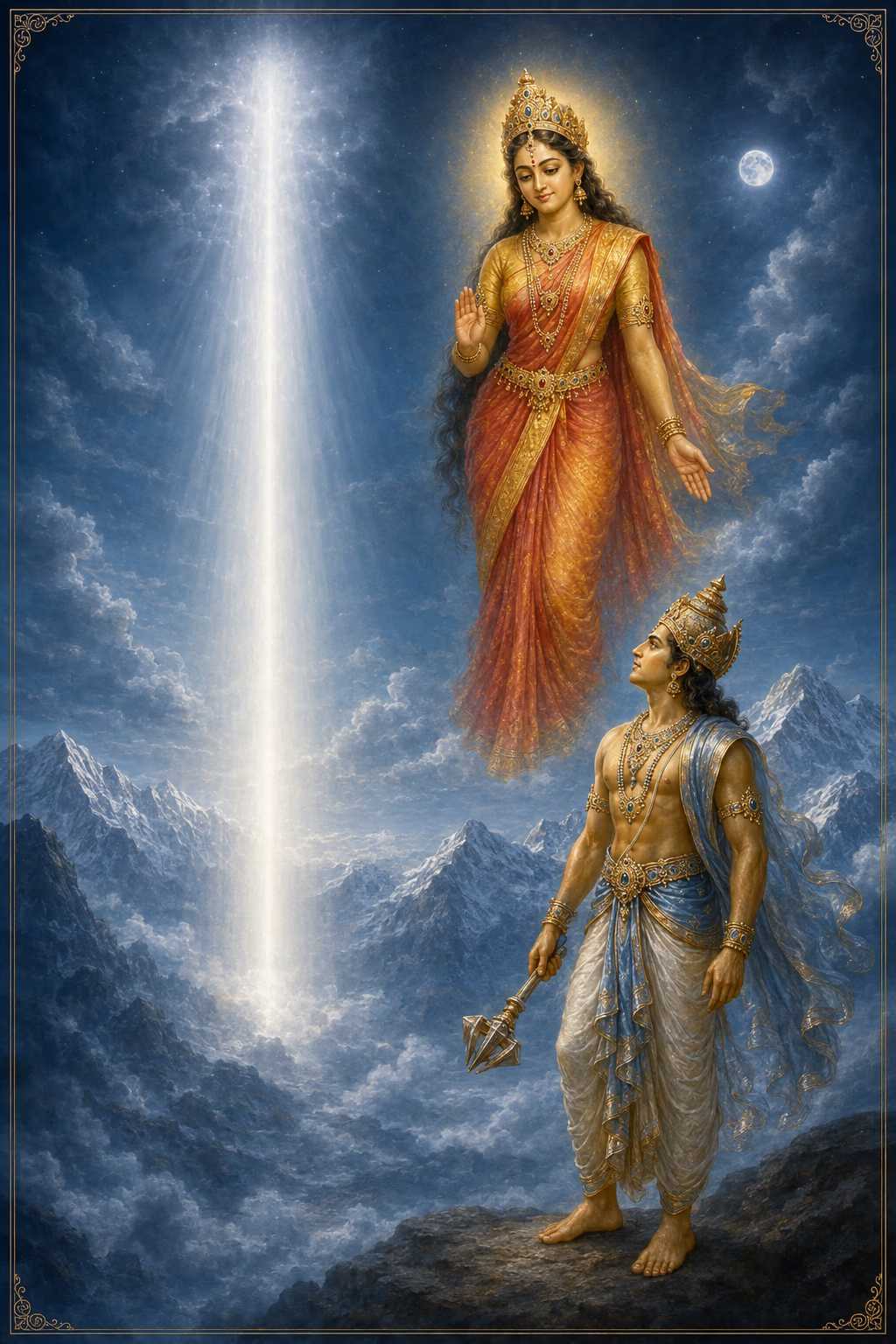
इन्द्र यक्ष के पास जाता है, पर वह अन्तर्धान हो जाता है — और उसके स्थान पर उमा हैमवती (ज्ञानस्वरूपा देवी) प्रकट होकर बताती हैं: 'वह ब्रह्म था; ब्रह्म की ही शक्ति से तुम्हें यह विजय मिली।' उपनिषद् का समापन: ब्रह्म को अन्तरात्मा रूप में जानना है, 'तद्वनम्' (परम वननीय/प्रिय) रूप में उपासना करनी है; उसका आधार है तप, दम और कर्म, वेद उसके अंग, और सत्य उसका आश्रय।
Indra approaches the yakṣa, but it vanishes — and in its place appears Umā Haimavatī (the Goddess, wisdom), who reveals: 'That was Brahman; it is through Brahman's power that you gained this victory.' The Upaniṣad closes: Brahman is to be known as the inner Self and adored as 'tadvanam' (the supremely dear); its supports are austerity, restraint, and work, the Vedas its limbs, and truth its abode.
“उमा हैमवती इन्द्र को ब्रह्म बतातीं” ॥ ३–४ ॥ · मूल चित्र — इस परियोजना हेतु
सा ब्रह्मेति होवाच — उमा हैमवती बहुशोभमाना
यक्ष के रहस्य से गर्वित देवताओं के समक्ष आकाश में प्रकट सुवर्णमयी उमा हैमवती, इन्द्र को बतातीं — 'वह ब्रह्म ही था।'
The golden goddess Umā Haimavatī appears in the sky before the proud gods and reveals to Indra: 'That was Brahman.'
उस (उमा) ने कहा—यह ब्रह्म है। ब्रह्मकी ही इस विजयमें तुम महिमान्वित हुए हो—ऐसा (सुनकर) तभी इन्द्रने जाना कि यह ब्रह्म है।
She said: 'It is Brahman. It is through the victory of Brahman that you have thus gained glory.' From that, then, he (Indra) knew it to be Brahman.
सरल अर्थ: जिस जीत पर देवता अकड़ रहे थे वह उनकी थी ही नहीं — देवी बताती हैं कि वह ब्रह्म की शक्ति थी, और यह सुनते ही इन्द्र को सच्चाई समझ आ जाती है।In simple words: The Goddess reveals the twist: the victory the gods were strutting about was never theirs — it was Brahman's power all along — and the instant Indra hears this, he finally gets it.
इसीलिये ये देवता—अग्नि, वायु और इन्द्र—अन्य देवताओंसे बढ़कर हैं, क्योंकि इन्होंने ही उस (ब्रह्म) को सबसे समीपसे स्पर्श किया और इन्होंने ही उसे सबसे पहले 'यह ब्रह्म है' इस प्रकार जाना।
Therefore these gods—Agni, Vāyu and Indra—excel the other gods, as it were, for they touched It (Brahman) most closely, and they first knew It to be Brahman.
सरल अर्थ: अग्नि, वायु और इन्द्र बाकी देवताओं से इसलिए आगे हैं क्योंकि वे उस सत्य के सबसे पास पहुँचे — बड़प्पन बल से नहीं, ब्रह्म के निकट होने से मिलता है।In simple words: Agni, Vāyu and Indra outrank the other gods only because they came nearest to that mystery — nearness to truth, not brute strength, is what lifts you.
tasmādvā indro'titarāmivānyāndevānsa hyenannediṣṭhaṁ pasparśa sa hyenatprathamo vidāñcakāra brahmeti ॥
और इसीलिये इन्द्र अन्य देवताओंसे बढ़कर है, क्योंकि उसने ही उस (ब्रह्म) को सबसे समीपसे स्पर्श किया और उसने ही उसे सबसे पहले 'यह ब्रह्म है' ऐसा जाना।
And therefore Indra excels the other gods, as it were, for he touched It most closely, and he first knew It to be Brahman.
सरल अर्थ: इन तीनों में भी इन्द्र सबसे ऊपर है, क्योंकि वह सबसे पास ही नहीं गया, बल्कि सबसे पहले पहचान भी गया कि यह ब्रह्म है।In simple words: Of the three, Indra stands highest because he not only came closest but was the first to actually recognize it as Brahman.
उस (ब्रह्म) का यह आदेश (उपदेश) है—जैसे यह बिजली चमक उठी 'आः!', और जैसे (आँख ने) निमेष किया 'आः!'—इस प्रकार यह अधिदैवत (अधिदैव) उपमासे ब्रह्मका वर्णन है।
This is Its teaching: it is as when lightning has flashed forth—'Ah!'—and as when the eye has winked—'Ah!' So much regarding the gods (the cosmic aspect).
सरल अर्थ: विशाल जगत में ब्रह्म बिजली की कौंध या आँख की झपक जैसा प्रकट होता है — बस पल भर को, इसलिए जागते रहोगे तभी उसे पकड़ पाओगे।In simple words: Out in the cosmos, Brahman flashes into view like a bolt of lightning or the blink of an eye — only for an instant, so you must be awake to catch it.
athādhyātmaṁ yadetadgacchatīva ca mano'nena caitadupasmaratyabhīkṣṇaṁ saṅkalpaḥ ॥
अब अध्यात्म (शरीर-सम्बन्धी उपदेश)—यह जो (मन) मानो (ब्रह्मकी ओर) जाता है, और इसी मनसे मनुष्य बार-बार उस (ब्रह्म) का स्मरण करता है तथा (यह) सङ्कल्प (होता है)।
Now regarding the self (the bodily aspect): it is that towards which the mind seems to go, and by which one repeatedly remembers It—this is the will (saṅkalpa).
सरल अर्थ: और तुम्हारे भीतर? वही चुपचाप शक्ति है जिससे मन किसी ओर दौड़ता है और बार-बार याद करता है — मन की हर हलचल के पीछे ब्रह्म ही है।In simple words: And within you, Brahman is the silent power behind every stirring of your mind — the pull that makes it reach for things and the light by which it keeps remembering.
taddha tadvanaṁ nāma tadvanamityupāsitavyaṁ sa ya etadevaṁ vedābhi hainaṁ sarvāṇi bhūtāni saṁvāñchanti ॥
वह (ब्रह्म) 'तद्वन' नामवाला है; 'तद्वन' (इस नामसे) उसकी उपासना करनी चाहिये। जो उसे इस प्रकार जानता है, उसकी ओर समस्त प्राणी अनुराग (कामना) करते हैं।
It is named 'Tadvana' (the Adorable); as 'Tadvana' It is to be worshipped. He who knows It thus—towards him all beings yearn.
सरल अर्थ: इसे "तद्वन" यानी सबका परम प्रिय कहो, क्योंकि हर दिल असल में इसी को चाहता है — इसे ऐसे जान लो, तो सब प्राणी तुम्हारी ओर खिंचे चले आते हैं।In simple words: Call it "the Adored One," for it is what every heart is secretly longing for — know it this way, and all beings are drawn toward you.
'Sir, teach me the Upaniṣad,' said (the pupil). 'The Upaniṣad has been told to you; verily, the Upaniṣad relating to Brahman have we told you.'
सरल अर्थ: जब शिष्य गुप्त उपदेश माँगता है, तो उत्तर मिलता है — वह तो दिया जा चुका; ब्रह्म की यही कथा ही पूरी उपनिषद् है।In simple words: When the pupil asks for the secret teaching, the answer is that it has already been given — this very account of Brahman is the whole secret.
tasyai tapo damaḥ karmeti pratiṣṭhā vedāḥ sarvāṅgāni satyamāyatanam ॥
उस (ब्राह्मी उपनिषद्) की प्रतिष्ठा (आधार) तप, दम और कर्म हैं; वेद (उसके) सब अङ्ग हैं और सत्य (उसका) आयतन (निवास-स्थान) है।
For it (the Upaniṣad), austerity, self-restraint and (sacrificial) action are the foundation; the Vedas are all its limbs; Truth is its abode.
सरल अर्थ: यह ज्ञान हवा में नहीं टिकता — यह तप, संयम और सत्कर्म पर खड़ा है; वेद इसके अंग हैं और सत्य इसका घर है।In simple words: This knowledge doesn't float free — it stands on real living: honest effort, self-restraint and good work, with the Vedas as its body and truth as its home.
जो इस (उपनिषद्) को इस प्रकार जानता है, वह पाप (अविद्या-काम-कर्मरूप संसारबीज) को नष्ट करके अनन्त, श्रेष्ठ स्वर्गलोक (ब्रह्म) में प्रतिष्ठित हो जाता है—प्रतिष्ठित हो जाता है।
He who knows It thus, having struck off sin, becomes established in the infinite, supreme heavenly world (Brahman)—he becomes established (therein).
सरल अर्थ: इसे इस प्रकार जान लो और जियो, तो भीतर के पाप-बोझ झड़ जाते हैं और तुम अनंत, अजेय स्वतंत्रता में सदा के लिए स्थिर हो जाते हो।In simple words: Know and live this, and your inner burdens fall away — you come to rest, for good, in a boundless, unshakable freedom nothing can take from you.
॥ इति केनोपनिषदि चतुर्थः खण्डः ॥
॥ इस प्रकार केनोपनिषद् का चतुर्थ खण्ड एवं केनोपनिषद् समाप्त ॥
ॐ आप्यायन्तु ममाङ्गानि वाक्प्राणश्चक्षुः श्रोत्रमथो बलमिन्द्रियाणि च सर्वाणि। सर्वं ब्रह्मौपनिषदं माऽहं ब्रह्म निराकुर्यां मा मा ब्रह्म निराकरोदनिराकरणमस्त्वनिराकरणं मेऽस्तु तदात्मनि निरते य उपनिषत्सु धर्मास्ते मयि सन्तु ते मयि सन्तु॥ ॐ शान्तिः शान्तिः शान्तिः ॥
ॐ — मेरे अंग, वाणी, प्राण, नेत्र, कान तथा बल और समस्त इन्द्रियाँ पुष्ट हों। सब कुछ उपनिषदों में वर्णित ब्रह्म है; मैं ब्रह्म का निराकरण (अस्वीकार) न करूँ, और ब्रह्म मेरा निराकरण न करे — कभी अस्वीकार न हो। आत्मा में रमण करने वाले मुझमें उपनिषदों के सभी धर्म प्रतिष्ठित हों। ॐ शान्ति, शान्ति, शान्ति।