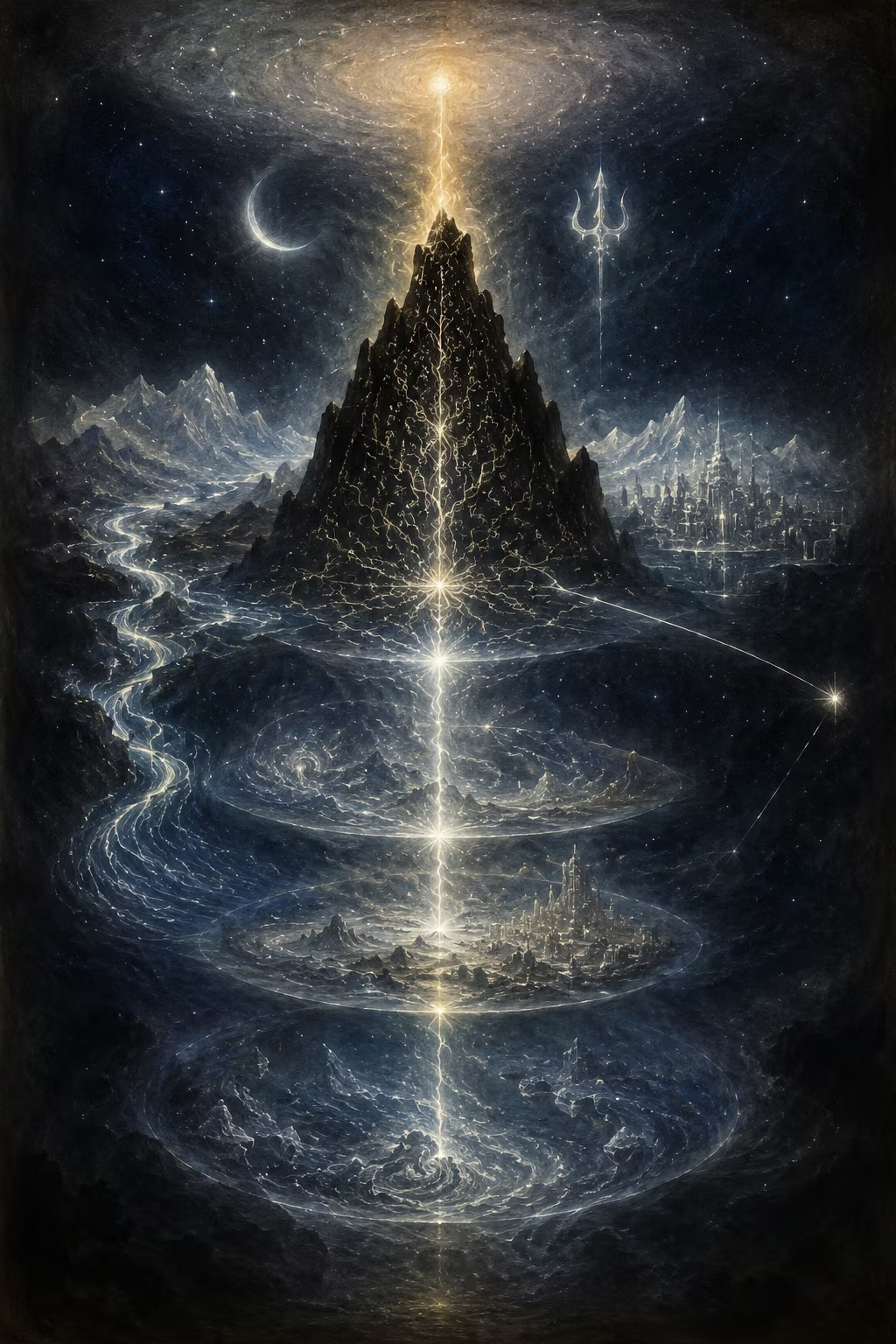
क्या मनुष्य सचमुच जगत् रच सकता है? शास्त्र वह प्रमाण देता है जो तुम रोज़ रात ढोते हो: करण-शक्ति अपने ही अनुभव से सिद्ध है (३·३७) — कल्पना और स्वप्न में तुम शून्य से पूरे लोक सजा ही देते हो; परम्परा कहती है, पूर्ण दृढ़ता से थामी जाये तो वही शक्ति बाहर भी ठहर जाती है। फिर वह निर्देश जिससे यह कक्ष दमकता है: तीनों अवस्थाओं में 'आदि' को — चौथे को — प्राण की तरह फूँको (३·३८): तुर्य, वह आनन्द-विद्युत् जो जीवन की तीव्रताओं में कौंधती है। टीका की सूची निस्संकोच ईमानदार है: संगम-स्मृति का उमड़ता आनन्द, बहुत दिनों बाद लौटा प्रिय मुख, अन्न-पान का रस, संगीत की रससमाधि — हर कौंध एक द्वार, कहता है विज्ञानभैरव, जो यहाँ विस्तार से उद्धृत है। और केवल मन की अवस्थाओं में नहीं: देह, इन्द्रियों और बाहरी वस्तुओं में भी उतना ही फूँको (३·३९)। फिर छाया-पक्ष, बिना घृणा जाँचा हुआ: ढोये जाने वाले को बाहर खींचती है अभिलाषा — 'मैं अधूरा हूँ' की कसक (३·४०); और चौथे पर आरूढ़ योगी की वह तृष्णा चुकते ही 'जीव' स्वयं चुपचाप समाप्त हो जाता है (३·४१): केवल ज्ञाता चमकता रह जाता है।
Can a person really create worlds? The text answers with evidence you carry nightly: the creative power is established from your own experience (III.37) — in imagination and dream you already furnish complete worlds from nothing; held with total conviction, says the tradition, that same power steadies outward. Then the instruction that makes this Room glow: enliven the three states with the first (III.38) — turya, the bliss-charge that flashes like lightning in life's intensities. The commentary's catalogue is honest without flinching: the flood of union remembered, a dear face returned after long absence, the savour of food and drink, the rapture of music — each flash a doorway, says the Vigyan Bhairav, quoted here at length. And not only in the mind's states: breathe it equally into body, senses and outer things (III.39). Then the shadow side, examined without contempt: what drives the carried-one outward is craving — the ache 'I am incomplete' (III.40); and for the yogi mounted on the fourth, as that thirst gives out, the 'creature' itself quietly ends (III.41): only the knower remains shining.
karaṇaśaktiḥ svato 'nubhavāt ॥
रचने की शक्ति अपने ही अनुभव से (सिद्ध) है — संकल्प और स्वप्न में आत्मा का यथेच्छ निर्माण-कर्तृत्व प्रत्यक्ष है।
The power to create is (established) from one's own experience — in imagination and in dream the Self's free authorship of worlds is directly seen.
सरल अर्थ: प्रमाण बाहर नहीं माँगा गया: हर रात, बिना ईंट-गारे, तुम नदी-पर्वत-नगर रच लेते हो। प्रत्यभिज्ञा: 'यथेष्ट रूपों के उल्लेख और अवभासन से हर जीवित के लिए ज्ञान-क्रिया स्पष्ट सिद्ध हैं।' और टीका जोड़ती है: गाढ़ अभिनिवेश से विमर्श हो, तो वह निर्माण सर्व-साधारण भी हो जाता है — विश्वामित्र की नयी स्वर्ग-सृष्टि जैसी गाथाएँ इसी की स्मृति हैं; तत्त्वगर्भ: तब 'संकल्प कल्पवृक्ष हो जाता है'। In simple words: The proof is not sought outside: every night, with no bricks or mortar, you build rivers, mountains, cities. The Pratyabhijna: 'from the sketching-forth and shining of things just as wished, knowing and doing stand plainly established for every living being.' And the commentary adds: contemplated with total conviction, that authorship can become visible to all — the tales of Vishvamitra's new-built heaven are its memory; the Tattvagarbha: then 'his resolve becomes a wish-fulfilling tree.'
tripadādyanuprāṇanam ॥
तीनों पदों — सृष्टि, स्थिति, लय रूपी अवस्थाओं — में 'आदि' का अनुप्राणन करे: उस तुर्य का, जो भोग-क्षणों में बिजली-सा कौंधता है।
Enliven the three states with the first — with turya, the bliss-dense principal that flashes like lightning in the moments of experience.
सरल अर्थ: ३·२० ने तेल कहा था; यह सूत्र साँस कहता है — और क्षेमराज विज्ञानभैरव की सबसे मानवीय धारणाएँ पंक्ति-दर-पंक्ति रखते हैं: 'भरिताकारा भैरवी अवस्था' से आरम्भ कर — शक्ति-संगम का आनन्द उसकी स्मृति-मात्र से, 'बहुत दिनों बाद बान्धव को देखकर उमड़ा आनन्द', 'भोजन-पान के रस का उल्लास', 'गीत आदि विषयों का असम सुख' — हर तीव्रता में वेद्य गल जाता है और चौथा कौंधता है; उसी क्षण उसे पहचानो, उसी में ठहरो। (बहन-Hall की गुफा ७१ यही 'आनन्द-आस्वाद' धाराएँ साधती है; गुफा ६७ संगम-वाली धारणा को मर्यादा से पढ़ती है।) स्पन्द जोड़ता है: 'अति क्रुद्ध, अति प्रहृष्ट, किंकर्तव्य-मूढ़, या दौड़ता हुआ — जिस पद पर पहुँचे, वहीं स्पन्द प्रतिष्ठित है।' In simple words: III.20 said oil; this sutra says breath — and Kshemaraja lays out the Vigyan Bhairav's most human dharanas line by line: beginning from 'the brimming state of Bhairavi', then — the flood of union's joy arising from its memory alone, 'the joy that surges on seeing a dear one after long', 'the savour-burst of food and drink', 'the unequalled happiness of music' — in every intensity the object melts and the fourth flashes; recognize it in that instant, rest there. (The sibling Hall's Room 71 practises exactly these joy-savouring streams; its Room 67 reads the union-dharana with full decorum.) The Spanda adds the fierce side: 'furious, overjoyed, stuck asking what do I do, or running for your life — whatever state you land in, there the spanda stands established.'
cittasthitivac charīrakaraṇabāhyeṣu ॥
जैसे चित्त की (भीतरी) स्थिति में, वैसे ही शरीर, इन्द्रिय और बाहरी वस्तुओं में भी (वही तुर्य-अनुप्राणन करे)।
As in the mind's (inner) state, so too in body, senses and outer things — (let the same fourth be breathed).
सरल अर्थ: भीतर की झलक पर सन्तोष नहीं: बहिर्मुखता में भी वही सेचन, क्रम-क्रम से। क्षेमराज का प्रमाण फिर विज्ञानभैरव: 'सारा जगत् या अपनी देह स्वानन्द से भरी स्मरण करो — युगपत् अपने ही अमृत से परमानन्दमय हो जाओगे' — बहन-Hall की गुफा ६५ का मूल वचन। यों आनन्दात्मा स्वातन्त्र्य-शक्ति सब दशाओं में स्पष्ट होकर यथेष्ट-निर्माणकारिणी होती है — ३·३७ का वृत्त पूरा। In simple words: No settling for inner glimpses: the same saturation in the outward turn, by degrees. Kshemaraja's proof-text is again the Vigyan Bhairav: 'remember the whole world, or your own body, as brimming with your own bliss — in that instant, through your own nectar, you become supreme joy' — the very verse of the sibling Hall's Room 65. Thus the freedom-power, bliss by nature, grows vivid in every state and becomes the free maker — closing the circle of III.37.
abhilāṣād bahirgatiḥ saṁvāhyasya ॥
संवाह्य की — योनि-योनि ढोये जाते पशु की — बहिर्गति अभिलाषा से होती है: 'मैं अधूरा हूँ' इस आणव मल की कसक से।
For the carried-one — the creature carted from womb to womb — the outward rush is driven by craving: the ache of the primal stain, 'I am incomplete.'
सरल अर्थ: तृष्णा की जड़ किसी वस्तु में नहीं — 'अपूर्णम्मन्यता' में है: कुछ-न-कुछ मुझे मिले, यह लौल्य ही आणव मल। स्वच्छन्द इसे ही 'मल' कहता है; कालिकाक्रम परिणाम गिनाता है: अतथ्य कल्पनाएँ, नरक-पाक, अपने ही दोषों से दहन, फिर मायामयी देह — क्लेश का पात्र। सूत्र में घृणा नहीं, निदान है: बाहर दौड़ने वाला दोषी नहीं — प्यासा है। In simple words: Craving's root is in no object — it is 'the deeming-oneself-incomplete': the restless 'may something be mine' that IS the primal stain. The Svacchanda names it the mala itself; the Kalikakrama counts the consequences — untrue imaginings, the cooking in hells, burning by one's own faults, then another maya-made body, a vessel of affliction. There is no contempt in the sutra, only diagnosis: the one rushing outward is not wicked — he is thirsty.
tadārūḍhapramites tatkṣayāj jīvasaṁkṣayaḥ ॥
जिसकी प्रमिति तुर्य पर आरूढ़ है, उसकी वह अभिलाषा क्षीण होते ही 'जीव' का — पुर्यष्टक-प्रमाता का — संक्षय हो जाता है: चित्-प्रमाता ही स्फुरित रहता है।
For one whose knowing is mounted on the fourth, as that craving wastes away the 'creature' itself wastes away — the subtle-body knower dissolves, and only the awareness-knower shines.
सरल अर्थ: जीव मरता नहीं — 'जीव-भाव' चुकता है, जैसे ईंधन चुके दीये की लौ आकाश हो जाती है। कालिकाक्रम का दृष्टान्त कोमल है: 'जागा हुआ स्वप्न में देखे पदार्थ नहीं देखता; वैसे भावना में पका योगी संसार नहीं देखता।' और लक्ष्य-वाक्य: 'सत्-असत् वृत्तियाँ हटाकर, भीतर के पद का आश्रय ले, कल्पना-जाल छोड़, नित्य स्वात्म-निरत, काल को ग्रसने में तत्पर — वह केवली योगी निर्वाण-पद पाता है।' In simple words: Nothing dies here — the creature-sense simply runs out, as a lamp's flame becomes sky when the fuel is spent. The Kalikakrama's simile is gentle: 'as one awake no longer sees what he saw in dream, the yogi ripened in contemplation no longer sees samsara.' And its summary sentence: 'dismissing the currents of is and is-not, resorting to the inner seat, dropping the net of imaginings, ever delighting in his own Self, intent on swallowing Time — that kevali yogi attains the ground of nirvana.'
३·३८ की कौंधें रोज़ तुम्हारे पास आती ही हैं — संगीत में, स्वाद में, पुनर्मिलन में, हँसी में। अभ्यास बस इतना है कि द्वार को चौखट समझना छूट जाये: अगली गहरी प्रसन्नता में, कारण से एक अंश घूमकर स्वयं आनन्द की ओर मुड़ो।III.38's flashes already visit you daily — in music, taste, reunion, laughter. The practice is only to stop mistaking the doorway for the door-frame: in the next strong joy, turn one degree from the trigger to the joy itself.
अवधि: Duration: जिस क्षण आनन्द आये — कुछ श्वासIn the moment joy arrives — a few breaths
क्या देखें: What to notice: हफ़्तों में कौंधें बिना कारण भी आने लगती हैं — साधारण क्षण में अकारण भराव। यही वह सेचन है जिसे ३·३९ देह और जगत् तक फैलाता है। (बहन-Hall विज्ञानभैरव इन्हीं धाराओं को अपनी गुफा ६५ और ७१ में साधता है।)Over weeks, the flashes begin arriving without triggers — a causeless brimming in an ordinary moment. That is the saturation III.39 extends to body and world. (The sibling Vigyan Bhairav Hall trains these same streams in its Rooms 65 and 71.)
आज रात ३·३७: सोते हुए याद रखो कि घण्टे-भर के भीतर तुम एक पूरा जगत् रचोगे और उसे सच मानोगे। कल जागकर एक ईमानदार प्रश्न पूछो: वहाँ यह मुझसे हो सका, तो सूत्र जिसे यहाँ भी मेरी ही शक्ति कहते हैं, वह ठीक-ठीक क्या है?
III.37 tonight: as you fall asleep, remember that within the hour you will build an entire world and believe it. Tomorrow, on waking, ask one honest question: if I could do that there, what exactly is this power the sutras say I am wielding here?