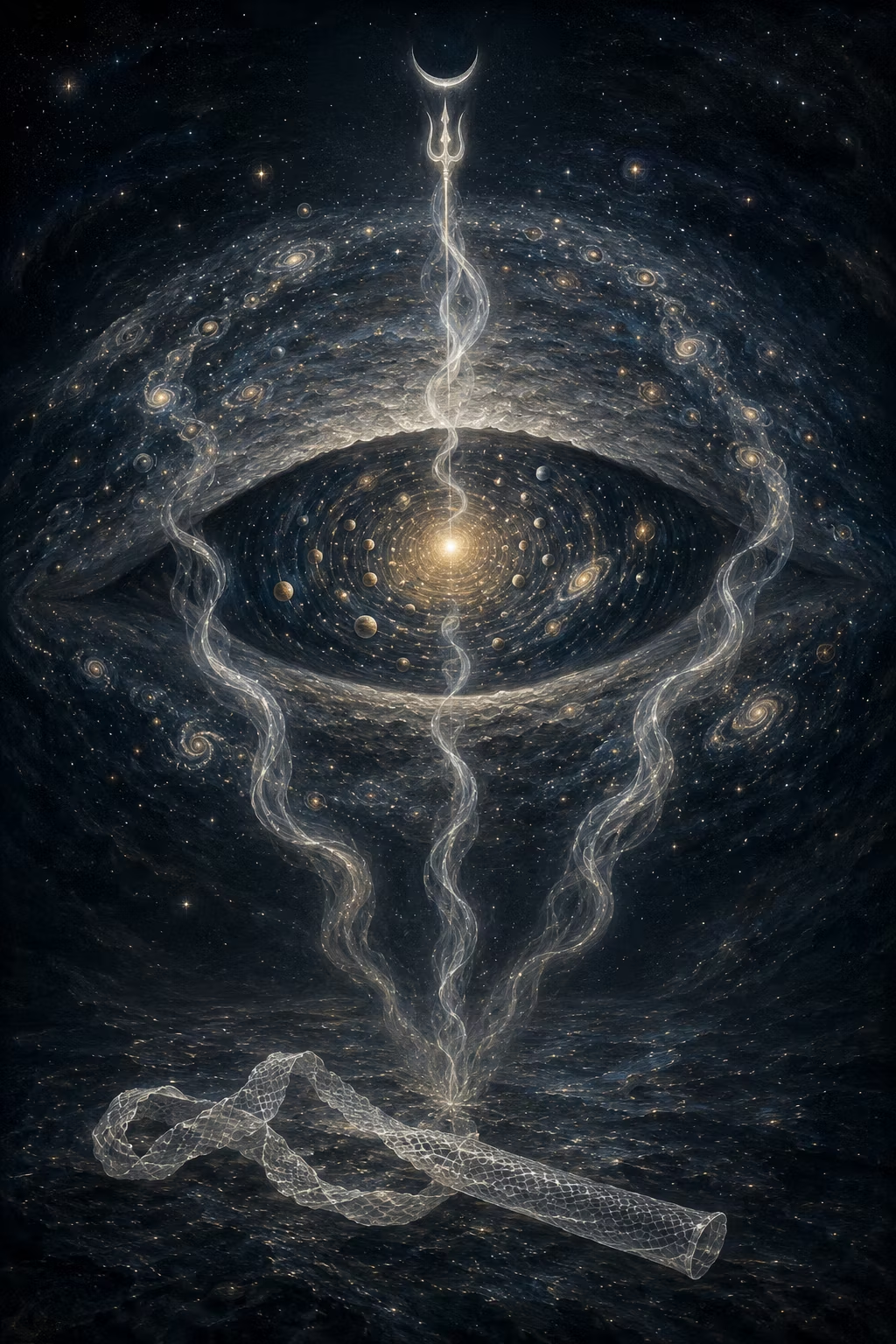
शास्त्र अब अपना अन्तिम पड़ाव चलता है। जीव-भाव चुक गया, तो शरीर क्यों बचा? क्योंकि वह अब उसका नहीं रहा: भूतों को वह केंचुल-सा ओढ़े है — साँप की उतरी त्वचा, तलवार की म्यान — विमुक्त, बहुलता से पति-सम, पूर्ण (३·४२)। टीका यहाँ तीन विस्मय पिरोती है: 'श्रेष्ठ गुरु ठीक-ठीक कह दे, तो उसी क्षण मुक्त — यन्त्र-भर चलता रहता है'; 'पलक झपकने-भर को भी तत्त्व दिख जाये, तो फिर जन्म नहीं।' तो फिर श्वास क्यों चलती है? क्योंकि प्राण से नाता नैसर्गिक है (३·४३): संविद् ही, जगत् दिखाने की इच्छा से, पहले प्राण में झुकती है — कुम्हार का चाक घूर्णन चुकने तक घूमता रहता है। अतः अन्तिम संयम: बायीं-दायीं-मध्य धाराओं में बहती कुटिल-वाहिनी प्राण-शक्ति के भीतर संविद् है, और संविद् के भीतर उसका अन्तरतम मध्य — उसी को थामो; शेष सबको सूत्र एक झटके में उतार देता है: 'किमत्र — यहाँ और कहना ही क्या?' (३·४४)। फिर पूरा शास्त्र आँख की तरह मुँद जाता है: फिर से, प्रतिमीलन होता है (३·४५) — उठा हुआ विश्व उसी चैतन्य की ओर वापस मुड़कर मुँद जाता है जिससे उठा था। अन्त नहीं: घर-वापसी — जो कभी दूर थी ही नहीं।
The scripture now walks its last mile. If the creature-sense has ended, why does the body remain? Because it no longer belongs to him: he wears the elements as a mere cloak — a snake's shed skin, a sword's sheath — released, abundantly equal to the Lord, full (III.42). The commentary strings three astonishments here: 'freed at the very moment the true guru speaks it — the body-machine merely goes on'; 'if the Real is glimpsed for the span of a blink, one is not born again.' Why then does breath continue at all? Because the bond with breath is native (III.43): awareness herself, wishing to display a world, first leans into breath — the potter's wheel spins on till the spin is spent. So the final samyama: within the winding current of breath in left, right and centre lies awareness, and within awareness its inmost middle — hold to that, and the sutra shrugs off everything else: 'what more is there to say?' (III.44). Then the whole text closes like an eye: again, there is the closing-in (III.45) — the risen universe folds back toward the awareness it rose from. Not an ending: a homecoming that was never far.
bhūtakañcukī tadā vimukto bhūyaḥ patisamaḥ paraḥ ॥
तब वह भूतों को केंचुल-मात्र ओढ़े हुए विमुक्त है — बहुलता से पति-सम, चिद्घन परमेश्वर-स्वरूप में प्रविष्ट, पर — पूर्ण।
Then, wearing the elements as a mere cloak, he is released — abundantly equal to the Lord, entered into the awareness-dense nature of the Supreme: parah, full.
सरल अर्थ: देह अब वस्त्र है, वक्ता नहीं: 'जीर्ण निर्मोक' — साँप की उतरी केंचुल, या म्यान — तलवार से भिन्न। ३·२५ की 'तुल्यता' यहाँ 'भूयः' से भर जाती है। और टीका के तीन वज्र-वचन: कुलरत्नमाला — 'श्रेष्ठ गुरु सम्यक् कह दे तो उसी क्षण मुक्त; यन्त्र-भर खड़ा रहता है'; मृत्युंजित् — 'निमेष-उन्मेष भर तत्त्व दिखे, तो फिर जन्म नहीं'; कुलसार — 'अहो तत्त्व की महिमा! जानते ही, कान में पड़ते ही, उसी क्षण मुक्ति।' In simple words: The body is now clothing, not the speaker: 'a worn-out slough' — the snake's shed skin, or the sheath beside the sword. III.25's 'equality' here fills out into 'abundantly'. And the commentary's three thunderbolts: the Kularatnamala — 'when the best of gurus speaks it rightly, freed that very moment; the machine merely stands'; the Mrityunjit — 'glimpse the Real for the span of a blink, and there is no birth again'; the Kulasara — 'ah, the majesty of the Real! merely known, merely entered at the ear — freed that instant.'
naisargikaḥ prāṇasaṁbandhaḥ ॥
प्राण से (संविद् का) सम्बन्ध नैसर्गिक है — विश्व दिखाने की इच्छा से भगवती संविद् ही पहले प्राणन-भूमिका ओढ़ती है।
The bond with breath is native — the Goddess Awareness herself, wishing to display a world's variety, first takes the platform of breathing.
सरल अर्थ: मुक्त की देह क्यों चलती रहती है, इसका शास्त्रीय उत्तर: भट्ट कल्लट का सूत्र-वाक्य — 'प्राक् संवित् प्राणे परिणता' — पहले संविद् ही प्राण में परिणत हुई; नाता जन्मगत है, दण्ड नहीं। टीका जोड़ती है: प्रारब्ध-भोग चुकने तक देह कुम्हार के चाक-सी घूमती रहती है। स्वच्छन्द का गहरा वचन: प्राण 'ह'-आकृति है — हर प्राणी के वक्ष में स्वयं उच्चरता हुआ; वाजसनेया: वही परा, सूक्ष्म, व्यापिनी शक्ति तीन धाराओं में काल को खींचती है। In simple words: The classical answer to why the freed one's body keeps running: Bhatta Kallata's lapidary line — 'first, Awareness ripened into breath.' The bond is congenital, not a sentence. The commentary adds: until the already-begun karma spends itself, the body turns like a potter's wheel after the push. The Svacchanda goes deeper: prana has the shape of 'ha' — reciting itself in every creature's chest; the Vajasaneya: that same supreme, subtle, pervading Shakti draws Time itself along the three channels.
nāsikāntarmadhyasaṁyamāt kimatra savyāpasavyasauṣumneṣu ॥
दायीं, बायीं और सुषुम्ना धाराओं में बहती नासिका — कुटिल-वाहिनी प्राण-शक्ति — के अन्तर् की संविद्, और उसके भी मध्य — अन्तरतम — के संयम से (सब सधता है); यहाँ और क्या कहें?
By samyama on the middle — the inmost — of what is inside the nasika, the winding breath-current flowing right, left and centre: (all is attained); what more is there to say?
सरल अर्थ: अन्तिम विधि-सूत्र, और क्षेमराज इसे नाड़ी-यान्त्रिकी से ऊपर उठा देते हैं: नासिका = कुटिलता से बहती प्राण-शक्ति; उसका 'अन्तर्' = संविद्; उसका भी 'मध्य' = सर्वान्तरतम विमर्श — परा शक्ति। संयम = बार-बार का अन्तर्-निभालन, भीतर देखते रहना। फल 'किमत्र' में: सब दशाओं में देदीप्यमान, व्युत्थान-रहित पर समाधि। धाराओं-चक्रों पर काम दीक्षा-क्षेत्र है; पर क्षेमराज का प्रमाण-वचन सबका है — विज्ञानभैरव: 'ग्राह्य-ग्राहक की संवित्ति सब देहधारियों में समान है; योगियों की विशेषता बस यह: वे सम्बन्ध पर सावधान रहते हैं।' In simple words: The last method-sutra, and Kshemaraja lifts it clear of channel-mechanics: nasika = the breath-power that 'flows windingly'; its 'inside' = awareness; the middle even of that = the inmost savouring — the supreme Shakti. Samyama = beholding it within, again and again. The fruit hides in 'kim atra': the samadhi that blazes through all states and knows no coming-out. Work on channels and centres is initiate's territory; but Kshemaraja's proof-verse belongs to everyone — the Vigyan Bhairav: 'the awareness in the meeting of knower and known is common to all embodied beings; the yogis differ in one thing only — they stay attentive to the connection.'
bhūyaḥ syāt pratimīlanam ॥
फिर से — और बहुलता से — प्रतिमीलन होता है: चैतन्य से उदित विश्व, भेद-संस्कार गलाकर, चैतन्य के ही अभिमुख मुँद जाता है — और वही अपने स्वरूप का उन्मीलन है।
Again — and abundantly — there is the closing-in: the universe that rose from awareness, its imprints of division dissolved, folds shut toward awareness itself — and that very closing is the opening of one's own nature.
सरल अर्थ: अन्तिम सूत्र में क्षेमराज 'भूयः' के दोनों अर्थ खिलने देते हैं — 'फिर से' और 'प्रचुरता से' — और अन्तिम रहस्य कहते हैं: योगी का शिवत्व अपूर्व नहीं, स्वभाव ही है; उपाय बस उसे उघाड़ते हैं। स्वच्छन्द का दृष्टान्त शास्त्र की अन्तिम छवि है: 'उद्बोधित अग्नि, निर्मल, अतीव भास्वर — फिर काठ में प्रवेश नहीं करती।' और अपनी विमर्शिनी के समापन-श्लोकों में क्षेमराज यह आशीर्वचन रखते हैं: 'देह-प्राण-सुख के परिमित 'मैं' से ढका जन अपना महामाहेश्वर चैतन्य नहीं सँजो पाता; जो उपदेश से बोध-सुधा-सागर के मध्य विश्व को उसके फेन-पिण्ड-सा देख ले — वही साक्षात् शिव कहा गया है।' In simple words: In the final sutra Kshemaraja lets both senses of 'bhuyah' blossom — 'again' and 'in abundance' — and states the last secret: the yogi's Shivhood is nothing new; it is his nature, and the ways merely uncover it. The Svacchanda supplies the scripture's closing image: 'fire once kindled — clean, blazing bright — does not re-enter the wood.' And among the final verses of his Vimarshini, Kshemaraja sets this benediction: 'covered by the limited I of body, breath and pleasure, a person never gathers his own vast Maheshvara-awareness; but one who, through instruction, comes to see this universe as a lump of foam in the middle of the nectar-ocean of knowing — he is called, outright, Shiv.'
३·४४ का नाड़ी-संयम दीक्षितों का क्षेत्र है; पर क्षेमराज जिस प्रमाण-वचन पर उसे टिकाते हैं, वह घोषित रूप से सबका है: ज्ञाता-ज्ञेय के मिलन की संविद् हर प्राणी में बह रही है — योगी बस उस पर सावधान रहते हैं। यह समापन-अभ्यास वही सावधानी है, अपने कोमलतम रूप में।III.44's channel-samyama belongs to the initiated; but the proof-verse Kshemaraja rests it on is explicitly universal: the awareness where knower meets known runs in everyone — yogis simply attend to it. This closing practice is that attending, in its gentlest form.
अवधि: Duration: ५–१० मिनट, बैठकर5–10 minutes, seated
क्या देखें: What to notice: मिलन-स्थल को किसी रख-रखाव की ज़रूरत नहीं — वह साधा नहीं गया, बस देखा गया। बैठक इस भाव पर पूरी हो कि बोध हर आतिथेय श्वास के बाद भी चुपचाप शेष रहता है, तो समझो — ३·४४ का अन्तरतम मध्य तुमने सामने के द्वार से छू लिया।The meeting-place needs no maintenance — it was attended, not built. If the sit ends with the sense that awareness quietly outlasts each breath it hosts, you have touched what III.44 calls the inmost middle, by the front door.
सावधानी: Take care: यह अभ्यास जान-बूझकर श्वास को अनछुआ रखता है। कुम्भक, नाड़ी-शोधन-प्रयोग और विधिवत् नाड़ी-संयम जीवित शिक्षक के सान्निध्य में मिलते हैं — वही मर्यादा जो इस Hall ने पहले कक्ष से इस अन्तिम तक रखी है।This practice deliberately leaves the breath untouched. Retention, alternate-nostril work and channel-samyama proper are received under a living teacher's guidance — the boundary this Hall has kept from its first Room to this last one.
आज रात, नींद की ओर आँखें मुँदते हुए, जगत् को लघु रूप में ३·४५ करते देखो: कमरा, ध्वनियाँ, स्वयं यह दिन — उसी बोध में वापस मुँदते हुए जिसमें वे प्रकट हुए थे। शास्त्र का अन्तिम वचन हर रात तुम्हारे साथ घटता है। एक बार, उसके पूरा होने से ठीक पहले, देख लो — और आँख का यह मुँदना, इस एक बार, खुलना हो जाये।
Tonight, as your eyes close toward sleep, watch the world perform III.45 in miniature: room, sounds, the day itself folding back into the awareness they appeared in. The text's last word happens to you every night. Once, just before it completes, notice — and let the closing of the eye be, this once, the opening.