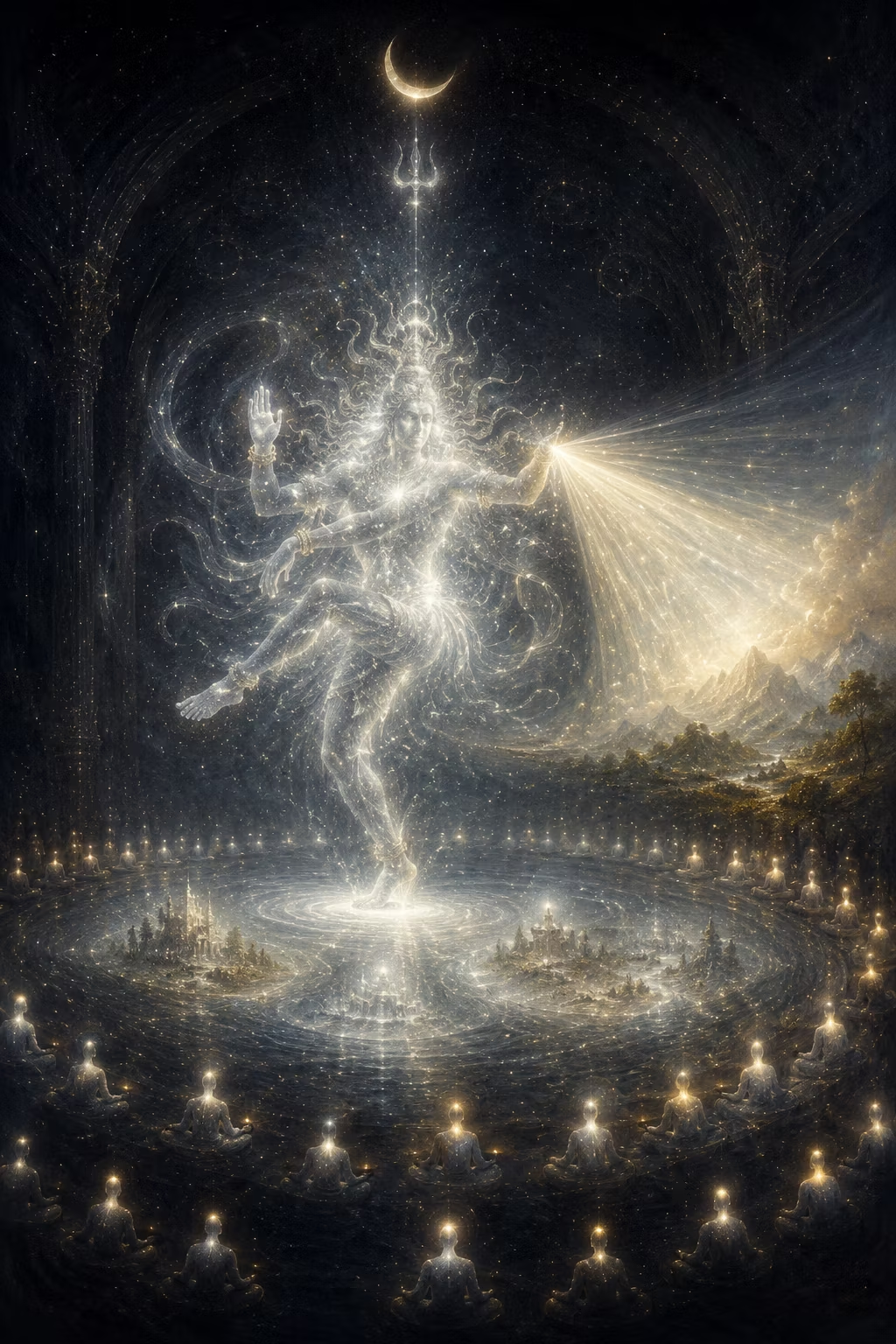
अब लम्बा मार्ग प्रकाशमय होता है। मोह जीतो — और जय ऐसी कि उसके सूक्ष्म संस्कार तक शान्त हो जायें — तो सहज विद्या मिलती है (३·७)। जिसने उसे थामा, उसके लिए जाग्रत् जगत् दीवार नहीं रहा, किरण हो गया: जो भी दिखता है, वह अपने ही दीपक का फेंका उजाला है (३·८)। फिर शिवसूत्र अपना सबसे प्रिय चित्र देते हैं। आत्मा नर्तक है (३·९) — अपने ही स्पन्द की लीला से जाग्रत्-स्वप्न-सुषुप्ति के दृश्य रचता, अपना असली मुख भीतर छिपाये। रंगमंच है अन्तरात्मा — वह सूक्ष्म देह जिस पर भूमिकाएँ धरी जाती हैं (३·१०)। और दर्शक? तुम्हारी अपनी इन्द्रियाँ (३·११) — जो भीतर मुड़कर अपने ही स्वरूप की लीला देखती हैं और चमत्कार-रस से भर जाती हैं।
Now the long road turns luminous. Conquer delusion — and the conquest must reach all the way, until even its subtle imprints subside — and the innate knowing, sahaja-vidya, is won (III.7). For the one who holds it, the waking world is no longer a wall but a ray: everything perceivable becomes the light thrown by one's own lamp (III.8). Then the Shiv Sutras give their most beloved image. The Self is a dancer (III.9), manifesting waking, dream and sleep as scenes by the play of its own vibration, its true face veiled within. The stage is the inner self — the subtle body on which the roles are taken up (III.10). And the audience? Your own senses (III.11) — which, turned inward, watch the play of their own nature and fill with the rasa of wonder.
mohajayād anantābhogāt sahajavidyājayaḥ ॥
मोह की जय से — ऐसी जय जिसका विस्तार अनन्त हो, संस्कारों के प्रशम तक — सहज विद्या की प्राप्ति होती है।
From the conquest of delusion — a conquest of endless expanse, carried until even its imprints subside — comes the winning of the innate knowing.
सरल अर्थ: 'अनन्त-आभोग' निर्णायक शर्त है: सतही जीत नहीं, संस्कार-प्रशम तक की जीत। क्षेमराज स्वच्छन्द से दो व्याप्तियाँ खोलते हैं: पाशों को देखना छोड़ स्वरूप को देखना = आत्मव्याप्ति; और सर्वज्ञत्व आदि गुणों को अपना भावित करना = शिवव्याप्ति — वही उन्मना, वही सहज विद्या, 'जिससे परे और विद्या नहीं'। In simple words: 'Endless expanse' is the decisive clause: not a surface victory but one carried to the stilling of the imprints. Kshemaraja opens the Svacchanda's two pervasions: turning from pasha-gazing to gazing on one's own nature = atma-vyapti; then contemplating omniscience and the Lord's powers as one's own = shiv-vyapti — the unmana state, the innate vidya 'beyond which there is no other'.
jāgrad dvitīyakaraḥ ॥
(उस विद्या में जागरूक के लिए) जाग्रत् जगत् उसकी दूसरी किरण है — पूर्ण 'अहम्' के आगे जो भी 'इदम्' दिखता है, वह अपनी ही रश्मि है।
(For one awake in that knowing) the waking world is his second ray — whatever appears as 'this' before the full 'I' is his own beam of light.
सरल अर्थ: 'कर' का अर्थ किरण भी है, हाथ भी: जगत् अब न शत्रु है न दीवार — अपना ही फैला हुआ हाथ। क्षेमराज विज्ञानभैरव उद्धृत करते हैं: 'जहाँ-जहाँ इन्द्रिय-मार्ग से विभु का चैतन्य प्रकट होता है, वहीं चित् में लीन होने से भरितात्मता' — वही धारणा बहन-Hall की गुफा ११५ में जीवित है। सर्वमङ्गला का सार: शक्तियाँ = समूचा जगत्; शक्तिमान् = महेश्वर। In simple words: Kara means both ray and hand: the world is now neither enemy nor wall — one's own extended hand. Kshemaraja cites the Vigyan Bhairav: 'wherever the pervasive one's consciousness shines through a sense-doorway, dissolving into awareness right there, one is filled' — a dharana alive in the sibling Hall's Room 115. The Sarvamangala's summary: the powers are the whole world; the holder of the powers, the great Lord.
nartaka ātmā ॥
आत्मा नर्तक है — भीतर छिपे अपने स्वरूप के आधार पर, अपने ही स्पन्द की लीला से, जाग्रत् आदि भूमिकाओं का प्रपंच अपनी ही भित्ति पर प्रकट करता हुआ।
The Self is a dancer — grounded in its own nature hidden within, unfolding the pageant of waking and the other states on its own screen, by the play of its own vibration.
सरल अर्थ: पूरे शास्त्र का सबसे प्रिय चित्र। नैश्वास-तन्त्र में देवी स्वयं स्तुति करती हैं: 'एक अंश से तुम अन्तरात्मा हो, नर्तक, कोशों के रक्षक।' भट्ट नारायण पूछते हैं: 'हे हर! जिसके गर्भ में समस्त बीज हैं, उस त्रैलोक्य-नाटक को तुम्हारे सिवा रचने-समेटने वाला कवि कौन?' और प्रत्यभिज्ञा: 'सोते जगत् में जागता, संसार-नाट्य का सूत्रधार — एक ही परमेश्वर।' In simple words: The best-loved image in the whole text. In the Naishvasa Tantra the Goddess herself sings: 'with one part of yourself you are the inner self — the dancer, keeper of the sheaths.' Bhatta Narayana asks: 'O Hara, what poet but you could stage and then gather up the drama of the three worlds, whose womb holds the seed of all beings?' And the Pratyabhijna: 'awake in the sleeping world, the one great Lord who sets the play of samsara in motion.'
raṅgo 'ntarātmā ॥
रंगमंच अन्तरात्मा है — वह सूक्ष्म देह (पुर्यष्टक-प्रधान जीव) जिस पर यह नर्तक अपनी भूमिकाएँ धरता और जगत्-नाट्य दिखाता है।
The stage is the inner self — the subtle body on which this dancer takes up his roles and displays the drama of the world.
सरल अर्थ: रंग = 'जिसमें रँगा जाता है' — भूमिका ग्रहण करने का स्थान। क्षेमराज: देह की अपेक्षा भीतरी, शून्य-प्रधान या प्राण-प्रधान पुर्यष्टक-रूप जीव ही वह मंच है; उसी पर करणों के स्पन्द-क्रम से नाट्य आभासित होता है। स्वच्छन्द: 'पुर्यष्टक में समाविष्ट होकर वह सब योनियों में विचरता है — उसे अन्तरात्मा जानो।' In simple words: Ranga — 'where colour is taken on' — the place where roles are assumed. Kshemaraja: interior to the gross body, the jiva as the subtle eight-fold city, void-leaning or breath-leaning, is that stage; on it, through the sequenced quiver of the inner instruments, the drama is projected. The Svacchanda: 'entering the eight-fold city he wanders through every womb — know him as the inner self.'
prekṣakāṇīndriyāṇi ॥
इन्द्रियाँ दर्शक हैं — (योगी की) आँख-कान आदि भीतर मुड़कर अपने ही स्वरूप का यह नाट्य साक्षात् देखती हैं और चमत्कार-रस से पूर्ण हो जाती हैं।
The senses are the audience — (the yogi's) eyes and ears, turned inward, directly watch this play of their own nature and fill to the brim with the rasa of wonder.
सरल अर्थ: साधारण दर्शा में इन्द्रियाँ बाहर भागती भीड़ हैं; योगी की इन्द्रियाँ प्रेक्षागृह में बैठ जाती हैं — वही नाटक, अब रस के साथ। क्षेमराज यहाँ श्रुति रखते हैं — कठोपनिषद्: 'कोई धीर, अमृत चाहता हुआ, आँखें लौटाकर प्रत्यगात्मा को देखता है।' वही 'लौटी हुई आँख' उपनिषद्-Hall के कठ-कक्ष में विस्तार से खुली है। In simple words: Ordinarily the senses are a crowd rushing outward; the yogi's senses take their seats in the theatre — the same play, now tasted as rasa. Kshemaraja rests this on shruti — the Katha Upanishad: 'a certain steady one, longing for deathlessness, turned his gaze around and saw the Self within.' That same turned-around gaze opens at length in the Upanishad Hall's Katha rooms.
३·९–११ रूपक के वेश में पूरा अभ्यास थमा देते हैं: दिन का एक दृश्य रंगमंच की तरह जियो — भूमिका पूरी निभती हुई, नर्तक याद रहता हुआ, इन्द्रियाँ अपनी कुर्सियों से रस लेती हुईं।III.9–11 hand you a complete practice disguised as a metaphor: live one scene of your day as theatre — the role played fully, the dancer remembered, the senses enjoying from their seats.
अवधि: Duration: दिन भर, एक-एक मिनटA minute at a time, through the day
क्या देखें: What to notice: भूमिकाएँ भूमिका जानी जाते ही अजब हल्की हो जाती हैं — और कोई भी दृश्य, कितना भी कठिन, नर्तक तक नहीं पहुँचता। वह बिना-उदासीनता का हल्कापन ३·९ का स्वयं-प्रमाण है; देखने में उमगता रस ३·११ का चमत्कार।Roles grow strangely lighter the moment they are known as roles — and no scene, however hard, reaches the dancer. That lightness-without-detachment is III.9 verifying itself; the flush of enjoyment in watching is III.11's chamatkara.
आज रात दिन का एक दृश्य प्रेक्षागृह की कुर्सी से दोहराओ — देखो 'तुम' मंच पर आते हो, बोलते हो, जाते हो। फिर देखो: जो अभी यह पुनरावृत्ति देख रहा है, वही तब भी देख रहा था। वह दर्शक कभी हॉल से गया ही नहीं।
Tonight, replay one scene of your day as if from a seat in the theatre — see 'you' walk on, speak, exit. Then notice: the one watching the replay now is the same one who was watching then. That audience never left the hall.