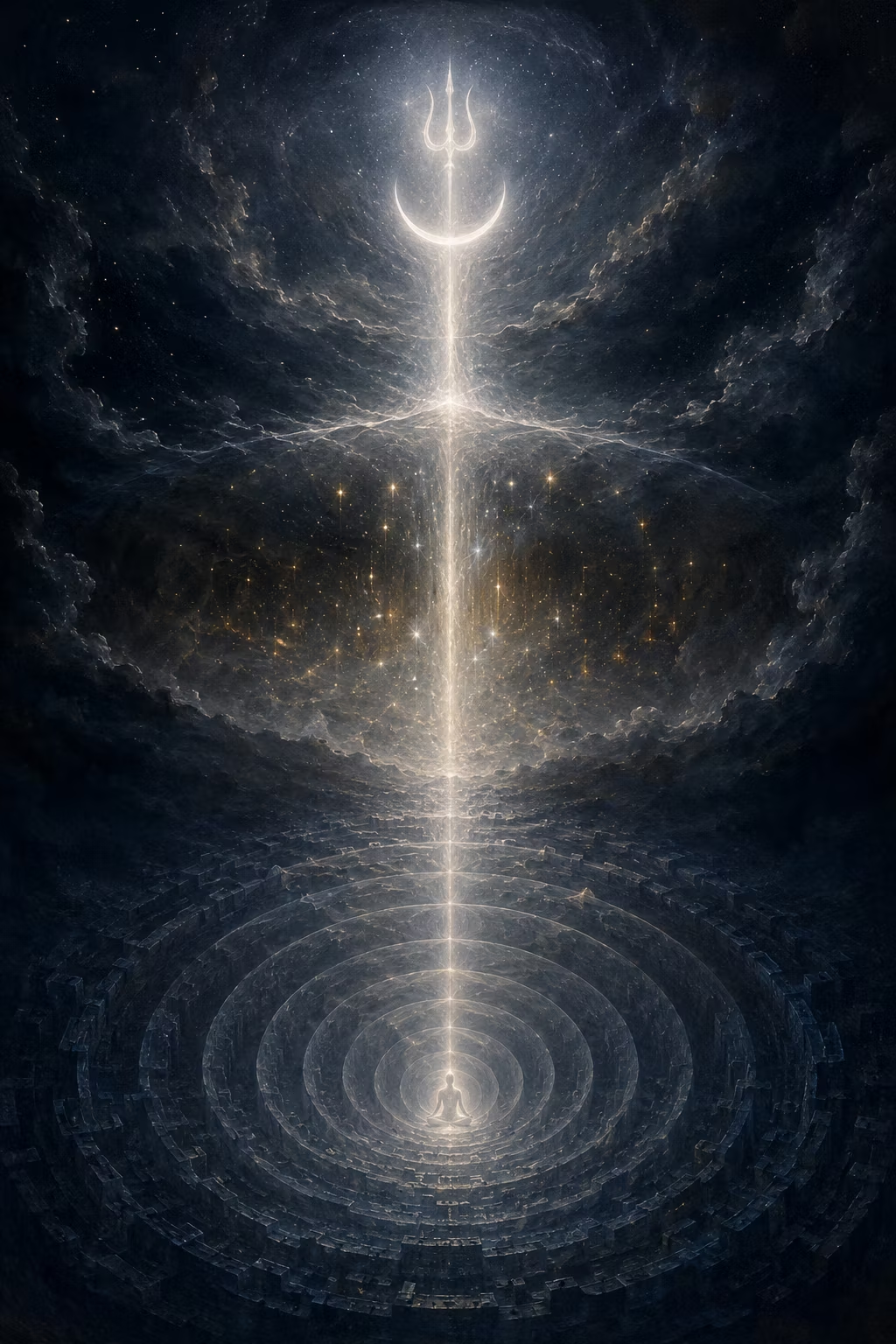
तीसरा उन्मेष सबसे लम्बा मार्ग है — अणु का उपाय, उस जीव का जो बिन्दु-भर सिकुड़ गया है और जिसे उसी सिकुड़न के औज़ारों — मन, प्राण, देह — से वापस चढ़ना है। आरम्भ छोटे 'मैं' से आँख मिलाकर होता है: यहाँ आत्मा चित्त ही है (३·१) — वासनाओं से रँगा बोध, बुद्धि-अहंकार-मन का वेश पहने, योनि-योनि भटकता। उसका जानना बाँधता है (३·२ — वही शब्द जो १·२ के थे, अब धरातल पर परखे हुए), और माया कुछ अलौकिक नहीं: वेश और पहनने वाले में भेद न कर पाना ही माया है (३·३)। फिर साधन-कोश: देह की कलाओं को उनके कारणों में विलीन करना (३·४); नाड़ी, प्राण और भूतों के अनुशासन (३·५)। और तुरन्त, परम्परा की दुर्लभ ईमानदारी: इनसे जो भी सिद्धियाँ मिलें, वे मोह के आवरण के भीतर की हैं — प्रकाश की नहीं (३·६)।
The third unmesha is the longest road — the way of the anu, the being who has shrunk to a point and must climb back using the very instruments of its shrinking: mind, breath, body. It opens by looking the small self in the face: here the Self IS the mind (III.1) — awareness dyed by its cravings, wearing intellect, ego and thought, wandering womb to womb. Its knowing binds (III.2 — the same words as I.2, now diagnosed at the ground floor), and maya is nothing exotic: simply not telling apart the costume from the wearer (III.3). Then the toolkit: dissolve the body's layers back into their causes (III.4); the disciplines of channel, breath and element (III.5). And immediately, the tradition's rare honesty: whatever powers these yield arise from within the veil of delusion — not from the light (III.6).
ātmā cittam ॥
(अणु के लिए) आत्मा चित्त ही है — विषय-वासनाओं से रँगा, बुद्धि-अहंकार-मन का रूप लिये वह बोध जो योनि-योनि 'अतति' — चलता-भटकता रहता है।
(For the limited being) the Self is the mind — awareness dyed by its cravings, wearing the shape of intellect, ego and thought, ever on the move from womb to womb.
सरल अर्थ: पहला सूत्र था 'चैतन्यमात्मा'; यह उसका दर्पण-उलट है — विरोध नहीं। क्षेमराज कहते हैं: वही चित् अपने चिद्-स्वरूप को भुलाकर, सत्त्व-रज-तम की वृत्तियों के सहारे चलती हुई 'चित्त' कहलाती है — और वही अणु है। सत्य वही है; यह उसकी पोशाक का वर्णन है। In simple words: The very first sutra said 'consciousness is the Self'; this is its mirror-inverse — not a contradiction. Kshemaraja: the same chit, forgetting its own nature and moving by the moods of sattva, rajas and tamas, is called 'the mind' — and that is the anu. The truth is unchanged; this describes its costume.
jñānaṁ bandhaḥ ॥
(उस चित्त-रूप अणु का) ज्ञान ही बन्धन है — सुख-दुःख-मोह में साने हुए निश्चय-विकल्प, जिनसे बिंधा वह संसरता है।
(For that mind-formed being) knowing is the bondage — determinations soaked in pleasure, pain and dullness, pierced by which it transmigrates.
सरल अर्थ: १·२ के ही शब्द, जान-बूझकर दोहराये गये: रोग एक ही है, हर तल पर नयी गहराई से पहचाना जाता है। क्षेमराज स्पन्द उद्धृत करते हैं: 'पुर्यष्टक से घिरा — पाँच तन्मात्राएँ और मन-अहंकार-बुद्धि, यह आठ दीवारों का नगर — वह परवश होकर उसी से उपजा भोग भोगता है; जब तक वह नगर है, संसरण है।' In simple words: The exact words of I.2, deliberately repeated: the disease is one, re-diagnosed deeper at every level. Kshemaraja quotes the Spanda: 'caged in the puryashtaka — the eight-walled city of the five subtle elements plus mind, ego and intellect — he helplessly undergoes the experience it breeds; as long as that city stands, the wandering continues.'
kalādīnāṁ tattvānām aviveko māyā ॥
कला से लेकर पृथ्वी तक के तत्त्वों का अविवेक — जो अपने से पृथक् हैं उन्हें अपृथक् मान लेना — ही माया है।
Non-discrimination of the tattvas — from limited agency (kala) down to earth — taking what is separate from you as not separate: that is maya.
सरल अर्थ: माया यहाँ कोई ब्रह्माण्डीय जादू नहीं — एक दैनिक भूल है: औज़ार को पहनने वाला समझ लेना। तन्त्रसद्भाव का चित्र: कला से 'थोड़ा-सा कर्ता' बना चैतन्य, विद्या से दिखाये विषय, राग से रँगा — यों बुद्धि आदि करणों से जुता हुआ पशु बँधा खड़ा है। In simple words: Maya here is no cosmic sorcery — it is a daily mistake: taking the instrument for the wearer. The Tantrasadbhava's picture: consciousness made 'a little doer' by kala, shown objects by limited knowing, coloured by craving — thus yoked to intellect and its tools, the bound beast stands tied.
śarīre saṁhāraḥ kalānām ॥
शरीर में ही कलाओं का संहार (भावना करनी चाहिए) — पृथ्वी से शिव तक के तत्त्व-भाग अपने-अपने कारण में विलीन होते भावित हों।
Within the body, the dissolution of the parts (is to be contemplated) — each tattva-layer, earth up to Shiv, melting back into its own cause.
सरल अर्थ: यह आणव ध्यान का शास्त्रीय हृदय है: आरोहण-क्रम से लय-भावना, या काल-अग्नि से रचे शरीर के दहन का चिन्तन। क्षेमराज विज्ञानभैरव को प्रमाण में रखते हैं: 'भुवन-अध्व आदि रूपों में क्रमशः स्थूल-सूक्ष्म-पर स्थिति से चिन्तन करो, जब तक अन्त में मन का लय न हो' — यह श्लोक बहन-Hall की गुफा ५२ में पूरा पढ़ा जाता है। मालिनीविजय इसी को आणव समावेश की परिभाषा बनाता है: उच्चार, करण, ध्यान, वर्ण, स्थान-कल्पना। यह पूरा क्रम दीक्षा-परम्परा की विधि है — यहाँ वर्णन है, विधि-पत्र नहीं। In simple words: This is the classical heart of anava meditation: the ascending dissolution-contemplation, or the contemplation of the body consumed by the fire of time. Kshemaraja's proof-text is the Vigyan Bhairav: 'contemplate the hierarchy of worlds and paths stage by stage — gross, subtle, supreme — until at the end the mind dissolves' — the sibling Hall reads this verse in full in its Room 52. The Malinivijaya makes this the very definition of anava absorption: uccara, karana, dhyana, varna, sthana-kalpana. That whole sequence is initiate's method — described here, not prescribed.
nāḍīsaṁhārabhūtajayabhūtakaivalyabhūtapṛthaktvāni ॥
नाड़ियों का (मध्य में) संहार, भूतों पर जय, भूतों से चित्त का कैवल्य, भूतों से पृथक्त्व — (ये योगी को भावनीय हैं)।
Merging the channels (into the centre), mastery of the elements, withdrawal of mind from the elements, separateness from the elements — (these the yogi is to cultivate).
सरल अर्थ: एक सूत्र में समूचा प्राण-मार्ग: प्राण-अपान की युक्ति से सब नाड़ियों को मध्य-नाड़ी की उदान-अग्नि में विलीन करना; पैर के अँगूठे से मूर्धा तक की भूत-धारणाएँ; प्रत्याहार; और अन्त में भूतों से अलिप्त स्वच्छ चिदात्मता। क्षेमराज स्वच्छन्द-तन्त्र के प्राणायाम-पटल पन्ने-भर उद्धृत करते हैं — रेचक-पूरक-कुम्भक, बाहरी और भीतरी। यह सब दीर्घ-अभ्यास और जीवित शिक्षक की देख-रेख का क्षेत्र है; यह Hall इसका मानचित्र देता है, चाबियाँ नहीं। In simple words: A whole breath-path in one sutra: dissolving all channels into the central channel's rising fire by the discipline of prana and apana; the elemental dharanas from big toe to crown; withdrawal; finally awareness standing clean of the elements. Kshemaraja quotes pages of the Svacchanda Tantra's breath chapters — exhalation, inhalation, retention, outer and inner. All of it is the territory of long practice under a living teacher's eye; this Hall gives the map, not the keys.
mohāvaraṇāt siddhiḥ ॥
(इन धारणाओं से मिलने वाली) सिद्धि मोह के आवरण से होती है — तत्त्वों के भोग-रूप फल देती है, परतत्त्व का प्रकाश नहीं।
The attainment (these disciplines yield) comes from within the covering of delusion — enjoyment of the tattvas, not the light of the supreme.
सरल अर्थ: परम्परा की सबसे साफ़ आत्म-आलोचना: धारणा-ध्यान-समाधि से मिली सिद्धि भी माया के भीतर की उपलब्धि है। लक्ष्मीकौलार्णव: 'स्वयम्भू भगवान् सब जीवों के प्रत्यक्ष है — मोहित उसे देखता ही नहीं।' और नेत्र-तन्त्र से क्षेमराज का निष्कर्ष: सही दिशा में साधे गये उन्हीं अंगों से परतत्त्व-समावेश होता है, 'मित सिद्धि नहीं'। पुरस्कार मुक्ति है, शक्तियाँ नहीं — यह शास्त्र स्वयं कहता है। In simple words: The tradition's clearest self-criticism: even attainment won by dharana, dhyana and samadhi is an achievement inside maya. The Lakshmikaularnava: 'the self-born Lord stands in plain sight of every creature — the deluded one simply does not see him.' And Kshemaraja's conclusion via the Netra Tantra: the same limbs, rightly aimed, yield absorption in the supreme — 'not petty attainment'. The prize is freedom, not powers — the scripture says it itself.
३·४–५ दीक्षित साधक का शास्त्रीय क्रम कहते हैं — देह की कलाओं का कारणों में लय, नाड़ियों का मध्य में संहार, कुम्भक, अँगूठे से मूर्धा तक चढ़ती भूत-धारणाएँ। और सूत्र स्वयं चेताते हैं (३·६): फल के लिए साधे जायें तो ये आवरण के भीतर की ही उपलब्धि देते हैं। यह Hall मानचित्र सादर रखता है — चाबियाँ वहीं, जहाँ परम्परा ने रखी हैं।III.4–5 describe the classical initiate's sequence — dissolving the body's layers into their causes, merging the channels, retention of breath, the elemental dharanas rising from toe to crown. The sutras themselves add the caution (III.6): pursued for their fruits, these yield only veiled attainments. This Hall presents the map with reverence and leaves the keys where the tradition left them.
कुम्भक, नाड़ी-संहार और धारणा-क्रम संक्रमित विद्याएँ हैं — शैव या योग परम्परा का जीवित शिक्षक ही इन्हें साधक की गति से देता और सुधारता है। यह कक्ष पुकारे, तो वही पुकार निर्देश है: शिक्षक खोजो। बिना सहारे जो चखा जा सकता है, वह ३·१ की ईमानदारी है — नीचे का अनुभव देखो।Breath-retention, channel-merging and the dharana ladder are transmitted practices — paced to the student, corrected by a living teacher of a Shaiva or yoga lineage. If this Room calls you, that call is the instruction: seek the teacher. What CAN be tasted unaided is the honesty of III.1 — see the Experience below.
यहाँ मानचित्र ही उपदेश है; चलना मार्गदर्शक माँगता है।The map is the teaching here; the walking needs a guide.
आज कई बार मन को वाक्य के बीच 'मैं' कहते पकड़ो — 'मैं थक गया', 'मुझे चाहिए', 'मुझसे नहीं होगा'। हर बार चुपचाप पूछो: यह बोध बोल रहा है, या पोशाक? उत्तर दर्शन से मत दो; बस दोनों के बीच की सीवन देखो। ३·१ मन का अपमान नहीं — गाँठ का ठीक-ठीक पता है।
Several times today, catch the mind mid-sentence saying 'I' — 'I'm tired', 'I want', 'I can't'. Each time, quietly ask: is that the awareness speaking, or the costume? Don't answer with philosophy; just notice the seam between the two. III.1 is not an insult to the mind — it is the exact address of where the knot sits.