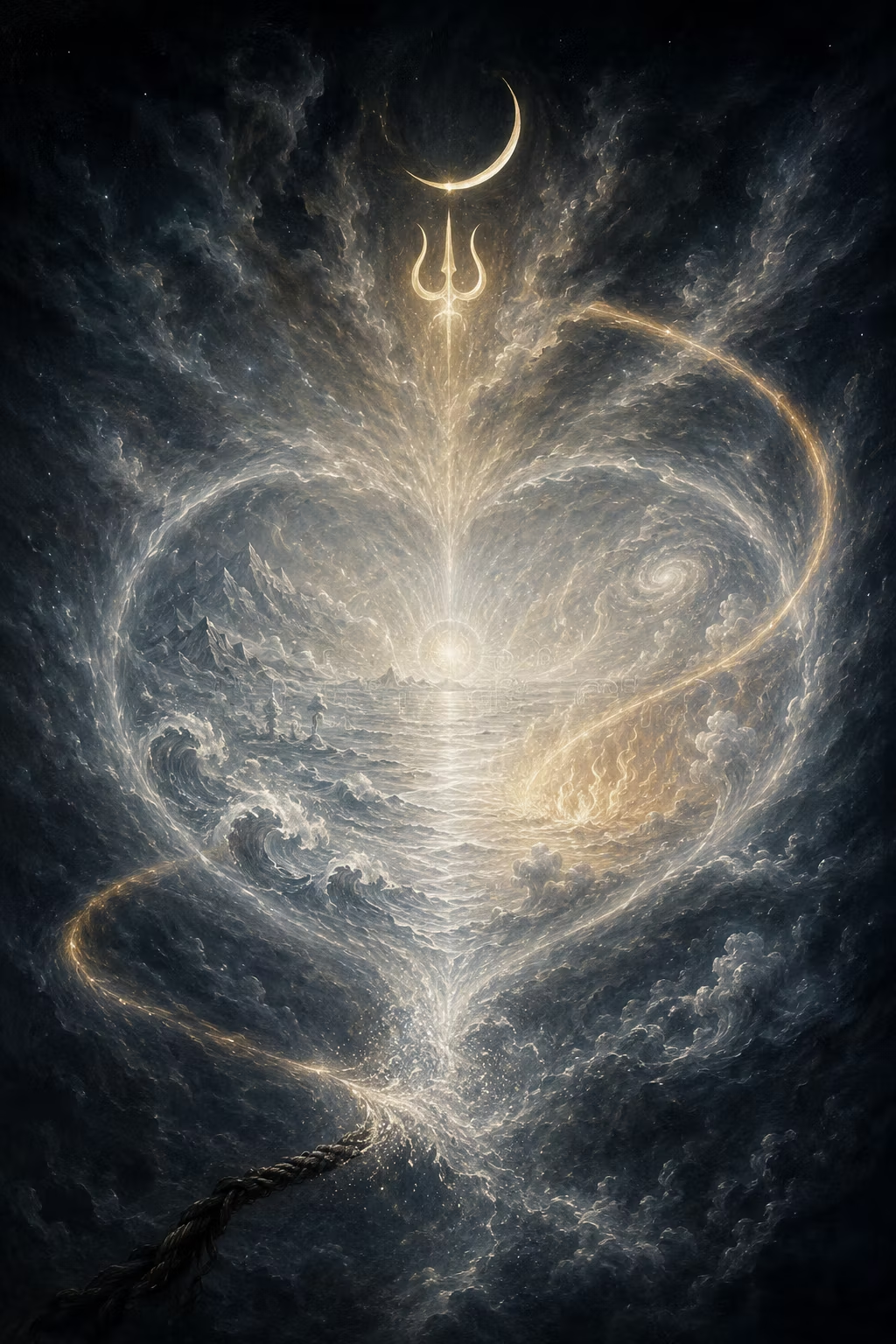
कैसे पता चले कि यह मार्ग सचमुच गहरा रहा है? अधिकांश परम्पराएँ उपलब्धियाँ गिनाती हैं; शिवसूत्र उत्तर देता है — विस्मय। इस योग के पड़ाव लोक और ज्योतियाँ नहीं, आश्चर्य है (१·१२) — अपने ही होने पर नित-नया, कभी न अघाने वाला अचम्भा। उसी पकाव में इच्छा भूख नहीं रहती — वह उमा कुमारी हो जाती है, स्वयं महेश्वर की क्रीड़ारत शक्ति (१·१३); देह — यहाँ तक कि मन और भीतर का शून्य भी — और दृश्यों जैसा एक दृश्य बन जाता है (१·१४); और दो द्वार खुलते हैं: चित्त हृदय में संघट्टित हो, तो दृश्य — और नींद का उसका अभाव भी — चैतन्य के अपने अंग-सा साक्षात् दिखता है (१·१५); या शुद्ध तत्त्व का संधान सधे, तो पशु को बाँधने वाली डोर बची ही नहीं रहती (१·१६)।
How do you know this path is actually deepening? Most traditions answer with attainments; the Shiv Sutras answer with wonder. The stages of this yoga are not planes and lights but astonishment (I.12) — ever-fresh amazement at your own being, never sated. In that ripening, desire stops being a hunger and becomes Uma the maiden, the Lord's own power at play (I.13); the body — even the mind, even the inner void — turns into scenery witnessed like any other sight (I.14); and two doorways open: press the mind into the heart, and the seen — and even its absence in sleep — is witnessed as awareness's own limb (I.15); or hold to the pure principle, and the leash of the bound beast simply is not there (I.16).
vismayo yogabhūmikāḥ ॥
विस्मय ही योग की भूमिकाएँ हैं — नित-नया आश्चर्य ही इस पथ के पड़ाव हैं।
Wonder is the stages of yoga — ever-new astonishment marks how far one has come.
सरल अर्थ: जैसे कोई अद्भुत वस्तु देखकर स्तब्ध रह जाता है, वैसे योगी अपने ही आत्मा के अखण्ड आनन्द पर बार-बार चकित होता है — 'अपरितृप्त', कभी न अघाने वाला। क्षेमराज साफ़ कहते हैं: भूमिकाएँ कन्द-बिन्दु आदि के अनुभव नहीं (नाड़ी-चक्रों के पड़ाव नहीं) — विस्मय ही कसौटी है। बहन-Hall विज्ञानभैरव में विस्मय स्वयं एक धारणा है (गुफा ११५)। In simple words: As one stands stunned before something extraordinary, the yogi is astonished again and again at the unbroken bliss of his own Self — 'unsated', never getting used to it. Kshemaraja is blunt: the stages are NOT experiences of subtle centres and drops — wonder itself is the measure. In the sibling Vigyan Bhairav Hall, wonder is itself a dharana (its Room 115).
icchā śaktir umā kumārī ॥
(ऐसे योगी की) इच्छा ही शक्ति है — उमा कुमारी, महेश्वर की क्रीड़ारत परा शक्ति।
(Such a yogi's) will is Shakti herself — Uma the maiden, the Lord's own supreme power at play.
सरल अर्थ: साधारण इच्छा किसी वस्तु की भूख है; पकाव में वही इच्छा परा शक्ति निकलती है — उमा, जो 'कुमारी' है: किसी और की भोग्य नहीं, विश्व की सृष्टि-संहार-क्रीड़ा में रत। क्षेमराज व्युत्पत्ति भी देते हैं: कु-मारी = भेद उठाने वाली माया-भूमि को मार देने वाली। In simple words: Ordinary desire is hunger for an object; ripened, that same will turns out to be the supreme Shakti — Uma, who is kumari: possessed by no other, absorbed in the play of making and dissolving worlds. Kshemaraja adds the etymology: ku-mari, 'she who slays' the soil of division (maya).
dṛśyaṁ śarīram ॥
(उसके लिए) सब दृश्य अपना शरीर है — और शरीर भी, नील आदि की तरह, एक दृश्य।
(For such a one) all that is seen is his own body — and the body itself, like the colour blue, just something seen.
सरल अर्थ: सूत्र दोनों ओर काटता है: बाहर-भीतर का हर दृश्य 'अहम् इदम्' — अपने अंग जैसा; और देह-बुद्धि-प्राण-शून्य तक सब 'दृश्य' — द्रष्टा नहीं। क्षेमराज यहीं विज्ञानभैरव उद्धृत करते हैं: 'जल की लहरें, अग्नि की लपटें, सूर्य की प्रभा — ये सब मुझ भैरव की ही विश्व-भंगियाँ हैं' (बहन-Hall की गुफा १०९ यही धारणा है)। In simple words: The sutra cuts both ways: everything seen, outer or inner, is 'I am this' — like one's own limb; and body, mind, breath, even the inner void are all 'seen' — never the seer. Kshemaraja quotes the Vigyan Bhairav right here: 'waves of water, flames of fire, light of the sun — all these are my own, Bhairav's, gestures of the universe' (the sibling Hall's Room 109 holds that very dharana).
hṛdaye cittasaṁghaṭṭād dṛśyasvāpadarśanam ॥
हृदय में चित्त के संघट्ट से — चंचल मन को चित्-प्रकाश में एकाग्र कर देने से — दृश्य और स्वाप (शून्य) दोनों यथावत् अपने अंग-रूप में प्रकाशित दिखते हैं।
By pressing the restless mind into the heart — the radiance of awareness in which everything rests — the seen world, and even its absence in sleep, are witnessed as one's own limbs, exactly as they are.
सरल अर्थ: 'हृदय' यहाँ छाती का अंग नहीं — 'विश्व की प्रतिष्ठा का स्थान', चित्-प्रकाश। चलते-भागते चित्त को बार-बार वहीं टिकाना = संघट्ट। क्षेमराज प्रमाण में विज्ञानभैरव की धारणा रखते हैं: 'हृदय-आकाश में आँखें विलीन कर…परम सौभाग्य मिलता है' — वही धारणा बहन-Hall की गुफा ४९ में जीवित है। In simple words: 'Heart' here is not the organ — it is 'the resting-place of the universe', the radiance of awareness itself. Sanghatta is pressing the darting mind home to it, again and again. Kshemaraja cites the Vigyan Bhairav as his proof-text: 'with the eyes dissolved in the heart's space… one attains the supreme fortune' — the very dharana alive in the sibling Hall's Room 49.
śuddhatattvasaṁdhānād vā 'paśuśaktiḥ ॥
अथवा शुद्ध तत्त्व के संधान से — 'सब कुछ परमशिवमय ही है' इस अनुसंधान से — पशु-शक्ति (बाँधने वाली शक्ति) रहती ही नहीं।
Or, by steady attention to the pure principle — 'all this is Paramashiv alone' — the binding power that makes a bound beast simply is not there.
सरल अर्थ: दूसरा द्वार, 'वा' — अथवा — से: हृदय-संघट्ट न सधे तो यह संधान साधो। पशु = बँधा जीव; उसकी 'शक्ति' = बाँधने वाली डोर। जिसका विश्व शिवमय हो गया, उसके लिए वह डोर 'अविद्यमान' — है ही नहीं। क्षेमराज फिर विज्ञानभैरव से: 'सारा देह चिन्मय है, या सारा जगत् — युगपत्, निर्विकल्प मन से भावित करो' । In simple words: A second door, marked by va — 'or': if pressing into the heart eludes you, hold this instead. Pashu is the bound beast — the ordinary self; its 'power' is the leash. For one whose universe has become Shiv through and through, that leash is avidyamana — simply not there. Kshemaraja again quotes the Vigyan Bhairav: 'contemplate the whole body, or the whole world, as made of awareness — all at once, with a thought-free mind.'
१·१५ स्वयं एक अभ्यास है, और क्षेमराज का इसके लिए प्रमाण-वचन विज्ञानभैरव की एक धारणा है। बलपूर्वक एकाग्रता नहीं — अवधान की हृदय-आकाश में बार-बार कोमल घर-वापसी, जब तक दृश्य-जगत् चैतन्य के भीतर विश्राम करता न दिखे।I.15 is itself a practice, and Kshemaraja's own proof-text for it is a Vigyan Bhairav dharana. Not concentration by force — a repeated, gentle homecoming of attention to the heart-space, until the seen world visibly rests inside awareness.
अवधि: Duration: १०–१५ मिनट10–15 minutes
क्या देखें: What to notice: हृदय-अवकाश तुम नहीं बनाते — वह मिलता है, पहले से खुला। और वहाँ जगत् मिटता नहीं; उसका पता बदल जाता है — 'मुझसे बाहर' से 'इसके भीतर'। पते की वही बदली १·१५ का स्वयं-प्रमाण है। (बहन-Hall विज्ञानभैरव इसे 'हृदय के आकाश में विश्राम' धारणा में साधता है, उसकी गुफा ४९।)The heart-space is not created by you — it is found, already open. And the world does not vanish there; it changes address, from 'outside me' to 'inside this'. That shift of address is I.15 verifying itself. (The sibling Vigyan Bhairav Hall guides this as 'Resting in the space of the heart', its Room 49.)
आज एक बार सच्चे विस्मय का क्षण पकड़ो — कोई रंग, कोई सदयता, कोई अचानक सौन्दर्य। उसका चित्र मत लो, नाम मत दो। स्वयं अचम्भे के भीतर एक श्वास भर और ठहरो। १·१२ का दावा: उस क्षण तुम पथ से भटके नहीं थे — उसकी एक भूमिका पर खड़े थे।
Once today, catch a moment of real wonder — a colour, a kindness, a sudden beauty. Do not photograph it, do not name it. Stay one breath longer inside the astonishment itself. I.12's claim: you were not distracted from the path in that moment — you were standing on one of its stages.