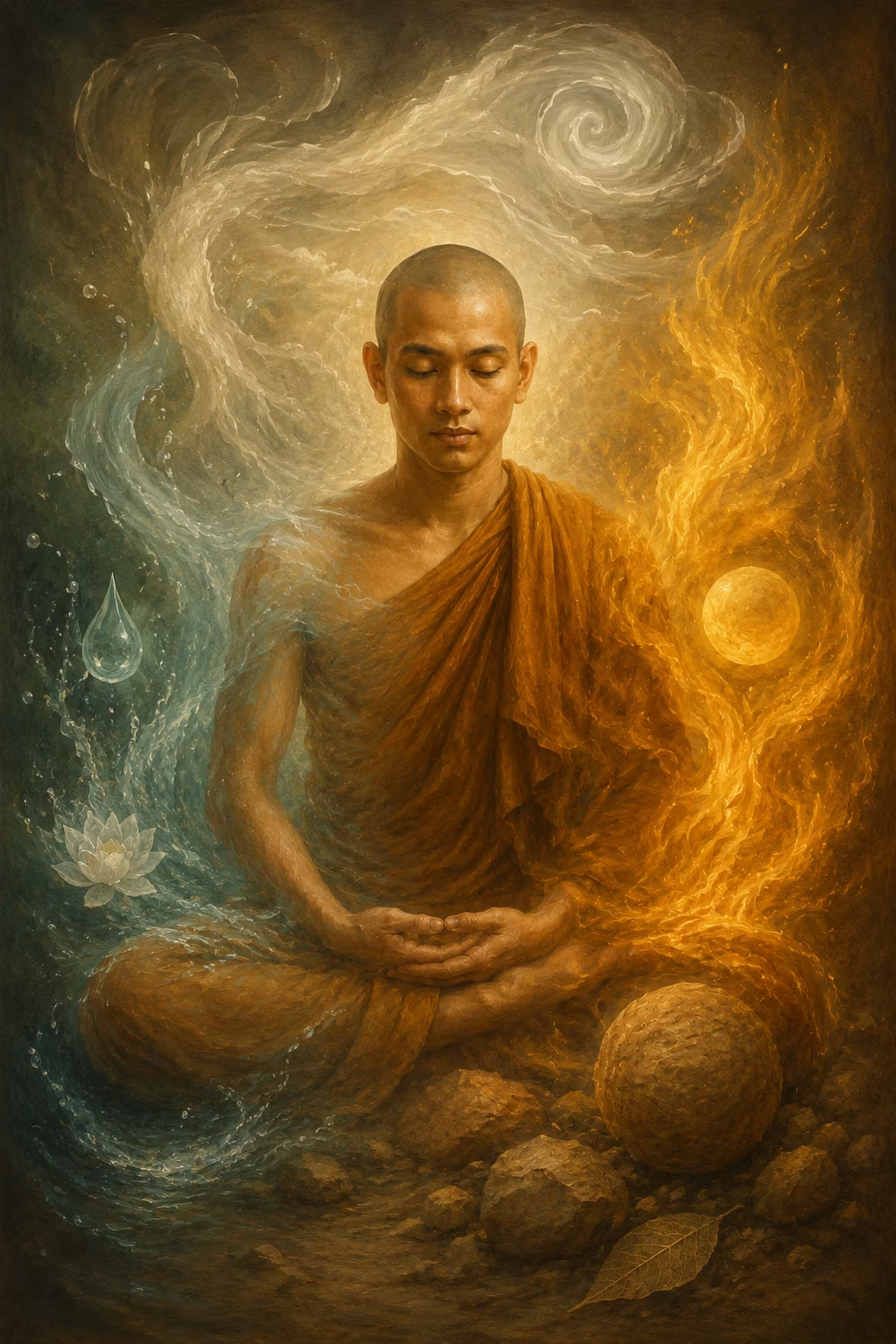
“The body as four elements — earth, water, fire, air.”
बैठी आकृति चार तत्त्व-आभाओं में घुलती हुई।
A seated figure dissolving into four elemental radiances.
तादात्म्य-भंग, अब शरीर-रचना से नहीं बल्कि तत्त्व-दृष्टि से। जिस भी मुद्रा में हो, भिक्षु इस काया को केवल चार धातुओं के रूप में देखता है: पृथ्वी (ठोसपन), जल (तरलता), तेज (ऊष्मा), वायु (गति)। जैसे कुशल कसाई गाय को काटकर अब ‘गाय’ नहीं, केवल माँस के अंश देखता है, वैसे ही साधक ‘काया, मेरी’ देखना छोड़कर केवल प्रकृति से उधार ली गई क्रियाएँ देखता है।
De-identification, now through physics rather than anatomy. Whatever posture it is in, the monk looks at this body as just four elements: earth (solidity), water (cohesion), fire (heat), air (movement). As a skilled butcher, having cut up a cow, no longer sees “a cow” but only portions of meat, so the meditator stops seeing “a body, mine” and sees only processes borrowed from nature.
“The body as four elements — earth, water, fire, air.”
बैठी आकृति चार तत्त्व-आभाओं में घुलती हुई।
A seated figure dissolving into four elemental radiances.
Puna caparaṁ, bhikkhave, bhikkhu imameva kāyaṁ yathāṭhitaṁ yathāpaṇihitaṁ dhātuso paccavekkhati:
और फिर भिक्षुओ! भिक्षु इस कायाको (इसकी) स्थितिके अनुसार (इसकी) रचनाके अनुसार देखता है—
Furthermore, a mendicant examines their own body, whatever its placement or posture, according to the elements:
सरल अर्थ: भिक्षु इस शरीर को, जिस भी अवस्था में हो, चार धातुओं (मूल तत्त्वों) के रूप में देखता है। In simple words: The monk examines this body, in whatever state or posture, in terms of the elements:
‘atthi imasmiṁ kāye pathavīdhātu āpodhātu tejodhātu vāyodhātū’ti.
इस कायामें हैं—पृथिवी धातु (=पृथिवी महाभूत), आप (=जल)-धातु, तेज (=अग्नि) धातु, वायु-धातु।
‘In this body there is the earth element, the water element, the fire element, and the air element.’
सरल अर्थ: ‘इस शरीर में पृथ्वी (ठोसपन), जल (तरलता), तेज (गरमी) और वायु (गति) — ये चार धातुएँ हैं।’ In simple words: ‘In this body there is the earth element, the water element, the fire element, and the air element.’
Seyyathāpi, bhikkhave, dakkho goghātako vā goghātakantevāsī vā gāviṁ vadhitvā catumahāpathe bilaso vibhajitvā nisinno assa.
जैसे भिक्षुओ, कोई कुशल कसाई या कसाई का शिष्य गाय को मारकर, उसके टुकड़े-टुकड़े करके, चौराहे पर बैठा हो —
It’s as if a deft butcher or butcher’s apprentice were to kill a cow and sit down at the crossroads with the meat cut into chops.
सरल अर्थ: जैसे कुशल कसाई गाय को काटकर टुकड़ों में बाँटे बैठा हो — ‘गाय’ का भाव मिट जाता है, बचते हैं केवल माँस के अंश; In simple words: Just as a skilled butcher, having killed a cow and cut it into portions, sits at a crossroads — the idea “cow” is gone, only meat remains;
Evameva kho, bhikkhave, bhikkhu imameva kāyaṁ yathāṭhitaṁ yathāpaṇihitaṁ dhātuso paccavekkhati:
इसी प्रकार भिक्षु इसी काया को — जैसी भी स्थित हो, जिस भी मुद्रा में हो — धातुओं की दृष्टि से देखता है:
In the same way, a monk examines this very body, in whatever posture, in terms of the elements:
सरल अर्थ: उसी तरह भिक्षु इस शरीर को धातुओं के रूप में देखता है। In simple words: in the same way the monk examines this very body in terms of the elements:
‘atthi imasmiṁ kāye pathavīdhātu āpodhātu tejodhātu vāyodhātū’ti.
‘इस काया में पृथ्वी-धातु, आप-धातु, तेज-धातु और वायु-धातु है।’
‘In this body there is the earth element, the water element, the fire element, and the air element.’
सरल अर्थ: ‘इस शरीर में पृथ्वी, जल, तेज और वायु — ये चार धातुएँ हैं।’ In simple words: ‘In this body there is the earth, water, fire, and air element.’
Iti ajjhattaṁ vā kāye kāyānupassī viharati …pe…
इस प्रकार वह भीतर काया में काया का अनुदर्शन करता हुआ विहरता है …(पूर्ववत्)…
And so they meditate observing an aspect of the body internally …
सरल अर्थ: वही अन्तर्दृष्टि-सार — भीतर/बाहर, उदय-व्यय, केवल ‘काया है’ — जो हर अनुदर्शन को पूरा करता है (देखें आनापान)। In simple words: The same insight refrain — internal/external, arising-passing, just ‘there is a body’ — that closes every contemplation (see Breathing).
evampi kho, bhikkhave, bhikkhu kāye kāyānupassī viharati.
इस प्रकार भी, भिक्षुओ, भिक्षु काया में काया का अनुदर्शन करता हुआ विहरता है।
That too is how a mendicant meditates by observing an aspect of the body.
सरल अर्थ: इस प्रकार भी भिक्षु शरीर में शरीर को देखता हुआ रहता है। In simple words: That too is how a monk keeps observing the body as body.
Dhātumanasikārapabbaṁ niṭṭhitaṁ.
धातु-मनसिकार-पब्ब (धातुओं पर मनसिकार का खण्ड) समाप्त हुआ।
The section on the elements is finished.
सरल अर्थ: (धातु-मनसिकार-पब्ब (धातुओं पर मनसिकार का खण्ड) समाप्त।) In simple words: (End of the section on the elements.)
एक और तादात्म्य-भंग, पर सीधी अनुभूति से: काया को पृथ्वी (कठोरता), जल (गीलापन/बहाव), तेज (गरमी), वायु (गति) के रूप में महसूस करना। ठोस, अपना ‘मैं’ क्रियाओं में घुल जाता है।Another de-identification, but through direct sensation: feeling the body as earth (hardness), water (wetness/flow), fire (warmth), air (movement). The solid, owned “me” softens into processes.
क्या देखें: What to notice: ज्यों-ज्यों चार धातुएँ सामने आती हैं, ठोस, अपनी काया का भाव बदलती अनुभूतियों में घुलता है। ध्यान दो कि यहाँ अनुभव है, पर उसके केन्द्र में किसी ‘स्वामी’ की ज़रूरत नहीं।As the four elements come forward, the sense of a solid, owned body softens into changing sensations. Notice there is experience here, with no owner needed at its centre.