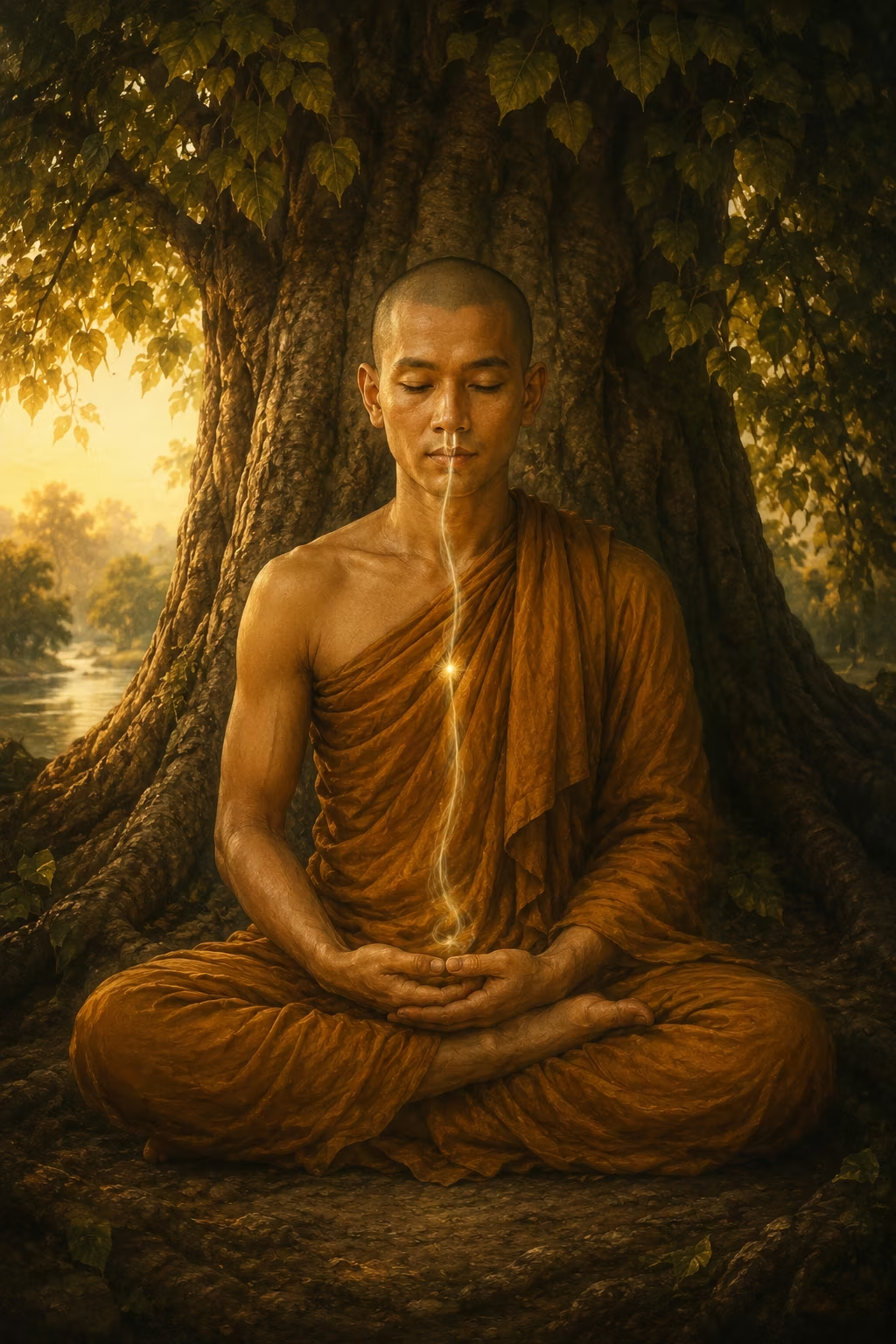
“Just knowing the breath — in, out, and the still gap between.”
वृक्ष-मूल में भिक्षु; साँस प्रकाश की डोर, गैप में एक स्थिर बिंदु।
A bhikkhu at a tree-root; the breath a thread of light, a still point in the gap.
काया का पहला अनुदर्शन — और सभी का आधार। बुद्ध पहले बाहरी रूप देते हैं — एकान्त स्थान, सीधी बैठक, सामने लाई गई स्मृति — और फिर अभ्यास स्वयं: साँस को जैसी है वैसा ही जान लेना — लम्बी, छोटी, पूरी, और शान्त होती साँस। साँस में कुछ जोड़ा नहीं जाता; केवल जाना जाता है। जैसे कुशल खरादी लम्बा या छोटा घुमाव ठीक-ठीक जानता है, वैसे ही साधक हर साँस को जानता है।
The first contemplation of the body — and the ground of them all. The Buddha gives the outer form (a quiet place, an upright seat, mindfulness brought to the fore), then the practice itself: simply knowing the breath as it is — long, short, the whole breath, and the breath growing calm. Nothing is added to the breath; it is only known. As a skilled turner knows each long or short pull of the lathe, so the meditator knows each breath.
“Just knowing the breath — in, out, and the still gap between.”
वृक्ष-मूल में भिक्षु; साँस प्रकाश की डोर, गैप में एक स्थिर बिंदु।
A bhikkhu at a tree-root; the breath a thread of light, a still point in the gap.
Kathañca, bhikkhave, bhikkhu kāye kāyānupassī viharati?
भिक्षुओ! कैसे भिक्षु कायामें, कायानुपश्यी हो विहरता है?
And how does a mendicant meditate observing an aspect of the body?
सरल अर्थ: और भिक्षु शरीर में शरीर को कैसे देखता है? In simple words: And how does a monk keep observing the body as body?
Idha, bhikkhave, bhikkhu araññagato vā rukkhamūlagato vā suññāgāragato vā nisīdati, pallaṅkaṁ ābhujitvā, ujuṁ kāyaṁ paṇidhāya, parimukhaṁ satiṁ upaṭṭhapetvā.
भिक्षुओ! भिक्षु अरण्यमें, वृक्षके नीचे, या शून्यागारमें, आसन मारकर, शरीरको सीधाकर, स्मृतिको सामने रखकर बैठता है।
It’s when a mendicant—gone to a wilderness, or to the root of a tree, or to an empty hut—sits down cross-legged, sets their body straight, and brings mindfulness to the present.
सरल अर्थ: भिक्षु किसी एकान्त स्थान — जंगल, पेड़ के नीचे या सूने कमरे — में जाकर पालथी मारकर बैठता है, कमर सीधी रखता है, और सजगता को साँस पर, सामने, टिका देता है। In simple words: A monk goes to a quiet place — a forest, the foot of a tree, or an empty room — sits down cross-legged, keeps the back straight, and settles mindfulness right in front, on the breath.
So satova assasati, satova passasati.
वह स्मरण रखते साँस छोड़ता है, स्मरण रखते ही साँस लेता है।
Just mindful, they breathe in. Mindful, they breathe out.
सरल अर्थ: वह सजग रहकर ही साँस लेता है, सजग रहकर ही छोड़ता है। In simple words: Just mindful, he breathes in; just mindful, he breathes out.
Dīghaṁ vā assasanto ‘dīghaṁ assasāmī’ti pajānāti, dīghaṁ vā passasanto ‘dīghaṁ passasāmī’ti pajānāti,
लम्बी साँस छोड़ते वक्त, ‘लम्बी साँस छोड़ता हूँ’—जानता है। लम्बी साँस लेते वक्त, ‘लम्बी साँस लेता हूँ’—जानता है।
Breathing in heavily they know: ‘I’m breathing in heavily.’ Breathing out heavily they know: ‘I’m breathing out heavily.’
सरल अर्थ: लम्बी साँस लेते हुए जानता है ‘लम्बी ले रहा हूँ’; लम्बी छोड़ते हुए ‘लम्बी छोड़ रहा हूँ’। In simple words: Breathing in long, he knows ‘I am breathing in long’; breathing out long, he knows ‘I am breathing out long.’
rassaṁ vā assasanto ‘rassaṁ assasāmī’ti pajānāti, rassaṁ vā passasanto ‘rassaṁ passasāmī’ti pajānāti.
छोटी साँस छोड़ते, ‘छोटी साँस छोड़ता हूँ’—जानता है। छोटी साँस लेते ‘छोटी साँस लेता हूँ’—जानता है।
When breathing in lightly they know: ‘I’m breathing in lightly.’ Breathing out lightly they know: ‘I’m breathing out lightly.’
सरल अर्थ: छोटी साँस लेते हुए जानता है ‘छोटी ले रहा हूँ’; छोटी छोड़ते हुए ‘छोटी छोड़ रहा हूँ’। In simple words: Breathing in short, he knows ‘I am breathing in short’; breathing out short, he knows ‘I am breathing out short.’
‘Sabbakāyapaṭisaṁvedī assasissāmī’ti sikkhati, ‘sabbakāyapaṭisaṁvedī passasissāmī’ti sikkhati.
सारी कायाको जानते (=अनुभव करते) हुये, साँस छोड़ना सीखता है। सारी कायाको जानते हुये साँस लेना सीखता है।
They practice like this: ‘I’ll breathe in experiencing the whole body.’ They practice like this: ‘I’ll breathe out experiencing the whole body.’
सरल अर्थ: ‘पूरी साँस को आदि से अन्त तक महसूस करते हुए साँस लूँगा/छोड़ूँगा’ — ऐसा अभ्यास करता है। In simple words: He trains: ‘Feeling the whole breath from start to finish, I will breathe in; feeling the whole breath, I will breathe out.’
‘Passambhayaṁ kāyasaṅkhāraṁ assasissāmī’ti sikkhati, ‘passambhayaṁ kāyasaṅkhāraṁ passasissāmī’ti sikkhati.
कायाके संस्कार (=गति, क्रिया)को शांत करते साँस छोड़ना सीखता है। कायाके संस्कारको शांत करते साँस लेना सीखता है।
They practice like this: ‘I’ll breathe in stilling the physical process.’ They practice like this: ‘I’ll breathe out stilling the physical process.’
सरल अर्थ: ‘साँस की हलचल को शान्त करते हुए साँस लूँगा/छोड़ूँगा’ — ऐसा अभ्यास करता है (साँस अपने आप सूक्ष्म होती जाती है)। In simple words: He trains: ‘Calming the breathing itself, I will breathe in; calming it, I will breathe out’ — and the breath grows quiet of its own accord.
Seyyathāpi, bhikkhave, dakkho bhamakāro vā bhamakārantevāsī vā dīghaṁ vā añchanto ‘dīghaṁ añchāmī’ti pajānāti, rassaṁ vā añchanto ‘rassaṁ añchāmī’ti pajānāti;
जैसे कि—भिक्षुओ! एक चतुर खरादकार (=भ्रमकार) था खरादकारका अन्तेवासी, लम्बे (काष्ठ)को रँगते समय ‘लम्बा रँगता हूँ’—जानता है। छोटेको रँगते समय ‘छोटा रँगता हूँ’—जानता है।
It’s like a deft carpenter or carpenter’s apprentice. When making a deep cut they know: ‘I’m making a deep cut,’ and when making a shallow cut they know: ‘I’m making a shallow cut.’
सरल अर्थ: जैसे कुशल खरादी लम्बा या छोटा घुमाव लेते हुए ठीक-ठीक जानता है — वैसे ही साधक अपनी साँस को जानता है। In simple words: Just as a skilled lathe-turner, or his apprentice, making a long pull knows ‘I am making a long pull,’ and making a short pull knows ‘I am making a short pull’—
evameva kho, bhikkhave, bhikkhu dīghaṁ vā assasanto ‘dīghaṁ assasāmī’ti pajānāti, dīghaṁ vā passasanto ‘dīghaṁ passasāmī’ti pajānāti, rassaṁ vā assasanto ‘rassaṁ assasāmī’ti pajānāti, rassaṁ vā passasanto ‘rassaṁ passasāmī’ti pajānāti;
ऐसेही भिक्षुओ! भिक्षु लम्बी साँस छोड़ते ०, लम्बी साँस लेते ०, छोटी साँस छोड़ते ०, छोटी साँस लेते ० जानता है।
In the same way, breathing in long he knows it is long, breathing out long he knows it is long; breathing in short he knows it is short, breathing out short he knows it is short;
सरल अर्थ: इसी तरह साधक भी अपनी लम्बी और छोटी साँस को वैसे ही ठीक-ठीक जानता रहता है। In simple words: In the same way, breathing in long he knows it is long, breathing out long he knows it is long; breathing in short he knows it is short, breathing out short he knows it is short;
‘sabbakāyapaṭisaṁvedī assasissāmī’ti sikkhati, ‘sabbakāyapaṭisaṁvedī passasissāmī’ti sikkhati;
सारी कायाको जानते (=अनुभव करते) हुये साँस छोड़ना सीखता है, ० साँस लेना ०।
he trains to breathe in and out experiencing the whole breath;
सरल अर्थ: ‘पूरी साँस को महसूस करते हुए साँस लूँगा/छोड़ूँगा’ — ऐसा अभ्यास करता है। In simple words: he trains to breathe in and out experiencing the whole breath;
‘passambhayaṁ kāyasaṅkhāraṁ assasissāmī’ti sikkhati, ‘passambhayaṁ kāyasaṅkhāraṁ passasissāmī’ti sikkhati.
काय-संस्कारको शांत करते साँस छोड़ना सीखता है; ० साँस लेना ०।
he trains to breathe in and out calming the breath.
सरल अर्थ: ‘साँस की हलचल को शान्त करते हुए साँस लूँगा/छोड़ूँगा’ — ऐसा अभ्यास करता है। In simple words: he trains to breathe in and out calming the breath.
Iti ajjhattaṁ vā kāye kāyānupassī viharati, bahiddhā vā kāye kāyānupassī viharati, ajjhattabahiddhā vā kāye kāyānupassī viharati;
इस प्रकार कायाके भीतरी भागमें कायानुपश्यी हो विहरता है। कायाके बाहरी भागमें ०। कायाके भीतरी और बाहरी भागमें कायानुपश्यी विहरता है।
And so they meditate observing an aspect of the body internally, externally, and both internally and externally.
सरल अर्थ: इस तरह वह इस देखने को अपनी काया में, दूसरों की काया में, और दोनों में लगाता है। In simple words: So he keeps observing the body as body internally, externally, and both.
samudayadhammānupassī vā kāyasmiṁ viharati, vayadhammānupassī vā kāyasmiṁ viharati, samudayavayadhammānupassī vā kāyasmiṁ viharati.
कायामें समुदय (=उत्पत्ति) धर्मको देखता विहरता है। कायामें व्यय (=खर्च, विनाश) धर्मको देखता विहरता है। कायामें समुदय-व्यय (=उत्पत्ति-विनाश) धर्मको देखता विहरता है।
They meditate observing , with respect to the body, the liability to originate, to vanish, and to originate and vanish.
सरल अर्थ: वह देखता है कि काया में सब कुछ उठता है, मिटता है, उठता-और-मिटता रहता है। In simple words: He observes how, in the body, phenomena arise, vanish, and both arise and vanish.
‘Atthi kāyo’ti vā panassa sati paccupaṭṭhitā hoti. Yāvadeva ñāṇamattāya paṭissatimattāya anissito ca viharati, na ca kiñci loke upādiyati.
‘काया है’—यह स्मृति, ज्ञान और स्मृतिके प्रमाणके लिये उपस्थित रहती है। (तृष्णा आदिमें) अ-लग्न हो विहरता है। लोकमें कुछ भी (मैं, और मेरा करके) नहीं ग्रहण करता।
Or mindfulness is established that the body exists, to the extent necessary for knowledge and mindfulness. They meditate independent, not grasping at anything in the world.
सरल अर्थ: ‘बस काया है’ — इतनी सजगता टिकी रहती है, केवल जानने और स्मरण-भर के लिये; वह किसी सहारे के बिना रहता है और संसार में किसी चीज़ से नहीं चिपकता। In simple words: ‘There is a body’ — mindfulness is established just enough for knowing and remembering; he abides independent, clinging to nothing in the world.
Evampi kho, bhikkhave, bhikkhu kāye kāyānupassī viharati.
इस प्रकार भी भिक्षुओ! भिक्षु कायामें काय बुद्धि रखते विहरता है।
That’s how a mendicant meditates by observing an aspect of the body.
सरल अर्थ: इस प्रकार भी भिक्षु शरीर में शरीर को देखता हुआ रहता है। In simple words: That too is how a monk keeps observing the body as body.
Ānāpānapabbaṁ niṭṭhitaṁ.
आनापान-पब्ब (श्वास-अनुदर्शन खण्ड) समाप्त हुआ।
The section on breathing is finished.
सरल अर्थ: (आनापान खण्ड समाप्त।) In simple words: (End of the section on mindfulness of breathing.)
पूरे सुत्त का मूल ध्यान: साँस को वश में करना नहीं, बल्कि जैसी है वैसी जान लेना। इसी एक सरल, सुरक्षित आधार से मन की स्थिरता बढ़ती है।The root meditation of the whole sutta: not to control the breath but to know it, exactly as it is. Steadiness of attention grows from this one simple, safe anchor.
अवधि: Duration: १०–२० मिनट10–20 minutes
क्या देखें: What to notice: दो बातें बढ़ती हैं: साँस शान्त होती जाती है, और भटकाव के अन्तराल छोटे होते जाते हैं। तुम्हें विचार रोकना नहीं है — केवल साँस को जानना है। देखो कि केवल जान लेना ही पूरे मन को कैसे स्थिर करता है।Two things grow: the breath becomes quieter, and the gaps of distraction get shorter. You are not trying to stop thought — only to know the breath. Watch how simply knowing steadies the whole mind.
सावधानी: Take care: यह निष्क्रिय रूप — साँस को जानना, कभी ज़बरदस्ती न करना — सबके लिये सुरक्षित है। यदि आघात या घबराहट का इतिहास हो और साँस पर ध्यान बेचैन करे, तो आँखें खोल लो, आसन से शरीर के स्पर्श को महसूस करो, और अभ्यास छोटा रखो; लम्बे अभ्यास हेतु शिविर या शिक्षक सहायक है।This passive form — knowing the breath, never forcing it — is safe for everyone. If you have a history of trauma or panic and breath-focus feels agitating, open the eyes, feel the body’s contact with the seat instead, and keep it brief; a retreat or teacher helps for longer sits.
अभी दस मिनट बैठो और केवल साँस को जानो — भीतर, बाहर, लम्बी, छोटी। कुछ गिनो मत; कुछ जोड़ो मत। बाद में एक ही प्रश्न पूछो: क्या अन्त में साँस आरम्भ से अधिक शान्त थी? वह छोटा, प्रत्यक्ष परिवर्तन — चलाई हुई साँस से केवल जानी हुई साँस तक — लघु रूप में पूरा सुत्त है।
Sit for ten minutes now and only know the breath — in, out, long, short. Count nothing; add nothing. Afterwards ask one question: was the breath at the end quieter than at the start? That small, verifiable shift — from a breath you drove to a breath you simply knew — is the whole sutta in miniature.