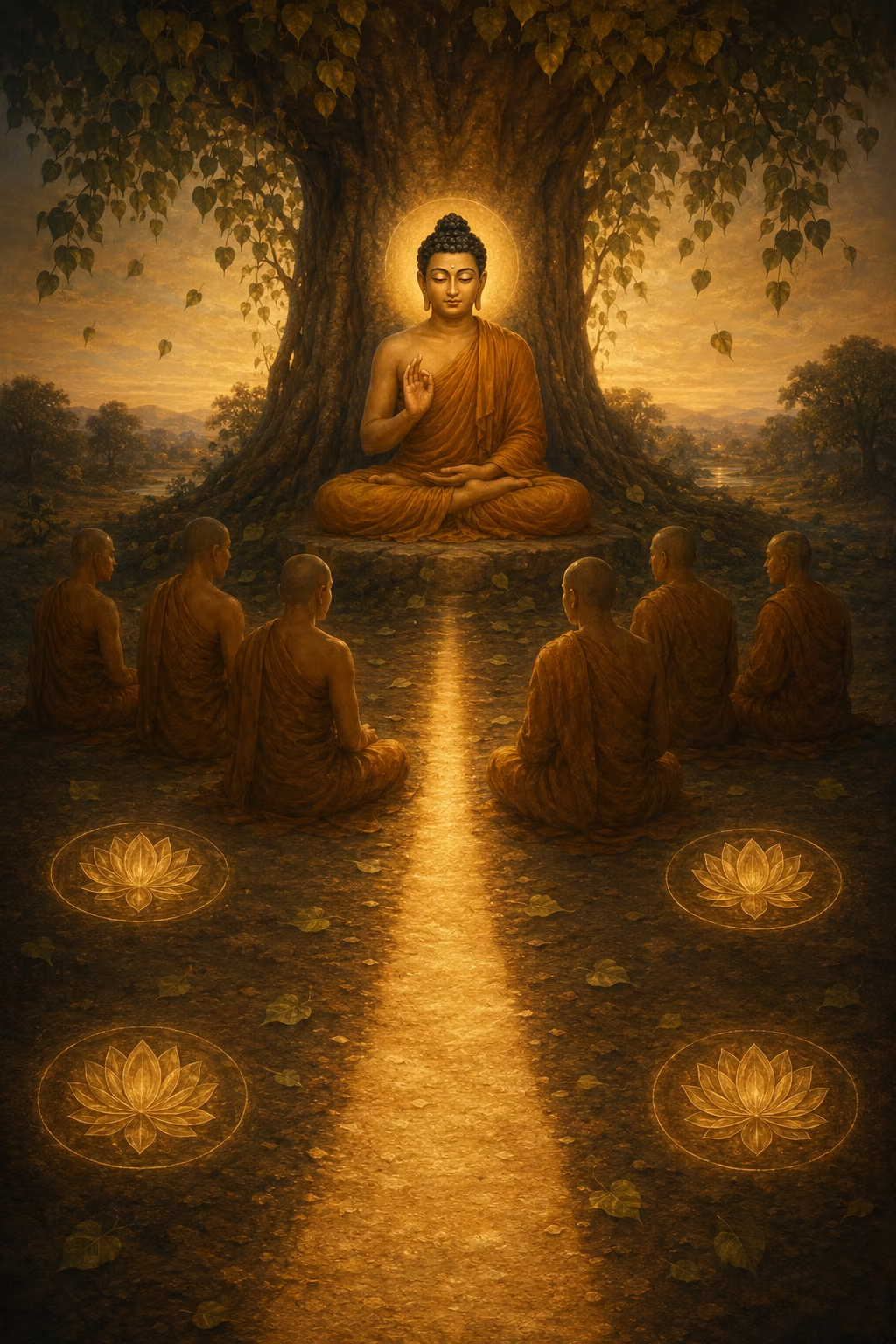
“One straight path — the four foundations of mindfulness.”
बुद्ध एक सीधा मार्ग सिखाते हैं; चार कमल-दीप = काया, वेदना, चित्त, धर्म।
The Buddha teaches the one direct path; four lotus-lights = body, feeling, mind, dhamma.
कुरु-देश के कम्मासधम्म नगर में बुद्ध भिक्षुओं को सम्बोधित करते हैं, और आरम्भ ही चौंका देने वाली सीधी घोषणा से करते हैं: एक मार्ग है जो सीधा ले जाता है — प्राणियों की विशुद्धि, शोक-विलाप के पार, दुःख-दौर्मनस्य के अस्त, ज्ञान की प्राप्ति और निर्वाण के साक्षात्कार तक — अर्थात् स्मृति की चार आधारशिलाएँ (चत्तारो सतिपट्ठाना)। आगे का पूरा सुत्त इसी एक वाक्य की कार्य-पुस्तिका है।
Among the Kurus, at the town of Kammasadhamma, the Buddha addresses the bhikkhus and opens with a claim of startling directness: there is a path that goes one way — to the purification of beings, the passing of sorrow, the ending of pain, the attainment of the way, the realization of nibbana — namely, the four foundations of mindfulness. Everything that follows in the sutta is the working manual for exactly this sentence.
“One straight path — the four foundations of mindfulness.”
बुद्ध एक सीधा मार्ग सिखाते हैं; चार कमल-दीप = काया, वेदना, चित्त, धर्म।
The Buddha teaches the one direct path; four lotus-lights = body, feeling, mind, dhamma.
Evaṁ me sutaṁ—
ऐसा मैंने सुना—
So I have heard.
सरल अर्थ: ऐसा मैंने (आनन्द ने) सुना — हर सुत्त इसी वचन से खुलता है। In simple words: 'So I have heard' — every discourse opens with these words of Ānanda, who heard them from the Buddha.
ekaṁ samayaṁ bhagavā kurūsu viharati kammāsadhammaṁ nāma kurūnaṁ nigamo.
एक समय भगवान् कुरु (देश)में कुरुओंके निगम (=कस्बा) कम्मास-दम्ममें विहार करते थे।
At one time the Buddha was staying in the land of the Kurus, near the Kuru town named Kammāsadamma.
सरल अर्थ: एक बार बुद्ध कुरु-जनपद के कम्मासधम्म नामक क़स्बे में ठहरे थे। In simple words: Once the Buddha was staying at Kammāsadhamma, a town in the Kuru country.
Tatra kho bhagavā bhikkhū āmantesi:
वहाँ भगवान्ने भिक्षुओंको संबोधित किया—
There the Buddha addressed the mendicants,
सरल अर्थ: वहाँ बुद्ध ने भिक्षुओं को पुकारा— In simple words: There the Buddha called out to the monks—
“bhikkhavo”ti.
“भिक्षुओ!”
“Mendicants!”
सरल अर्थ: “भिक्षुओ!” In simple words: “Monks!”
“Bhadante”ti te bhikkhū bhagavato paccassosuṁ.
“भदन्त!” (कह) भिक्षुओंने भगवान्को उत्तर दिया।
“Venerable sir,” they replied.
सरल अर्थ: “जी भन्ते!” भिक्षुओं ने उत्तर दिया। In simple words: “Yes, sir!” the monks replied.
Bhagavā etadavoca:
भगवान् ने यह कहा—
The Buddha said this:
सरल अर्थ: तब बुद्ध ने यह कहा— In simple words: The Buddha said this—
“Ekāyano ayaṁ, bhikkhave, maggo sattānaṁ visuddhiyā, sokaparidevānaṁ samatikkamāya, dukkhadomanassānaṁ atthaṅgamāya, ñāyassa adhigamāya, nibbānassa sacchikiriyāya, yadidaṁ cattāro satipaṭṭhānā.
“भिक्षुओ! यह जो चार स्मृति-प्रस्थान (=सति-पट्ठान) हैं, वह सर्वोंके—शोक कष्टकी विशुद्धिके लिए; दुःख=दौर्मनस्यके अतिक्रमणके लिये, न्याय (=सत्य)की प्राप्तिके लिये, निर्वाणकी प्राप्ति और साक्षात्करनेके लिये, एकायन (=अकेला) मार्ग है।
“Mendicants, the four kinds of mindfulness meditation are the path to convergence. They are in order to purify sentient beings, to get past sorrow and crying, to make an end of pain and sadness, to discover the system, and to realize extinguishment.
सरल अर्थ: यह एक ही सीधा मार्ग है — मन को शुद्ध करने, शोक-विलाप के पार जाने, दुःख मिटाने और निर्वाण तक पहुँचने का: वे हैं चार सतिपट्ठान (स्मृति की चार नींव)। In simple words: This is the one direct path — to purify the mind, cross beyond sorrow and grief, end suffering, and realize nibbāna: the four foundations of mindfulness.
Katame cattāro?
कौनसे चार?—
What four?
सरल अर्थ: वे चार कौन-से? In simple words: Which four?
Idha, bhikkhave, bhikkhu kāye kāyānupassī viharati ātāpī sampajāno satimā, vineyya loke abhijjhādomanassaṁ;
भिक्षुओ! वहाँ (इस धर्ममें) भिक्षु कायामें काय-अनुपश्यी हो, उद्योगशील अनुभव (=संप्रजन्य) ज्ञान-युक्त, स्मृति-मान्, लोक (=संसार या शरीर)में अभिध्या (=लोभ) और दौर्मनस्य (=दुःख)-को हटाकर विहरता है।
It’s when a mendicant meditates by observing an aspect of the body—keen, aware, and mindful, rid of covetousness and displeasure for the world.
सरल अर्थ: यहाँ भिक्षु शरीर में शरीर को देखता हुआ रहता है — उत्साही, पूरी सजगता और स्मृति के साथ, संसार का लोभ और खेद हटाकर। In simple words: Here a monk keeps observing the body as body — ardent, fully aware, mindful — having put aside longing and aversion toward the world.
vedanāsu vedanānupassī viharati ātāpī sampajāno satimā, vineyya loke abhijjhādomanassaṁ;
वेदनाओं (=सुखादि)में वेदनानुपश्यी हो ० विहरता है।
They meditate observing an aspect of feelings—keen, aware, and mindful, rid of covetousness and displeasure for the world.
सरल अर्थ: वेदनाओं (सुख-दुःख की अनुभूतियों) में वेदना को देखता हुआ रहता है — उसी सजगता के साथ। In simple words: He keeps observing feelings as feelings — with that same awareness.
citte cittānupassī viharati ātāpī sampajāno satimā, vineyya loke abhijjhādomanassaṁ;
चित्तमें चित्तानुपश्यी ०।
They meditate observing an aspect of the mind—keen, aware, and mindful, rid of covetousness and displeasure for the world.
सरल अर्थ: चित्त (मन की दशा) में चित्त को देखता हुआ रहता है — उसी सजगता के साथ। In simple words: He keeps observing the mind as mind — with that same awareness.
dhammesu dhammānupassī viharati ātāpī sampajāno satimā, vineyya loke abhijjhādomanassaṁ.
धर्मोंमें धर्मानुपश्यी ०।
They meditate observing an aspect of principles—keen, aware, and mindful, rid of covetousness and displeasure for the world.
सरल अर्थ: धर्मों (मन के विषयों/अनुभव के नियमों) में धर्म को देखता हुआ रहता है — उसी सजगता के साथ। In simple words: He keeps observing dhammas (mental objects) as dhammas — with that same awareness.
Uddeso niṭṭhito.
उद्देश (संक्षिप्त निरूपण) समाप्त हुआ।
The summary is finished.
सरल अर्थ: (उद्देश — संक्षिप्त भूमिका — समाप्त।) In simple words: (End of the summary section.)
किसी भी तकनीक से पहले सुत्त एक ही सामर्थ्य माँगता है: सचमुच वहाँ होना जहाँ तुम हो, यह जानते हुए कि क्या हो रहा है। यह छोटा-सा अभ्यास वही गढ़ता है।Before any technique, the sutta asks for one capacity: to actually be where you are, knowing what is happening. This smallest practice builds exactly that.
क्या देखें: What to notice: ध्यान दो कि कितना कुछ हो रहा था जिससे तुम अनजान थे — और केवल जान लेने से क्षण की बनावट कैसे बदल जाती है। यही बीज-रूप में सति है।Notice how much was happening that you were not aware of — and how the simple act of knowing changes the texture of the moment. That is sati, in seed.
सुत्त एक वचन पर पूर्ण होता है: पूर्ण अभ्यास से यह मार्ग सात वर्षों में — या सात दिनों में — फल देता है। आज पाँच बार तीन-श्वास जाँच करो, और शाम को पूछो: क्या मैं कल से अधिक 'यहाँ' था? जो ढाल तुम्हें दिखे, वही वचन का आरम्भ है।
The sutta ends with a promise: practised fully, this path bears fruit in seven years — or seven days. Today, do the three-breath check-in five times, and in the evening ask: was I more here than yesterday? The gradient you notice is the promise beginning.