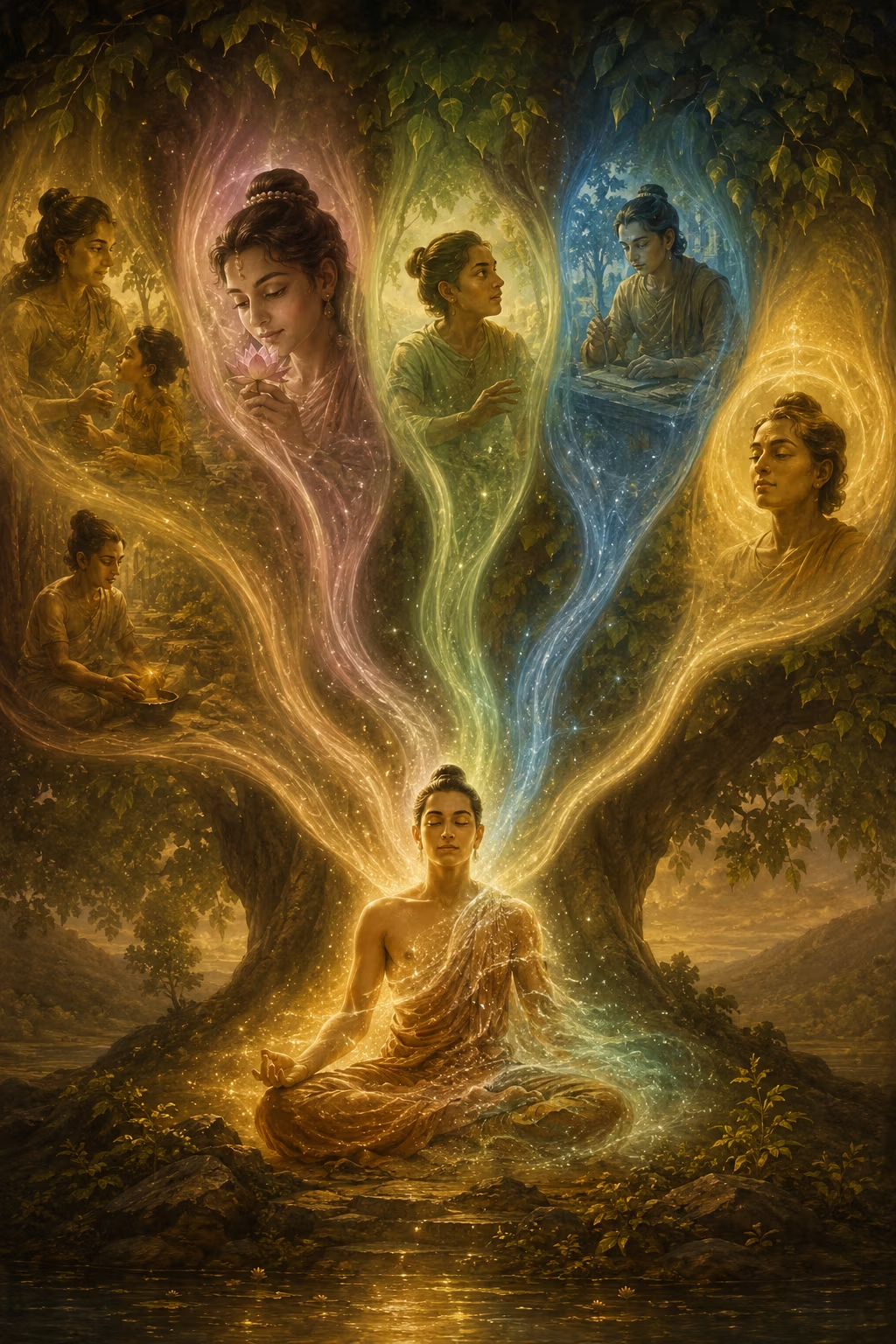
“What we call 'I' — five processes, each arising and passing.”
आकृति पाँच प्रकाश-धाराओं में विभक्त होती।
A figure resolving into five streams of light.
जिसे हम ‘मैं’ कहते हैं वह वस्तुतः पाँच प्रक्रियाओं का पुंज है: रूप (काया), वेदना, संज्ञा (पहचान), संस्कार (विचार, प्रतिक्रियाएँ, संकल्प), और विज्ञान (चेतना)। यहाँ भिक्षु हर स्कन्ध का चिन्तन करता है — “यह रूप है, यह उसका उदय, यह उसका अस्त” — और वैसे ही शेष चार का। अनुभव को इन पाँच में — प्रत्येक अनित्य — छँटता देख, इनके पीछे एक अकेले स्वामी का ठोस भाव ढीला पड़ता है।
What we call “I” is really five processes bundled together: form (the body), feeling, perception, mental formations (thoughts, reactions, will), and consciousness. Here the monk contemplates each aggregate — “such is form, such is its arising, such is its passing” — and the same for the other four. Seeing experience sort itself into these five, each impermanent, loosens the solid sense of a single owner behind them.
“What we call 'I' — five processes, each arising and passing.”
आकृति पाँच प्रकाश-धाराओं में विभक्त होती।
A figure resolving into five streams of light.
Puna caparaṁ, bhikkhave, bhikkhu dhammesu dhammānupassī viharati pañcasu upādānakkhandhesu.
फिर आगे, भिक्षुओ, भिक्षु पाँच उपादान-स्कन्धों (आसक्ति के पाँच पुंजों) के सम्बन्ध में धर्मों में धर्म का अनुदर्शन करता हुआ विहरता है।
Furthermore, a mendicant meditates by observing an aspect of principles with respect to the five grasping aggregates.
सरल अर्थ: वह पाँच उपादान-स्कन्धों (जिनसे ‘मैं’ बनता है) के सम्बन्ध में धर्मों को देखता है। In simple words: He observes principles with respect to the five grasping aggregates.
Kathañca pana, bhikkhave, bhikkhu dhammesu dhammānupassī viharati pañcasu upādānakkhandhesu?
और किस प्रकार, भिक्षुओ, भिक्षु पाँच उपादान-स्कन्धों के सम्बन्ध में धर्मों में धर्म का अनुदर्शन करता हुआ विहरता है?
And how does a mendicant meditate observing an aspect of principles with respect to the five grasping aggregates?
सरल अर्थ: वह पाँच स्कन्धों को किस प्रकार देखता है? In simple words: And how does he observe them with respect to the five aggregates?
Idha, bhikkhave, bhikkhu:
यहाँ भिक्षु इस प्रकार चिन्तन करता है:
It’s when a mendicant contemplates:
सरल अर्थ: भिक्षु इस प्रकार देखता है — In simple words: Here a monk contemplates:
‘iti rūpaṁ, iti rūpassa samudayo, iti rūpassa atthaṅgamo;
भिक्षु (अनुभव करता है)—‘यह रूप है’, ‘यह रूपकी उत्पत्ति (=समुदय)’, ‘यह रूपका अस्त-गमन (=विनाश) है’।
‘Such is form, such is the origin of form, such is the disappearance of form.
सरल अर्थ: रूप (काया/भौतिक रूप) — यह है, यह उठता है, यह मिटता है। In simple words: ‘Such is form, such its arising, such its passing;’
iti vedanā, iti vedanāya samudayo, iti vedanāya atthaṅgamo;
‘यह वेदना है, यह वेदना का समुदय (उत्पत्ति) है, यह वेदना का अस्तंगम (नाश) है;
Such is feeling, such is the origin of feeling, such is the disappearance of feeling.
सरल अर्थ: वेदना (अनुभूति) — यह है, यह उठता है, यह मिटता है। In simple words: ‘Such is feeling, such its arising, such its passing;’
iti saññā, iti saññāya samudayo, iti saññāya atthaṅgamo;
‘यह संज्ञा है, यह संज्ञा का समुदय (उत्पत्ति) है, यह संज्ञा का अस्तंगम (नाश) है;
Such is perception, such is the origin of perception, such is the disappearance of perception.
सरल अर्थ: संज्ञा (पहचान/धारणा) — यह है, यह उठता है, यह मिटता है। In simple words: ‘Such is perception, such its arising, such its passing;’
iti saṅkhārā, iti saṅkhārānaṁ samudayo, iti saṅkhārānaṁ atthaṅgamo;
‘ये संस्कार हैं, यह संस्कारों का समुदय (उत्पत्ति) है, यह संस्कारों का अस्तंगम (नाश) है;
Such are choices, such is the origin of choices, such is the disappearance of choices.
सरल अर्थ: संस्कार (चेतना-वृत्तियाँ, संकल्प) — ये हैं, ये उठते हैं, ये मिटते हैं। In simple words: ‘Such are choices (formations), such their arising, such their passing;’
iti viññāṇaṁ, iti viññāṇassa samudayo, iti viññāṇassa atthaṅgamo’ti;
यह विज्ञान है, यह विज्ञान का समुदय है, यह विज्ञान का अस्तंगम है।’
Such is consciousness, such is the origin of consciousness, such is the disappearance of consciousness.’
सरल अर्थ: विज्ञान (चेतना) — यह है, यह उठता है, यह मिटता है। In simple words: ‘Such is consciousness, such its arising, such its passing.’
iti ajjhattaṁ vā dhammesu dhammānupassī viharati, bahiddhā vā dhammesu dhammānupassī viharati, ajjhattabahiddhā vā dhammesu dhammānupassī viharati;
इस प्रकार वह भीतर धर्मों में धर्म का अनुदर्शन करता हुआ विहरता है, बाहर धर्मों में, और भीतर-बाहर दोनों में धर्मों में धर्म का अनुदर्शन करता हुआ विहरता है;
And so they meditate observing an aspect of principles internally …
सरल अर्थ: इस देखने को वह भीतर, बाहर, और दोनों में लगाता है। In simple words: He keeps observing principles as principles internally, externally, and both.
samudayadhammānupassī vā dhammesu viharati, vayadhammānupassī vā dhammesu viharati, samudayavayadhammānupassī vā dhammesu viharati.
अथवा धर्मों में समुदय-धर्म (उत्पत्ति) का अनुदर्शन करता हुआ विहरता है, वय-धर्म (व्यय) का, अथवा समुदय-वय दोनों का अनुदर्शन करता हुआ विहरता है।
He observes how these principles arise, vanish, and both.
सरल अर्थ: वह देखता है कि ये धर्म उठते हैं, मिटते हैं, उठते-और-मिटते रहते हैं। In simple words: He observes how these principles arise, vanish, and both.
‘Atthi dhammā’ti vā panassa sati paccupaṭṭhitā hoti. Yāvadeva ñāṇamattāya paṭissatimattāya anissito ca viharati, na ca kiñci loke upādiyati.
अथवा ‘धर्म हैं’ — इतनी ही उसकी स्मृति उपस्थित रहती है, केवल ज्ञान-मात्र और स्मृति-मात्र के लिये। और वह अनिश्रित विहरता है, संसार में किसी वस्तु से चिपकता नहीं।
‘There are principles’ — mindfulness established just enough to know; independent, clinging to nothing.
सरल अर्थ: ‘बस धर्म हैं’ — इतनी सजगता, केवल जानने-भर के लिये; किसी सहारे बिना, किसी चीज़ से चिपके बिना। In simple words: ‘There are principles’ — mindfulness established just enough to know; independent, clinging to nothing.
Evampi kho, bhikkhave, bhikkhu dhammesu dhammānupassī viharati pañcasu upādānakkhandhesu.
इस प्रकार भी, भिक्षुओ, भिक्षु पाँच उपादान-स्कन्धों के सम्बन्ध में धर्मों में धर्म का अनुदर्शन करता हुआ विहरता है।
That’s how a mendicant meditates by observing an aspect of principles with respect to the five grasping aggregates.
सरल अर्थ: इस प्रकार भी भिक्षु पाँच स्कन्धों के सम्बन्ध में धर्मों को देखता हुआ रहता है। In simple words: That is how a monk observes principles with respect to the five aggregates.
Khandhapabbaṁ niṭṭhitaṁ.
खन्ध-पब्ब (पाँच स्कन्ध खण्ड) समाप्त हुआ।
The section on the aggregates is finished.
सरल अर्थ: (खन्ध-पब्ब (पाँच स्कन्ध खण्ड) समाप्त।) In simple words: (End of the section on the aggregates.)
जिसे हम ‘मैं’ कहते हैं वह पाँच प्रक्रियाएँ हैं: रूप, वेदना, संज्ञा, संस्कार, विज्ञान। अनुभव को इन पाँच में — प्रत्येक उठता-मिटता — छँटता देखना इनके पीछे एक अकेले स्वामी का ठोस भाव ढीला करता है।What we call “I” is five processes bundled together: form, feeling, perception, formations, consciousness. Seeing experience sort into these five — each arising and passing — loosens the solid sense of a single owner behind them.
क्या देखें: What to notice: एकीकृत ‘मैं’ अंशों की धारा में घुलता है, हर अंश अनित्य। यह हानि नहीं, राहत है: जब स्व को सम्पत्ति नहीं प्रक्रिया देखा जाए, तो बचाने को बहुत कम रह जाता है।The unified “I” softens into a stream of parts, each impermanent. This is not loss but relief: there is far less to defend when the self is seen as a process rather than a possession.
आज एक बार, जब कोई प्रबल ‘मैं’ प्रतिक्रिया उठे — गर्व, चोट, तृष्णा — रुककर पूछो: यह वास्तव में कौन-सा स्कन्ध है? वेदना? संज्ञा? संस्कार? अखंड ‘मैं’ को बीतते अंशों में टूटते देखो। वही टूटकर खुलना स्कन्ध-अनुदर्शन का काम है।
Once today, when a strong “I” reaction fires — pride, hurt, craving — pause and ask: which aggregate is this, really? A feeling? A perception? A thought-formation? Watch the monolithic “me” break into passing parts. That breaking-open is the aggregates-contemplation at work.