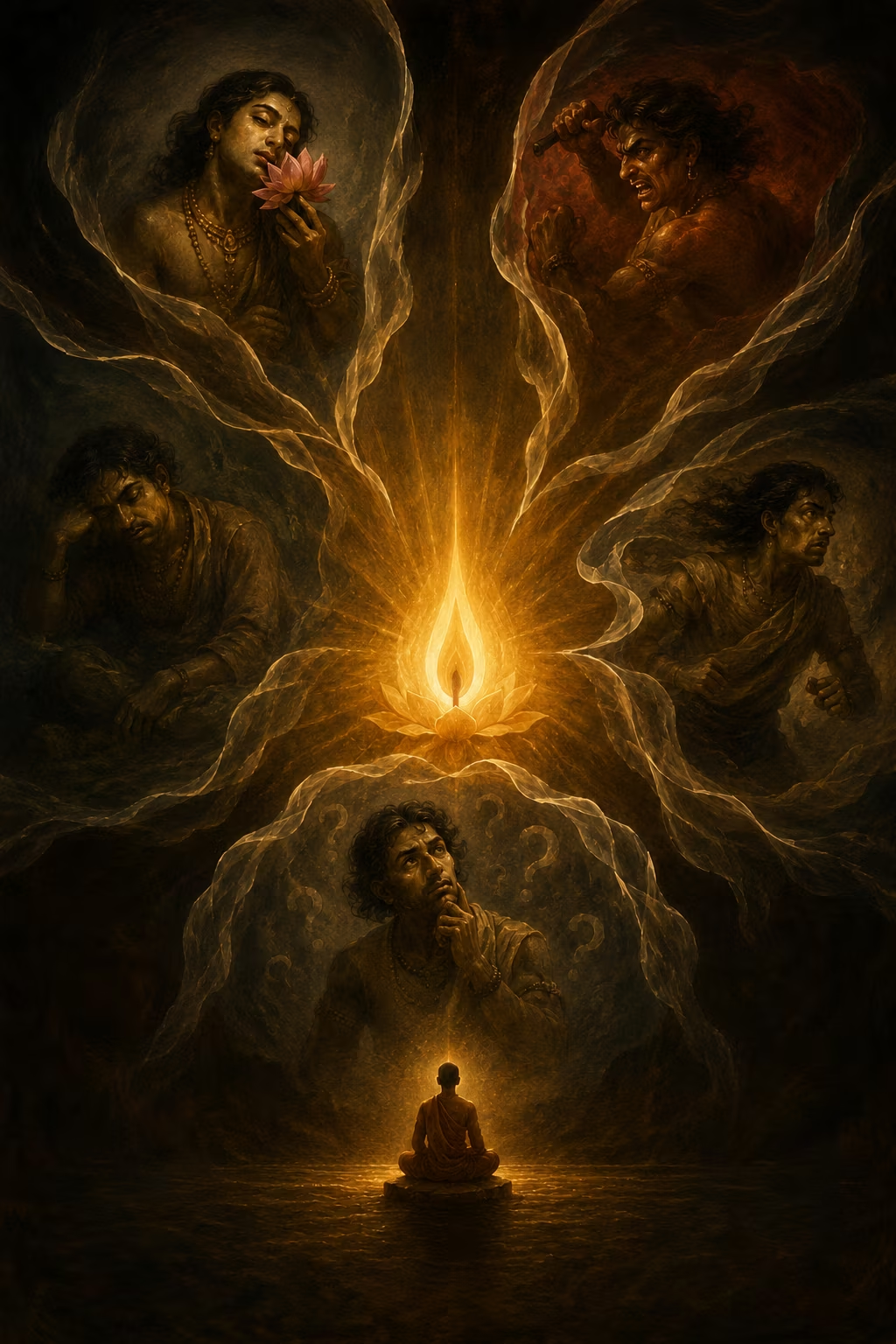
“Five hindrances — dissolved by being clearly seen.”
पाँच आवरण स्थिर होती स्वर्ण-ज्वाला से हटते।
Five veils lift from a steadying golden flame.
चौथी आधारशिला — धर्मों का अनुदर्शन, अनुभव के प्रतिमानों और नियमों का — पाँच नीवरणों से खुलती है, स्वच्छ मन की उत्कृष्ट बाधाएँ: काम-छन्द, व्यापाद, थीन-मिद्ध (आलस्य-निद्रा), उद्धत्य-कौकृत्य (चंचलता-पश्चात्ताप), और विचिकित्सा (सन्देह)। विधि इनसे लड़ना नहीं, इन्हें जानना है: कब कोई उपस्थित है, कब अनुपस्थित, कैसे उठता है, कैसे छूटता है, और कैसे फिर नहीं उठता। पहचान ही इनकी पकड़ घोलने लगती है।
The fourth foundation — observing dhammas, the patterns and principles of experience — opens with the five hindrances, the classic obstacles to a clear mind: sensual desire, ill will, dullness-and-drowsiness, restlessness-and-remorse, and doubt. The method is not to battle them but to know them: to see when one is present, when it is absent, how it arises, how it is abandoned, and how it comes not to arise again. Recognition itself begins to dissolve their grip.
“Five hindrances — dissolved by being clearly seen.”
पाँच आवरण स्थिर होती स्वर्ण-ज्वाला से हटते।
Five veils lift from a steadying golden flame.
Kathañca, bhikkhave, bhikkhu dhammesu dhammānupassī viharati?
और भिक्षुओ, भिक्षु किस प्रकार धर्मों में धर्म का अनुदर्शन करता हुआ विहरता है?
And how does a mendicant meditate observing an aspect of principles?
सरल अर्थ: और भिक्षु धर्मों (अनुभव के नियमों/विषयों) में धर्म को कैसे देखता है? In simple words: And how does a monk keep observing principles as principles?
Idha, bhikkhave, bhikkhu dhammesu dhammānupassī viharati pañcasu nīvaraṇesu.
यहाँ भिक्षु पाँच नीवरणों (बाधाओं) के सम्बन्ध में धर्मों में धर्म का अनुदर्शन करता हुआ विहरता है।
It’s when a mendicant meditates by observing an aspect of principles with respect to the five hindrances.
सरल अर्थ: वह पाँच नीवरणों (मन की पाँच बाधाओं) के सम्बन्ध में धर्मों को देखता है। In simple words: He observes principles with respect to the five hindrances.
Kathañca pana, bhikkhave, bhikkhu dhammesu dhammānupassī viharati pañcasu nīvaraṇesu?
और किस प्रकार, भिक्षुओ, भिक्षु पाँच नीवरणों के सम्बन्ध में धर्मों में धर्म का अनुदर्शन करता हुआ विहरता है?
And how does a mendicant meditate observing an aspect of principles with respect to the five hindrances?
सरल अर्थ: वह पाँच नीवरणों को किस प्रकार देखता है? In simple words: And how does he observe them with respect to the five hindrances?
Idha, bhikkhave, bhikkhu santaṁ vā ajjhattaṁ kāmacchandaṁ ‘atthi me ajjhattaṁ kāmacchando’ti pajānāti, asantaṁ vā ajjhattaṁ kāmacchandaṁ ‘natthi me ajjhattaṁ kāmacchando’ti pajānāti; yathā ca anuppannassa kāmacchandassa uppādo hoti tañca pajānāti, yathā ca uppannassa kāmacchandassa pahānaṁ hoti tañca pajānāti, yathā ca pahīnassa kāmacchandassa āyatiṁ anuppādo hoti tañca pajānāti.
यहाँ भिक्षुओ! भिक्षु विद्यमान भीतरी काम-च्छन्द (=कामुकता)को ‘मेरेमें भीतरी काम-च्छन्द विद्यमान है’—जानता है। अ-विद्यमान भीतरी कामच्छन्दको ‘मेरेमें भीतरी कामच्छन्द नहीं विद्यमान है’—जानता है। जैसे अनु-उत्पन्न कामच्छन्दकी उत्पत्ति होती है, उसे जानता है। जैसे उत्पन्न हुये कामच्छन्दका प्रहाण (=विनाश) होता है, उसे जानता है। जैसे विनष्ट कामच्छन्दकी आगे फिर उत्पत्ति नहीं होती, उसे जानता है।
It’s when a mendicant who has sensual desire in them understands: ‘I have sensual desire in me.’ When they don’t have sensual desire in them, they understand: ‘I don’t have sensual desire in me.’ They understand how sensual desire arises; how, when it’s already arisen, it’s given up; and how, once it’s given up, it doesn’t arise again in the future.
सरल अर्थ: काम-छन्द भीतर है या नहीं — यह जानता है; और वह कैसे उठता है, कैसे छूटता है, कैसे फिर नहीं उठता — यह भी। In simple words: When sensual desire is present he knows it; when absent he knows it; and he knows how it arises, how it is abandoned, and how it does not arise again.
Santaṁ vā ajjhattaṁ byāpādaṁ ‘atthi me ajjhattaṁ byāpādo’ti pajānāti, asantaṁ vā ajjhattaṁ byāpādaṁ ‘natthi me ajjhattaṁ byāpādo’ti pajānāti; yathā ca anuppannassa byāpādassa uppādo hoti tañca pajānāti, yathā ca uppannassa byāpādassa pahānaṁ hoti tañca pajānāti, yathā ca pahīnassa byāpādassa āyatiṁ anuppādo hoti tañca pajānāti.
विद्यमान भीतरी व्यापाद (=द्रोह)को—‘मेरेमें भीतरी व्यापाद विद्यमान है’—जानता है। अ-विद्यमान भीतरी व्यापादको—‘मेरेमें भीतरी व्यापाद नहीं विद्यमान है’—जानता है। जैसे अनु-उत्पन्न व्यापाद उत्पन्न होता है, उसे जानता है। जैसे उत्पन्न व्यापाद नष्ट होता है, उसे जानता है। जैसे विनष्ट व्यापाद आगे फिर नहीं उत्पन्न होता, उसे जानता है।
When they have ill will in them, they understand: ‘I have ill will in me.’ When they don’t have ill will in them, they understand: ‘I don’t have ill will in me.’ They understand how ill will arises; how, when it’s already arisen, it’s given up; and how, once it’s given up, it doesn’t arise again in the future.
सरल अर्थ: व्यापाद भीतर है या नहीं — यह जानता है; और वह कैसे उठता है, कैसे छूटता है, कैसे फिर नहीं उठता — यह भी। In simple words: When ill will is present he knows it; when absent he knows it; and he knows how it arises, how it is abandoned, and how it does not arise again.
Santaṁ vā ajjhattaṁ thinamiddhaṁ ‘atthi me ajjhattaṁ thinamiddhan’ti pajānāti, asantaṁ vā ajjhattaṁ thinamiddhaṁ ‘natthi me ajjhattaṁ thinamiddhan’ti pajānāti, yathā ca anuppannassa thinamiddhassa uppādo hoti tañca pajānāti, yathā ca uppannassa thinamiddhassa pahānaṁ hoti tañca pajānāti, yathā ca pahīnassa thinamiddhassa āyatiṁ anuppādo hoti tañca pajānāti.
भीतर थीन-मिद्ध (आलस्य-निद्रा/सुस्ती) होने पर ‘मुझमें थीन-मिद्ध है’ जानता है, न होने पर ‘मुझमें थीन-मिद्ध नहीं है’ जानता है; और जिस प्रकार अनुत्पन्न थीन-मिद्ध उत्पन्न होता है उसे जानता है, उत्पन्न थीन-मिद्ध का त्याग होता है उसे जानता है, और त्यागे हुए थीन-मिद्ध का आगे फिर से उत्पन्न न होना होता है — उसे जानता है।
When they have dullness and drowsiness in them, they understand: ‘I have dullness and drowsiness in me.’ When they don’t have dullness and drowsiness in them, they understand: ‘I don’t have dullness and drowsiness in me.’ They understand how dullness and drowsiness arise; how, when they’ve already arisen, they’re given up; and how, once they’re given up, they don’t arise again in the future.
सरल अर्थ: थीन-मिद्ध भीतर है या नहीं — यह जानता है; और वह कैसे उठता है, कैसे छूटता है, कैसे फिर नहीं उठता — यह भी। In simple words: When dullness and drowsiness is present he knows it; when absent he knows it; and he knows how it arises, how it is abandoned, and how it does not arise again.
Santaṁ vā ajjhattaṁ uddhaccakukkuccaṁ ‘atthi me ajjhattaṁ uddhaccakukkuccan’ti pajānāti, asantaṁ vā ajjhattaṁ uddhaccakukkuccaṁ ‘natthi me ajjhattaṁ uddhaccakukkuccan’ti pajānāti; yathā ca anuppannassa uddhaccakukkuccassa uppādo hoti tañca pajānāti, yathā ca uppannassa uddhaccakukkuccassa pahānaṁ hoti tañca pajānāti, yathā ca pahīnassa uddhaccakukkuccassa āyatiṁ anuppādo hoti tañca pajānāti.
भीतर उद्धत्य-कौकृत्य (चंचलता-पश्चात्ताप) होने पर ‘मुझमें उद्धत्य-कौकृत्य है’ जानता है, न होने पर ‘मुझमें उद्धत्य-कौकृत्य नहीं है’ जानता है; और जिस प्रकार अनुत्पन्न उद्धत्य-कौकृत्य उत्पन्न होता है उसे जानता है, उत्पन्न उद्धत्य-कौकृत्य का त्याग होता है उसे जानता है, और त्यागे हुए उद्धत्य-कौकृत्य का आगे फिर से उत्पन्न न होना होता है — उसे जानता है।
When they have restlessness and remorse in them, they understand: ‘I have restlessness and remorse in me.’ When they don’t have restlessness and remorse in them, they understand: ‘I don’t have restlessness and remorse in me.’ They understand how restlessness and remorse arise; how, when they’ve already arisen, they’re given up; and how, once they’re given up, they don’t arise again in the future.
सरल अर्थ: उद्धत्य-कौकृत्य भीतर है या नहीं — यह जानता है; और वह कैसे उठता है, कैसे छूटता है, कैसे फिर नहीं उठता — यह भी। In simple words: When restlessness and remorse is present he knows it; when absent he knows it; and he knows how it arises, how it is abandoned, and how it does not arise again.
Santaṁ vā ajjhattaṁ vicikicchaṁ ‘atthi me ajjhattaṁ vicikicchā’ti pajānāti, asantaṁ vā ajjhattaṁ vicikicchaṁ ‘natthi me ajjhattaṁ vicikicchā’ti pajānāti; yathā ca anuppannāya vicikicchāya uppādo hoti tañca pajānāti, yathā ca uppannāya vicikicchāya pahānaṁ hoti tañca pajānāti, yathā ca pahīnāya vicikicchāya āyatiṁ anuppādo hoti tañca pajānāti.
भीतर विचिकित्सा (सन्देह/डाँवाडोलपन) होने पर ‘मुझमें विचिकित्सा है’ जानता है, न होने पर ‘मुझमें विचिकित्सा नहीं है’ जानता है; और जिस प्रकार अनुत्पन्न विचिकित्सा उत्पन्न होती है उसे जानता है, उत्पन्न विचिकित्सा का त्याग होता है उसे जानता है, और त्यागी हुई विचिकित्सा का आगे फिर से उत्पन्न न होना होता है — उसे जानता है।
When they have doubt in them, they understand: ‘I have doubt in me.’ When they don’t have doubt in them, they understand: ‘I don’t have doubt in me.’ They understand how doubt arises; how, when it’s already arisen, it’s given up; and how, once it’s given up, it doesn’t arise again in the future.
सरल अर्थ: विचिकित्सा भीतर है या नहीं — यह जानता है; और वह कैसे उठती है, कैसे छूटती है, कैसे फिर नहीं उठती — यह भी। In simple words: When doubt is present he knows it; when absent he knows it; and he knows how it arises, how it is abandoned, and how it does not arise again.
Iti ajjhattaṁ vā dhammesu dhammānupassī viharati, bahiddhā vā dhammesu dhammānupassī viharati, ajjhattabahiddhā vā dhammesu dhammānupassī viharati;
इस प्रकार वह भीतर धर्मों में धर्म का अनुदर्शन करता हुआ विहरता है, बाहर धर्मों में, और भीतर-बाहर दोनों में धर्मों में धर्म का अनुदर्शन करता हुआ विहरता है;
And so they meditate observing an aspect of principles internally, externally, and both internally and externally.
सरल अर्थ: इस देखने को वह भीतर, बाहर, और दोनों में लगाता है। In simple words: He keeps observing principles as principles internally, externally, and both.
samudayadhammānupassī vā dhammesu viharati, vayadhammānupassī vā dhammesu viharati, samudayavayadhammānupassī vā dhammesu viharati.
अथवा धर्मों में समुदय-धर्म (उत्पत्ति) का अनुदर्शन करता हुआ विहरता है, वय-धर्म (व्यय) का, अथवा समुदय-वय दोनों का अनुदर्शन करता हुआ विहरता है।
They meditate observing, with respect to the principles, the liability to originate, to vanish, and to originate and vanish.
सरल अर्थ: वह देखता है कि ये धर्म उठते हैं, मिटते हैं, उठते-और-मिटते रहते हैं। In simple words: He observes how these principles arise, vanish, and both.
‘Atthi dhammā’ti vā panassa sati paccupaṭṭhitā hoti. Yāvadeva ñāṇamattāya paṭissatimattāya anissito ca viharati, na ca kiñci loke upādiyati.
अथवा ‘धर्म हैं’ — इतनी ही उसकी स्मृति उपस्थित रहती है, केवल ज्ञान-मात्र और स्मृति-मात्र के लिये। और वह अनिश्रित विहरता है, संसार में किसी वस्तु से चिपकता नहीं।
Or mindfulness is established that principles exist, to the extent necessary for knowledge and mindfulness. They meditate independent, not grasping at anything in the world.
सरल अर्थ: ‘बस धर्म हैं’ — इतनी सजगता, केवल जानने-भर के लिये; किसी सहारे बिना, किसी चीज़ से चिपके बिना। In simple words: ‘There are principles’ — mindfulness established just enough to know; independent, clinging to nothing.
Evampi kho, bhikkhave, bhikkhu dhammesu dhammānupassī viharati pañcasu nīvaraṇesu.
इस प्रकार भी, भिक्षुओ, भिक्षु पाँच नीवरणों के सम्बन्ध में धर्मों में धर्म का अनुदर्शन करता हुआ विहरता है।
That’s how a mendicant meditates by observing an aspect of principles with respect to the five hindrances.
सरल अर्थ: इस प्रकार भी भिक्षु पाँच बाधाओं के सम्बन्ध में धर्मों को देखता हुआ रहता है। In simple words: That is how a monk observes principles with respect to the five hindrances.
Nīvaraṇapabbaṁ niṭṭhitaṁ.
नीवरण-पब्ब (पाँच बाधा खण्ड) समाप्त हुआ।
The section on the hindrances is finished.
सरल अर्थ: (नीवरण-पब्ब (पाँच बाधा खण्ड) समाप्त।) In simple words: (End of the section on the hindrances.)
पाँच नीवरण स्वच्छ मन की उत्कृष्ट बाधाएँ हैं। अभ्यास इनसे लड़ना नहीं, पहचानना है — कब कोई उपस्थित है, कब अनुपस्थित, और कैसे उठता-मिटता है। बाधा को नाम देना ही उसकी शक्ति घोलने लगता है।The five hindrances are the classic obstacles to a clear mind. The practice is not to fight them but to recognize them — to know when one is present, when absent, and how it arises and fades. Naming a hindrance already begins to dissolve its power.
क्या देखें: What to notice: पहचानी और नामित बाधा अपनी पकड़ बहुत खो देती है; बिन-पहचानी छाया से मन को चलाती है। दिनों में तुम हर एक का स्वाद, उसके कारण, और वे स्थितियाँ सीखते हो जिनमें वह घुलता है। मन बल से नहीं, जानने से स्वच्छ होता है।A hindrance recognized and named loses much of its grip; an unnamed one runs the mind from the shadows. Over days you learn each one’s flavour, its triggers, and the conditions under which it dissolves. The mind is cleared by knowing, not by force.
अगली अशान्त बैठक या क्षण में, संघर्ष के बजाय बस निदान करो: नाम दो कि कौन-सी बाधा उपस्थित है। स्पष्ट देखे जाने पर उसका क्या होता है, देखो। प्रायः जाना जाना ही उसे ढीला करने को पर्याप्त है — यही नीवरण-अनुदर्शन का प्रमाण है।
Next restless sit or moment, instead of struggling, just diagnose: name which hindrance is present. Watch what happens to it once it is clearly seen. Often, being known is enough to loosen it — that is the hindrances-contemplation proving itself.