अर्जुन कई प्रश्न पूछते हैं — ब्रह्म, अध्यात्म, कर्म, अधिभूत, अधिदैव, अधियज्ञ क्या हैं? — और श्रीकृष्ण उन महान् पदों का वर्णन करते हैं (८·३-४)। फिर आता है अध्याय का हृदय: 'अन्तकाल में जिस भाव का स्मरण करते हुए शरीर त्यागता है, उसी को प्राप्त होता है' — इसलिये 'सब समय मेरा स्मरण कर और युद्ध भी कर' (८·५-७)। अन्तिम क्षण में वही उठता है जिससे मन जीवनभर भरा रहा। वे योगी के सचेत प्रयाण का वर्णन करते हैं — प्राण को ऊपर खींचकर भ्रूमध्य में स्थापित कर, ॐ का उच्चारण करते हुए (८·१०-१३) — तथा सब लोकों से परे परम अक्षर धाम (८·२०-२२), और प्रयाण के शुक्ल-कृष्ण (प्रकाश-अन्धकार) दो मार्गों की (८·२४-२६)।
Arjuna asks a cluster of questions — what is Brahman, the Self, action, and the gods? — and Krishna answers, naming the great terms (8.3-4). Then comes the chapter's heart: 'whatever state one remembers at the hour of death, that state one attains' — therefore 'remember Me at all times, and fight' (8.5-7). What fills the final moment is whatever the mind has been filled with all along. He describes the yogi's conscious departure — drawing the breath up, fixing it between the brows, uttering OM (8.10-13) — and the Supreme, Imperishable Abode beyond all worlds (8.20-22), and the bright and dark paths by which souls depart (8.24-26).
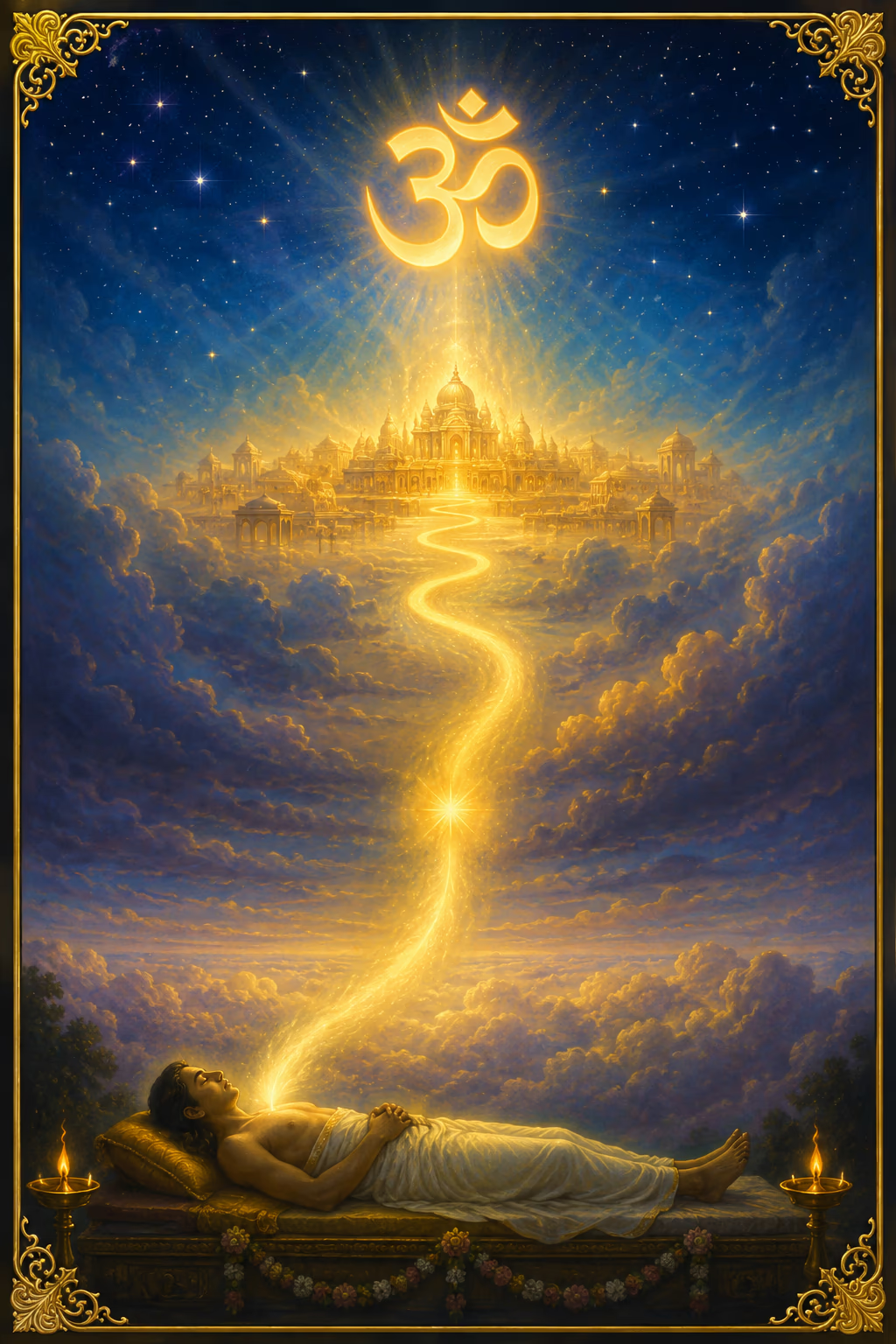
“ॐ इत्येकाक्षरं ब्रह्म — अन्तकाल की स्मृति” ॥ १२–१३ ॥ · मूल चित्र — इस परियोजना हेतु
शान्त आत्मा देह त्यागकर स्वर्ण-प्रकाश के बिन्दु-रूप में ऊर्ध्व-पथ पर उठती है; ऊपर गहरे नील गोधूलि-आकाश में दिव्य ॐ प्रकाशित।
A serene soul leaves the body and rises as a point of golden light along the upward path; above, in the deep twilight sky, the sacred OM glows radiant.
kiṁ tad brahma kim adhyātmaṁ kiṁ karma puruṣottama । adhibhūtaṁ ca kiṁ proktam adhidaivaṁ kim ucyate ॥
अर्जुन ने कहा—हे पुरुषोत्तम ! वह ब्रह्म क्या है ? अध्यात्म क्या है ? कर्म क्या है ? अधिभूत नाम से क्या कहा गया है और अधिदैव किसको कहते हैं ?
Arjuna said: What is that Brahman? What is the Self (adhyatma)? What is action? O Supreme Person, what is declared to be the realm of the elements (adhibhuta), and what is said to be the realm of the gods (adhidaiva)?
सरल अर्थ: अर्जुन पूछते हैं — हे पुरुषोत्तम! वह ब्रह्म क्या है? अध्यात्म क्या है? कर्म क्या है? अधिभूत किसे कहते हैं और अधिदैव क्या कहलाता है? अर्जुन उन कठिन शब्दों का अर्थ जानना चाहते हैं जिन्हें भगवान ने पिछले अध्याय के अंत में कहा था।In simple words: Arjuna asks Krishna to explain six terms he used at the end of chapter 7: Brahman, the Self, action, the field of beings, and the field of the gods. He wants plain definitions.
हे मधुसूदन ! यहाँ अधियज्ञ कौन है ? और वह इस शरीर में कैसे है ? तथा युक्तचित्त वाले पुरुषों द्वारा अन्त समय में आप किस प्रकार जानने में आते हैं ?
O Madhusudana, who is the lord of sacrifice (adhiyajna) here, and how does He dwell in this body? And at the time of departure, how are You to be known by those of disciplined mind?
सरल अर्थ: हे मधुसूदन! इस शरीर में अधियज्ञ कौन है और किस प्रकार है? तथा मृत्यु के समय संयमी पुरुष आपको किस प्रकार जान पाते हैं? अर्जुन का यह अंतिम प्रश्न ही पूरे अध्याय का मुख्य विषय बन जाता है — अंत समय में भगवान का स्मरण।In simple words: Two more questions: who is the lord of sacrifice within the body, and how can a self-controlled person know God at the moment of death? This last question becomes the heart of the chapter.
श्रीभगवान् ने कहा—परम अक्षर 'ब्रह्म' है, अपना स्वरूप अर्थात् जीवात्मा 'अध्यात्म' नाम से कहा जाता है तथा भूतों के भाव को उत्पन्न करने वाला जो त्याग है, वह 'कर्म' नाम से कहा गया है
The Blessed Lord said: The imperishable, the supreme, is Brahman. One's own essential nature is called the Self (adhyatma). The creative offering that brings forth the existence of beings is named action (karma).
सरल अर्थ: श्रीभगवान कहते हैं — जो अविनाशी और परम है, वह ब्रह्म है। जीव का अपना स्वरूप (आत्मा) अध्यात्म कहलाता है। प्राणियों की उत्पत्ति करने वाला जो त्याग रूप विसर्ग है, वह कर्म नाम से जाना जाता है। यहाँ कर्म का अर्थ है वह सृजनशील क्रिया जिससे सब प्राणी जन्म लेते हैं।In simple words: Krishna answers one by one. Brahman = the changeless Supreme. Adhyatma = your own true nature, the Self. Karma = the creative act of offering that causes beings to come into existence.
उत्पत्ति-विनाश धर्म वाले सब पदार्थ अधिभूत हैं, हिरण्यमय पुरुष अधिदैव है और हे देहधारियों में श्रेष्ठ अर्जुन ! इस शरीर में मैं वासुदेव ही अन्तर्यामी रूप से अधियज्ञ हूँ
The realm of the elements (adhibhuta) is the perishable nature; the cosmic Person is the realm of the gods (adhidaiva). I alone am the lord of sacrifice (adhiyajna) here in the body, O best among the embodied.
सरल अर्थ: हे देहधारियों में श्रेष्ठ! जो नाशवान पदार्थ है, वह अधिभूत है; और दिव्य पुरुष अधिदैव है। इस शरीर में अधियज्ञ मैं ही हूँ — अर्थात सब यज्ञों और कर्मों का स्वामी और साक्षी रूप में मैं ही शरीर के भीतर विद्यमान हूँ।In simple words: Adhibhuta = all changing, perishable matter. Adhidaiva = the cosmic divine Person. And the lord of sacrifice within the body is Krishna Himself — He is the inner presence behind all worship and action.
antakāle ca mām eva smaran muktvā kalevaram । yaḥ prayāti sa madbhāvaṁ yāti nāstyatra saṁśayaḥ ॥
जो पुरुष अन्तकाल में भी मुझको ही स्मरण करता हुआ शरीर को त्याग कर जाता है, वह मेरे साक्षात् स्वरूप को प्राप्त होता है—इसमें कुछ भी संशय नहीं है
And whoever, at the hour of death, departs leaving the body while remembering Me alone, attains My state of being — of this there is no doubt.
सरल अर्थ: जो मनुष्य अंत समय में मेरा ही स्मरण करता हुआ शरीर को छोड़कर जाता है, वह मेरे ही स्वरूप को प्राप्त होता है — इसमें कोई संदेह नहीं। मृत्यु के समय जिसकी जैसी स्मृति होती है, उसी के अनुसार उसकी गति होती है।In simple words: If at the moment of death a person leaves the body thinking only of Krishna, that person reaches His being. Where the mind rests at death decides where the soul goes.
हे कुन्ती पुत्र अर्जुन ! यह मनुष्य अन्तकाल में जिस-जिस भी भावको स्मरण करता हुआ शरीर को त्याग करता है, उस-उसको ही प्राप्त होता है; क्योंकि वह सदा उसी भाव से भावित रहा है
Whatever state of being one remembers when at the end one gives up the body, that very state one attains, O son of Kunti, ever absorbed in that thought.
सरल अर्थ: हे कुन्तीपुत्र! मनुष्य अंत समय में जिस-जिस भाव का स्मरण करते हुए शरीर त्यागता है, वह उसी भाव को प्राप्त होता है, क्योंकि वह सदा उसी भाव में रंगा रहता है। जीवन भर जिस भाव का अभ्यास होता है, वही अंत में याद आता है।In simple words: Whatever thought or state fills the mind at the last moment, that is what the soul becomes. And that final thought is shaped by what one dwelt on throughout life.
इसलिये हे अर्जुन ! तू सब समय में निरन्तर मेरा स्मरण कर और युद्ध भी कर । इस प्रकार मुझ में अर्पण किये हुए मन-बुद्धि से युक्त होकर तू निःसन्देह मुझ को ही प्राप्त होगा
Therefore, at all times remember Me, and fight. With mind and intellect fixed on Me, you shall surely come to Me alone — of this have no doubt.
सरल अर्थ: इसलिए हे अर्जुन! तू हर समय मेरा स्मरण कर और युद्ध भी कर। अपने मन और बुद्धि को मुझमें अर्पित कर देने पर तू निःसंदेह मुझे ही प्राप्त होगा। भगवान कहते हैं कि कर्तव्य करते हुए भी निरंतर स्मरण संभव है।In simple words: So Krishna's practical instruction: remember Me always and still do your duty (fight). Keep your mind and reason offered to Me, and you will certainly reach Me. Devotion and action go together.
हे पार्थ ! यह नियम है कि परमेश्वर के ध्यान के अभ्यास रूप योग से युक्त, दूसरी ओर न जाने वाले चित्त से निरन्तर चिन्तन करता हुआ मनुष्य परम प्रकाश स्वरूप दिव्य पुरुष को अर्थात् परमेश्वर को ही प्राप्त होता है
With a mind disciplined by the practice of yoga, not wandering to anything else, and meditating constantly, one reaches the supreme divine Person, O Partha.
सरल अर्थ: हे पार्थ! जो मनुष्य अभ्यासरूप योग से युक्त चित्त के द्वारा, जो कहीं और नहीं भटकता, निरंतर चिंतन करता हुआ साधना करता है, वह परम दिव्य पुरुष को प्राप्त होता है। बार-बार के अभ्यास से ही मन एकाग्र होता है।In simple words: Through steady practice the mind is trained not to wander elsewhere. One who keeps meditating on the Supreme with such a focused mind reaches that highest divine Person. Constant practice is the key.
जो पुरुष सर्वज्ञ, अनादि, सबके नियन्ता, सूक्ष्म से भी अति सूक्ष्म, सबके धारण-पोषण करने वाले अचिन्त्य स्वरूप, सूर्य के सदृश नित्य चेतन प्रकाश रूप और अविद्या से अति परे, शुद्ध सच्चिदानन्दघन परमेश्वर का स्मरण करता है
One who meditates upon the Omniscient, the Ancient, the Ruler, subtler than the subtle atom, the Sustainer of all, whose form is beyond conception, radiant like the sun, and beyond all darkness —
सरल अर्थ: जो साधक उस परमात्मा का स्मरण करता है जो सर्वज्ञ है, सबसे पुराना (अनादि) है, सबका शासक है, अणु से भी अधिक सूक्ष्म है, सबका पालन-पोषण करने वाला है, जिसका रूप मन-बुद्धि से सोचा नहीं जा सकता, जो सूर्य के समान तेजस्वी है और अज्ञानरूपी अंधकार से सर्वथा परे है —In simple words: Picture the Supreme as God describes Himself here: all-knowing, beginningless, the controller of everything, finer than the tiniest atom yet holding the whole universe together, with a form the mind can't fully grasp, glowing like the sun, far beyond all darkness. Keep that in mind — the next verse tells you when and how to remember it.
वह भक्तियुक्त पुरुष अन्तकाल में भी योगबल से भृकुटी के मध्य में प्राण को अच्छी प्रकार स्थापित करके, फिर निश्चल मन से स्मरण करता हुआ उस दिव्य स्वरूप परम पुरुष परमात्मा को ही प्राप्त होता है
At the time of death, with an unwavering mind, endowed with devotion and the power of yoga, fixing the life-breath firmly between the eyebrows, he reaches that Supreme Divine Person.
सरल अर्थ: मृत्यु के समय जो साधक अपने मन को बिना डगमगाए स्थिर रखता है, भक्ति और योग के अभ्यास से प्राप्त शक्ति से युक्त रहता है, और प्राणों को भौंहों के बीच (भ्रूमध्य में) भलीभाँति स्थापित कर देता है — वह उस परम दिव्य पुरुष परमात्मा को प्राप्त कर लेता है।In simple words: When the final moment comes, the trained yogi keeps the mind rock-steady, fueled by devotion and the strength built up through years of practice, and concentrates the life-force at the point between the eyebrows. Doing this, he attains the supreme, divine Being. The point: the last thought is the fruit of a lifetime's practice, not a lucky accident.
साधना · अभ्यासSādhana · Practiceउन्नत · जीवित गुरु आवश्यकAdvanced · requires a living Guru
सचेत प्रयाण की योग-विधि (८·१०-१३) — एक दीक्षा-योग्य साधनाThe yoga of conscious departure (8.10-13) — an initiatory practice
श्रीकृष्ण सिद्ध योगी के सचेत प्रयाण का वर्णन करते हैं: इन्द्रियों के द्वारों को रोककर, प्राण को ऊपर खींचकर भ्रूमध्य में स्थापित कर, मन को हृदय में धारण कर, और शरीर त्यागते समय एक अक्षर ॐ का उच्चारण करते हुए (८·१०-१३)। यह एक वास्तविक और शक्तिशाली योग-साधना है — और ठीक वैसी साधना जिसे यह पुस्तकालय स्वयं-करने योग्य चरणों के रूप में नहीं देगा।Krishna describes the accomplished yogi's conscious departure at death: closing the gates of the senses, drawing the prāṇa upward and fixing it between the brows, holding the mind in the heart, and sounding the single syllable OM as one leaves the body (8.10-13). This is a real and powerful yogic discipline — and precisely the kind of practice this library will NOT lay out as self-serve steps.
🪔
बलपूर्वक प्राणायाम और सचेत मृत्यु का योग प्राण, सूक्ष्म नाड़ियों और स्वयं मृत्यु-क्षण को छूते हैं — पुस्तक से करने पर ये हानि या भ्रम दे सकते हैं। गीता मानचित्र देती है; इस भूमि में केवल किसी जीवित, आत्मज्ञ गुरु के संरक्षण में ही प्रवेश करना चाहिए जो इसे सुरक्षित रूप से दे सके और सही समय पर साधे। यदि यह तुम्हें बुलाए, तो किसी प्रामाणिक जीवित परम्परा में दीक्षा लो — इन विधियों को स्वयं मत आज़माओ।Forceful breath-control and the yoga of conscious dying touch the prāṇa, the subtle channels, and the moment of death itself — attempted from a book, they can harm or mislead. The Gita gives the map; this territory must be entered only under a living, realized teacher (Guru) who can transmit it safely and time it rightly. If this calls you, seek initiation (dīkṣā) within an authentic living lineage — do not attempt these techniques on your own.
yad akṣaraṁ veda-vido vadanti viśanti yad yatayo vīta-rāgāḥ । yad icchanto brahmacaryaṁ caranti tat te padaṁ saṅgraheṇa pravakṣye ॥
वेद के जानने वाले विद्वान् जिस सच्चिदानन्दघन रूप परमपद को अविनाशी कहते हैं, आसक्ति रहित यत्नशील संन्यासी महात्माजन जिसमें प्रवेश करते हैं और जिस परमपद को चाहने वाले ब्रह्मचारी लोग ब्रह्मचर्य का आचरण करते हैं, उस परम पद को मैं तेरे लिये संक्षेप से कहूँगा
That which the knowers of the Vedas call the Imperishable, which the self-controlled, free from attachment, enter, and desiring which they practice celibacy — that goal I shall declare to you in brief.
सरल अर्थ: वेद के जानकार जिसे 'अक्षर' (अविनाशी ब्रह्म) कहते हैं, राग-रहित संयमी साधक जिसमें प्रवेश करते हैं, और जिसकी प्राप्ति की इच्छा से लोग ब्रह्मचर्य का पालन करते हैं — उस परम पद को मैं तुम्हें संक्षेप में बताऊँगा।In simple words: Krishna is about to summarize the path to the highest goal — the Imperishable that the Veda-scholars speak of, that detached, disciplined seekers merge into, and for whose sake people live a life of celibacy and restraint. He says: I'll lay it out for you briefly.
sarva-dvārāṇi saṁyamya mano hṛdi nirudhya ca । mūrdhny ādhāyātmanaḥ prāṇam āsthito yoga-dhāraṇām ॥
संयुक्त अनुवाद ↓joint translation ↓
सरल अर्थ: शरीर के सब द्वारों (आँख, कान, नाक आदि इन्द्रियों) को रोककर, मन को हृदय में स्थिर करके, और अपने प्राण को मस्तक में स्थापित करके — इस प्रकार योग की धारणा में दृढ़ता से स्थित होकर —In simple words: Here is the technique. Shut down the senses (the body's 'gates' — eyes, ears, etc.), gather the wandering mind and hold it in the heart, then draw the life-breath up to the crown of the head, and stay locked in steady yogic concentration. The next verse adds the final piece.
om ity ekākṣaraṁ brahma vyāharan mām anusmaran । yaḥ prayāti tyajan dehaṁ sa yāti paramāṁ gatim ॥
✦ tap a glowing wordचमकते शब्द छुएँ ✦
॥ १२–१३ ॥
सब इन्द्रियों के द्वारों को रोककर तथा मन को हृदेश में स्थिर करके, फिर उस जीते हुए मन के द्वारा प्राण को मस्तक में स्थापित करके, परमात्म संबंधी योगधारणा में स्थित होकर जो पुरुष ‘ॐ’ इस एक अक्षररूप ब्रह्म का चिन्तन करता हुआ शरीर को त्याग कर जाता है, वह पुरुष परमगति को प्राप्त होता है
Having closed all the gates of the body, confining the mind within the heart, and fixing one's life-breath in the head, established in the steadfastness of yoga — Uttering the single syllable OM — the Brahman — and remembering Me, one who departs, leaving the body, attains the supreme goal.
सरल अर्थ: जो साधक 'ॐ' इस एक अक्षररूप ब्रह्म का उच्चारण करता हुआ और मेरा (परमात्मा का) स्मरण करता हुआ शरीर को त्यागकर देह से प्रयाण करता है, वह परम गति को प्राप्त होता है।In simple words: Now the final piece: while doing that breath-and-mind practice, sound the one syllable OM (which stands for Brahman) and hold Krishna in mind. Whoever leaves the body in this state reaches the highest destination. So the whole method is: sense-withdrawal, breath at the crown, OM, and remembrance of God.
हे अर्जुन ! जो पुरुष मुझमें अनन्यचित्त होकर सदा ही निरन्तर मुझ पुरुषोत्तम को स्मरण करता है, उस नित्य-निरन्तर मुझमें युक्त हुए योगी के लिये मैं सुलभ हूँ, अर्थात् उसे सहज ही प्राप्त हो जाता हूँ
For one who constantly remembers Me with an undistracted mind, ever absorbed in Me — for that ever-steadfast yogi, O Pārtha, I am easy to attain.
सरल अर्थ: हे पार्थ! जो साधक अनन्य चित्त से, बिना किसी और में मन लगाए, सदा निरन्तर मेरा स्मरण करता रहता है, उस नित्य-निरन्तर मुझमें जुड़े हुए योगी के लिए मैं सहज ही सुलभ (आसानी से प्राप्त) हूँ।In simple words: Krishna gives the encouraging news: the person who keeps Him in mind constantly, with a one-pointed heart that doesn't run to other things, finds Him easy to reach. Steady, daily remembrance — not last-minute effort — is what makes God accessible.
परम सिद्धि को प्राप्त महात्माजन मुझ को प्राप्त होकर दुःखों के घर एवं क्षणभंगुर पुनर्जन्म को नहीं प्राप्त होते
Having reached Me, the great souls who have attained the highest perfection are never again born into this transient abode of suffering.
सरल अर्थ: मुझे प्राप्त करके वे महात्मा परम सिद्धि को प्राप्त हो जाते हैं और फिर दुःखों के घर तथा क्षणभंगुर (नाशवान) इस संसार में पुनर्जन्म नहीं पाते।In simple words: Those who reach Krishna have hit the ultimate success: they are not reborn again into this world, which is a temporary place full of sorrow. Reaching Him means the cycle of birth and death is over for them.
ā-brahma-bhuvanāl lokāḥ punar āvartino 'rjuna । mām upetya tu kaunteya punar janma na vidyate ॥
हे अर्जुन ! ब्रह्मलोकपर्यन्त सब लोक पुनरावर्ती हैं, परंतु हे कुन्ती पुत्र ! मुझ को प्राप्त होकर पुनर्जन्म नहीं होता; क्योंकि मैं कालातीत हूँ और यह सब ब्रह्मादि के लोक काल के द्वारा सीमित होने से अनित्य हैं
All the worlds, up to the realm of Brahmā, are subject to return, O Arjuna; but on reaching Me, O son of Kuntī, there is no rebirth.
सरल अर्थ: हे अर्जुन! ब्रह्मलोक तक के सभी लोक पुनरावर्ती हैं अर्थात् वहाँ पहुँचकर भी जीव को लौटकर फिर जन्म लेना पड़ता है। परन्तु हे कुन्तीपुत्र! मुझे प्राप्त कर लेने पर फिर पुनर्जन्म नहीं होता।In simple words: Even the highest heavenly worlds — right up to Brahma's realm, the topmost — are temporary: you enjoy them, then come back and are reborn. But once you reach Krishna, there is no coming back, no rebirth. His abode is the only truly permanent one.
sahasra-yuga-paryantam ahar yad brahmaṇo viduḥ । rātriṁ yuga-sahasrāntāṁ te 'ho-rātra-vido janāḥ ॥
ब्रह्मा का जो एक दिन है, उसको एक हजार चतुर्युगीकी की अवधि वाला और रात्रि को भी एक हजार चतुर्युगीकी की अवधि वाली जो पुरुष तत्त्व से जानते हैं, वे योगीजन काल के तत्त्व को जानने वाले हैं
Those who know that Brahmā's day extends for a thousand ages, and that his night too is a thousand ages long — they are the people who truly understand day and night.
सरल अर्थ: जो लोग जानते हैं कि ब्रह्माजी का एक दिन एक हजार चतुर्युगों जितना लंबा होता है, और उनकी रात भी उतनी ही लंबी होती है, वे ही दिन-रात के सच्चे स्वरूप को समझने वाले हैं। इस श्लोक में समय की विशालता बताई गई है।In simple words: One day of Brahma, the creator, lasts a thousand cosmic ages, and his night is just as long. People who grasp this truly understand the vast scale of time.
सम्पूर्ण चराचर भूतगण ब्रह्मा के दिन के प्रवेशकाल में अव्यक्त से अर्थात् ब्रह्मा के सूक्ष्म शरीर से उत्पन्न होते हैं और ब्रह्मा की रात्रि के प्रवेशकाल में उस अव्यक्त नामक ब्रह्मा के सूक्ष्म शरीर में ही लीन हो जाते हैं
At the coming of Brahmā's day, all manifest beings spring forth from the unmanifest; and at the coming of night they dissolve back into that very same unmanifest.
सरल अर्थ: जब ब्रह्माजी का दिन आता है, तब सारे प्राणी अव्यक्त (अप्रकट) मूल से प्रकट होकर जन्म लेते हैं; और जब रात आती है, तब वे फिर उसी अव्यक्त में लीन हो जाते हैं। सृष्टि बार-बार प्रकट और लीन होती रहती है।In simple words: When Brahma's day begins, all visible beings come out from an unseen source; when his night comes, they all merge back into that same unseen state. Creation appears and dissolves in cycles.
हे पार्थ ! वही एक यह समुदाय उत्पन्न हो-होकर प्रकृति के वश में हुआ रात्रि के प्रवेश काल में लीन होता है और दिन के प्रवेश काल में फिर उत्पन्न होता है
This same multitude of beings, having come into existence again and again, is dissolved at the coming of night, and helplessly comes forth again at the coming of day, O Pārtha.
सरल अर्थ: हे अर्जुन! यही प्राणियों का समूह बार-बार जन्म लेकर रात आने पर विवश होकर लीन हो जाता है, और दिन आने पर फिर अपने आप उत्पन्न हो जाता है। जीव अपने वश में नहीं, कर्मों के अधीन इस चक्र में घूमता रहता है।In simple words: The same crowd of living beings is born over and over. When Brahma's night comes they helplessly dissolve, and when his day comes they are born again — caught in a repeating cycle they cannot control.
paras tasmāt tu bhāvo 'nyo 'vyakto 'vyaktāt sanātanaḥ । yaḥ sa sarveṣu bhūteṣu naśyatsu na vinaśyati ॥
उस अव्यक्त से भी अति परे दूसरा अर्थात् विलक्षण जो सनातन अव्यक्त भाव है, वह परम दिव्य पुरुष सब भूतों के नष्ट होने पर भी नष्ट नहीं होता
But beyond that unmanifest there is yet another unmanifest, eternal Being, which does not perish even when all beings perish.
सरल अर्थ: परन्तु उस अव्यक्त से भी परे एक और अव्यक्त, सनातन (नित्य) तत्त्व है, जो सब प्राणियों के नष्ट हो जाने पर भी नष्ट नहीं होता। यह परमात्मा का अविनाशी स्वरूप है, जो सृष्टि के प्रलय में भी बना रहता है।In simple words: Beyond even that unseen source lies another, higher, eternal reality. It never dies, even when everything else is destroyed. This is the imperishable Supreme.
avyakto 'kṣara ity uktas tam āhuḥ paramāṁ gatim । yaṁ prāpya na nivartante tad dhāma paramaṁ mama ॥
जो अव्यक्त ‘अक्षर’ इस नाम से कहा गया है, उसी अक्षर नामक अव्यक्त भाव को परमगति कहते हैं तथा जिस सनातन अव्यक्त भाव को प्राप्त होकर मनुष्य वापस नहीं आते, वह मेरा परम धाम है
That unmanifest is called the Imperishable; They name it the supreme goal. Having reached it, they never return — that is My supreme abode.
सरल अर्थ: उस अव्यक्त को 'अक्षर' (अविनाशी) कहा गया है, और उसी को परम गति (सर्वोच्च लक्ष्य) कहते हैं। जिसे पाकर जीव फिर लौटकर संसार में नहीं आते — वही मेरा सर्वोच्च परम धाम है।In simple words: This unseen reality is called the Imperishable and is the highest goal. Once a soul reaches it, it never comes back to this world of birth and death. This is God's supreme home.
puruṣaḥ sa paraḥ pārtha bhaktyā labhyas tv ananyayā । yasyāntaḥ-sthāni bhūtāni yena sarvam idaṁ tatam ॥
हे पार्थ! जिस परमात्मा के अन्तर्गत सर्वभूत हैं और जिस सच्चिदानन्दघन परमात्मा से यह सब जगत् परिपूर्ण है, वह सनातन अव्यक्त परम पुरुष तो अनन्य भक्ति से ही प्राप्त होने योग्य है
That Supreme Person, O Pārtha, within whom all beings dwell and by whom all this is pervaded, is attainable only through undivided devotion.
सरल अर्थ: हे अर्जुन! वह परम पुरुष, जिसके भीतर सब प्राणी स्थित हैं और जिसने इस सारे जगत् को व्याप्त कर रखा है, केवल अनन्य (एकनिष्ठ) भक्ति से ही प्राप्त होता है। उसे पाने का सरल मार्ग अनन्य भक्ति है।In simple words: That Supreme Being holds all creatures within Himself and fills this entire universe. He can be reached only through one-pointed, undivided devotion — loving Him alone with the whole heart.
हे अर्जुन! जिस काल में शरीर त्यागकर गये हुए योगीजन तो वापस न लौटनेवाली गति को और जिस काल में गये हुए वापस लौटनेवाली गति को ही प्राप्त होते हैं, उस काल को अर्थात् दोनों मार्गों को कहूँगा
Now I shall tell you, O best of the Bharatas, of the times at which yogis depart to return no more, and also those at which they depart only to return again.
सरल अर्थ: हे भरतवंशियों में श्रेष्ठ अर्जुन! अब मैं तुम्हें वह काल (समय) बताता हूँ, जिसमें शरीर त्यागकर जाने वाले योगी लौटकर नहीं आते, और वह काल भी जिसमें जाने पर वे फिर लौट आते हैं। यहाँ देहत्याग के दो मार्गों का वर्णन आरम्भ होता है।In simple words: Krishna now explains the times of departure from the body. Some yogis leave at a time after which they never return (liberation); others leave at a time that brings them back to rebirth.
जिस मार्ग में ज्योतिर्मय अग्नि अभिमानी देवता है, दिन का अभिमानी देवता है, शुक्ल पक्ष का अभिमानी देवता है और उत्तरायण के छः महीनों का अभिमानी देवता है, उस मार्ग में मरकर गये हुए ब्रह्मवेत्ता योगीजन उपर्युक्त देवताओं द्वारा क्रम से ले जाये जाकर ब्रह्म को प्राप्त होते हैं
Fire, light, the day, the bright fortnight, the six months of the sun's northern course — departing then, the knowers of Brahman go to Brahman.
सरल अर्थ: अग्नि, ज्योति (प्रकाश), दिन, शुक्ल पक्ष और सूर्य के उत्तरायण के छह महीने — इस प्रकाशमय मार्ग से देह त्यागकर जाने वाले ब्रह्मज्ञानी पुरुष ब्रह्म को प्राप्त होते हैं। यह उजाले का मार्ग (देवयान) है, जो मुक्ति की ओर ले जाता है।In simple words: This is the bright path of departure: fire, light, daytime, the bright half of the month, and the six months when the sun moves north. Those who know Brahman and leave the body along this path of light attain Brahman and are freed.
जिस मार्ग में धूमाभिमानी देवता है, रात्रि-अभिमानी देवता है तथा कृष्ण पक्ष का अभिमानी देवता है और दक्षिणायन के छः महीनों का अभिमानी देवता है, उस मार्ग में मरकर गया हुआ सकाम कर्म करने वाला योगी उपर्युक्त देवताओं द्वारा क्रम से ले गया हुआ चन्द्रमा की ज्योति को प्राप्त होकर स्वर्ग में अपने शुभ कर्मों का फल भोगकर वापस आता है
Smoke, the night, likewise the dark fortnight, the six months of the sun's southern course — by this path the yogī, attaining the lunar light, returns again.
सरल अर्थ: धुआँ, रात, कृष्ण पक्ष और सूर्य के दक्षिणायन के छ: महीने — मृत्यु के समय इस मार्ग से जाने वाला योगी चन्द्रमा की ज्योति को पाकर अपने पुण्यों का फल भोगकर फिर लौट आता है, अर्थात् उसे फिर जन्म लेना पड़ता है।In simple words: This is the 'dark path' of departure — smoke, night, the waning moon, the southern six months. One who leaves this way reaches the heavenly lunar realm, enjoys its rewards, and then comes back to be reborn.
क्योंकि जगत् के ये दो प्रकार के—शुक्ल और कृष्ण अर्थात् देवयान और पितृयान मार्ग सनातन माने गये हैं। इनमें एक के द्वारा गया हुआ—जिससे वापस नहीं लौटना पड़ता, उस परम गति को प्राप्त होता है और दूसरे के द्वारा गया हुआ फिर वापस आता है अर्थात् जन्म-मृत्यु को प्राप्त होता है
These two paths of the world, the bright and the dark, are held to be eternal. By the one a person goes to no-return; by the other he comes back again.
सरल अर्थ: संसार के ये दो मार्ग — शुक्ल (प्रकाशमय) और कृष्ण (अंधकारमय) — सनातन माने गये हैं। शुक्ल मार्ग से जाने वाला लौटकर नहीं आता (मुक्त हो जाता है), और कृष्ण मार्ग से जाने वाला फिर लौट आता है।In simple words: The world has two everlasting routes for the departing soul: the bright one leads to liberation (no coming back), and the dark one leads back to rebirth.
हे पार्थ! इस प्रकार इन दोनों मार्गों को तत्त्व से जानकर कोई भी योगी मोहित नहीं होता। इस कारण हे अर्जुन! तू सब काल में समबुद्धि रूप योग से युक्त हो अर्थात् निरन्तर मेरी प्राप्ति के लिये साधन करने वाला हो
Knowing these two paths, O Pārtha, no yogī is ever deluded. Therefore at all times be steadfast in yoga, O Arjuna.
सरल अर्थ: हे पार्थ! इन दोनों मार्गों को तत्त्व से जानने वाला कोई भी योगी मोहित नहीं होता। इसलिए हे अर्जुन! तू सब समय योग से युक्त रहा कर अर्थात् निरन्तर मुझमें लगा रह।In simple words: A yogī who truly understands these two paths is never confused. So, Arjuna, stay united in yoga at all times — keep your mind fixed on God constantly.
योगी पुरुष इस रहस्य को तत्त्व से जानकर वेदों के पढ़ने में तथा यज्ञ, तप और दानादि के करने में जो पुण्यफल कहा है, उस सबको निःसन्देह उल्लंघन कर जाता है और सनातन परमपद को प्राप्त होता है
Whatever fruit of merit is declared for the Vedas, for sacrifices, for austerities, and for gifts — the yogī, having known this, transcends all that, and reaches the supreme, primal Abode.
सरल अर्थ: वेदों के अध्ययन, यज्ञ, तप और दान में जो पुण्य का फल कहा गया है, इस (अध्याय में बताये गये) तत्त्व को जानकर योगी उन सबका अतिक्रमण कर जाता है और सनातन परम धाम को प्राप्त होता है।In simple words: Study of scripture, sacrifices, austerity, and charity all bring sacred rewards — but the yogī who knows this teaching goes beyond all of them and reaches the supreme, original abode of God.
स्मरण — दिनभर परमात्मा का स्मरणSmaraṇa — remembering the Divine through the day
श्रीकृष्ण एक सरल, दूरगामी नियम देते हैं (८·५-७): 'अन्त में जिसका स्मरण होता है, वही प्राप्त होता है' — इसलिये 'सब समय मेरा स्मरण कर, और कर्म भी कर।' अन्तिम क्षण में वही भरता है जो मन में जीवनभर भरा रहा। इसलिये यह मृत्यु-शय्या का प्रयास नहीं, बल्कि साधारण जीवन में स्मरण को रोज़ बुनना है।Krishna gives a simple, far-reaching law (8.5-7): 'whatever one remembers at the end, that one attains' — so 'remember Me at all times, and act.' What fills the last moment is whatever the mind has held all along. So this is not a deathbed effort but a daily weaving of remembrance into ordinary life.
स्मरण का एक सरल रूप चुनो — परमात्मा का कोई नाम, एक छोटा वाक्य, या बस हृदय का परमात्मा की ओर मुड़ जाना।Choose one simple form of remembrance — a name of the Divine, a short phrase, or just a felt turning of the heart toward God.
उसे बार-बार आने वाले क्षणों से जोड़ो — जागना, भोजन, द्वार पार करना, सोने से पहले। ये स्मरण की छोटी-छोटी घंटियाँ बन जाएँ।Anchor it to recurring moments — waking, meals, crossing a doorway, before sleep. Let these become small bells of remembrance.
जैसे-जैसे यह सहज हो, इसे अपने कर्म के नीचे चुपचाप गूँजने दो — 'स्मरण कर और कर्म कर' (८·७): काम चलता रहे, स्मरण उसके नीचे बहता रहे।As it grows familiar, let it hum quietly beneath your activity — 'remember, and act' (8.7): the work goes on, the remembrance runs under it.
जब भूल जाओ — और भूलोगे — तो बिना किसी झिड़की के फिर से आरम्भ कर दो। हर बार लौटने पर वह तार फिर जुड़ जाता है।When you forget — and you will — simply begin again, without reproach. The thread re-forms each time you return to it.
क्या देखें: What to notice: ध्यान दो कि दिनभर स्मरण के लिए अभ्यस्त मन कैसे शान्त होता है और क्षणिक मनोभावों के वश में कम रहता है — और कठिन क्षणों में वह स्मरण कितनी सहजता से उठ आता है। यही उसका सबसे गहरा वचन है (८·५-७)।Notice how a mind trained to remember through the day grows calmer and less owned by passing moods — and how naturally the remembrance arises in hard moments. That is its deepest promise (8.5-7).
अनुभव · स्वयं देखेंAnubhava · see for yourself
एक सप्ताह तक अपने दिन के तीन निश्चित क्षणों में स्मरण को बोओ। सातवें दिन तक देखो — क्या वह कभी अपने आप, बिना बुलाए, किसी शान्त या कठिन क्षण में उठ आता है? वह स्वतःस्फूर्त उठना ही साधना का जड़ पकड़ना है; और यही, चुपचाप, उस एक क्षण की तुम्हारी तैयारी है जिसकी ओर श्रीकृष्ण इशारा करते हैं (८·५-६)।
For one week, plant remembrance in three fixed moments of your day. By the seventh day, notice — does it ever arise on its own, unbidden, in a quiet or a difficult moment? That spontaneous arising is the practice taking root; it is also, quietly, your preparation for the one moment Krishna points to (8.5-6).
ॐ तत्सदिति श्रीमद्भगवद्गीतासूपनिषत्सु ब्रह्मविद्यायां योगशास्त्रे श्रीकृष्णार्जुनसंवादे अक्षरब्रह्मयोगो नाम अष्टमोऽध्यायः ॥ ८ ॥
॥ इस प्रकार उपनिषद्, ब्रह्मविद्या तथा योगशास्त्र रूप श्रीमद्भगवद्गीता के श्रीकृष्ण-अर्जुन संवाद में 'अक्षरब्रह्मयोग' नामक आठवाँ अध्याय पूर्ण हुआ ॥