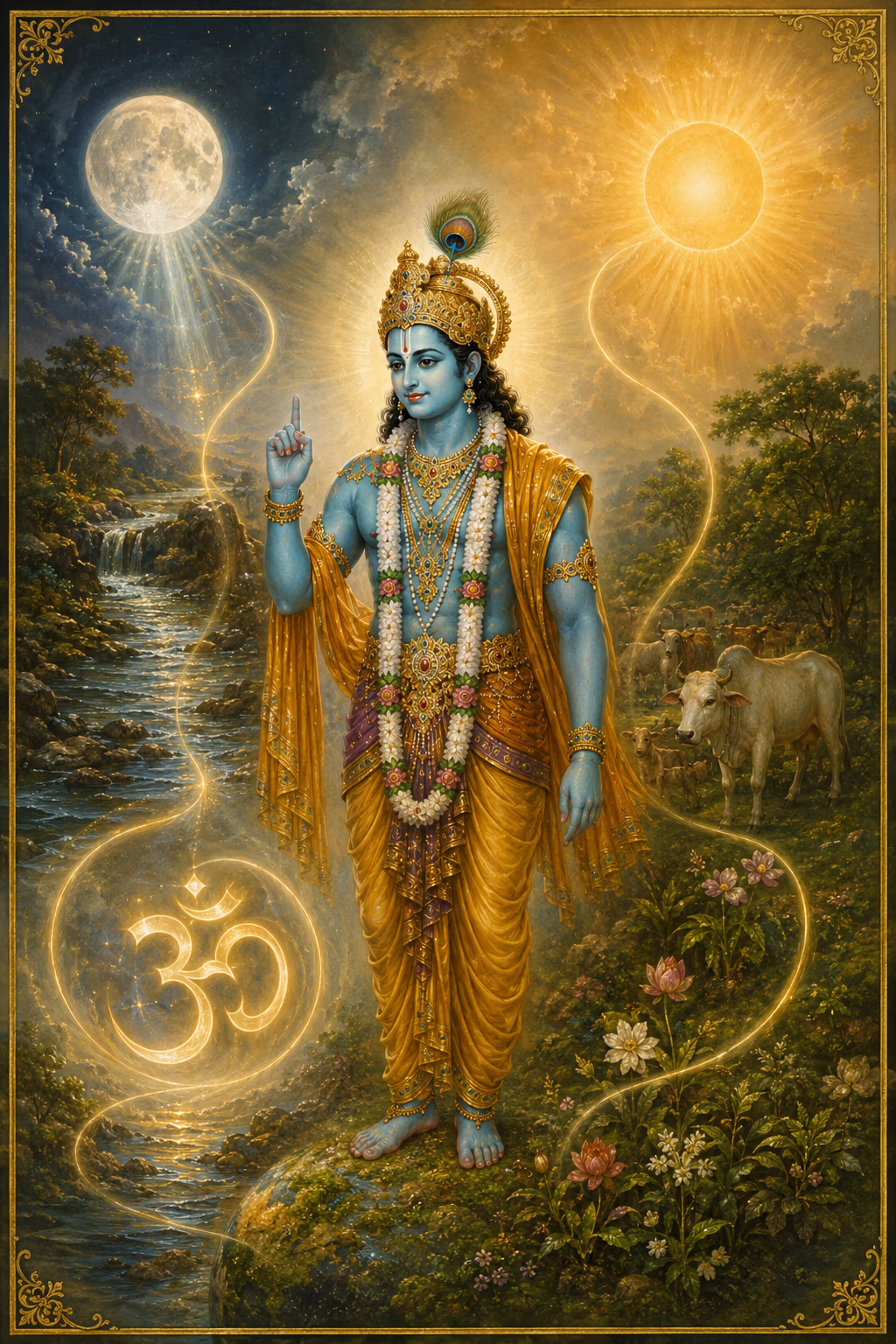
सातवाँ अध्याय कर्म से मुड़कर सब कर्मों के ज्ञाता — स्वयं भगवान् — की पूर्णता की ओर ले जाता है। श्रीकृष्ण अपनी दो प्रकृतियाँ खोलते हैं: एक अपरा (अष्टधा जड़ प्रकृति) और एक परा प्रकृति जो जगत् की जीवात्मा बनती है। 'मुझसे श्रेष्ठ कुछ भी नहीं; यह सब मुझमें सूत्र में मणियों की भाँति गुँथा हुआ है' (७·७)। फिर आता है गीता का एक परम प्रिय प्रसंग — 'मैं जल में रस हूँ, चन्द्र-सूर्य में प्रकाश हूँ, प्रणव (ॐ) हूँ, सब प्राणियों में जीवन हूँ, पृथ्वी की गन्ध हूँ' (७·८-११): परमात्मा को अनुभव के हर तन्तु में पहचानना। वे अपनी दिव्य माया की बात करते हैं जिसे पार करना कठिन है, पर जो उनकी शरण आते हैं वे उसे पार कर जाते हैं (७·१४); चार प्रकार के भक्तों की; और उस विरले महात्मा की जो अनेक जन्मों के बाद जान लेता है कि 'वासुदेव ही सब कुछ है' (७·१९)।
Chapter 7 turns from action to the Knower of all action — God Himself, in His fullness. Krishna unfolds His two natures: a lower, eightfold material nature, and a higher nature that becomes the living soul of the world. 'There is nothing higher than Me; all this is strung upon Me like beads on a thread' (7.7). Then comes one of the Gita's most beloved passages — 'I am the taste in water, the light in the moon and the sun, the sacred syllable OM, the life in all beings, the fragrance of the earth' (7.8–11): God to be recognized in the very texture of experience. He speaks of His divine māyā, hard to cross yet crossed by those who take refuge in Him (7.14); of four kinds of devotees; and of the rare great soul who, after many births, knows that 'Vāsudeva — God — is all' (7.19).
“रसोऽहमप्सु — सर्वत्र भगवद्-अनुभूति” ॥ ८–११ ॥ · मूल चित्र — इस परियोजना हेतु
तेजोमय श्रीकृष्ण के चारों ओर सूक्ष्म स्वर्ण-आभा में तत्त्व प्रकट होते हैं — जल का रस, चन्द्र-सूर्य का प्रकाश, प्रणव ॐ — सब उन्हीं की ओर संकेत करते हुए।
Around the radiant Krishna the elements shine in golden light — the taste in water, the light of moon and sun, the sacred OM — all quietly pointing back to Him.
श्रीभगवान् बोले—हे पार्थ! अनन्य प्रेम से मुझमें आसक्त चित्त तथा अनन्य भाव से मेरे परायण होकर योग में लगा हुआ तू जिस प्रकार से सम्पूर्ण विभूति, बल, ऐश्वर्यादि गुणों से युक्त, सबके आत्मरूप मुझको संशयरहित जानेगा, उसको सुन
The Blessed Lord said: Hear, O Partha, how with mind attached to Me, practicing yoga and taking refuge in Me, you shall know Me in full, free from all doubt.
सरल अर्थ: श्रीभगवान् कहते हैं—हे पार्थ! अपने मन को मुझमें लगाकर, मेरा आश्रय लेकर योग का अभ्यास करते हुए तुम जिस प्रकार मुझे पूर्ण रूप से और बिना किसी संशय के जान सकोगे, उसे सुनो।In simple words: Krishna says: keep your mind fixed on Me, take shelter in Me, and practice yoga. Then you will know Me completely, with no doubt left. Listen to how this happens.
मैं तेरे लिये इस विज्ञान सहित तत्त्व ज्ञान को सम्पूर्णतया कहूँगा, जिसको जानकर संसार में फिर और कुछ भी जानने योग्य शेष नहीं रह जाता
I shall declare to you in full this knowledge together with realization, knowing which nothing further remains to be known here.
सरल अर्थ: मैं तुम्हें यह ज्ञान, अनुभव सहित, पूर्ण रूप से कहूँगा, जिसे जान लेने पर इस संसार में फिर कुछ और जानना शेष नहीं रहता।In simple words: I will give you both the knowing and the direct experience of it, completely. Once you grasp this, nothing else is left for you to learn.
हजारों मनुष्यों में कोई एक मेरे प्राप्ति के लिये यत्न करता है और उन यत्न करने वाले योगियों में भी कोई एक मेरे परायण होकर मुझको तत्त्व से अर्थात् यथार्थ रूप से जानता है
Among thousands of men, scarcely one strives for perfection; and even among those who strive and succeed, scarcely one knows Me in truth.
सरल अर्थ: हजारों मनुष्यों में कोई एक ही सिद्धि के लिए प्रयत्न करता है, और उन प्रयत्न करने वाले सिद्ध पुरुषों में भी कोई एक ही मुझे तत्त्व से जानता है।In simple words: Out of thousands of people, only a rare one even tries seriously for spiritual perfection. And among those rare achievers, only a rare one truly knows Me as I am.
bhūmirāpo'nalo vāyuḥ khaṁ mano buddhireva ca । ahaṅkāra itīyaṁ me bhinnā prakṛtiraṣṭadhā ॥
संयुक्त अनुवाद ↓joint translation ↓
सरल अर्थ: पृथ्वी, जल, अग्नि, वायु, आकाश, मन, बुद्धि और अहंकार—इस प्रकार यह मेरी प्रकृति आठ भागों में विभाजित है।In simple words: My lower nature has eight parts: the five elements (earth, water, fire, air, space) plus mind, intellect, and ego. This is the material side of Me.
पृथ्वी, जल, अग्नि, वायु, आकाश, मन, बुद्धि और अहंकार भी—इस प्रकार यह आठ प्रकार से विभाजित मेरी प्रकृति है। यह आठ प्रकार के भेदोंवाली तो अपरा अर्थात् मेरी जड़ प्रकृति है और हे महाबाहो! इससे दूसरी को, जिससे यह सम्पूर्ण जगत् धारण किया जाता है, मेरी जीवरूपा परा अर्थात् चेतन प्रकृति जान
Earth, water, fire, air, ether, mind, intellect, and ego—thus is My nature divided eightfold. This is My lower nature. But know, O mighty-armed, My other and higher nature—the very life-element, by which this world is sustained.
सरल अर्थ: हे महाबाहो! यह मेरी अपरा (निचली) प्रकृति है; इससे भिन्न मेरी दूसरी परा (उच्च) प्रकृति को जानो, जो जीवरूप है और जिसके द्वारा यह सारा जगत् धारण किया जाता है।In simple words: That eightfold nature is My lower one. Beyond it I have a higher nature: the conscious life-force, the souls, who hold up and animate this whole world.
हे अर्जुन! तू ऐसा समझ कि सम्पूर्ण भूत इन दोनों प्रकृतियों से ही उत्पन्न होने वाले हैं और मैं सम्पूर्ण जगत् का प्रभव तथा प्रलय हूँ अर्थात् सम्पूर्ण जगत् का मूल कारण हूँ
Know that all beings have their birth in these two. I am the origin of the entire universe, and likewise its dissolution.
सरल अर्थ: ऐसा समझ लो कि सम्पूर्ण प्राणी इन्हीं दोनों प्रकृतियों से उत्पन्न होते हैं। मैं ही सारे जगत् का उद्भव (उत्पत्ति) हूँ और प्रलय (अंत) भी हूँ।In simple words: Every living being comes from these two natures of Mine combined. I am where the whole universe arises from, and also where it all dissolves back into.
हे धनञ्जय! मुझसे भिन्न दूसरा कोई भी परम कारण नहीं है। यह सम्पूर्ण जगत् सूत्र में सूत्र के मणियों के सदृश मेरे में गुँथा हुआ है
There is nothing whatsoever higher than Me, O Dhananjaya. All this is strung on Me like rows of beads on a thread.
सरल अर्थ: हे धनंजय! मुझसे श्रेष्ठ कोई दूसरी वस्तु नहीं है। यह सम्पूर्ण जगत् मुझमें इस प्रकार पिरोया हुआ है जैसे धागे में मणियों के समूह।In simple words: Nothing at all is higher than Me. Everything that exists is held together in Me, just like beads are strung together on a single thread.
हे अर्जुन! मैं जल में रस हूँ, चन्द्रमा और सूर्य में प्रकाश हूँ, सम्पूर्ण वेदों में ओंकार हूँ तथा आकाश में शब्द और पुरुषों में पुरुषत्व हूँ
I am the taste in water, O son of Kunti; I am the radiance in the moon and the sun; I am OM in all the Vedas, the sound in ether, and the manhood in men.
सरल अर्थ: हे कुन्तीपुत्र! मैं जल में रस (स्वाद) हूँ, चन्द्रमा और सूर्य में प्रकाश हूँ, समस्त वेदों में ॐकार हूँ, आकाश में शब्द हूँ और पुरुषों में पुरुषत्व (सामर्थ्य) हूँ।In simple words: Krishna shows His presence in the essence of things: the taste in water, the light in sun and moon, the sacred OM in the Vedas, the sound in space, and the manly strength in people.
मैं पृथ्वी में पवित्र गन्ध और अग्नि में तेज हूँ तथा सम्पूर्ण भूतों में उनका जीवन हूँ और तपस्वियों में तप हूँ
I am the pure fragrance of the earth and the brilliance in fire; I am the life in all beings and the austerity in ascetics.
सरल अर्थ: श्रीकृष्ण कहते हैं—मैं पृथ्वी की पवित्र सुगन्ध हूँ और अग्नि का तेज हूँ। समस्त प्राणियों में जो जीवन (प्राण) है वह मैं हूँ, और तपस्वियों में जो तप है वह भी मैं ही हूँ। अर्थात् हर वस्तु का सार-तत्त्व भगवान ही हैं।In simple words: Krishna keeps naming where He is felt: the sweet smell of fresh earth, the glow of fire, the very life pulsing in every creature, and the discipline that burns in those who do austerity. The essence of each thing is Him.
हे अर्जुन! तू सम्पूर्ण भूतों का सनातन बीज मुझको ही जान। मैं बुद्धिमानों की बुद्धि और तेजस्वियों का तेज हूँ
Know Me, O Partha, to be the eternal seed of all beings. I am the intelligence of the intelligent and the splendor of the splendid.
सरल अर्थ: हे अर्जुन! तुम मुझे समस्त प्राणियों का सनातन (अनादि) बीज जानो—जिससे सब उत्पन्न होते हैं। बुद्धिमानों की बुद्धि और तेजस्वी पुरुषों का तेज भी मैं ही हूँ।In simple words: Krishna says He is the original, never-ending seed from which all beings sprout. Whatever sharp intelligence the wise have, and whatever brilliance the powerful shine with, that too comes from Him.
हे भरतश्रेष्ठ! मैं बलवानों का आसक्ति और कामनाओं से रहित बल अर्थात् सामर्थ्य हूँ और सब भूतों में धर्म के अनुकूल अर्थात् शास्त्र के अनुकूल काम हूँ
I am the strength of the strong, free from desire and attachment; and in beings I am desire that is not opposed to dharma, O best of the Bharatas.
सरल अर्थ: मैं बलवानों का वह बल हूँ जो काम और आसक्ति से रहित है। हे भरतश्रेष्ठ अर्जुन! प्राणियों में जो धर्म के अनुकूल (धर्म के विरुद्ध न होने वाली) कामना है, वह कामना मैं ही हूँ।In simple words: The strength Krishna claims is pure strength, not the kind driven by craving or selfish attachment. And the desire He is, is healthy desire that stays within dharma, such as the wish to do one's duty, not greedy lust.
ye caiva sāttvikā bhāvā rājasāstāmasāśca ye । matta eveti tānviddhi na tvahaṁ teṣu te mayi ॥
और भी जो सत्त्वगुण से उत्पन्न होने वाले भाव हैं और जो रजोगुण से तथा तमोगुण से होने वाले भाव हैं, उन सबको तू 'मुझसे ही होने वाले हैं' ऐसा जान। परन्तु वास्तव में उनमें मैं और वे मुझमें नहीं हैं
Whatever states of being there are, whether of sattva, rajas, or tamas, know that they all proceed from Me alone; yet I am not in them, they are in Me.
सरल अर्थ: जितने भी सात्त्विक, राजसिक और तामसिक भाव (अवस्थाएँ) हैं, उन सबको तुम मुझसे ही उत्पन्न हुआ जानो। परन्तु मैं उनके अधीन नहीं हूँ—वे मुझमें हैं, मैं उनमें नहीं।In simple words: All the qualities and moods in the world, whether calm and pure (sattva), restless and passionate (rajas), or dull and dark (tamas), come from Krishna. But He is not controlled by them; they exist within Him, He does not depend on them.
क्योंकि यह अलौकिक अर्थात् अति अद्भुत त्रिगुणमयी मेरी माया बड़ी दुस्तर है; परंतु जो पुरुष केवल मुझको ही निरन्तर भजते हैं वे इस माया को उल्लंघन कर जाते हैं अर्थात् संसार से तर जाते हैं
Deluded by these three states composed of the gunas, this whole world does not recognize Me, who am beyond them and imperishable.
सरल अर्थ: इन तीनों गुणों से बने भावों के कारण मोहित हुआ यह सारा संसार इन गुणों से परे और अविनाशी मुझ परमेश्वर को नहीं पहचानता।In simple words: Because everyone is caught up and fooled by these three gunas, the whole world fails to see Krishna, who is above all three and never decays. People see the surface play but miss the changeless reality behind it.
daivī hyeṣā guṇamayī mama māyā duratyayā । māmeva ye prapadyante māyāmetāṁ taranti te ॥
माया के द्वारा जिनका ज्ञान हरा जा चुका है ऐसे आसुर-स्वभाव को धारण किये हुए, मनुष्यों में नीच, दूषित कर्म करने वाले मूढ़ लोग मुझको नहीं भजते
This divine maya of Mine, made of the gunas, is hard to overcome; but those who take refuge in Me alone cross beyond this maya.
सरल अर्थ: क्योंकि मेरी यह गुणमयी दैवी माया बड़ी दुस्तर (पार करने में कठिन) है। परन्तु जो पुरुष केवल मेरी ही शरण में आते हैं, वे इस माया को पार कर जाते हैं।In simple words: Krishna's maya, His power that weaves the three gunas, is extremely hard to get past on one's own. But those who fully surrender to Him alone are carried safely across it.
हे भरतवंशियों में श्रेष्ठ अर्जुन! उत्तम कर्म करने वाले अर्थार्थी, आर्त, जिज्ञासु और ज्ञानी—ऐसे चार प्रकार के भक्तजन मुझ को भजते हैं
The evil-doers, the deluded, the lowest of men, whose knowledge is stolen away by maya, and who follow the way of demons, do not surrender to Me.
सरल अर्थ: दुष्कर्म करने वाले, मूढ़ और नीच मनुष्य मेरी शरण में नहीं आते; क्योंकि माया ने उनका ज्ञान हर लिया है और वे आसुरी (दानवी) स्वभाव का आश्रय लिए हुए हैं।In simple words: Some people never turn to Krishna: those who do wicked deeds, the foolish, and the worst among men. Maya has robbed them of clear understanding, so they cling to a demonic, self-centered nature instead.
उनमें नित्य मुझ में एकीभाव से स्थित अनन्य प्रेम भक्ति वाला ज्ञानी भक्त अति उत्तम है, क्योंकि मुझको तत्त्व से जानने वाले ज्ञानी को मैं अत्यन्त प्रिय हूँ और वह ज्ञानी मुझे अत्यन्त प्रिय है
Four kinds of virtuous people worship Me, O Arjuna: the distressed, the seeker of knowledge, the seeker of wealth, and the wise, O best of the Bharatas.
सरल अर्थ: हे अर्जुन! उत्तम कर्म करने वाले चार प्रकार के भक्त मुझे भजते हैं—आर्त (दुःख से पीड़ित), जिज्ञासु (मुझे जानने का इच्छुक), अर्थार्थी (धन आदि की कामना वाला) और ज्ञानी (तत्त्व को जानने वाला)।In simple words: Krishna names four kinds of good people who worship Him: the one in distress seeking relief, the one curious to know the truth, the one wanting wealth or worldly gain, and the wise one who already knows. All four are virtuous, though their motives differ.
teṣāṁ jñānī nitya-yukta eka-bhaktir viśiṣyate । priyo hi jñānino 'tyartham ahaṁ sa ca mama priyaḥ ॥
ये सभी उदार हैं, परंतु ज्ञानी तो साक्षात् मेरा स्वरूप ही है, ऐसा मेरा मत है, क्योंकि वह मद्गत मन-बुद्धिवाला ज्ञानी भक्त अति उत्तम गतिस्वरूप मुझ में ही अच्छी प्रकार स्थित है
Of these, the wise one, ever united with Me through single-pointed devotion, excels. For I am exceedingly dear to the man of wisdom, and he is dear to Me.
सरल अर्थ: इन चारों भक्तों में ज्ञानी श्रेष्ठ है, क्योंकि वह सदा मुझसे जुड़ा रहता है और केवल मुझमें ही अनन्य भक्ति रखता है। ज्ञानी को मैं अत्यन्त प्रिय हूँ और वह मुझे भी अत्यन्त प्रिय है।In simple words: Among the four kinds of devotees, the wise one (jnani) is the best, because he stays constantly linked with God and loves only Him with undivided devotion. God is supremely dear to him, and he is supremely dear to God.
udārāḥ sarva evaite jñānī tv ātmaiva me matam । āsthitaḥ sa hi yuktātmā mām evānuttamāṁ gatim ॥
बहुत जन्मों के अन्त के जन्म में तत्त्व ज्ञान को प्राप्त पुरुष, सब कुछ वासुदेव ही है—इस प्रकार मुझ को भजता है, वह महात्मा अत्यन्त दुर्लभ है
All these are indeed noble, but the wise one I hold to be My very Self; for, his mind steadfast, he is established in Me alone as the highest goal.
सरल अर्थ: ये सभी भक्त उदार और श्रेष्ठ हैं, परन्तु ज्ञानी तो मेरा स्वरूप ही है — ऐसा मेरा मत है। क्योंकि वह स्थिर मन वाला भक्त मुझ परम गति में ही दृढ़ता से टिका रहता है।In simple words: All four kinds of devotees are good and generous, but the wise one is, in God's own view, like His very own Self. With a steady mind he is firmly fixed in God alone as the highest destination.
bahūnāṁ janmanām ante jñānavān māṁ prapadyate । vāsudevaḥ sarvam iti sa mahātmā su-durlabhaḥ ॥
उन-उन भोगों की कामना द्वारा जिनका ज्ञान हरा जा चुका है, वे लोग अपने स्वभाव से प्रेरित होकर उस-उस नियम को धारण करके अन्य देवताओं को भजते हैं अर्थात् पूजते हैं
At the end of many births, the man of wisdom takes refuge in Me, realizing that Vāsudeva is all. Such a great soul is very rare to find.
सरल अर्थ: अनेक जन्मों के अन्त में ज्ञान को प्राप्त हुआ मनुष्य 'सब कुछ वासुदेव ही है' — ऐसा जानकर मेरी शरण में आता है। ऐसा महात्मा अत्यन्त दुर्लभ है।In simple words: After many lifetimes, the one who has gained true knowledge surrenders to God, understanding that 'Vasudeva (God) is everything.' Such a great soul is extremely rare.
kāmais tais tair hṛta-jñānāḥ prapadyante 'nya-devatāḥ । taṁ taṁ niyamam āsthāya prakṛtyā niyatāḥ svayā ॥
जो-जो सकाम भक्त जिस-जिस देवता के स्वरूप को श्रद्धा से पूजना चाहता है, उस-उस भक्त की श्रद्धा को मैं उसी देवता के प्रति स्थिर करता हूँ
Those whose discernment is carried away by various desires resort to other deities, adopting this or that rite, constrained by their own natures.
सरल अर्थ: जिनका विवेक अनेक प्रकार की कामनाओं से हर लिया गया है, वे अपने-अपने स्वभाव से प्रेरित होकर, भिन्न-भिन्न नियमों का आश्रय लेते हुए दूसरे देवताओं की शरण में जाते हैं।In simple words: People whose good sense has been stolen away by various desires turn to other gods. Pushed by their own inborn nature, they follow this or that ritual to worship them.
yo yo yāṁ yāṁ tanuṁ bhaktaḥ śraddhayārcitum icchati । tasya tasyācalāṁ śraddhāṁ tām eva vidadhāmy aham ॥
वह पुरुष उस श्रद्धा से युक्त होकर उस देवता का पूजन करता है और उस देवता से मेरे द्वारा ही विधान किये हुए उन इच्छित भोगों को निःसन्देह प्राप्त करता है
Whatever form any devotee seeks to worship with faith, that very faith in it I make unshakable.
सरल अर्थ: जो-जो भक्त जिस-जिस देवता के स्वरूप को श्रद्धा से पूजना चाहता है, उस-उस भक्त की उसी देवता में श्रद्धा को मैं अचल (स्थिर) कर देता हूँ।In simple words: Whichever deity's form a devotee wishes to worship with faith, God makes that devotee's faith in that very form firm and steady.
sa tayā śraddhayā yuktas tasyārādhanam īhate । labhate ca tataḥ kāmān mayaiva vihitān hi tān ॥
परंतु उन अल्प बुद्धिवालों का वह फल नाशवान् है तथा वे देवताओं की पूजन वाले देवताओं को प्राप्त होते हैं और मेरे भक्त चाहे जैसे भी भजें, अन्त में वे मुझ को ही प्राप्त होते हैं
Endowed with that faith, he engages in the worship of that deity and obtains from it his desires—desires that are, in truth, ordained by Me alone.
सरल अर्थ: वह उस श्रद्धा से युक्त होकर उस देवता की आराधना करता है और उससे अपनी कामनाओं को प्राप्त करता है — परन्तु वे कामनाएँ वास्तव में मेरे द्वारा ही विधान की हुई हैं।In simple words: Filled with that faith, the devotee worships that deity and gets the things he wants from it. But in reality, those very fruits are granted by God alone.
antavat tu phalaṁ teṣāṁ tad bhavaty alpa-medhasām । devān deva-yajo yānti mad-bhaktā yānti mām api ॥
परंतु उन अल्प बुद्धिवालों का वह फल नाशवान् है तथा वे देवताओं को पूजने वाले देवताओं को प्राप्त होते हैं और मेरे भक्त चाहे जैसे ही भजें, अन्त में वे मुझ को ही प्राप्त होते हैं
But finite is the fruit gained by those of small understanding. The worshippers of the gods go to the gods; My devotees come to Me.
सरल अर्थ: परन्तु उन अल्प बुद्धि वालों को मिलने वाला वह फल नाशवान् होता है। देवताओं को पूजने वाले देवताओं को प्राप्त होते हैं, और मेरे भक्त मुझको ही प्राप्त होते हैं।In simple words: But the reward those people of little understanding get is temporary and perishable. Worshippers of the gods reach those gods, while God's own devotees reach God Himself.
बुद्धिहीन पुरुष मेरे अनुत्तम अविनाशी परम भाव को न जानते हुए मन-इन्द्रियों से परे मुझ सच्चिदानन्दघन परमात्मा को मनुष्य की भाँति जन्म कर व्यक्ति भाव को प्राप्त हुआ मानते हैं
The unintelligent, not knowing My higher, imperishable, and supreme nature, think of Me—the unmanifest—as having come into manifestation.
सरल अर्थ: बुद्धिहीन लोग मेरे परम, अविनाशी और सर्वश्रेष्ठ स्वरूप को न जानते हुए मुझ अव्यक्त (इन्द्रियों से परे) को व्यक्ति-भाव में आया हुआ (साधारण मनुष्य के समान प्रकट हुआ) मानते हैं।In simple words: Those lacking wisdom do not know God's supreme, unchanging, and highest true nature. So they wrongly think that God, who is really beyond the senses and formless, has become an ordinary visible person.
nāhaṁ prakāśaḥ sarvasya yogamāyāsamāvṛtaḥ । mūḍho'yaṁ nābhijānāti loko māmajamavyayam ॥
अपनी योगमाया से छिपा हुआ मैं सबके प्रत्यक्ष नहीं होता, इसलिये यह अज्ञानी जनसमुदाय मुझ जन्मरहित अविनाशी परमेश्वर को नहीं जानता अर्थात् मुझको जन्मने-मरनेवाला समझता है
Veiled by My yoga-maya, I am not manifest to all. This deluded world does not recognize Me, the unborn and imperishable.
सरल अर्थ: मैं अपनी योगमाया से ढका हुआ हूँ, इसलिए सबके सामने प्रकट नहीं होता। यह मोहित संसार मुझ अजन्मे और अविनाशी को नहीं पहचान पाता।In simple words: Krishna says His divine power (yoga-maya) keeps Him hidden, so ordinary people cannot see Him as He truly is. The world, caught in delusion, fails to know that He is birthless and never decays.
vedāhaṁ samatītāni vartamānāni cārjuna । bhaviṣyāṇi ca bhūtāni māṁ tu veda na kaścana ॥
हे अर्जुन ! पूर्व में व्यतीत हुए और वर्तमान में स्थित तथा आगे होने वाले सब भूतों को मैं जानता हूँ, परंतु मुझको कोई भी श्रद्धा-भक्तिरहित पुरुष नहीं जानता
O Arjuna, I know the beings that are past, those that are present, and those that are yet to come; but no one knows Me.
सरल अर्थ: हे अर्जुन! मैं बीते हुए, वर्तमान और आने वाले सभी प्राणियों को जानता हूँ, परन्तु मुझे कोई नहीं जानता।In simple words: Krishna's knowledge covers every being across past, present and future. Yet because He is hidden by His own power, no one truly knows Him.
हे भरतवंशी अर्जुन ! संसार में इच्छा और द्वेष से उत्पन्न सुख-दुःखादि द्वन्द्वरूप मोह से सम्पूर्ण प्राणी अत्यन्त अज्ञता को प्राप्त हो रहे हैं
O Bharata, scorcher of foes, by the delusion of the dual opposites that springs from desire and aversion, all beings fall into bewilderment at their very birth.
सरल अर्थ: हे भरतवंशी अर्जुन! राग और द्वेष से उत्पन्न होने वाले सुख-दुःख आदि द्वन्द्वों के मोह से, सभी प्राणी जन्म लेते ही गहरे भ्रम में पड़ जाते हैं।In simple words: Liking and disliking create pairs of opposites like pleasure and pain. This confusion grips every being from the moment of birth, keeping them from seeing the truth.
परंतु निष्काम भाव से श्रेष्ठ कर्मों का आचरण करने वाले जिन पुरुषों का पाप नष्ट हो गया है, वे राग-द्वेषजनित द्वन्द्वरूप मोह से मुक्त दृढ़निश्चयी भक्त मुझ को सब प्रकार से भजते हैं
But those persons of virtuous deeds, whose sin has come to an end, freed from the delusion of the opposites, worship Me with firm resolve.
सरल अर्थ: परन्तु जिन पुण्यकर्म करने वाले मनुष्यों का पाप समाप्त हो चुका है, वे द्वन्द्वों के मोह से मुक्त होकर दृढ़ निश्चय के साथ मेरी भक्ति करते हैं।In simple words: People who have done good and worn away their sins are no longer trapped by the pull of opposites. With steady determination they turn to worship Krishna.
jarāmaraṇamokṣāya māmāśritya yatanti ye । te brahma tadviduḥ kṛtsnamadhyātmaṁ karma cākhilam ॥
संयुक्त अनुवाद ↓joint translation ↓
सरल अर्थ: जो लोग बुढ़ापे और मृत्यु से छुटकारा पाने के लिए मेरी शरण लेकर प्रयत्न करते हैं, वे उस ब्रह्म को, सम्पूर्ण अध्यात्म को और समस्त कर्म को पूरी तरह जान लेते हैं।In simple words: Those who take shelter in Krishna while striving to escape aging and death come to fully understand the Absolute (Brahman), the inner Self, and the whole nature of action.
sādhibhūtādhidaivaṁ māṁ sādhiyajñaṁ ca ye viduḥ । prayāṇakāle'pi ca māṁ te viduryuktacetasaḥ ॥
॥ २९–३० ॥
जो पुरुष अधिभूत और अधिदैव के सहित तथा अधियज्ञ के सहित (सबका आत्मरूप) मुझे अन्तकाल में भी जानते हैं वे युक्तचित्त वाले पुरुष मुझे जानते हैं अर्थात् प्राप्त हो जाते हैं । जो मेरे शरण होकर जरा और मरण से छूटने के लिये यत्न करते हैं, वे पुरुष उस ब्रह्म को, सम्पूर्ण अध्यात्मको, सम्पूर्ण कर्म को जानते हैं
Those who strive for liberation from old age and death by taking refuge in Me come to know that Brahman in full, the entire Self, and all action. Those who know Me together with the adhibhuta, the adhidaiva, and the adhiyajna, they, their minds steadfast, know Me even at the hour of departure.
सरल अर्थ: जो मुझे अधिभूत, अधिदैव और अधियज्ञ सहित जानते हैं, वे स्थिर चित्त वाले पुरुष मृत्यु के समय में भी मुझे ही जानते हैं अर्थात् मुझमें ही स्थित रहते हैं।In simple words: Those who understand Krishna as the principle behind all created things, all divine forces, and all sacrifice keep their minds fixed on Him. So even at the moment of death they remain aware of Him.
रसोऽहम् — हर वस्तु में परमात्मा को पहचाननाRaso 'ham — recognizing the Divine in everything
७·८-११ में श्रीकृष्ण ठीक-ठीक बताते हैं कि उन्हें कहाँ खोजें: 'मैं जल में रस हूँ, चन्द्र-सूर्य में प्रकाश हूँ, सब प्राणियों में जीवन हूँ, पृथ्वी की गन्ध हूँ।' यह अभ्यास दृष्टि को सिखाता है कि साधारण अनुभव में गुँथी हुई उस एक दिव्य उपस्थिति को पहचाने — रोज़मर्रा की धारणा को ही परमात्मा की स्मृति बना दे।In 7.8–11 Krishna names exactly where to find Him: 'I am the taste in water, the light in moon and sun, the life in all beings, the fragrance of the earth.' This practice trains the eye to recognize the one Divine presence woven through ordinary experience — turning daily perception itself into remembrance of God.
दिन के लिए कुछ सरल संकेत चुनो — पानी का पहला घूँट, त्वचा पर धूप, कोई सुगन्ध, किसी की आँखों में जीवन्तता।Choose a few simple cues for the day — your first sip of water, sunlight on your skin, a fragrance, the aliveness in someone's eyes.
हर संकेत पर एक साँस रुककर मौन में पहचानो: 'यह रस, यह प्रकाश, यह जीवन — वही तुम हो।' (रसोऽहमप्सु — मैं जल में रस हूँ)At each cue, pause for a breath and silently recognize: 'this taste, this light, this life — that is You.' (raso 'ham apsu — I am the taste in the waters)
कुछ अनुभव करने का ज़ोर मत लगाओ; बस इस पहचान को साधारण, यान्त्रिक धारणा की जगह आने दो।Don't strain to feel anything; simply let the recognition replace the usual blank, automatic perception.
दिनभर संकेतों को अपने आप बढ़ने दो — संसार धीरे-धीरे अपने पीछे की उस एक उपस्थिति के प्रति पारदर्शी होने लगता है।Let the cues multiply on their own through the day — the world slowly becomes transparent to the one Presence behind it.
क्या देखें: What to notice: ध्यान दो कि साधारण क्षण, परमात्मा के रूप में मिलने पर, चुपचाप अर्थ और स्नेह से भर जाते हैं — और एक अलग, ईश्वर-रहित संसार का भाव क्षीण होता जाता है।Notice how ordinary moments quietly fill with meaning and warmth when met as the Divine — and how the sense of a separate, godless world thins.
अनुभव · स्वयं देखेंAnubhava · see for yourself
आज केवल तीन अनुभवों में परमात्मा को पहचानो — एक स्वाद, एक प्रकाश, एक जीवित मुख। उस शाम पूछो: क्या संसार थोड़ा-सा भी अधिक जीवन्त, अधिक सँभाला हुआ लगा? वही सूक्ष्म स्नेह 'वासुदेवः सर्वम्' (७·१९) का सत्य है, जो तुमने अपने ही दिन में चखा।
Today, recognize the Divine in just three experiences — a taste, a light, a living face. That evening, ask: did the world feel even slightly more alive, more held? That subtle warmth is the truth of 'Vāsudeva is all' (7.19), tasted in your own day.
ॐ तत्सदिति श्रीमद्भगवद्गीतासूपनिषत्सु ब्रह्मविद्यायां योगशास्त्रे श्रीकृष्णार्जुनसंवादे ज्ञानविज्ञानयोगो नाम सप्तमोऽध्यायः ॥ ७ ॥
॥ इस प्रकार उपनिषद्, ब्रह्मविद्या तथा योगशास्त्र रूप श्रीमद्भगवद्गीता के श्रीकृष्ण-अर्जुन संवाद में 'ज्ञानविज्ञानयोग' नामक सातवाँ अध्याय पूर्ण हुआ ॥