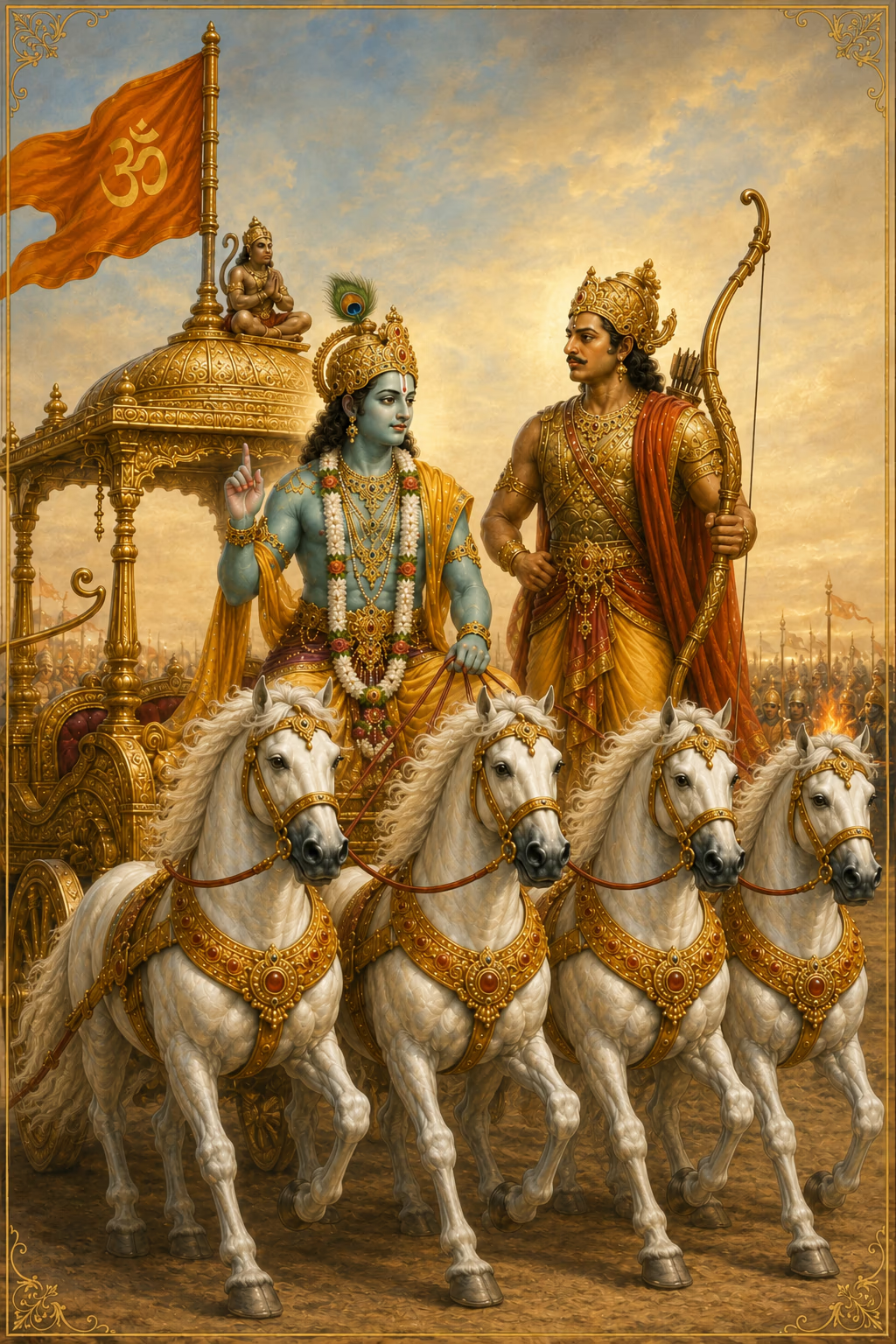
यदि ज्ञान ही श्रेष्ठ है, तो कर्म क्यों करें? अर्जुन के इसी प्रश्न से तीसरा अध्याय खुलता है — और श्रीकृष्ण का उत्तर कर्मयोग का हृदय है। वे कहते हैं: कोई क्षणभर भी कर्म किये बिना नहीं रह सकता; प्रश्न यह नहीं कि कर्म करें या नहीं, बल्कि कैसे करें। कर्म तो करना ही है — पर यज्ञ-भाव से: हर कर्म एक अर्पण की तरह, कुशलता और लगन से, फल की आसक्ति छोड़कर। ऐसा कर्म शुद्ध करता है, लोक का संग्रह (कल्याण) करता है, और किसी को बाँधता नहीं। दूसरे के श्रेष्ठ धर्म से अपना साधारण स्वधर्म ही श्रेयस्कर है। और उस असली शत्रु को पहचानो जो हमें अकर्तव्य में घसीटता है — काम, और काम के टूटने से उपजा क्रोध।
If wisdom is the goal, why act at all? Arjuna's question opens chapter 3 — and Krishna's answer is the heart of karma-yoga. No one can stop acting even for a moment, he says; the choice is not whether to act but how. Act you must — but as yajña, sacrifice: every deed done as an offering, with skill and care, free of attachment to its fruit. Such action purifies, sustains the world (loka-saṅgraha), and binds no one. Do your own duty (svadharma), however humble, rather than another's done well. And know the real enemy that drags us into wrong action: desire, and the anger born when desire is thwarted.
“कर्मयोग — आसक्ति छोड़कर कर्म कर” ॥ १९ ॥ · मूल चित्र — इस परियोजना हेतु
श्रीकृष्ण उपदेश-मुद्रा में अर्जुन को निष्काम कर्म की प्रेरणा देते हैं; अर्जुन दृढ़ होकर कर्तव्य के लिए गाण्डीव उठाते हैं, पीछे यज्ञ की सूक्ष्म आभा।
Krishna, hand raised in teaching, bids Arjuna act without attachment; strengthened, Arjuna takes up Gāṇḍīva for his duty, a faint yajña-glow behind them.
jyāyasī cet karmaṇas te matā buddhir janārdana । tat kiṁ karmaṇi ghore māṁ niyojayasi keśava ॥
अर्जुन बोले—हे जनार्दन ! यदि आपको कर्म की अपेक्षा ज्ञान श्रेष्ठ मान्य है तो फिर हे केशव ! मुझे भयंकर कर्म में क्यों लगाते हैं ?
Arjuna said: If You hold that knowledge is superior to action, O Janārdana, why then, O Keśava, do You urge me into this terrible deed?
सरल अर्थ: अर्जुन पूछते हैं — हे जनार्दन, यदि आपके मत में ज्ञान कर्म से श्रेष्ठ है, तो फिर हे केशव, आप मुझे इस भयंकर युद्धरूपी कर्म में क्यों लगा रहे हैं?In simple words: Chapter 3 opens with Arjun's honest confusion. In Chapter 2 Krishna praised both wisdom and steady action, and Arjun heard him seeming to rate inner knowledge above outer doing. So he asks the natural question: if understanding is the higher path, why are you pushing me toward something as brutal as this war? He wants the apparent contradiction cleared up.
vyāmiśreṇeva vākyena buddhiṁ mohayasīva me । tad ekaṁ vada niścitya yena śreyo 'ham āpnuyām ॥
आप मिले हुए-से वचनों से मेरी बुद्धि को मानो मोहित कर रहे हैं । इसलिये उस एक बात को निश्चित करके कहिये जिससे मैं कल्याण को प्राप्त हो जाऊँ
With these seemingly mixed words You are, as it were, bewildering my understanding. Tell me decisively that one thing by which I may attain the highest good.
सरल अर्थ: आपके मानो उलझे हुए-से वचनों से मेरी बुद्धि जैसे भ्रम में पड़ गई है। इसलिए कृपया वह एक निश्चित बात बता दीजिए जिससे मेरा परम कल्याण हो।In simple words: Arjun isn't accusing Krishna of really contradicting himself — he says the words 'seem' mixed and his mind 'seems' confused. The teaching is subtle and he's caught between two threads. So he makes a clean request: drop the either/or, just give me one definite path I can actually follow to reach what's truly good for me.
श्रीभगवान् बोले—हे निष्पाप ! इस लोक में दो प्रकार की निष्ठा मेरे द्वारा पहले वर्णन की गयी है । उनमें से सांख्ययोगियों की निष्ठा तो ज्ञान योग से और योगियों की निष्ठा कर्मयोग से होती है
The Blessed Lord said: In this world a twofold path was taught by Me of old, O sinless one — the path of knowledge for the contemplatives, and the path of action for the active.
सरल अर्थ: श्रीभगवान् कहते हैं — हे निष्पाप अर्जुन, इस संसार में मैंने पहले दो प्रकार की निष्ठाएँ बताई हैं — ज्ञानियों (सांख्ययोगियों) के लिए ज्ञानयोग, और कर्मयोगियों के लिए कर्मयोग।In simple words: Krishna clears up the confusion right away: these aren't two rival options where one is better. They are two doorways into the same goal, suited to two kinds of temperaments — the reflective person who reaches truth mainly through inner inquiry, and the active person who reaches it through selfless work. He never said one cancels the other.
na karmaṇām anārambhān naiṣkarmyaṁ puruṣo 'śnute । na ca saṁnyasanād eva siddhiṁ samadhigacchati ॥
मनुष्य न तो कर्मों का आरम्भ किये बिना निष्कर्मता को यानी योगनिष्ठा को प्राप्त होता है और न कर्मों के केवल त्याग मात्र से सिद्धि यानी सांख्यनिष्ठा को ही प्राप्त होता है
Not by abstaining from actions does a person attain freedom from action, nor by mere renunciation does he reach perfection.
सरल अर्थ: मनुष्य केवल कर्मों को आरम्भ न करने मात्र से कर्मबंधन से रहित (निष्क्रिय-अवस्था) नहीं हो जाता, और न ही केवल कर्मों को छोड़ देने मात्र से सिद्धि को प्राप्त कर लेता है।In simple words: Here's the key correction. You can't escape the bondage of action simply by refusing to act — sitting still doesn't make you free, it just makes you idle. And merely walking away from your duties ('I renounce!') doesn't bring spiritual perfection either. Inaction and dropping out are not the same as the inner freedom Krishna is pointing to.
na hi kaścit kṣaṇam api jātu tiṣṭhaty akarmakṛt । kāryate hy avaśaḥ karma sarvaḥ prakṛtijair guṇaiḥ ॥
निःसन्देह कोई भी मनुष्य किसी भी काल में क्षण मात्र भी बिना कर्म किये नहीं रहता; क्योंकि सारा मनुष्य समुदाय प्रकृति जनित गुणों द्वारा परवश हुआ कर्म करने के लिये बाध्य किया जाता है
For no one can ever remain even for a moment without performing action; everyone is driven to act, helplessly, by the qualities born of nature.
सरल अर्थ: क्योंकि कोई भी मनुष्य एक क्षण भी कर्म किए बिना नहीं रह सकता; सभी प्राणी प्रकृति से उत्पन्न गुणों के वश में होकर विवश होकर कर्म करते ही हैं।In simple words: Why is mere abstaining impossible? Because being alive is itself activity. Even sitting quietly, the body breathes, the mind moves, nature's forces (the guṇas) keep pushing us. No one stays truly action-free for even a second. So the real question is never 'act or not act' — it's 'how to act rightly.'
karmendriyāṇi saṁyamya ya āste manasā smaran । indriyārthān vimūḍhātmā mithyācāraḥ sa ucyate ॥
जो मूढबुद्धि मनुष्य समस्त इन्द्रियों को हठपूर्वक ऊपर से रोककर मन से उन इन्द्रियों के विषयों का चिन्तन करता रहता है, वह मिथ्याचारी अर्थात् दम्भी कहा जाता है
He who restrains his organs of action but sits dwelling in his mind upon the objects of the senses — that deluded soul is called a hypocrite.
सरल अर्थ: जो मनुष्य कर्मेन्द्रियों को तो बाहर से रोककर बैठ जाता है, पर मन ही मन इन्द्रियों के विषयों का चिंतन करता रहता है — वह मूढ़बुद्धि मिथ्याचारी (पाखंडी) कहलाता है।In simple words: Krishna exposes a fake form of self-control. Someone may freeze the body — hands still, eyes shut, pretending to be a renunciant — while inside, the mind keeps feasting on the very pleasures he's pretending to have given up. That's not discipline; it's self-deception. Outer stillness with an obsessed mind is just hypocrisy.
yas tv indriyāṇi manasā niyamyārabhate 'rjuna । karmendriyaiḥ karmayogam asaktaḥ sa viśiṣyate ॥
किंतु हे अर्जुन ! जो पुरुष मन से इन्द्रियों को वश में करके अनासक्त हुआ समस्त इन्द्रियों द्वारा कर्मयोग का आचरण करता है, वही श्रेष्ठ है
But he who, controlling the senses by the mind, O Arjuna, engages the organs of action in the yoga of action, unattached — he excels.
सरल अर्थ: परंतु हे अर्जुन, जो मनुष्य मन के द्वारा इन्द्रियों को वश में करके, आसक्ति-रहित होकर कर्मेन्द्रियों से कर्मयोग का आचरण करता है — वही श्रेष्ठ है।In simple words: Now the genuine path. The truly superior person isn't the one who quits action, but the one who first reins in the senses from within (with the mind), and then throws himself fully into his work — without clinging to the rewards. Engaged but unattached. That inner freedom while acting is far higher than any pretended withdrawal.
niyataṁ kuru karma tvaṁ karma jyāyo hy akarmaṇaḥ । śarīrayātrāpi ca te na prasidhyed akarmaṇaḥ ॥
तू शास्त्र विहित कर्तव्य कर्म कर; क्योंकि कर्म न करने की अपेक्षा कर्म करना श्रेष्ठ है तथा कर्म न करने से तेरा शरीर-निर्वाह भी नहीं सिद्ध होगा
Perform your prescribed duty, for action is indeed better than inaction; even the maintenance of your body could not succeed through inaction.
सरल अर्थ: तू अपने नियत (शास्त्रविहित) कर्म को कर, क्योंकि कर्म न करने की अपेक्षा कर्म करना ही श्रेष्ठ है; कर्म किए बिना तो तेरे शरीर का निर्वाह भी सिद्ध नहीं हो सकता।In simple words: Krishna gives the practical bottom line: do the duty that's rightly yours. Doing is better than not-doing — and not for grand reasons alone. Look at plain life: even keeping the body alive needs action — food, movement, effort. If you can't sustain your own body without acting, the dream of 'achieving' anything by sitting idle collapses. So act — but act rightly.
यज्ञ के निमित्त किये जाने वाले कर्मों से अतिरिक्त दूसरे कर्मों में लगा हुआ ही यह मनुष्य समुदाय कर्मों से बँधता है । इसलिये हे अर्जुन ! तू आसक्ति से रहित होकर उस यज्ञ के निमित्त ही भलीभाँति कर्तव्य कर्म कर
Work done as a sacrifice (yajña) for the sake of the Supreme alone is free of bondage; any other work binds this world. Therefore, O son of Kuntī, perform your duty for that sake, free from attachment.
सरल अर्थ: यज्ञ अर्थात् भगवान् की प्रसन्नता के लिए किया गया कर्म बन्धन में नहीं डालता। इसके अतिरिक्त जो भी कर्म स्वार्थ या फल की आसक्ति से किया जाता है, वही मनुष्य को इस संसार में बाँध देता है। इसलिए हे अर्जुन, आसक्ति छोड़कर केवल भगवान् के लिए अपना कर्तव्य करते रहो।In simple words: Action done as an offering to the Divine does not trap you. Action done out of selfish craving does. So act for that higher purpose, with no clinging to results.
प्रजापति ब्रह्मा ने कल्प के आदि में यज्ञ सहित प्रजाओं को रचकर उनसे कहा कि तुम लोग इस यज्ञ के द्वारा वृद्धि को प्राप्त होओ और यह यज्ञ तुम लोगों को इच्छित भोग प्रदान करने वाला हो
In the beginning the Lord of creatures sent forth humankind together with sacrifice and said: "By this shall you prosper; let this be the cow of plenty that fulfills your desires."
सरल अर्थ: सृष्टि के आरम्भ में प्रजापति ने मनुष्यों को यज्ञ के साथ रचा और कहा — इस यज्ञ के द्वारा तुम उन्नति करो, वृद्धि पाओ; यही यज्ञ तुम्हारी इच्छाओं को पूर्ण करने वाली कामधेनु (इच्छित वस्तु देने वाली गाय) सिद्ध हो।In simple words: At creation, the Creator made people along with sacrifice and said: use this to flourish. Sacrifice would be like a wish-fulfilling cow, granting all you genuinely need.
तुम लोग इस यज्ञ के द्वारा देवताओं को उन्नत करो और वे देवता तुम लोगों को उन्नत करें । इस प्रकार निःस्वार्थभाव से एक-दूसरे को उन्नत करते हुए तुम लोग परम कल्याण को प्राप्त हो जाओगे
By this sacrifice nourish the gods, and may the gods nourish you; nourishing one another, you shall attain the highest good.
सरल अर्थ: इस यज्ञ के द्वारा तुम देवताओं को सन्तुष्ट और पुष्ट करो, और वे देवता तुम्हें पुष्ट करें। इस प्रकार एक-दूसरे का पोषण करते हुए तुम परम कल्याण को प्राप्त कर लोगे।In simple words: Through sacrifice you support the higher powers that run nature, and they support you in return. This mutual giving leads everyone to the greatest welfare.
iṣṭān bhogān hi vo devā dāsyante yajña-bhāvitāḥ । tair dattān apradāyaibhyo yo bhuṅkte stena eva saḥ ॥
यज्ञ के द्वारा बढ़ाये हुए देवता तुम लोगों को बिना माँगे ही इच्छित भोग निश्चय ही देते रहेंगे। इस प्रकार उन देवताओं के द्वारा दिये हुए भोगों को जो पुरुष उनको बिना दिये स्वयं भोगता है, वह चोर ही है
Nourished by sacrifice, the gods will grant you the enjoyments you desire. But one who enjoys their gifts without offering anything back to them is verily a thief.
सरल अर्थ: यज्ञ से सन्तुष्ट हुए देवता तुम्हें इच्छित भोग प्रदान करेंगे। परन्तु जो मनुष्य उन देवताओं के दिए हुए भोगों को उन्हें (यज्ञादि के रूप में) बिना अर्पण किए स्वयं ही भोगता है, वह निश्चय ही चोर है।In simple words: When you cooperate with the cosmic order, you receive what you need. But to take all of nature's gifts and give nothing back, living only for yourself, is a kind of theft.
yajña-śiṣṭāśinaḥ santo mucyante sarva-kilbiṣaiḥ । bhuñjate te tv aghaṁ pāpā ye pacanty ātma-kāraṇāt ॥
यज्ञ से बचे हुए अन्न को खाने वाले श्रेष्ठ पुरुष सब पापों से मुक्त हो जाते हैं और जो पापी लोग अपना शरीर पोषण करने के लिये ही अन्न पकाते हैं, वे तो पाप को खाते हैं
The good, who eat what remains after the sacrifice, are freed from all sins. But the wicked, who cook food only for their own sake, eat only sin.
सरल अर्थ: जो श्रेष्ठ पुरुष यज्ञ करने के पश्चात् बचे हुए अन्न को ही खाते हैं, वे समस्त पापों से मुक्त हो जाते हैं। परन्तु जो पापी लोग केवल अपने ही शरीर के पोषण के लिए अन्न पकाते (और भोगते) हैं, वे तो पाप का ही भक्षण करते हैं।In simple words: Those who first offer and share, then take what is left, are freed from wrongdoing. Those who prepare and consume everything only for themselves take in nothing but fault.
सरल अर्थ: सम्पूर्ण प्राणी अन्न से उत्पन्न होते हैं, अन्न की उत्पत्ति वर्षा से होती है, वर्षा यज्ञ से होती है, और यज्ञ विहित कर्मों से उत्पन्न होने वाला है।In simple words: Living beings live on food; food grows from rain; rain comes through sacrifice; and sacrifice springs from action. Everything is linked in one cycle.
सम्पूर्ण प्राणी अन्न से उत्पन्न होते हैं, अन्न की उत्पत्ति वृष्टि से होती है, वृष्टि यज्ञ से होती है और यज्ञ विहित कर्मों से उत्पन्न होने वाला है। कर्म समुदाय को तू वेद से उत्पन्न और वेद को अविनाशी परमात्मा से उत्पन्न हुआ जान। इससे सिद्ध होता है कि सर्वव्यापी परम अक्षर परमात्मा सदा ही यज्ञ में प्रतिष्ठित है
From food beings come into being; from rain food is produced; from sacrifice rain arises; and sacrifice is born of action. Know that action arises from Brahman (the Veda), and Brahman arises from the Imperishable. Therefore the all-pervading Brahman is ever established in sacrifice.
सरल अर्थ: कर्म वेद (ब्रह्म) से उत्पन्न होता है, यह जान, और वेद अविनाशी परमात्मा से प्रकट हुआ है। इसी कारण सर्वव्यापी परमात्मा सदा ही यज्ञ में प्रतिष्ठित (स्थित) रहता है।In simple words: Right action is guided by the Veda, and the Veda comes from the eternal, imperishable Reality. So the all-pervading Divine is always present at the heart of sacrifice.
हे पार्थ! जो पुरुष इस लोक में इस प्रकार परम्परा से प्रचलित सृष्टि चक्र के अनुकूल नहीं बरतता अर्थात् अपने कर्तव्य का पालन नहीं करता, वह इन्द्रियों के द्वारा भोगों में रमण करने वाला पापायु पुरुष व्यर्थ ही जीता है
One who does not follow here the wheel thus set in motion, living in sin and delighting in the senses — that one, O Pārtha, lives in vain.
सरल अर्थ: हे पार्थ, इस प्रकार सृष्टि-चक्र के अनुसार जो मनुष्य यहाँ अपना कर्तव्य नहीं निभाता, जो इन्द्रियों के भोगों में ही रमा रहता है और पापमय जीवन जीता है, वह व्यर्थ ही जीता है।In simple words: This great cycle of mutual giving keeps the world going. Whoever refuses to play their part and lives only for sense-pleasure, unkindly and selfishly, is wasting their life.
yas tv ātma-ratir eva syād ātma-tṛptaś ca mānavaḥ । ātmany eva ca santuṣṭas tasya kāryaṁ na vidyate ॥
परन्तु जो मनुष्य आत्मा में ही रमण करने वाला और आत्मा में ही तृप्त तथा आत्मा में ही सन्तुष्ट हो उसके लिये कोई कर्तव्य नहीं है
But for the person who delights only in the Self, who is satisfied with the Self, and who is content in the Self alone — for him there remains no duty to be done.
सरल अर्थ: जो मनुष्य केवल अपनी आत्मा में ही रमता है, आत्मा से ही तृप्त रहता है और आत्मा में ही संतुष्ट है, उसके लिए कोई कर्तव्य शेष नहीं रहता। ऐसा आत्मज्ञानी पुरुष पूर्ण हो चुका है, उसे बाहर किसी काम से कुछ पाना नहीं रह जाता।In simple words: A person who has found complete joy and fullness within their own true Self no longer has any outer duty left to fulfill — they have nothing more to gain from action.
उस महापुरुष का इस विश्व में न तो कर्म करने से कोई प्रयोजन रहता है और न कर्मों के न करने से ही कोई प्रयोजन रहता है। तथा सम्पूर्ण प्राणियों में भी इसका किञ्चिन्मात्र भी स्वार्थ का सम्बन्ध नहीं रहता
For such a one there is no purpose served by action done, nor any loss from action left undone; nor does he depend on any being for any object whatsoever.
सरल अर्थ: ऐसे आत्मतृप्त पुरुष को न तो कर्म करने से कोई लाभ है और न कर्म न करने से कोई हानि। उसे किसी भी प्राणी से अपना कोई स्वार्थ सिद्ध नहीं करना होता; वह किसी पर निर्भर नहीं रहता।In simple words: Such a Self-fulfilled person gains nothing by acting and loses nothing by not acting. He needs nothing from anyone and depends on no one to get anything done.
इसलिये तू निरन्तर आसक्ति से रहित होकर सदा कर्तव्य कर्म को भलीभाँति करता रह। क्योंकि आसक्ति से रहित होकर कर्म करता हुआ मनुष्य परमात्मा को प्राप्त हो जाता है
Therefore, always perform your prescribed duty without attachment; for by performing action without attachment a person attains the Supreme.
सरल अर्थ: इसलिए तू आसक्ति को छोड़कर सदा अपना कर्तव्य-कर्म भली-भाँति करता रह। आसक्ति-रहित होकर कर्म करता हुआ मनुष्य परमात्मा को प्राप्त कर लेता है।In simple words: So keep doing your proper duty, always — but without clinging to the results. Acting in this detached way is what leads a person all the way to the Supreme.
जनकादि ज्ञानीजन भी आसक्ति रहित कर्मद्वारा ही परम सिद्धि को प्राप्त हुए थे। इसलिये तथा लोक संग्रह को देखते हुए भी तू कर्म करने को ही योग्य है अर्थात् तुझे कर्म करना ही उचित है
It was indeed through action alone that Janaka and others attained perfection. Even for the sake of guiding the world, you ought to act.
सरल अर्थ: राजा जनक आदि ज्ञानी पुरुषों ने भी कर्म के द्वारा ही परम सिद्धि प्राप्त की थी। लोक-संग्रह अर्थात संसार को सन्मार्ग पर रखने के लिए भी तुझे कर्म करना ही उचित है।In simple words: Wise kings like Janaka reached the highest goal through action itself. And even just to set a good example and hold society together, you should keep working.
yad yad ācarati śreṣṭhas tat tad evetaro janaḥ । sa yat pramāṇaṁ kurute lokas tad anuvartate ॥
श्रेष्ठ पुरुष जो-जो आचरण करता है, अन्य पुरुष भी वैसा-वैसा ही आचरण करते हैं। वह जो कुछ प्रमाण कर देता है, समस्त मनुष्य समुदाय उसी के अनुसार बरतने लग जाता है
Whatever a great person does, others do the very same; whatever standard he sets, the world follows that.
सरल अर्थ: श्रेष्ठ पुरुष जो-जो आचरण करता है, अन्य साधारण लोग भी वैसा ही करते हैं। वह जो कुछ प्रमाण (आदर्श) स्थापित कर देता है, सारा संसार उसी के अनुसार चलने लगता है।In simple words: Ordinary people copy whatever a respected person does. Whatever example a leader sets, everyone else takes it as the standard and follows it.
na me pārthāsti kartavyaṁ triṣu lokeṣu kiñcana । nānavāptam avāptavyaṁ varta eva ca karmaṇi ॥
हे अर्जुन ! मुझे इन तीनों लोकों में न तो कुछ कर्तव्य है और न कोई भी प्राप्त करने योग्य वस्तु अप्राप्त है, तो भी मैं कर्म में ही बरतता हूँ
O Partha, there is nothing in all the three worlds that I am obliged to do, nothing unattained that I need to attain — yet I remain engaged in action.
सरल अर्थ: हे पार्थ! तीनों लोकों में मेरे लिए कोई कर्तव्य नहीं है, न कोई वस्तु अप्राप्त है जिसे मुझे पाना हो; फिर भी मैं कर्म में ही लगा रहता हूँ।In simple words: Krishna says: Arjuna, I have no duty I must do anywhere in all the worlds, and there is nothing left for Me to gain — yet even so, I keep on acting.
yadi hy ahaṁ na varteyaṁ jātu karmaṇy atandritaḥ । mama vartmānuvartante manuṣyāḥ pārtha sarvaśaḥ ॥
क्योंकि हे पार्थ ! यदि कदाचित् मैं सावधान होकर कर्मों में न बरतूँ तो बड़ी हानि हो जाय; क्योंकि मनुष्य सब प्रकार से मेरे ही मार्ग का अनुसरण करते हैं
For if I were ever to refrain from tireless action, O Partha, people would follow My path in every way.
सरल अर्थ: हे पार्थ! यदि मैं कभी सावधानी से कर्म करना छोड़ दूँ, तो बड़ी हानि हो जाए; क्योंकि सब मनुष्य सब प्रकार से मेरे ही मार्ग का अनुसरण करते हैं।In simple words: If I ever stopped working diligently, people everywhere would imitate Me and also stop — since everyone follows the path I walk.
utsīdeyur ime lokā na kuryāṁ karma ced aham । saṅkarasya ca kartā syām upahanyām imāḥ prajāḥ ॥
इसलिये यदि मैं कर्म न करूँ तो ये सब मनुष्य नष्ट-भ्रष्ट हो जायँ और मैं संकरता का करने वाला होऊँ तथा इस समस्त प्रजा को नष्ट करने वाला बनूँ
If I did not perform action, these worlds would fall into ruin; I would be the cause of confusion and would destroy these creatures.
सरल अर्थ: यदि मैं कर्म न करूँ तो ये सब लोक नष्ट-भ्रष्ट हो जाएँ; मैं वर्ण-संकर (समाज में अव्यवस्था) फैलाने का कारण बनूँ और इन सारी प्रजा का विनाश कर दूँ।In simple words: If I stopped acting, the whole world would collapse into chaos. I would be the cause of social breakdown and would end up ruining all these people.
हे भारत ! कर्म में आसक्त हुए अज्ञानीजन जिस प्रकार कर्म करते हैं, आसक्ति रहित विद्वान् भी लोक संग्रह करना चाहता हुआ उसी प्रकार कर्म करे
As the ignorant act with attachment to their work, O Bharata, so should the wise act, but without attachment, desiring to guide and uphold the world.
सरल अर्थ: हे भारत! जैसे अज्ञानी लोग फल की आसक्ति के साथ कर्म करते हैं, वैसे ही ज्ञानी को भी कर्म करना चाहिए — पर बिना किसी आसक्ति के, केवल लोककल्याण के लिए, ताकि लोग सही मार्ग पर चलें।In simple words: An ignorant person works hard because he is attached to the results. A wise person should work just as diligently, but without that attachment — purely to set a good example and keep society on the right path.
परमात्मा स्वरूप में अटल स्थित हुए ज्ञानी पुरुष को चाहिये कि वह शास्त्र विहित कर्मों में आसक्ति वाले अज्ञानियों की बुद्धि में भ्रम अर्थात् कर्मों में अश्रद्धा उत्पन्न न करे, किंतु स्वयं शास्त्र विहित समस्त कर्म भलीभाँति करता हुआ उनसे भी वैसे ही करवावे
Let the wise one not unsettle the minds of the ignorant who are attached to action; rather, acting himself with discipline, he should inspire them to perform all their duties well.
सरल अर्थ: ज्ञानी को चाहिए कि वह फल में आसक्त अज्ञानी लोगों की बुद्धि में भ्रम न पैदा करे — यानी उनसे यह न कहे कि कर्म छोड़ दो। बल्कि स्वयं भली-भाँति कर्म करते हुए उन्हें भी अपने सब कर्म ठीक से करने के लिए प्रेरित करे।In simple words: A wise person should not confuse simple, work-attached people by telling them to give up their duties. Instead, by doing his own work properly, he should encourage them to keep doing theirs well too.
वास्तव में सम्पूर्ण कर्म सब प्रकार से प्रकृति के गुणों द्वारा किये जाते हैं तो भी जिसका अन्तःकरण अहंकार से मोहित हो रहा है, ऐसा अज्ञानी 'मैं कर्ता हूँ' ऐसा मानता है
All actions are performed in every way by the qualities (guṇas) of material nature. But one whose self is deluded by ego thinks, "I am the doer."
सरल अर्थ: सारे कर्म वास्तव में प्रकृति के तीन गुणों (सत्त्व, रज, तम) के द्वारा ही किए जाते हैं। पर अहंकार से जिसकी बुद्धि मोहित हो गई है, वह समझता है कि 'मैं ही कर्ता हूँ।'In simple words: In reality, all our actions are driven by the forces of nature (the three guṇas) working through the body and mind. But a person fooled by ego thinks, "I am the one doing it all."
tattvavit tu mahābāho guṇakarmavibhāgayoḥ । guṇā guṇeṣu vartanta iti matvā na sajjate ॥
परंतु हे महाबाहो ! गुण विभाग और कर्म विभाग के तत्त्व को जानने वाला ज्ञानयोगी सम्पूर्ण गुण ही गुणों में बरत रहे हैं, ऐसा समझकर उनमें आसक्त नहीं होता
But one who knows the truth, O mighty-armed, about the divisions of the guṇas and their actions, understands that it is the guṇas that act upon the guṇas — and so he does not become attached.
सरल अर्थ: परन्तु हे महाबाहो! जो गुणों और कर्मों के विभाग का तत्त्व जानता है, वह समझता है कि गुण ही गुणों में बरत रहे हैं (इन्द्रियाँ अपने विषयों में लगी हैं) — ऐसा जानकर वह उनमें आसक्त नहीं होता।In simple words: But one who truly understands knows that it is nature's qualities acting among nature's objects — the senses simply engaging with their objects. Knowing this, he does not get caught up or attached to the work.
प्रकृति के गुणों से अत्यन्त मोहित हुए मनुष्य गुणों में और कर्मों में आसक्त रहते हैं, उन पूर्णतया न समझने वाले मन्दबुद्धि अज्ञानियों को पूर्णतया जानने वाला ज्ञानी विचलित न करे
Those deluded by the qualities of material nature become attached to the actions born of those qualities. The one who knows the whole should not unsettle these dull-witted people who know only a part.
सरल अर्थ: प्रकृति के गुणों से अच्छी तरह मोहित हुए लोग गुणों के कर्मों में आसक्त हो जाते हैं। पूर्ण ज्ञानी को चाहिए कि वह इन अधूरे ज्ञान वाले मन्दबुद्धि लोगों को विचलित न करे (अर्थात् उनकी श्रद्धा और कर्म में बाधा न डाले)।In simple words: People who are fooled by nature's qualities get attached to their actions. A person of complete knowledge should not disturb or confuse these people who understand only a little — let them keep doing their work with faith.
मुझ अन्तर्यामी परमात्मा में लगे हुए चित्त द्वारा सम्पूर्ण कर्मों को मुझ में अर्पण करके आशारहित, ममतारहित और सन्तापरहित होकर युद्ध कर
Surrendering all actions to Me, with your mind fixed on the Self, free from longing and from the sense of "mine," and rid of mental fever — fight!
सरल अर्थ: अपने सब कर्मों को मुझमें अर्पित करके, मन को परमात्मा में लगाकर, फल की इच्छा से रहित और ममता से रहित होकर, तथा मन के सन्ताप (शोक-चिन्ता) को त्यागकर तुम युद्ध करो।In simple words: Dedicate all your actions to Me, keep your mind on the higher Self, drop all craving for results and all sense of "this is mine," let go of mental anxiety — and then act (fight your battle of duty).
सर्व-कर्म-अर्पण — सब कर्म समर्पित कर दोSarva-karma-arpaṇa — dedicate all your actions
श्रीकृष्ण का सबसे संक्षिप्त उपदेश (३·३०): अपने सब कर्म परमात्मा को सौंप दो, 'मैं चाहता हूँ' और 'यह मेरा है' को छोड़ दो, और फिर बिना संताप के कर्म करो। यह एक ही दैनिक संकल्प में सिमटा हुआ कर्मयोग है।Krishna's most condensed instruction (3.30): hand over all your actions to the Divine, drop 'I want' and 'it is mine', and then act free of feverish anxiety. It is karma-yoga compressed into a single daily resolve.
दिन के आरम्भ में एक शान्त साँस लेकर संकल्प करो: 'आज मैं जो भी करूँ, वह तुम्हें अर्पित है।' (मयि सर्वाणि कर्माणि संन्यस्य)At the start of the day, take one quiet breath and resolve: 'All that I do today, I offer to You.' (mayi sarvāṇi karmāṇi sannyasya)
दिनभर कर्म करते हुए, जब 'मैं' और 'मेरा' कसने लगे, मन में संकल्प दोहराओ और ढीले हो जाओ।As you act through the day, when 'I' and 'mine' tighten, silently repeat the resolve and loosen.
क्या देखें: What to notice: ध्यान दो कि वह 'ज्वर' — चिंता और अहंकार की बेचैन तपन — शान्त होता है, जबकि तुम उतनी ही लगन से काम करते रहते हो।Notice the 'fever' (jvara) — the restless heat of anxiety and ego — cooling, even as you work just as hard.
ye me matam idaṁ nityam anutiṣṭhanti mānavāḥ । śraddhāvanto 'nasūyanto mucyante te 'pi karmabhiḥ ॥
जो कोई मनुष्य दोष दृष्टि से रहित और श्रद्धायुक्त होकर मेरे इस मत का सदा अनुसरण करते हैं, वे भी सम्पूर्ण कर्मों से छूट जाते हैं
Those people who constantly practice this teaching of Mine, full of faith and free from fault-finding, they too are released from the bondage of actions.
सरल अर्थ: जो मनुष्य श्रद्धावान् होकर और दोष-दृष्टि से रहित होकर मेरे इस उपदेश का सदा पालन करते हैं, वे भी कर्मों के बन्धन से मुक्त हो जाते हैं।In simple words: Those who sincerely live by this teaching of Mine — with faith and without finding fault in it — also become free from the bondage created by actions.
ye tv etad abhyasūyanto nānutiṣṭhanti me matam । sarvajñānavimūḍhāṁs tān viddhi naṣṭān acetasaḥ ॥
परंतु जो मनुष्य मुझ में दोषारोपण करते हुए मेरे इस मत के अनुसार नहीं चलते हैं, उन मूर्खों को तू सम्पूर्ण ज्ञानों में मोहित और नष्ट हुए ही समझ
But those who, finding fault, do not follow this teaching of Mine — know them to be deluded in all knowledge, devoid of discernment, and lost.
सरल अर्थ: परन्तु जो लोग मेरे इस उपदेश में दोष निकालते हुए इसका पालन नहीं करते, उन्हें तू समस्त ज्ञान से मोहित, विवेकहीन और नष्ट हुआ (पतन की ओर गया) ही समझ।In simple words: But those who criticize this teaching and refuse to follow it — understand that they are confused about all real knowledge, lack sound judgment, and are heading toward ruin.
सभी प्राणी प्रकृति को प्राप्त होते हैं अर्थात् अपने स्वभाव से परवश हुए कर्म करते हैं, ज्ञानवान् भी अपनी प्रकृति के अनुसार चेष्टा करता है। फिर इसमें किसी का हठ क्या करेगा
Even a person of wisdom acts according to his own nature; all beings follow their nature. What can suppression accomplish?
सरल अर्थ: ज्ञानी मनुष्य भी अपने स्वभाव के अनुसार ही चेष्टा करता है। सभी प्राणी अपनी प्रकृति के पीछे चलते हैं। फिर ज़बरदस्ती रोकने से क्या होगा? कृष्ण कह रहे हैं कि भीतर के स्वभाव और संस्कारों का वेग बहुत प्रबल है — उसे केवल दबाने भर से काम नहीं चलता, उसे सही दिशा देनी होती है।In simple words: Even a wise person behaves according to his own inborn nature; every creature follows its nature. So merely forcing or suppressing it does little good. The deep momentum of our conditioning is powerful — it must be redirected, not just held down.
indriyasyendriyasyārthe rāga-dveṣau vyavasthitau । tayor na vaśam āgacchet tau hy asya paripanthinau ॥
इन्द्रिय-इन्द्रिय के अर्थ में अर्थात् प्रत्येक इन्द्रिय के विषय में राग और द्वेष छिपे हुए स्थित हैं, मनुष्य को उन दोनों के वश में नहीं होना चाहिये, क्योंकि वे दोनों ही इसके कल्याण मार्ग में विघ्न करने वाले महान् शत्रु हैं
Attraction and aversion abide in each sense, fixed toward its object. One should not come under their sway, for the two are one's waylaying foes.
सरल अर्थ: हर इन्द्रिय अपने-अपने विषय के प्रति राग (खिंचाव) और द्वेष (नफ़रत) से बँधी रहती है। इन दोनों के वश में मनुष्य को नहीं आना चाहिए, क्योंकि ये ही उसके मार्ग को रोकने वाले दुश्मन हैं। साधना में आगे न बढ़ने देने वाले यही दो लुटेरे हैं।In simple words: Every sense is wired with liking and disliking toward its objects. Don't let these two run you, because they are the highway robbers that block your path. Reacting automatically to 'I want this / I hate that' is what derails progress.
अच्छी प्रकार आचरण में लाये हुए दूसरे के धर्म से गुणरहित भी अपना धर्म अति उत्तम है। अपने धर्म में तो मरना भी कल्याणकारक है और दूसरे का धर्म भय को देने वाला है
Better is one's own duty, though imperfectly done, than another's duty well performed. Better is death in one's own duty; another's duty brings danger.
सरल अर्थ: अपना धर्म (अपने स्वभाव और स्थिति के अनुरूप कर्तव्य) भले ही दोषयुक्त हो, फिर भी वह दूसरे के अच्छी तरह निभाए हुए धर्म से श्रेष्ठ है। अपने धर्म में मर जाना भी कल्याणकारी है, परन्तु दूसरे का धर्म भयभीत करने वाला है। अपने सच्चे स्वभाव के अनुसार जीना ही ठीक है, दूसरे की नक़ल करना हानिकारक।In simple words: Your own duty, even done imperfectly, is better than someone else's duty done perfectly. It is better to die doing your own work than to live imitating another's — living someone else's life, against your true nature, is full of danger.
अर्जुन बोले—हे कृष्ण ! तो फिर यह मनुष्य स्वयं न चाहता हुआ भी बलात्कार से लगाये हुए की भाँति किससे प्रेरित होकर पाप का आचरण करता है ?
Arjuna said: But then, O Vārṣṇeya, impelled by what does a person commit sin, even against his will, as if driven by force?
सरल अर्थ: अर्जुन ने पूछा — हे वार्ष्णेय (कृष्ण)! फिर मनुष्य न चाहते हुए भी, मानो किसी ने ज़बरदस्ती लगा दिया हो, ऐसे किस वस्तु की प्रेरणा से पाप करता है? अर्जुन का बहुत सच्चा प्रश्न — हम जानते हैं कि ग़लत है, फिर भी कोई भीतरी ताक़त हमें वही करवा देती है; वह कौन है?In simple words: Arjuna asks: Then what is it that pushes a person to do wrong, even when he doesn't want to — as if shoved by some force? It's the honest human question: we know something is wrong, yet some inner pressure makes us do it anyway. What is that force?
श्रीभगवान् बोले—रजोगुण से उत्पन्न हुआ यह काम ही क्रोध है, यह बहुत खाने वाला अर्थात् भोगों से कभी न अघाने वाला और बड़ा पापी है, इसको ही तू इस विषय में वैरी जान
The Blessed Lord said: It is desire, it is anger, born of the mode of passion (rajas) — all-devouring and greatly sinful. Know this to be the enemy here.
सरल अर्थ: श्रीभगवान बोले — यह काम (इच्छा) है, यही क्रोध है, जो रजोगुण से उत्पन्न होता है। यह बहुत खा जाने वाला (कभी न तृप्त होने वाला) और महान पापी है — इसी को तू यहाँ शत्रु जान। काम पूरा न हो तो वही क्रोध बन जाता है; यही भीतरी दुश्मन है जो हमसे पाप करवाता है।In simple words: Krishna answers: It is desire, and it is anger — both arising from rajas, the restless mode of passion. It is endlessly hungry and deeply corrupting. Know this to be the real enemy. When craving is blocked it flips into anger; this is the inner foe that drives us to wrong.
जिस प्रकार धुएँ से अग्नि और मैल से दर्पण ढका जाता है तथा जिस प्रकार जेर से गर्भ ढका रहता है, वैसे ही उस काम के द्वारा यह ज्ञान ढका रहता है
As fire is veiled by smoke, as a mirror by dust, as an embryo is wrapped in the womb, so is this (wisdom) covered by that (desire).
सरल अर्थ: जैसे धुएँ से आग ढक जाती है, जैसे मैल से दर्पण ढक जाता है, और जैसे झिल्ली से गर्भ ढका रहता है — वैसे ही इस काम के द्वारा यह ज्ञान ढका रहता है। तीन उदाहरणों से बताया कि इच्छा कैसे अलग-अलग मात्रा में हमारी समझ को छिपा देती है।In simple words: Just as smoke hides fire, dust covers a mirror, and a membrane wraps an unborn child, so desire covers our wisdom. The three images show desire clouding our understanding to different degrees — light, medium, and heavy.
और हे अर्जुन ! इस अग्नि के समान कभी न पूर्ण होने वाले कामरूप ज्ञानियों के नित्य वैरी के द्वारा मनुष्य का ज्ञान ढका हुआ है
Wisdom is covered, O son of Kuntī, by this constant enemy of the wise — in the form of desire, insatiable and like fire.
सरल अर्थ: हे कुन्तीपुत्र! इस काम-रूपी, कभी न भरने वाले और अग्नि के समान (जलाने वाले) ज्ञानी के नित्य शत्रु के द्वारा मनुष्य का ज्ञान ढका हुआ है। इच्छा आग की तरह है — जितना ईंधन डालो, उतनी और भड़कती है, कभी तृप्त नहीं होती; यही विवेकी की भी समझ को ढक लेती है।In simple words: O son of Kunti, our wisdom is hidden by this ever-present enemy — desire, which can never be filled and burns like fire. The more you feed a craving, the more it flares; it never says 'enough,' and it clouds even a thoughtful person's judgment.
इन्द्रियाँ, मन और बुद्धि—ये सब इसके वासस्थान कहे जाते हैं। यह काम इन मन, बुद्धि और इन्द्रियों के द्वारा ही ज्ञान को आच्छादित करके जीवात्मा को मोहित करता है
The senses, the mind, and the intellect are said to be its seat; through these it deludes the embodied one by veiling wisdom.
सरल अर्थ: इन्द्रियाँ, मन और बुद्धि — ये इस काम के निवास-स्थान कहे जाते हैं। इन्हीं के द्वारा यह काम ज्ञान को ढककर देहधारी जीव को मोह में डाल देता है। यानी दुश्मन बाहर नहीं, हमारी ही इन्द्रियों, मन और बुद्धि में बैठा है — वहीं से वह हमें भ्रमित करता है।In simple words: The senses, the mind, and the intellect are where desire takes its seat. Working through them, it covers our wisdom and confuses the embodied soul. In other words, the enemy isn't outside — it hides inside our own senses, mind, and intellect, and deludes us from there.
इसलिये हे अर्जुन ! तू पहले इन्द्रियों को वश में करके इस ज्ञान और विज्ञान का नाश करने वाले महान पापी काम को अवश्य ही बलपूर्वक मार डाल
Therefore, O best of the Bharatas, first restrain the senses, and then slay this destroyer — desire — which is the ruiner of knowledge and realization.
सरल अर्थ: इसलिए हे अर्जुन! तू सबसे पहले अपनी इन्द्रियों को वश में कर, और फिर इस पापी काम (इच्छा) का नाश कर दे, जो ज्ञान और विज्ञान दोनों को नष्ट कर देने वाला है। काम पर विजय की शुरुआत इन्द्रियों के संयम से होती है।In simple words: Krishna gives the practical step: first bring your senses under control, then destroy desire — that inner enemy which wrecks both your understanding (jñāna) and your direct experience of truth (vijñāna).
indriyāṇi parāṇy āhur indriyebhyaḥ paraṁ manaḥ । manasas tu parā buddhir yo buddheḥ paratas tu saḥ ॥
इन्द्रियों को स्थूल शरीर से परे यानी श्रेष्ठ, बलवान् और सूक्ष्म कहते हैं; इन इन्द्रियों से परे मन है, मन से भी परे बुद्धि है और जो बुद्धि से भी अन्यन्त परे है वह आत्मा है
The senses are said to be superior to the body; superior to the senses is the mind; higher than the mind is the intellect; and that which is even higher than the intellect is the Self.
सरल अर्थ: शरीर से बढ़कर इन्द्रियाँ हैं, इन्द्रियों से बढ़कर मन है, मन से भी श्रेष्ठ बुद्धि है, और जो बुद्धि से भी परे है — वह आत्मा है। यह भीतर की सीढ़ी है: स्थूल से सूक्ष्म, सूक्ष्म से सूक्ष्मतर की ओर।In simple words: Krishna shows the inner ladder of subtlety: above the gross body stand the senses, above them the mind, above the mind the intellect (buddhi), and highest of all — beyond even the intellect — is the Self (the true 'you').
इस प्रकार बुद्धि से परे अर्थात् सूक्ष्म, बलवान् और अत्यन्त श्रेष्ठ आत्मा को जानकर और बुद्धि के द्वारा मन को वश में करके हे महाबाहो ! तू इस कामरूप दुर्जय शत्रु को मार डाल
Thus, knowing the Self to be higher than the intellect, and steadying the lower self by the higher Self, O mighty-armed one, slay this enemy in the form of desire, so hard to overcome.
सरल अर्थ: इस प्रकार आत्मा को बुद्धि से भी परे जानकर, अपने आप को (मन-बुद्धि को) उस श्रेष्ठ आत्मा के बल से स्थिर करके, हे महाबाहु अर्जुन! इस काम रूपी दुर्जय शत्रु का संहार कर दे। ऊँची आत्म-शक्ति से ही नीचे की प्रवृत्ति जीती जाती है।In simple words: The closing instruction: realize that the Self is even higher than the intellect, then use that higher Self to steady your mind, and with that strength kill desire — the enemy that is so very hard to defeat.
यज्ञभाव — अपने कर्म को अर्पण बना दोYajña-bhāva — turn your work into an offering
दूसरे अध्याय ने फल छोड़ना सिखाया (२·४७)। तीसरा अध्याय उससे गहरी बात जोड़ता है: कर्म को स्वयं यज्ञ — एक पवित्र अर्पण — की तरह करो, अपने लिए सौदे की तरह नहीं। यह एक ही बदलाव साधारण दैनिक कर्म को साधना बना देता है: अहंकार की पकड़ ढीली होती है, मन स्थिर होता है, और तुम्हारा कर्म चुपचाप 'मैं' से बड़े किसी से जुड़ जाता है।Chapter 2 taught releasing the fruit (2.47). Chapter 3 adds the deeper move: do the work itself as yajña — a sacred offering, not a transaction for yourself. This single shift turns ordinary daily work into sādhana: it loosens the ego's grip, steadies the mind, and quietly connects your action to something larger than 'me'.
आज किया जाने वाला एक साधारण काम चुनो — भोजन बनाना, अपनी नौकरी, किसी की सहायता, या कोई छोटा काम।Choose one ordinary task you'll do today — cooking, your job, helping someone, even a chore.
शुरू करने से पहले उसे भीतर ही अर्पित करो: 'यह मैं केवल अपने लिए नहीं करता — इसे अर्पित करता हूँ।' इसे परमात्मा को, या जिनके हित में है उनके कल्याण को अर्पित करो।Before starting, offer it inwardly: 'This I do not for myself alone — I offer it.' Offer it to the Divine, or to the good of those it serves.
काम को पूरे कौशल और लगन से करो, जैसे कोई यज्ञ की अग्नि की सेवा करता है — उपस्थित, अनुद्विग्न, कुछ भी बचाये बिना।Do the work with full skill and care, as one tends a sacred fire — present, unhurried, holding nothing back.
पूरा होने पर परिणाम छोड़ दो — अर्पण तो अर्पित करते ही पूर्ण हो जाता है; फल को पकड़ना तुम्हारा काम नहीं।When it's done, release the result — the offering is complete the moment it is made; the fruit is not yours to clutch.
अवधि: Duration: एक बार में एक काम; धीरे-धीरे पूरे दिन में फैलने दो।One task at a time; let it spread across the day.
क्या देखें: What to notice: ध्यान दो कि वही काम अर्पण-भाव से करने पर कम चिंता और कम 'मुझे क्या मिलेगा' के साथ होता है — और साधारण काम में भी एक शान्त गरिमा और स्थिरता उतर आती है।Notice how the same task, done as offering, carries less anxiety and less 'what's in it for me' — and how a quiet dignity and steadiness enters even mundane work.
अनुभव · स्वयं देखेंAnubhava · see for yourself
एक दिन सब कुछ अर्पण-भाव से करो — और उस शाम पूछो: क्या काम बिगड़ा, या वह गहरा हुआ? अधिकांश पाते हैं कि काम वैसा ही या बेहतर रहता है, पर भीतर का मौसम हल्का हो जाता है। अपने ही हाथों से कमाया वह हल्कापन ही कर्मयोग का प्रमाण है।
For one day, do everything as an offering — and that evening ask: did the work suffer, or did it deepen? Most find the work is the same or better, but the inner weather is lighter. That lightness, earned by your own hands, is karma-yoga proving itself.
ॐ तत्सदिति श्रीमद्भगवद्गीतासूपनिषत्सु ब्रह्मविद्यायां योगशास्त्रे श्रीकृष्णार्जुनसंवादे कर्मयोगो नाम तृतीयोऽध्यायः ॥ ३ ॥
॥ इस प्रकार उपनिषद्, ब्रह्मविद्या तथा योगशास्त्र रूप श्रीमद्भगवद्गीता के श्रीकृष्ण-अर्जुन संवाद में 'कर्मयोग' नामक तीसरा अध्याय पूर्ण हुआ ॥