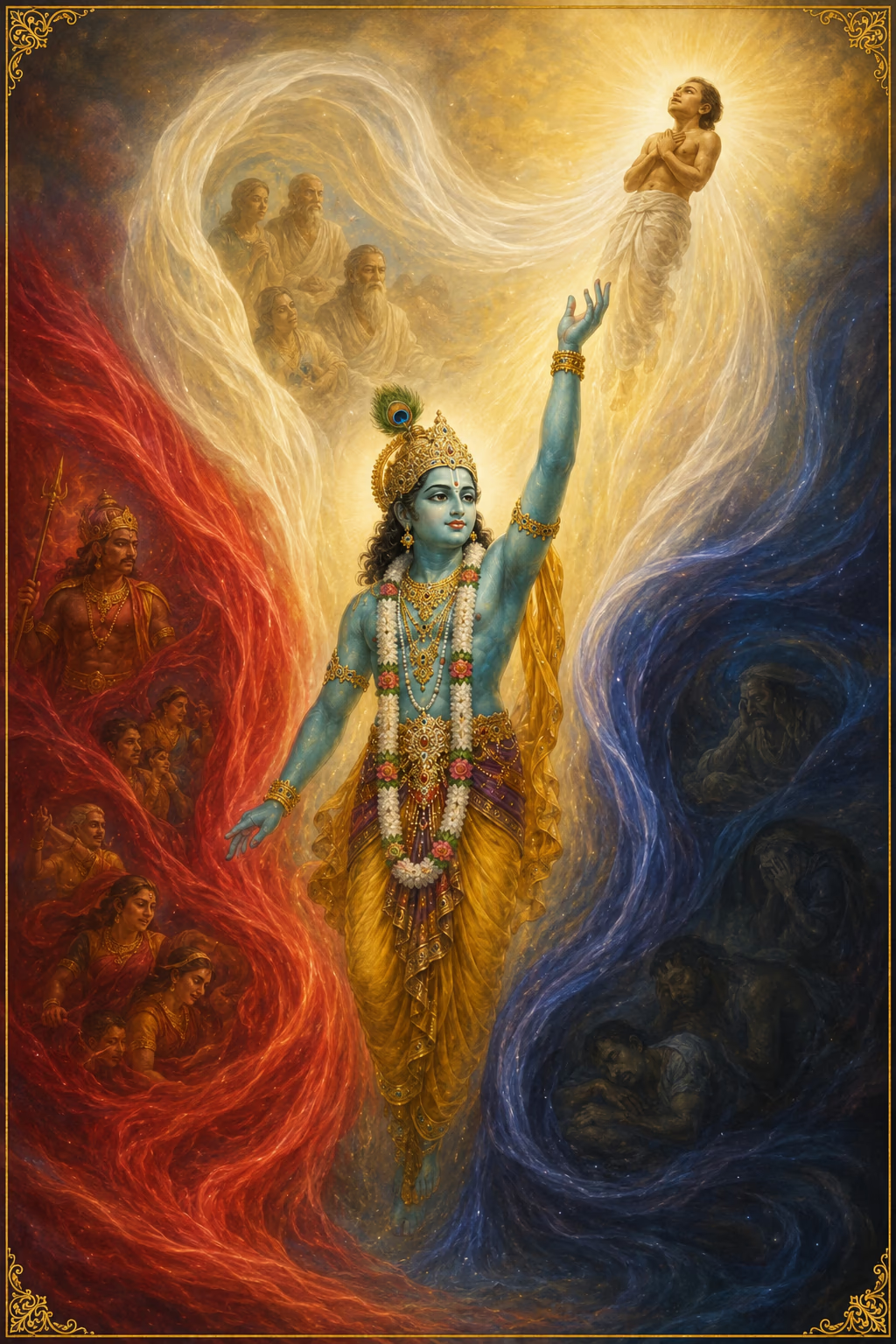
चौदहवाँ अध्याय तीन गुणों का नक्शा खींचता है — प्रकृति के वे तन्तु जिनसे हर मन, मनोदशा और प्रेरणा बुनी जाती है। सत्त्व (पवित्रता: स्पष्टता, प्रकाश, शान्त सुख), रज (राग: तृष्णा, बेचैनी, निरन्तर कर्म) और तम (अन्धकार: जड़ता, मोह, आलस्य) — ये प्रकृति से उत्पन्न होकर अविनाशी आत्मा को भी शरीर में बाँध देते हैं (१४·५-९)। ये एक-दूसरे पर घटते-बढ़ते रहते हैं, इसलिये जीवन कभी देर तक एक रंग का नहीं रहता (१४·१०); श्रीकृष्ण इनके पहचान-चिह्न बताते हैं (१४·११-१३) और मृत्यु के बाद की गति — सत्त्व ऊपर, रज मध्य में, तम नीचे (१४·१४-१८)। मोड़ आता है १४·१९ पर: 'जब द्रष्टा गुणों के सिवा अन्य किसी को कर्ता नहीं देखता और उनसे परे जो है उसे जान लेता है, तब वह मेरे भाव को प्राप्त होता है।' फिर अर्जुन गुणातीत पुरुष के लक्षण पूछते हैं (१४·२१); श्रीकृष्ण उसका वर्णन करते हैं — गुणों के खेल से अविचल, ढेले, पत्थर और सोने में सम, मान-अपमान में समान, जो गुणों के आने पर उनसे द्वेष नहीं करता और जाने पर उनकी चाह नहीं करता, दृढ़ स्थित (१४·२२-२५)। और पार जाने का सेतु: 'जो अनन्य भक्तियोग से मेरी सेवा करता है, वह इन गुणों को पार करके ब्रह्म-रूप होने के योग्य हो जाता है' (१४·२६-२७)।
Chapter 14 maps the three guṇas — the strands of Nature out of which every mind, mood and motive is woven. Sattva (purity: clarity, light, calm happiness), rajas (passion: craving, restlessness, ceaseless activity) and tamas (darkness: dullness, delusion, inertia) are born of Prakṛti and bind even the deathless soul to the body (14.5–9). They rise and fall over one another, so a life is never one colour for long (14.10); Krishna gives their tell-tale signs (14.11–13) and the destinations they lead to after death — sattva upward, rajas to the middle, tamas downward (14.14–18). The turn comes at 14.19: 'when the seer beholds no agent other than the guṇas, and knows that which is beyond them, he attains My being.' Arjuna then asks the marks of one who has crossed beyond the guṇas (guṇātīta, 14.21); Krishna describes him — unshaken by their play, equal to a clod, a stone or gold, the same in honour and dishonour, who neither hates the guṇas when they come nor longs for them when they go, firmly seated (14.22–25). And the bridge across: 'one who serves Me with unswerving devotion (bhakti-yoga) transcends these guṇas and becomes fit to be one with Brahman' (14.26–27).
“त्रिगुण — सत्त्व, रज, तम के बन्धन” ॥ ५ ॥ · मूल चित्र — इस परियोजना हेतु
केन्द्र में तेजोमय श्रीकृष्ण; प्रकृति से तीन प्रकाश-आवरण उठते हैं — श्वेत-स्वर्ण सत्त्व, आरक्त रज, गहन नील तम — जो जीव को बाँधते हैं; कृष्ण उसे इनके पार खींच लेते हैं।
The radiant Krishna at the centre; from Nature rise three veils of light — white-gold sattva, crimson rajas, deep-indigo tamas — binding the soul, while Krishna draws it beyond them into freedom.
श्रीभगवान् बोले—ज्ञानों में भी अति उत्तम उस परम ज्ञान को मैं फिर कहूँगा, जिसको जानकर सब मुनिजन इस संसार से मुक्त होकर परम सिद्धि को प्राप्त हो गये हैं
The Blessed Lord said: I shall declare again the supreme knowledge, the highest of all knowledge, knowing which all the sages have passed from here to the highest perfection.
सरल अर्थ: श्रीभगवान् ने कहा — सब ज्ञानों में जो सबसे उत्तम और श्रेष्ठ ज्ञान है, उसे मैं तुझे फिर से कहूँगा; जिसको जानकर सभी मुनिजन इस संसार-बन्धन से छूटकर परम सिद्धि (मोक्ष) को प्राप्त हुए हैं।In simple words: The Lord says: I will once more tell you the very best of all knowledge. By knowing it, all the great sages have gone from this world to the highest goal, freedom.
idaṁ jñānamupāśritya mama sādharmyamāgatāḥ । sarge'pi nopajāyante pralaye na vyathanti ca ॥
इस ज्ञान को आश्रय करके अर्थात् धारण करके मेरे स्वरूप को प्राप्त हुए पुरुष सृष्टि के आदि में पुनः उत्पन्न नहीं होते और प्रलयकाल में भी व्याकुल नहीं होते
Having taken refuge in this knowledge and attained likeness to My own nature, they are not born again at the time of creation, nor are they disturbed at the time of dissolution.
सरल अर्थ: इस ज्ञान का आश्रय लेकर जो मेरे स्वरूप के समान (साधर्म्य) हो जाते हैं, वे सृष्टि के समय फिर जन्म नहीं लेते और प्रलय के समय भी व्याकुल नहीं होते। (अर्थात् जन्म-मरण के चक्र से मुक्त हो जाते हैं।)In simple words: Those who lean on this knowledge become like Me in nature. So they are not born again when a new creation begins, nor are they shaken when the world dissolves. They are free of the cycle of birth and death.
mama yonirmahad brahma tasmin garbhaṁ dadhāmyaham । sambhavaḥ sarvabhūtānāṁ tato bhavati bhārata ॥
हे अर्जुन ! मेरी महत्-ब्रह्म रूप मूल प्रकृति सम्पूर्ण भूतों की योनि है अर्थात् गर्भाधान का स्थान है और मैं उस योनि में चेतन-समुदाय रूप गर्भ को स्थापन करता हूँ। उस जड़-चेतन के संयोग से सब भूतों की उत्पत्ति होती है
My womb is the great Brahman; in it I place the seed. From that comes the birth of all beings, O Bhārata.
सरल अर्थ: हे भारत! मूल प्रकृति (महद्-ब्रह्म) मेरा गर्भ-स्थान है; उसमें मैं चेतन-रूपी बीज स्थापित करता हूँ। उसी से सम्पूर्ण प्राणियों की उत्पत्ति होती है। (प्रकृति माता है, परमात्मा बीज देने वाला पिता है।)In simple words: The great Nature is like My womb; into it I place the seed of consciousness. From that union all living beings are born, Arjuna. Nature is the mother, and the Lord is the seed-giving father.
हे अर्जुन ! नाना प्रकार की सब योनियों में जितनी मूर्तियाँ अर्थात् शरीर धारी प्राणी उत्पन्न होते हैं, प्रकृति तो उन सबकी गर्भ धारण करने वाली माता है और मैं बीज को स्थापन करने वाला पिता हूँ
Whatever forms are produced in all the wombs, O son of Kuntī, the great Brahman is their womb, and I am the father who gives the seed.
सरल अर्थ: हे कुन्तीपुत्र! सब योनियों में जितने भी शरीर (मूर्तियाँ) उत्पन्न होते हैं, उन सबका गर्भ-स्थान महद्-ब्रह्म (मूल प्रकृति) है, और मैं बीज स्थापित करने वाला पिता हूँ।In simple words: Whatever bodies appear in every kind of womb and species, Arjuna, the great Nature is the mother-womb of them all, and I am the father who gives the seed.
हे अर्जुन ! सत्त्वगुण, रजोगुण और तमोगुण—ये प्रकृति से उत्पन्न तीनों गुण अविनाशी जीवात्मा को शरीर में बाँधते हैं
Sattva, rajas and tamas — these guṇas, born of Prakṛti, bind fast in the body the imperishable embodied one, O mighty-armed.
सरल अर्थ: हे महाबाहु! सत्त्व, रज और तम — ये तीनों गुण प्रकृति से उत्पन्न होते हैं, और ये अविनाशी जीवात्मा को शरीर में बाँध देते हैं। (आत्मा स्वयं तो निर्बन्ध है, पर गुणों के कारण देह में बँधा हुआ प्रतीत होता है।)In simple words: Sattva, rajas and tamas are the three qualities born of Nature. These three bind the deathless soul to the body, Arjuna. The soul is really free, but because of the guṇas it seems tied to the body.
tatra sattvaṁ nirmalatvātprakāśakamanāmayam । sukhasaṅgena badhnāti jñānasaṅgena cānagha ॥
हे निष्पाप ! उन तीनों गुणों में सत्त्वगुण तो निर्मल होने के कारण प्रकाश करने वाला और विकार रहित है, वह सुख के सम्बन्ध से और ज्ञान के सम्बन्ध से अर्थात् उसके अभिमान से बाँधता है
Of these, sattva, being pure, is luminous and free from disease; it binds, O sinless one, by attachment to happiness and by attachment to knowledge.
सरल अर्थ: हे निष्पाप अर्जुन! उन तीनों में सत्त्वगुण निर्मल होने के कारण प्रकाश देने वाला और निर्विकार (निरोग) है; यह जीव को सुख की आसक्ति और ज्ञान की आसक्ति से बाँधता है। (अच्छी होने पर भी यह आसक्ति बन्धन ही है।)In simple words: Of the three, sattva is pure, so it gives light and is healthy and untroubled. But it still binds the soul through attachment to happiness and to knowledge, Arjuna. Even good attachment is a bond.
हे अर्जुन ! रागरूप रजोगुण को कामना और आसक्ति से उत्पन्न जान। वह इस जीवात्मा को कर्मों और उनके फल के सम्बन्ध से बाँधता है
Know rajas to be of the nature of passion, born of craving and attachment; it binds fast the embodied one, O son of Kuntī, by attachment to action.
सरल अर्थ: हे कुन्तीपुत्र! रजोगुण को राग-रूप (आसक्ति का स्वभाव वाला) जान, जो तृष्णा और आसक्ति से उत्पन्न होता है; यह जीवात्मा को कर्म की आसक्ति के द्वारा बाँध देता है। (कुछ-न-कुछ पाने की चाह में जीव निरन्तर कर्म में लगा रहता है।)In simple words: Know that rajas has the nature of passion and longing; it springs from thirst and attachment. It binds the soul by making it cling to action and stay restlessly busy, Arjuna.
हे अर्जुन ! सब देहाभिमानियों को मोहित करने वाले तमोगुण को तो अज्ञान से उत्पन्न जान। वह इस जीवात्मा को प्रमाद, आलस्य और निद्रा के द्वारा बाँधता है
But know tamas to be born of ignorance, the deluder of all embodied beings; it binds, O Bhārata, through heedlessness, indolence, and sleep.
सरल अर्थ: और हे भरतवंशी अर्जुन! तमोगुण को अज्ञान से उत्पन्न हुआ जान — यही सब देहधारियों को मोह में डालने वाला है। यह तमोगुण प्रमाद (असावधानी), आलस्य और नींद के द्वारा जीव को बाँधता है।In simple words: Tamas is the third quality, born from ignorance. It clouds and deludes every embodied being. It ties the soul down through carelessness, laziness, and excessive sleep.
हे अर्जुन ! सत्त्वगुण सुख में लगाता है और रजोगुण कर्म में। तथा तमोगुण तो ज्ञान को ढककर प्रमाद में भी लगाता है
Sattva attaches one to happiness, rajas to action, O Bhārata; but tamas, veiling knowledge, attaches one to heedlessness.
सरल अर्थ: हे भरतवंशी अर्जुन! सत्त्वगुण मनुष्य को सुख में आसक्त कर देता है और रजोगुण कर्म में आसक्त कर देता है; परन्तु तमोगुण ज्ञान को ढककर मनुष्य को प्रमाद (असावधानी) में फँसा देता है।In simple words: Each quality ties you down in its own way: sattva makes you cling to feeling happy, rajas makes you cling to activity, and tamas hides true understanding and traps you in carelessness.
हे अर्जुन ! रजोगुण और तमोगुण को दबाकर सत्त्वगुण होता है और सत्त्वगुण तथा तमोगुण को दबाकर रजोगुण, वैसे ही सत्त्वगुण और रजोगुण को दबाकर तमोगुण होता है अर्थात् बढ़ता है
Overpowering rajas and tamas, sattva prevails, O Bhārata; rajas overpowering sattva and tamas, and likewise tamas overpowering sattva and rajas.
सरल अर्थ: हे भरतवंशी अर्जुन! रजोगुण और तमोगुण को दबाकर सत्त्वगुण बढ़ता है, सत्त्वगुण और तमोगुण को दबाकर रजोगुण बढ़ता है, और इसी प्रकार सत्त्वगुण तथा रजोगुण को दबाकर तमोगुण बढ़ता है। (तीनों गुण आपस में घटते-बढ़ते रहते हैं।)In simple words: The three qualities are always competing. At times sattva rises by pushing down rajas and tamas; at other times rajas rises by pushing down the other two; and at other times tamas rises by pushing down sattva and rajas. None stays fixed.
जिस समय इस देह में तथा अन्तःकरण और इन्द्रियों में चेतनता और विवेकशक्ति उत्पन्न होती है, उस समय ऐसा जानना चाहिये कि सत्त्वगुण बढ़ा है
When the light of knowledge shines forth through all the gates of this body, then it should be known that sattva is predominant.
सरल अर्थ: जब इस शरीर के सभी द्वारों (आँख, कान आदि सब इन्द्रियों) में ज्ञान का प्रकाश उत्पन्न होने लगे, तब समझना चाहिए कि सत्त्वगुण बढ़ा हुआ है।In simple words: This is how to tell which quality is dominant. When a clear light of awareness and understanding shines out through all the senses, you can know that sattva has grown strong.
हे अर्जुन ! रजोगुण के बढ़ने पर लोभ प्रवृत्ति, स्वार्थ बुद्धि से कर्मों का सकाम भाव से आरम्भ, अशान्ति और विषय भोगों की लालसा—ये सब उत्पन्न होते हैं
Greed, activity, the undertaking of works, restlessness, and longing — these arise, O best of the Bharatas, when rajas is predominant.
सरल अर्थ: हे भरतश्रेष्ठ अर्जुन! जब रजोगुण बढ़ा हुआ होता है, तब लोभ, (कर्मों में) प्रवृत्ति, नये-नये कर्मों का आरम्भ, अशान्ति (बेचैनी) और (विषयों की) तृष्णा — ये सब उत्पन्न होते हैं।In simple words: The signs of rajas being strong are: greed, constant busyness, starting many new projects, an inability to sit still, and restless craving for things.
aprakāśo'pravṛttiśca pramādo moha eva ca । tamasyetāni jāyante vivṛddhe kurunandana ॥
हे अर्जुन ! तमोगुण के बढ़ने पर अन्तःकरण और इन्द्रियों में अप्रकाश, कर्तव्य-कर्मों में अप्रवृत्ति और प्रमाद अर्थात् व्यर्थ चेष्टा और निद्रादि अन्तःकरण की मोहिनी वृत्तियाँ—ये सब भी उत्पन्न होते हैं
Darkness, inertia, heedlessness, and delusion — these arise, O delight of the Kurus, when tamas is predominant.
सरल अर्थ: हे कुरुनन्दन अर्जुन! जब तमोगुण बढ़ा हुआ होता है, तब अप्रकाश (अंधकार, समझ का अभाव), अप्रवृत्ति (कर्तव्य में आलस्य), प्रमाद (असावधानी) और मोह (मूढ़ता) — ये सब उत्पन्न होते हैं।In simple words: The signs of tamas being strong are: dullness and lack of clarity, no urge to do one's duty, carelessness, and confusion or delusion.
जब यह मनुष्य सत्त्वगुण की वृद्धि में मृत्यु को प्राप्त होता है, तब तो उत्तम कर्म करने वालों के निर्मल दिव्य स्वर्गादि लोकों को प्राप्त होता है
When the embodied one meets death while sattva is predominant, he then attains the spotless worlds of those who know the highest.
सरल अर्थ: जब सत्त्वगुण के बढ़े हुए रहने पर देहधारी मनुष्य मृत्यु को प्राप्त होता है, तब वह उत्तम ज्ञान को जानने वालों के निर्मल (पवित्र) लोकों को प्राप्त होता है।In simple words: The quality that is uppermost at the moment of death decides where the soul goes next. If one dies while sattva is dominant, he reaches the pure, bright worlds attained by those who know the higher truth.
रजोगुण के बढ़ने पर मृत्यु को प्राप्त होकर कर्मों की आसक्ति वाले मनुष्यों में उत्पन्न होता है; तथा तमोगुण के बढ़ने पर मरा हुआ मनुष्य कीट, पशु आदि मूढ़योनियों में उत्पन्न होता है
Meeting death when rajas prevails, one is born among those attached to action; and dying when tamas prevails, one is born in the wombs of the deluded.
सरल अर्थ: जो मनुष्य रजोगुण के बढ़े होने पर मरता है, वह कर्मों में आसक्त रहने वाले मनुष्यों के बीच जन्म लेता है; और जो तमोगुण के बढ़े होने पर मरता है, वह मूढ़ योनियों में (पशु-पक्षी आदि विवेकहीन शरीरों में) जन्म लेता है।In simple words: If a person dies while rajas (restless passion) is dominant, he is reborn among people busily attached to action. If he dies while tamas (darkness) is dominant, he is reborn in dull, deluded forms of life, such as animals.
श्रेष्ठ कर्म का तो सात्त्विक अर्थात् सुख, ज्ञान और वैराग्यादि निर्मल फल कहा है; राजस कर्म का फल दुःख एवं तामस कर्म का फल अज्ञान कहा है
The fruit of good action, they say, is pure and sattvic; the fruit of rajas is pain, and the fruit of tamas is ignorance.
सरल अर्थ: ज्ञानी जन कहते हैं कि शुभ (सात्त्विक) कर्म का फल सात्त्विक एवं निर्मल (पवित्र, सुखमय और ज्ञानदायक) होता है; परन्तु राजस कर्म का फल दुःख होता है, और तामस कर्म का फल अज्ञान (मूढ़ता) होता है।In simple words: The wise say: a good, sattvic action bears clean, pure fruit. Action driven by rajas brings pain as its result, and action steeped in tamas brings only ignorance and dullness.
sattvātsañjāyate jñānaṁ rajaso lobha eva ca । pramādamohau tamaso bhavato'jñānameva ca ॥
सत्त्वगुण से ज्ञान उत्पन्न होता है और रजोगुण से निस्सन्देह लोभ; तथा तमोगुण से प्रमाद और मोह उत्पन्न होते हैं और अज्ञान भी होता है
From sattva arises knowledge, and from rajas greed; negligence and delusion arise from tamas, and ignorance as well.
सरल अर्थ: सत्त्वगुण से ज्ञान उत्पन्न होता है, और रजोगुण से लोभ। तमोगुण से प्रमाद (असावधानी) और मोह उत्पन्न होते हैं, तथा अज्ञान भी।In simple words: Each guṇa produces its own effects: sattva gives rise to clear knowledge; rajas gives rise to greed; and tamas gives rise to carelessness, confusion, and ignorance.
सत्त्वगुण में स्थित पुरुष स्वर्गादि उच्च लोकों को जाते हैं, रजोगुण में स्थित राजस पुरुष मध्य में अर्थात् मनुष्यलोक में ही रहते हैं और तमोगुण के कार्यरूप निद्रा, प्रमाद और आलस्यादि में स्थित तामस पुरुष अधोगति को अर्थात् कीट, पशु आदि नीच योनियों को तथा नरकों को प्राप्त होते हैं
Those established in sattva go upward; the rajasic remain in the middle; and the tamasic, abiding in the function of the lowest guṇa, go downward.
सरल अर्थ: सत्त्वगुण में स्थित मनुष्य ऊँचे लोकों को जाते हैं; रजोगुण वाले बीच में (मनुष्य-लोक में) रहते हैं; और निकृष्ट गुण (तमोगुण) की वृत्ति में स्थित तामस मनुष्य नीचे की योनियों को (अधोगति को) जाते हैं।In simple words: After death, people rise or fall according to the guṇa they live in: those settled in sattva go to higher worlds; those ruled by rajas stay in the middle (human level); and those sunk in tamas, the lowest tendency, sink downward to lower births.
जिस समय द्रष्टा तीनों गुणों के अतिरिक्त अन्य किसी को कर्ता नहीं देखता और तीनों गुणों से अत्यन्त परे सच्चिदानन्दघन स्वरूप मुझ परमात्मा को तत्त्व से जानता है, उस समय वह मेरे स्वरूप को प्राप्त होता है
When the seer perceives no agent other than the guṇas, and knows That which is beyond the guṇas, he attains My state of being.
सरल अर्थ: जब विवेकी द्रष्टा (देखने वाला) तीनों गुणों के अतिरिक्त किसी को कर्ता नहीं देखता — अर्थात् समझ लेता है कि सब कर्म गुण ही करते हैं — और गुणों से परे रहने वाले आत्मा (परमात्मा) को जान लेता है, तब वह मेरे स्वरूप को प्राप्त हो जाता है।In simple words: When a clear-seeing person realizes that all actions are really done by the guṇas (qualities of nature) and not by the true Self, and also knows the Self that is beyond the guṇas, then he attains My divine nature.
यह पुरुष शरीर की उत्पत्ति के कारण रूप इन तीनों गुणों को उल्लंघन करके जन्म, मृत्यु, वृद्धावस्था और सब प्रकार के दुःखों से मुक्त हुआ परमानन्द को प्राप्त होता है
Transcending these three guṇas, out of which the body arises, the embodied one, freed from birth, death, old age, and sorrow, attains immortality.
सरल अर्थ: इन शरीर की उत्पत्ति के कारणरूप तीनों गुणों को लाँघकर देहधारी जीव जन्म, मृत्यु, वृद्धावस्था और सब प्रकार के दुःखों से छूटकर अमृतत्व (मोक्ष) को प्राप्त कर लेता है।In simple words: The body and its experiences come from the three guṇas. When the embodied soul rises above these three, it becomes free from birth, death, old age, and all suffering, and enjoys immortality (liberation).
अर्जुन बोले—इन तीनों गुणों से अतीत पुरुष किन-किन लक्षणों से युक्त होता है और किस प्रकार के आचरणों वाला होता है; तथा हे प्रभो ! मनुष्य किस उपाय से इन तीनों गुणों से अतीत होता है
Arjuna said: By what marks is one known who has transcended these three guṇas, O Lord? What is his conduct, and how does he pass beyond these three guṇas?
सरल अर्थ: अर्जुन ने पूछा — हे प्रभो! इन तीनों गुणों से अतीत हो चुका पुरुष किन लक्षणों से पहचाना जाता है? उसका आचरण (बर्ताव) कैसा होता है, और वह इन तीनों गुणों को किस उपाय से लाँघ जाता है?In simple words: Arjuna asks three things: What are the visible signs of a person who has gone beyond the three guṇas? How does such a person behave? And by what means does he cross over the three guṇas?
śrībhagavānuvāca prakāśaṁ ca pravṛttiṁ ca mohameva ca pāṇḍava । na dveṣṭi sampravṛttāni na nivṛttāni kāṅkṣati ॥
श्रीभगवान् बोले—हे अर्जुन ! जो पुरुष सत्त्वगुण के कार्यरूप प्रकाश को और रजोगुण के कार्यरूप प्रवृत्ति को तथा तमोगुण के कार्यरूप मोहको भी न तो प्रवृत्त होने पर उनसे द्वेष करता है और न निवृत्त होने पर उनकी आकाङ्क्षा करता है
The Blessed Lord said: O Pāṇḍava, he who neither hates illumination, activity, and delusion when they arise, nor longs for them when they cease;
सरल अर्थ: श्रीभगवान् ने कहा — हे पाण्डव! जो पुरुष सत्त्व के कार्यरूप प्रकाश को, रजोगुण के कार्यरूप प्रवृत्ति (कर्मों में लगने) को और तमोगुण के कार्यरूप मोह को — इन तीनों के आ जाने पर इनसे द्वेष नहीं करता, और इनके न रहने पर इनकी कामना भी नहीं करता;In simple words: Krishna begins describing the one who has gone beyond the three guṇas. When clarity (sattva), restlessness and drive (rajas), or confusion (tamas) show up, he does not dislike them; and when they fade away, he does not crave them back. He simply lets them come and go.
जो साक्षी के सदृश स्थित हुआ गुणों के द्वारा विचलित नहीं किया जा सकता और गुण ही गुणों में बरतते हैं—ऐसा समझता हुआ जो सच्चिदानन्दघन परमात्मा में एकीभाव से स्थित रहता है एवं उस स्थिति से कभी विचलित नहीं होता
who, seated as if indifferent, is not disturbed by the guṇas; who, knowing that it is merely the guṇas that act, stands firm and does not waver;
सरल अर्थ: जो उदासीन (तटस्थ साक्षी) के समान बैठा रहता है और गुणों के द्वारा विचलित नहीं किया जा सकता; जो 'गुण ही अपने-अपने कार्य में बरत रहे हैं' — ऐसा समझकर स्थिर रहता है और अपने स्वरूप से नहीं हिलता-डुलता;In simple words: He sits like a neutral witness, untouched by the play of the guṇas. Understanding that it is only the guṇas (nature's qualities) doing all the activity, not his true Self, he stays steady and does not get shaken.
जो निरन्तर आत्मभाव में स्थित, दुःख-सुख को समान समझने वाला, मिट्टी, पत्थर और स्वर्ण में समान भाव वाला, ज्ञानी, प्रिय तथा अप्रिय को एक-सा मानने वाला और अपनी निन्दा-स्तुति में भी समान भाव वाला है
to whom pain and pleasure are alike, who abides in his own Self, to whom a clod, a stone, and gold are the same, who is the same toward the pleasant and the unpleasant, who is steadfast, the same in blame and in praise of himself;
सरल अर्थ: जिसको सुख और दुःख समान हैं, जो अपने स्वरूप में स्थित रहता है, जिसके लिए मिट्टी का ढेला, पत्थर और सोना एक समान हैं, जिसको प्रिय और अप्रिय एक समान हैं, जो धीर (बुद्धिमान्) है, तथा जिसको अपनी निन्दा और अपनी स्तुति दोनों बराबर हैं;In simple words: Pain and pleasure feel the same to him; he rests in his own Self. A lump of dirt, a stone, and gold are equal in his eyes. Pleasant and unpleasant, blame and praise of himself — all are the same to this wise, steady person.
mānāpamānayostulyastulyo mitrāripakṣayoḥ । sarvārambhaparityāgī guṇātītaḥ sa ucyate ॥
जो मान और अपमान में सम है, मित्र और वैरी के पक्ष में भी सम है एवं सम्पूर्ण आरम्भों में कर्तापन के अभिमान से रहित है, वह पुरुष गुणातीत कहा जाता है
who is the same in honour and dishonour, the same toward the side of friend and of foe, and who has renounced all undertakings — he is said to have transcended the guṇas.
सरल अर्थ: जो मान और अपमान में समान है, मित्र और शत्रु के पक्ष में समान है, तथा जिसने (फल की कामना से किये जाने वाले) सब आरम्भों (नये कामों) का त्याग कर दिया है — वह पुरुष गुणातीत (गुणों से परे गया हुआ) कहा जाता है।In simple words: He stays the same whether honoured or insulted, the same toward a friend's side or an enemy's side, and he has given up starting selfish projects. Such a person is called guṇātīta — one who has risen above the three guṇas.
māṁ ca yo'vyabhicāreṇa bhaktiyogena sevate । sa guṇānsamatītyaitānbrahmabhūyāya kalpate ॥
✦ tap a glowing wordचमकते शब्द छुएँ ✦
जो पुरुष अव्यभिचारी भक्ति योग के द्वारा मुझ को निरन्तर भजता है, वह भी इन तीनों गुणों को भलीभाँति लाँघकर सच्चिदानन्दघन ब्रह्म को प्राप्त होने के लिये योग्य बन जाता है
And he who serves Me with unswerving devotion through the yoga of bhakti — he, transcending these guṇas, becomes fit for becoming Brahman.
सरल अर्थ: और जो पुरुष अनन्य (अव्यभिचारिणी, कभी न डिगने वाली) भक्तियोग के द्वारा निरन्तर मेरी सेवा करता है, वह इन तीनों गुणों को भली-भाँति लाँघकर ब्रह्मरूप होने के योग्य बन जाता है।In simple words: Krishna gives the practical means: whoever serves Me with steady, never-wavering loving devotion rises above all three guṇas and becomes fit to merge into Brahman, the Absolute.
brahmaṇo hi pratiṣṭhāhamamṛtasyāvyayasya ca । śāśvatasya ca dharmasya sukhasyaikāntikasya ca ॥
क्योंकि उस अविनाशी परब्रह्म का और अमृत का तथा नित्य धर्म का और अखण्ड एकरस आनन्द का आश्रय मैं हूँ इसलिये इनका मैं परम आश्रय हूँ
For I am the abode of Brahman, of the immortal and imperishable, of the eternal dharma, and of absolute bliss.
सरल अर्थ: क्योंकि उस अविनाशी और अव्यय ब्रह्म का, नित्य (शाश्वत) धर्म का, तथा अखण्ड (एकमात्र, परम) आनन्द का आश्रय (प्रतिष्ठा) मैं ही हूँ।In simple words: Krishna reveals why devotion to Him leads to Brahman: He Himself is the very ground and support of Brahman — the immortal, the unchanging, the eternal dharma, and the one unbroken, absolute bliss.
गुण-दर्शन — पहचानो कौन-सा गुण तुम्हें चला रहा हैGuṇa-darśana — read which guṇa is moving you
चौदहवाँ अध्याय एक अत्यन्त व्यावहारिक दृष्टि देता है: किसी भी क्षण तुम्हारा भीतरी मौसम तीन गुणों में से किसी एक से रँगा होता है — सत्त्व (स्वच्छ, शान्त, हल्का), रज (बेचैन, तृष्णायुक्त, संचालित) या तम (जड़, भारी, धुँधला)। श्रीकृष्ण की मुक्तिदायी चाल (१४·१९) यह है कि 'मैं बेचैन हूँ / मैं सुस्त हूँ' कहना छोड़कर देखो 'गुण चल रहे हैं; मैं उनका साक्षी हूँ।' यह अभ्यास उसी दृष्टि को साधता है — गुण को नाम देना, कोमलता से सत्त्व की ओर झुकना, और तीनों को देखने वाले के रूप में ठहरना।Chapter 14 gives an extraordinarily practical lens: at any moment your inner weather is being coloured by one of three guṇas — sattva (clear, calm, light), rajas (restless, craving, driven) or tamas (dull, heavy, foggy). Krishna's liberating move (14.19) is to stop saying 'I am restless / I am dull' and instead see 'the guṇas are moving; I am their witness.' This practice trains that eye — naming the guṇa, gently leaning toward sattva, and resting as the one who watches all three.
आज कुछ बार रुककर अपना भीतरी मौसम पढ़ो। पूछो: यह कौन-सा गुण है? बेचैन, तृष्णायुक्त, टिक न पाना → रज। भारी, धुँधला, सुस्त, टालने वाला → तम। स्वच्छ, शान्त, स्नेहमय, सन्तुष्ट → सत्त्व।A few times today, pause and read your inner weather. Ask: which guṇa is this? Restless, craving, can't-sit-still → rajas. Heavy, foggy, dull, avoidant → tamas. Clear, calm, kind, content → sattva.
बिना निर्णय किये उसे नाम दो — 'अभी रज बढ़ा हुआ है।' केवल यह नाम देना ही तुम्हें मनोदशा होने से उसका साक्षी होने की ओर सरका देता है (१४·१९): गुण करते हैं; तुम देखते हो।Name it without judging — 'rajas is up right now.' That naming alone shifts you from being the mood to being its witness (14.19): the guṇas act; you watch.
फिर सत्त्व की ओर एक छोटा-सा कदम बढ़ाओ — कुछ धीमी साँसें, एक गिलास जल, एक ठहराव, एक स्नेहभरा शब्द, एक क्षण का मौन। रज या तम से लड़ो मत; बस कोमलता से सत्त्व को बुलाओ, जो स्वभावतः उन्हें शान्त कर देता है।Then make one small move toward sattva — a few slow breaths, a glass of water, a pause, a kind word, a moment of stillness. Don't fight rajas or tamas; just gently invite sattva, which naturally quiets them.
सत्त्व भी एक तन्तु है, लक्ष्य नहीं (१४·६)। इसलिये अन्त में एक क्षण तीनों के साक्षी के रूप में ठहरो — और जैसा १४·२६ कहता है, परमात्मा की स्मृति को इस पूरे खेल के पार ले जाने दो।Even sattva is a strand, not the goal (14.6). So end by resting a moment as the witness of all three — and, as 14.26 says, let remembrance of the Divine carry you beyond the whole play.
क्या देखें: What to notice: ध्यान दो कि गुण को नाम देना ही उसकी पकड़ ढीली कर देता है — राजसिक आवेग या तामसिक धुंध 'मैं' जैसा लगना बन्द करके ऐसा मौसम बन जाता है जिसे तुम देख सकते हो। दिनों में तुम बदलावों को पहले पकड़ने लगोगे, और पाओगे कि सत्त्व को जान-बूझकर बुला सकते हो।Notice how simply naming the guṇa loosens its grip — a rajasic rush or a tamasic fog stops feeling like 'me' and becomes weather you can watch. Over days you'll catch the shifts earlier, and find you can summon sattva on purpose.
अनुभव · स्वयं देखेंAnubhava · see for yourself
आज एक बार स्वयं को किसी राजसिक आवेग या तामसिक सुस्ती में पकड़ो, उसे नाम दो — 'यह तो बस एक गुण चल रहा है' — और कोई छोटा सात्त्विक कदम चुनने से पहले एक साँस उसके साक्षी के रूप में लो। उस शाम पूछो: क्या गुण को नाम देने से उस मनोदशा पर पकड़ मिली जो पहले बस तुम्हें चलाती थी? वही पकड़ १४·१९ की स्वतन्त्रता है, जो तुमने अपने ही दिन में चखी।
Today, catch yourself once in a rajasic rush or a tamasic slump, name it — 'this is just a guṇa moving' — and take one breath as its witness before choosing a small sattvic step. That evening, ask: did naming the guṇa give you a handle on a mood that used to simply run you? That handle is the freedom of 14.19, tasted in your own day.
ॐ तत्सदिति श्रीमद्भगवद्गीतासूपनिषत्सु ब्रह्मविद्यायां योगशास्त्रे श्रीकृष्णार्जुनसंवादे गुणत्रयविभागयोगो नाम चतुर्दशोऽध्यायः ॥ १४ ॥
॥ इस प्रकार उपनिषद्, ब्रह्मविद्या तथा योगशास्त्र रूप श्रीमद्भगवद्गीता के श्रीकृष्ण-अर्जुन संवाद में 'गुणत्रयविभागयोग' नामक चौदहवाँ अध्याय पूर्ण हुआ ॥