तेरहवाँ अध्याय गीता की सबसे गहरी रेखा खींचता है — क्षेत्र (खेत) और क्षेत्रज्ञ (खेत को जानने वाले) के बीच। शरीर, इन्द्रियाँ, मन, भाव, यहाँ तक कि बुद्धि और अहंकार भी — यह सब 'क्षेत्र' है, परिवर्तनशील, जानने योग्य जड़ प्रकृति (१३·१, ५-६)। जो इसे जानता है — वह मौन चेतना जिसमें यह सब प्रतीत होता है — वही क्षेत्रज्ञ है; और श्रीकृष्ण प्रकट करते हैं कि वह क्षेत्रज्ञ वास्तव में हर प्राणी में स्थित उन्हीं की उपस्थिति है (१३·२)। फिर वे सच्चे 'ज्ञान' को सूचना नहीं, बल्कि जीवन जीने का ढंग बताते हैं — अमानित्व, अहिंसा, समता, भक्ति, एकान्तप्रियता, आत्मज्ञान में नित्य स्थिति (१३·७-११) — और उस जानने योग्य ब्रह्म का वर्णन करते हैं जो अनादि है, 'जिसके हाथ-पैर सर्वत्र हैं', सब प्राणियों के भीतर-बाहर, अविभक्त होकर भी विभक्त-सा प्रतीत होता है (१३·१२-१७)। प्रकृति और पुरुष, तथा प्रकृति से उत्पन्न गुण, समस्त जन्म और अनुभव को समझाते हैं (१३·१९-२३); आत्मा, शरीर में स्थित होकर भी, न करती है न लिप्त होती है — सर्वव्यापी आकाश के समान, उस एक सूर्य के समान जो सारे संसार को प्रकाशित करता है (१३·३१-३३)। और अध्याय की कुंजी: 'जो ज्ञान-नेत्र से क्षेत्र और क्षेत्रज्ञ के भेद को — तथा प्रकृति से प्राणियों की मुक्ति को — जानते हैं, वे परम को प्राप्त होते हैं' (१३·३४)। (कुछ पाठ अर्जुन के प्रश्न 'प्रकृतिं पुरुषं चैव...' से आरम्भ होते हैं; गीता प्रेस का पाठ और ७०० श्लोक की गणना 'इदं शरीरं' से आरम्भ करती है, जिसे हम मानते हैं।)
Chapter 13 draws the Gita's deepest line — between the kṣetra, the 'field', and the kṣetrajña, the 'knower of the field'. The body, the senses, the mind, the emotions, even intellect and ego: all of this is the field, the changing, knowable matter (13.1, 5–6). What knows it — the silent awareness in which all of it appears — is the knower; and that knower, Krishna reveals, is in truth His own presence seated in every being (13.2). He then names true 'knowledge' not as information but as a way of living — humility, non-violence, evenness, devotion, solitude, constancy in self-knowledge (13.7–11) — and describes the Knowable Brahman, beginningless, with 'hands and feet everywhere', within and without all beings, undivided yet appearing divided (13.12–17). Prakṛti and Puruṣa, and the guṇas born of Nature, explain all birth and experience (13.19–23); the Self, though seated in the body, neither acts nor is stained, like all-pervading space, like the one sun that lights the whole world (13.31–33). And the chapter's key: 'those who see, with the eye of knowledge, the difference between the field and its knower — and the freeing of beings from Nature — reach the Supreme' (13.34). (Some recensions open with Arjuna's question, 'prakṛtiṁ puruṣaṁ caiva...'; the Gita Press text and the 700-verse count begin at idaṁ śarīraṁ, which we follow.)
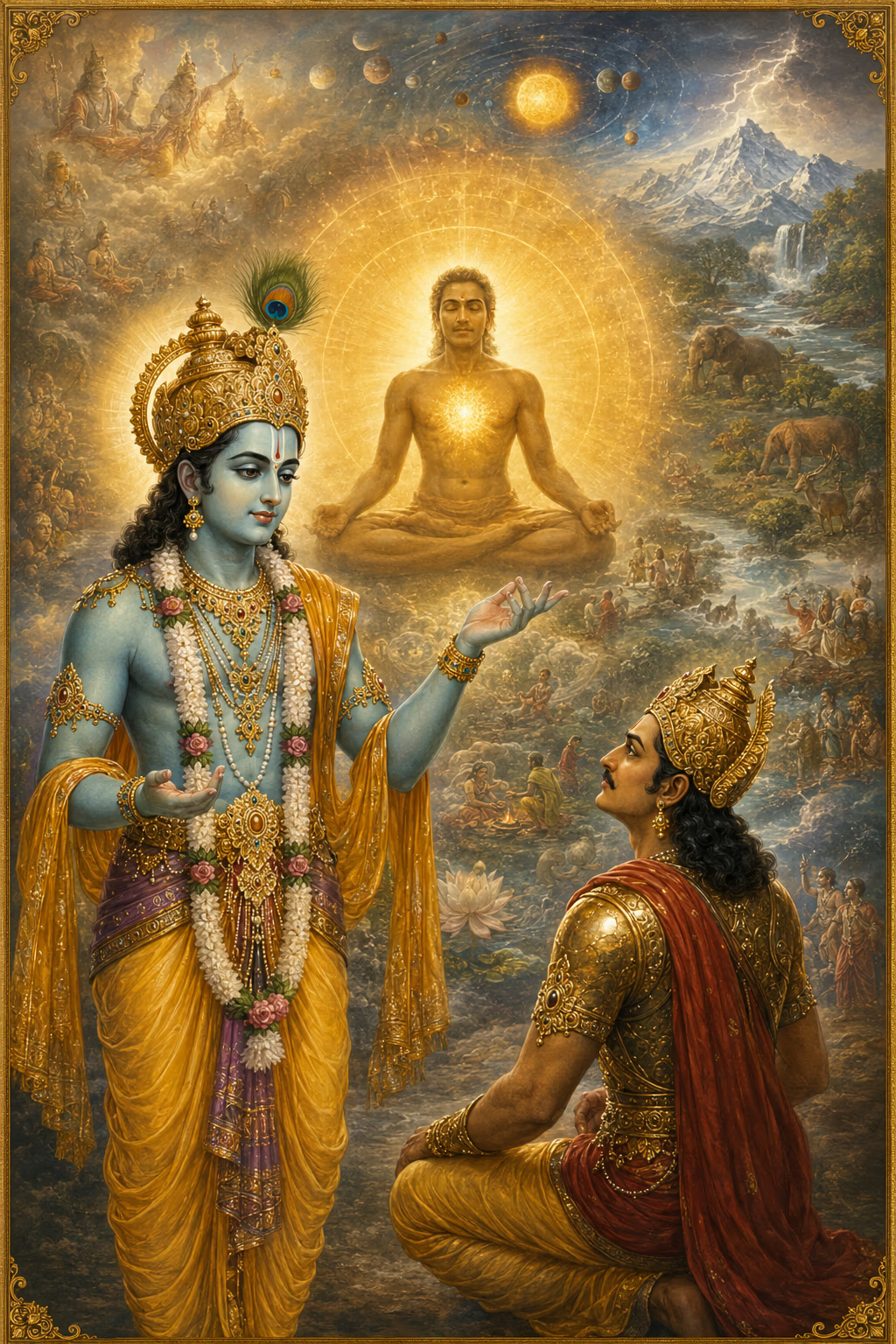
“क्षेत्र-क्षेत्रज्ञ — देह और उसका ज्ञाता” ॥ १–२ ॥ · मूल चित्र — इस परियोजना हेतु
श्रीकृष्ण महाविवेक प्रकट करते हैं; ध्यानस्थ आत्मा के हृदय में मौन साक्षी का स्वर्ण-प्रकाश जलता है, चारों ओर बदलता क्षेत्र (देह, तत्त्व, सृष्टि) मन्द रंगों में उसी में उदित-लीन।
Krishna reveals the great discrimination; within a meditating soul burns the golden light of the silent knower, while the changing field — body, elements, cosmos — rises and dissolves within that witnessing light.
श्रीभगवान् बोले—हे अर्जुन ! यह शरीर 'क्षेत्र' इस नाम से कहा जाता है; और इसको जो जानता है, उसको 'क्षेत्रज्ञ' इस नाम से उनके तत्त्व को जानने वाले ज्ञानीजन कहते हैं
The Blessed Lord said: This body, O son of Kuntī, is called the 'field' (kṣetra); and the one who knows it, the knowers of truth call the 'knower of the field' (kṣetrajña).
सरल अर्थ: श्रीभगवान् ने कहा — हे कुन्तीपुत्र अर्जुन! यह शरीर 'क्षेत्र' कहलाता है (अर्थात् जैसे खेत में बीज बोने पर फल उगते हैं, वैसे ही इस शरीररूपी खेत में किये हुए कर्मों के फल उगते हैं)। और इस शरीर को जो जानता है — उसे तत्त्व को जानने वाले ज्ञानी पुरुष 'क्षेत्रज्ञ' (क्षेत्र को जानने वाला) कहते हैं।In simple words: The Lord begins teaching the difference between two things. The body is the 'field' — like a farmland where the seeds of our actions grow into results. The conscious 'someone' who knows and experiences this body is the 'knower of the field'. Wise people give these two their proper names.
हे अर्जुन ! तू सब क्षेत्रों में क्षेत्रज्ञ अर्थात् जीवात्मा भी मुझे ही जान। और क्षेत्र-क्षेत्रज्ञ का अर्थात् विकार सहित प्रकृति का और पुरुष का जो तत्त्व से जानना है, वह ज्ञान है—ऐसा मेरा मत है
And know Me, O descendant of Bharata, to be the knower of the field in all fields; the knowledge of the field and the knower of the field — that, in My view, is true knowledge.
सरल अर्थ: हे भरतवंशी अर्जुन! सब क्षेत्रों (सब शरीरों) में जो क्षेत्रज्ञ (जानने वाला) है, उसे तू मुझ परमात्मा को ही समझ। क्षेत्र और क्षेत्रज्ञ का — अर्थात् शरीर और आत्मा का — जो यथार्थ ज्ञान है, वही मेरे मत में सच्चा ज्ञान है।In simple words: The Lord reveals a great secret: the knower seated within every body, in everyone, is none other than God Himself. To clearly understand the difference between the body (field) and this inner knower (the Self) — that is what He calls real knowledge.
tatkṣetraṁ yacca yādṛkca yadvikāri yataśca yat । sa ca yo yatprabhāvaśca tatsamāsena me śṛṇu ॥
वह क्षेत्र जो और जैसा है तथा जिन विकारों वाला है, और जिस कारण से जो हुआ है; तथा वह क्षेत्रज्ञ भी जो और जिस प्रभाव वाला है—वह सब संक्षेप में मुझसे सुन
What that field is, and of what kind, and what its modifications, and from what it arises, and who he (the knower) is, and what his powers — hear all that from Me in brief.
सरल अर्थ: वह क्षेत्र (शरीर) क्या है, कैसा है, उसमें कौन-कौन से विकार (परिवर्तन) होते हैं, किस कारण से तथा किससे उत्पन्न हुआ है; और वह क्षेत्रज्ञ कौन है तथा उसका कैसा प्रभाव (सामर्थ्य) है — यह सब मुझसे संक्षेप में सुन।In simple words: The Lord promises to explain everything in short: what the body-field is, what it is like, how it changes, where it comes from — and also who the inner knower is and what powers he holds. He asks Arjuna to listen carefully.
यह क्षेत्र और क्षेत्रज्ञ का तत्त्व ऋषियों द्वारा बहुत प्रकार से कहा गया है और विविध वेदमन्त्रों द्वारा भी विभागपूर्वक कहा गया है, तथा भलीभाँति निश्चय किये हुए युक्तियुक्त ब्रह्म सूत्र के पदों द्वारा भी कहा गया है
This has been sung in many ways by the sages, distinctly in various hymns, and also in the words of the Brahma-sūtra, which are full of reasoning and conclusive.
सरल अर्थ: यह क्षेत्र-क्षेत्रज्ञ का तत्त्व ऋषि-मुनियों ने अनेक प्रकार से गाया है, भाँति-भाँति के वेदमन्त्रों (छन्दों) द्वारा अलग-अलग कहा है; और तर्कयुक्त एवं निश्चय करने वाले ब्रह्मसूत्र के पदों द्वारा भी भली-भाँति कहा गया है।In simple words: This same truth, the Lord says, is not new — many sages have described it in different ways through various Vedic hymns, and it is also set out clearly, with sound reasoning, in the verses of the Brahma-sutra.
mahābhūtānyahaṅkāro buddhiravyaktameva ca । indriyāṇi daśaikaṁ ca pañca cendriyagocarāḥ ॥
पाँच महाभूत, अहंकार, बुद्धि और मूल प्रकृति भी; तथा दस इन्द्रियाँ, एक मन और पाँच इन्द्रियों के विषय अर्थात् शब्द, स्पर्श, रूप, रस और गन्ध—
The great elements, egoism, intellect, and the Unmanifest; the ten senses and the one (mind), and the five objects of the senses;
सरल अर्थ: पाँच महाभूत (पृथ्वी, जल, अग्नि, वायु, आकाश), अहंकार, बुद्धि और मूल प्रकृति (अव्यक्त) — तथा दस इन्द्रियाँ (पाँच ज्ञानेन्द्रियाँ, पाँच कर्मेन्द्रियाँ) और एक मन, एवं इन्द्रियों के पाँच विषय (शब्द, स्पर्श, रूप, रस, गन्ध) —In simple words: Now the Lord lists what makes up the field (the body and its world): the five great elements, the sense of 'I' (ego), the intellect, and unmanifest primal nature; then the ten senses plus the mind, and the five things the senses perceive — sound, touch, sight, taste, smell.
तथा इच्छा, द्वेष, सुख, दुःख, स्थूल देह का पिण्ड, चेतना और धृति—इस प्रकार विकारों के सहित यह क्षेत्र संक्षेप में कहा गया है
desire, aversion, pleasure, pain, the aggregate (the body), consciousness, firmness — this, in brief, is the field together with its modifications.
सरल अर्थ: इच्छा, द्वेष, सुख, दुःख, स्थूल देह का पिण्ड (संघात), चेतना (चेतना-शक्ति) और धृति (धारण-शक्ति, धैर्य) — इन विकारोंसहित यह सब संक्षेप में 'क्षेत्र' कहा गया है।In simple words: The list continues: wanting, disliking, happiness, sorrow, the assembled physical body, the life-force that makes it feel, and the steadiness that holds it together. All this, with its changes, is summed up as 'the field'.
श्रेष्ठता के अभिमान का अभाव, दम्भाचरण का अभाव, किसी भी प्राणी को किसी प्रकार भी न सताना, क्षमाभाव, मन-वाणी आदि की सरलता, श्रद्धा-भक्ति सहित गुरु की सेवा, बाहर-भीतर की शुद्धि, अन्तःकरण की स्थिरता और मन-इन्द्रियों सहित शरीर का निग्रह
Humility, unpretentiousness, non-violence, forbearance, uprightness, service of the teacher, purity, steadfastness, self-control;
सरल अर्थ: अपने को श्रेष्ठ न मानना (अमानित्व), दिखावा न करना (अदम्भित्व), अहिंसा, क्षमा, सरलता, गुरु की सेवा, भीतर-बाहर की पवित्रता, अन्तःकरण की स्थिरता और मन-इन्द्रियों का संयम —In simple words: Now the Lord begins listing what He calls true 'knowledge' — really a set of virtues to live by: not being proud, not showing off, not harming others, patience, honesty, serving one's teacher, inner and outer cleanliness, steadiness of mind, and control over the senses.
indriyārtheṣu vairāgyam anahaṅkāra eva ca । janma-mṛtyu-jarā-vyādhi-duḥkha-doṣānudarśanam ॥
इस लोक और परलोक के सम्पूर्ण भोगों में आसक्ति का अभाव और अहंकार का भी अभाव; जन्म, मृत्यु, जरा और रोग आदि में दुःख और दोषों का बार-बार विचार करना
dispassion toward the objects of the senses, and absence of egoism; constant perception of the evil inherent in birth, death, old age, disease, and pain;
सरल अर्थ: इन्द्रियों के विषयों के प्रति वैराग्य (आसक्ति का न रहना) और अहंकार का अभाव; तथा जन्म, मृत्यु, बुढ़ापा, रोग और दुःख—इनमें बार-बार दोष देखते रहना (कि इस संसार में बँधे रहने में केवल कष्ट ही है)—In simple words: no craving for sense-pleasures and no ego; and always keeping in view how birth, death, old age, sickness, and pain bring only suffering. (This continues the list of qualities called 'knowledge' begun in verse 7.)
asaktir anabhiṣvaṅgaḥ putra-dāra-gṛhādiṣu । nityaṁ ca samacittatvam iṣṭāniṣṭopapattiṣu ॥
पुत्र, स्त्री, घर और धन आदि में आसक्ति का अभाव; ममता का न होना तथा प्रिय और अप्रिय की प्राप्ति में सदा ही चित्त का सम रहना
non-attachment, absence of clinging to son, wife, home, and the like; and constant evenness of mind amid the happening of the desired and the undesired;
सरल अर्थ: आसक्ति का न होना; पुत्र, स्त्री, घर आदि में ममता-भरा लगाव न रखना; और इष्ट (अनुकूल) तथा अनिष्ट (प्रतिकूल) की प्राप्ति होने पर सदा मन का समान बना रहना—In simple words: no attachment; not clinging tightly to son, wife, home, and so on; and keeping the mind steady and the same whether wanted or unwanted things come your way.
मुझ परमेश्वर में अनन्य योग के द्वारा अव्यभिचारिणी भक्ति तथा एकान्त और शुद्ध देश में रहने का स्वभाव और विषयासक्त मनुष्यों के समुदाय में प्रेम का न होना
unswerving devotion to Me through undivided yoga; resort to solitary places; distaste for the company of crowds;
सरल अर्थ: अनन्ययोग के द्वारा मुझमें अविचल (कभी न डगमगाने वाली) भक्ति; एकान्त और पवित्र स्थान में रहने का स्वभाव; तथा भीड़-भरी जन-मण्डली में रुचि न होना—In simple words: steady, never-wavering devotion to Me with a one-pointed mind; a liking for quiet, secluded places; and no fondness for noisy crowds.
अध्यात्मज्ञान में नित्य स्थिति और तत्त्वज्ञान के अर्थ रूप परमात्मा को ही देखना—यह सब ज्ञान है, और जो इससे विपरीत है, वह अज्ञान है—ऐसा कहा है
constancy in the knowledge of the Self, and insight into the goal of knowing the truth — all this is declared to be knowledge; what is contrary to this is ignorance.
सरल अर्थ: अध्यात्म-ज्ञान (आत्मा के ज्ञान) में निरन्तर लगे रहना और तत्त्वज्ञान के लक्ष्य (परमात्मा) को सदा देखते रहना—इन सब (पूर्व श्लोकों से कहे गुणों) को ज्ञान कहा गया है, और जो इससे विपरीत है वह अज्ञान है।In simple words: staying always rooted in knowledge of the Self, and keeping the true goal of all knowledge in sight. All these qualities together (from verse 7 onward) are called 'knowledge'; whatever is the opposite of these is 'ignorance'.
jñeyaṁ yat tat pravakṣyāmi yaj jñātvāmṛtam aśnute । anādimat paraṁ brahma na sat tan nāsad ucyate ॥
जो जानने योग्य है तथा जिसको जानकर मनुष्य परमानन्द को प्राप्त होता है, उसको भलीभाँति कहूँगा। वह अनादिवाला परमब्रह्म न सत् ही कहा जाता है, न असत् ही
I shall declare that which is to be known, by knowing which one attains the immortal: it is the beginningless supreme Brahman, said to be neither being nor non-being.
सरल अर्थ: अब मैं उस जानने योग्य तत्त्व (ज्ञेय) को बताऊँगा, जिसे जानकर मनुष्य अमृत (अमरता, मोक्ष) को प्राप्त कर लेता है। वह अनादि परम ब्रह्म है, जो न सत् कहा जा सकता है और न असत् (वह दोनों से परे है)।In simple words: Now the Lord describes the Knowable — knowing which one gains the deathless state. It is the beginningless supreme Brahman, which cannot be simply called 'existent' nor 'non-existent', because it is beyond both.
वह सब ओर हाथ-पैरवाला, सब ओर नेत्र, सिर और मुखवाला तथा सब ओर कानवाला है। क्योंकि वह संसार में सबको व्याप्त करके स्थित है
With hands and feet everywhere, with eyes, heads, and faces on all sides, with ears in all directions, That exists, enveloping everything in the world.
सरल अर्थ: उसके हाथ और पैर सब ओर हैं, उसकी आँखें, सिर और मुख सब ओर हैं, तथा उसके कान सब ओर हैं—वह परमात्मा संसार में सबको व्याप्त करके (सब कुछ घेरकर) स्थित है।In simple words: That supreme Reality has hands and feet on every side, eyes and heads and faces in all directions, ears everywhere — because it is present in every being, it pervades and surrounds the whole world.
sarvendriya-guṇābhāsaṁ sarvendriya-vivarjitam । asaktaṁ sarva-bhṛc caiva nirguṇaṁ guṇa-bhoktṛ ca ॥
वह सम्पूर्ण इन्द्रियों के विषयों को जानने वाला है, परन्तु वास्तव में सब इन्द्रियों से रहित है, तथा आसक्ति रहित होने पर भी सबका धारण-पोषण करने वाला और निर्गुण होने पर भी गुणों को भोगने वाला है
Shining through the functions of all the senses, yet itself devoid of all the senses; unattached, yet supporting all; free from the guṇas, yet experiencing the guṇas.
सरल अर्थ: वह सब इन्द्रियों के विषयों को जानने वाला (उनमें प्रकाशित होने वाला) है, फिर भी स्वयं सब इन्द्रियों से रहित है; वह आसक्ति-रहित होकर भी सबका भरण-पोषण करने वाला है; और गुणों से परे (निर्गुण) होकर भी गुणों का भोक्ता है।In simple words: It appears to act through all the senses, yet it has no senses of its own; it is unattached, yet it nourishes and upholds everything; it is beyond the three guṇas (qualities of nature), yet it is the one who experiences them.
sarvendriya-guṇābhāsaṁ sarvendriya-vivarjitam । asaktaṁ sarva-bhṛc caiva nirguṇaṁ guṇa-bhoktṛ ca ॥
वह चराचर सब भूतों के बाहर-भीतर परिपूर्ण है, और चर-अचररूप भी वही है और वह सूक्ष्म होने से अविज्ञेय है तथा अति समीप में और दूर में भी स्थित वही है
Shining through the functions of all the senses, yet free from all the senses; unattached, yet sustaining all; devoid of the guṇas, yet the experiencer of the guṇas.
सरल अर्थ: वह परब्रह्म सब इन्द्रियों के विषयों को जाननेवाला है, फिर भी सब इन्द्रियों से रहित है। वह किसी में आसक्त नहीं है, फिर भी सबका धारण-पोषण करनेवाला है। वह तीनों गुणों से रहित है, फिर भी गुणों को भोगनेवाला है।In simple words: It illumines and perceives through every sense, yet is itself beyond the senses. It clings to nothing, yet upholds everything. It is free of the three guṇas (qualities of nature), yet experiences them.
bahir antaś ca bhūtānām acaraṁ caram eva ca । sūkṣmatvāt tad avijñeyaṁ dūra-sthaṁ cāntike ca tat ॥
वह परमात्मा विभाग रहित एक रूप से आकाश के सदृश परिपूर्ण होने पर भी चराचर सम्पूर्ण भूतों में विभक्त-सा स्थित प्रतीत होता है। तथा वह जानने योग्य परमात्मा विष्णु रूप से भूतों को धारण-पोषण करने वाला और रुद्ररूप से संहार करने वाला तथा ब्रह्मा रूप से सबको उत्पन्न करने वाला है
It is outside and inside all beings; it is the unmoving and also the moving. Because of its subtlety, it is incomprehensible; it is far away and also near.
सरल अर्थ: वह परमात्मा सब प्राणियों के बाहर भी है और भीतर भी। वही चर (चलनेवाला) और अचर (न चलनेवाला) रूप है। अत्यन्त सूक्ष्म होने के कारण वह जाना नहीं जा सकता, तथा वह बहुत दूर भी है और बहुत निकट भी।In simple words: It is both outside and within all beings, both the moving and the unmoving. Being so subtle, it cannot be grasped by the mind; and it is at once far away and very near.
avibhaktaṁ ca bhūteṣu vibhaktam iva ca sthitam । bhūta-bhartṛ ca taj jñeyaṁ grasiṣṇu prabhaviṣṇu ca ॥
वह परब्रह्म ज्योतियों का भी ज्योति एवं माया से अत्यन्त परे कहा जाता है। वह परमात्मा बोधस्वरूप, जानने के योग्य एवं तत्त्व ज्ञान से प्राप्त करने योग्य है और सबके हृदय विशेष रूप स्थित है
Undivided, yet it abides as though divided among beings; it is to be known as the sustainer of beings, and also as that which devours and brings them forth.
सरल अर्थ: वह परमात्मा विभागरहित है, फिर भी प्राणियों में विभक्त-सा प्रतीत होता है। वही जानने योग्य परमात्मा प्राणियों का धारण-पोषण करनेवाला, उनका संहार करनेवाला और उन्हें उत्पन्न करनेवाला है।In simple words: It is whole and undivided, yet appears divided up among all beings. This Knowable is the supporter of beings, and also the one that withdraws and creates them.
jyotiṣām api taj jyotis tamasaḥ param ucyate । jñānaṁ jñeyaṁ jñāna-gamyaṁ hṛdi sarvasya viṣṭhitam ॥
इस प्रकार क्षेत्र तथा ज्ञान और जानने योग्य परमात्मा का स्वरूप संक्षेप से कहा गया। मेरा भक्त इसको तत्त्व से जानकर मेरे स्वरूप को प्राप्त होता है
It is even the light of lights; it is said to be beyond darkness. It is knowledge, the object of knowledge, and that which is to be reached through knowledge; it is seated in the hearts of all.
सरल अर्थ: वह परमात्मा सब ज्योतियों की भी ज्योति तथा अज्ञानरूप अन्धकार से सर्वथा परे कहा जाता है। वही ज्ञान है, जानने योग्य है और ज्ञान के द्वारा प्राप्त करने योग्य है, तथा वह सबके हृदय में विशेषरूप से स्थित है।In simple words: It is the light behind all lights, beyond all darkness. It is knowledge itself, the thing to be known, and the goal reached through knowledge; it dwells in the heart of everyone.
प्रकृति और पुरुष, इन दोनों को ही तू अनादि जान। और राग-द्वेषादि विकारों को तथा त्रिगुणात्मक सम्पूर्ण पदार्थों को भी प्रकृति से ही उत्पन्न जान
Thus the field, knowledge, and the Knowable have been briefly described. My devotee, understanding this, becomes fit for My state of being.
सरल अर्थ: इस प्रकार क्षेत्र, ज्ञान और जानने योग्य परमात्मा का स्वरूप संक्षेप में कहा गया। मेरा भक्त इसको तत्त्व से जानकर मेरे स्वरूप को प्राप्त हो जाता है।In simple words: So the field, the knowledge, and the Knowable have been told in brief. My devotee who truly understands this becomes worthy of attaining My own being.
prakṛtiṁ puruṣaṁ caiva viddhy anādī ubhāv api । vikārāṁś ca guṇāṁś caiva viddhi prakṛti-sambhavān ॥
कार्य और करण को उत्पन्न करने में हेतु प्रकृति कही जाती है और जीवात्मा सुख-दुःखों के भोक्तापन में अर्थात् भोगने में हेतु कहा जाता है
Know that both prakṛti (nature) and puruṣa (spirit) are beginningless; and know too that the modifications and the guṇas are born of prakṛti.
सरल अर्थ: प्रकृति और पुरुष — इन दोनों को ही तू अनादि जान। और रागद्वेषादि विकारों को तथा तीनों गुणों को भी प्रकृति से ही उत्पन्न हुआ जान।In simple words: Understand that both nature (prakṛti) and spirit (puruṣa) are without beginning. And know that all the changes and the three guṇas arise out of nature.
प्रकृति में स्थित ही पुरुष प्रकृति से उत्पन्न त्रिगुणात्मक पदार्थों को भोगता है और इन गुणों का संग ही इस जीवात्मा के अच्छी-बुरी योनियों में जन्म लेने का कारण है
In the matter of producing the body and the senses, prakṛti is said to be the cause; in the matter of the experience of pleasure and pain, the puruṣa is said to be the cause.
सरल अर्थ: कार्य (शरीर) और करण (इन्द्रियों) को उत्पन्न करने में प्रकृति हेतु कही जाती है, और सुख-दुःखों के भोगने में पुरुष (जीवात्मा) हेतु कहा जाता है।In simple words: Nature (prakṛti) is said to be the cause behind producing the body and the instruments of action; the spirit (puruṣa) is said to be the cause behind the experience of pleasure and pain.
इस देह में स्थित यह आत्मा वास्तव में परमात्मा ही है। वही साक्षी होने से उपद्रष्टा और यथार्थ सम्मति देने वाला होने से अनुमन्ता, सबका धारण-पोषण करने वाला होने से भर्ता, जीवरूप से भोक्ता, ब्रह्मा आदि का भी स्वामी होने से महेश्वर और शुद्ध सच्चिदानन्दघन होने से परमात्मा—ऐसा कहा गया है
Yet the Supreme Spirit dwelling in this body is also called the Witness, the Permitter, the Sustainer, the Experiencer, the Great Lord, and the Supreme Self.
सरल अर्थ: इस शरीर में स्थित परम पुरुष (परमात्मा) सबका साक्षी है, सबको अनुमति देने वाला है, सबका भरण-पोषण करने वाला, भोक्ता, महान् ईश्वर और परमात्मा — इन नामों से भी उसका वर्णन किया गया है। वह जीव के समीप रहते हुए भी उससे परे है।In simple words: The Supreme Self living in the body is the silent witness, the one who permits, the supporter, the experiencer, and the great Lord — also called the Supreme Self (Paramatma).
ya evaṁ vetti puruṣaṁ prakṛtiṁ ca guṇaiḥ saha । sarvathā vartamāno'pi na sa bhūyo'bhijāyate ॥
इस प्रकार पुरुष को और गुणों के सहित प्रकृति को जो मनुष्य तत्त्व से जानता है, वह सब प्रकार से कर्तव्य कर्म करता हुआ भी फिर नहीं जन्मता
He who thus knows the puruṣa (Spirit) and prakṛti (Nature) together with its guṇas — in whatever way he may live, he is not born again.
सरल अर्थ: जो मनुष्य पुरुष (आत्मा) को और गुणों सहित प्रकृति को इस प्रकार तत्त्व से जान लेता है, वह सब प्रकार से बर्ताव करता हुआ भी फिर से जन्म नहीं लेता — अर्थात् मुक्त हो जाता है।In simple words: Whoever truly understands the Spirit (self) and Nature with its three qualities, is freed from rebirth — no matter how he lives.
उस परमात्मा को कितने ही मनुष्य तो शुद्ध हुई सूक्ष्म बुद्धि से ध्यान के द्वारा हृदय में देखते हैं; अन्य कितने ही ज्ञान योग के द्वारा और दूसरे कितने ही कर्मयोग के द्वारा देखते हैं अर्थात् प्राप्त करते हैं
Some by meditation behold the Self in the self by the self; others by the yoga of knowledge (sāṅkhya), and still others by the yoga of action.
सरल अर्थ: कुछ साधक ध्यान के द्वारा शुद्ध हुई बुद्धि से अपने हृदय में आत्मा को देखते हैं; दूसरे ज्ञानयोग (सांख्य) के द्वारा और कुछ अन्य कर्मयोग के द्वारा उस आत्मा का साक्षात्कार करते हैं।In simple words: Some see the Self within through meditation, some through the path of knowledge, and others through selfless action — different roads to the same realization.
anye tv evam ajānantaḥ śrutvānyebhya upāsate । te'pi cātitaranty eva mṛtyuṁ śruti-parāyaṇāḥ ॥
परन्तु इनसे दूसरे अर्थात् जो मन्दबुद्धिवाले पुरुष हैं, वे इस प्रकार न जानते हुए दूसरों से अर्थात् तत्त्व के जानने वाले पुरुषों से सुनकर ही तदनुसार उपासना करते हैं और वे श्रवणपरायण पुरुष भी मृत्यु रूप संसार सागर को निःसंदेह तर जाते हैं
Yet others, not knowing this, worship as they have heard from others; and they too, devoted to what they have heard, cross beyond death.
सरल अर्थ: परन्तु कुछ अन्य मनुष्य इस प्रकार न जानते हुए, दूसरों (आचार्यों) से सुनकर ही उपासना करते हैं; वे श्रवण को ही परम आश्रय बनाने वाले भी मृत्यु को (संसार-सागर को) तर जाते हैं।In simple words: Others who do not know directly, but worship faithfully as they heard from teachers — they too cross beyond death by their devotion to that teaching.
हे अर्जुन ! जितने भी स्थावर-जंगम प्राणी उत्पन्न होते हैं, उन सबको तू क्षेत्र और क्षेत्रज्ञ के संयोग से ही उत्पन्न जान
Whatever being is born, moving or unmoving — know, O best of the Bharatas, that it springs from the union of the field and the knower of the field.
सरल अर्थ: हे भरतवंशियों में श्रेष्ठ अर्जुन! स्थावर (अचल) और जंगम (चल) — जो कुछ भी प्राणी उत्पन्न होता है, उसे तुम क्षेत्र (शरीर) और क्षेत्रज्ञ (आत्मा) के संयोग से ही उत्पन्न हुआ जानो।In simple words: Every living thing that is born — still or moving — arises from the joining of the field (body) and the knower of the field (self).
जो पुरुष नष्ट होते हुए सब चराचर भूतों में परमेश्वर को नाशरहित और समभाव से स्थित देखता है वही यथार्थ देखता है
He who sees the Supreme Lord dwelling equally in all beings, the imperishable amid the perishing — he truly sees.
सरल अर्थ: जो मनुष्य नष्ट होते हुए समस्त प्राणियों में परमेश्वर को समान भाव से स्थित और कभी नष्ट न होने वाला देखता है, वही वास्तव में सही देखता है।In simple words: One who sees the Supreme Lord present equally in all beings — never perishing even when the bodies perish — that person truly sees.
samaṁ paśyan hi sarvatra samavasthitam īśvaram । na hinasty ātmanātmānaṁ tato yāti parāṁ gatim ॥
क्योंकि जो पुरुष सब में समभाव से स्थित परमेश्वर को समान देखता हुआ अपने द्वारा अपने को नष्ट नहीं करता, इससे वह परम गति को प्राप्त होता है
For, seeing the Lord equally present everywhere, he does not destroy the Self by the self; therefore he attains the supreme goal.
सरल अर्थ: क्योंकि वह सर्वत्र समान भाव से स्थित परमेश्वर को देखता हुआ अपने द्वारा अपने आत्मा का हनन (पतन) नहीं करता, इसलिए वह परम गति को प्राप्त होता है।In simple words: Because he sees the Lord equally everywhere, he does not harm himself by wrong understanding; and so he reaches the highest goal.
prakṛtyaiva ca karmāṇi kriyamāṇāni sarvaśaḥ । yaḥ paśyati tathātmānamakartāraṁ sa paśyati ॥
और जो पुरुष सम्पूर्ण कर्मों को सब प्रकार से प्रकृति के द्वारा ही किये जाते हुए देखता है और आत्मा को अकर्ता देखता है, वही यथार्थ देखता है
And he who sees that actions are in every way performed by Prakṛti (Nature) alone, and that the Self is therefore not the doer — he truly sees.
सरल अर्थ: जो मनुष्य यह देखता है कि सम्पूर्ण कर्म सब प्रकार से प्रकृति के द्वारा ही किये जा रहे हैं, और इस प्रकार आत्मा को अकर्ता (कुछ न करने वाला) देखता है, वही वास्तव में ठीक देखता है। (शरीर-इन्द्रिय-मन सब प्रकृति के हैं, अतः कर्म प्रकृति करती है; आत्मा साक्षीमात्र है, कर्ता नहीं।)In simple words: All actions are really done by Nature — by the body, senses and mind, which are part of Nature. The Self does nothing; it is only the witness. Whoever sees clearly that the Self is not the doer sees the truth.
yadā bhūtapṛthagbhāvamekasthamanupaśyati । tata eva ca vistāraṁ brahma sampadyate tadā ॥
जिस क्षण यह पुरुष भूतों के पृथक्-पृथक् भाव को एक परमात्मा में ही स्थित तथा उस परमात्मा से ही सम्पूर्ण भूतों का विस्तार देखता है, उसी क्षण वह सच्चिदानन्दघन ब्रह्म को प्राप्त हो जाता है
When one perceives the diverse states of beings as resting in the One, and as spreading forth from That alone, then he attains Brahman.
सरल अर्थ: जिस समय मनुष्य प्राणियों की भिन्न-भिन्न अवस्थाओं (अलग-अलग रूपों) को एक ही (परमात्मा) में स्थित देखता है, और उसी एक से ही उन सबका विस्तार (फैलाव) हुआ देखता है, उसी समय वह ब्रह्म को प्राप्त हो जाता है।In simple words: All the countless different beings rest in one Self, and they all spread out from that same One. The moment a person truly sees this oneness, he reaches Brahman.
anāditvānnirguṇatvātparamātmāyamavyayaḥ । śarīrastho'pi kaunteya na karoti na lipyate ॥
हे अर्जुन ! अनादि होने से और निर्गुण होने से यह अविनाशी परमात्मा शरीर में स्थित होने पर भी वास्तव में न तो कुछ करता है और न लिप्त ही होता है
Being without beginning and devoid of the guṇas, this imperishable supreme Self, though seated in the body, O son of Kuntī, neither acts nor is tainted.
सरल अर्थ: हे कुन्तीपुत्र! अनादि होने के कारण और गुणों से रहित होने के कारण यह अविनाशी परमात्मा शरीर में स्थित रहता हुआ भी न तो कुछ करता है और न किसी कर्म या उसके फल से लिप्त (लिपायमान) होता है।In simple words: This supreme Self has no beginning and is free of the three guṇas (qualities of Nature). So even though it lives inside the body, it never really acts and is never stained by any action or its result.
जिस प्रकार सर्वत्र व्याप्त आकाश सूक्ष्म होने के कारण लिप्त नहीं होता, वैसे ही देह में सर्वत्र स्थित आत्मा निर्गुण होने के कारण देह के गुणों से लिप्त नहीं होता
As the all-pervading space, by reason of its subtlety, is never tainted, so the Self, seated everywhere in the body, is never tainted.
सरल अर्थ: जैसे सब जगह फैला हुआ आकाश अत्यन्त सूक्ष्म होने के कारण किसी से लिप्त नहीं होता (मलिन नहीं होता), वैसे ही सम्पूर्ण शरीर में सब जगह स्थित आत्मा (देह के दोषों से) लिप्त नहीं होता।In simple words: Space spreads everywhere yet, because it is so subtle, nothing clings to it or dirties it. In the same way the Self pervades the whole body but is never touched or stained by the body's faults.
हे अर्जुन ! जिस प्रकार एक ही सूर्य इस सम्पूर्ण ब्रह्माण्ड को प्रकाशित करता है, उसी प्रकार एक ही आत्मा सम्पूर्ण क्षेत्र को प्रकाशित करता है
As the one sun illumines this whole world, so does the Knower of the field illumine the entire field, O Bhārata.
सरल अर्थ: हे भारत! जैसे एक ही सूर्य इस सम्पूर्ण संसार को प्रकाशित करता है, वैसे ही एक ही क्षेत्री (आत्मा अर्थात् क्षेत्र को जानने वाला) सम्पूर्ण क्षेत्र (शरीर) को प्रकाशित करता है।In simple words: Just as a single sun lights up the entire world, so the one Self — the Knower of the field — lights up and gives awareness to the whole field, that is, the whole body.
kṣetrakṣetrajñayorevamantaraṁ jñānacakṣuṣā । bhūtaprakṛtimokṣaṁ ca ye viduryānti te param ॥
✦ tap a glowing wordचमकते शब्द छुएँ ✦
इस प्रकार क्षेत्र और क्षेत्रज्ञ के भेद को तथा कार्य सहित प्रकृति से मुक्त होने को जो पुरुष ज्ञान-नेत्रों द्वारा तत्त्व से जानते हैं, वे महात्माजन परम ब्रह्म परमात्मा को प्राप्त होते हैं
Those who thus, with the eye of knowledge, perceive the distinction between the field and the Knower of the field, and the liberation of beings from Prakṛti — they reach the Supreme.
सरल अर्थ: जो मनुष्य इस प्रकार ज्ञानरूपी नेत्र के द्वारा क्षेत्र और क्षेत्रज्ञ के भेद को (शरीर और आत्मा का अन्तर) तथा प्राणियों की प्रकृति से छूटने के उपाय (मुक्ति) को जान लेते हैं, वे परमपद (परमात्मा) को प्राप्त हो जाते हैं।In simple words: With the inner eye of true knowledge, some clearly see the difference between the field (body and Nature) and the Knower of the field (the Self), and also how beings become free from Nature. Those who understand this reach the Supreme.
क्षेत्र–क्षेत्रज्ञ विवेक — क्षेत्र को देखो, ज्ञाता बनोKṣetra–kṣetrajña viveka — watch the field, be the knower
तेरहवाँ अध्याय समस्त योग का मूल विवेक तुम्हारे हाथ में देता है: तुम क्षेत्र नहीं हो (शरीर, इन्द्रियाँ, मन, भाव, विचार — जो कुछ देखा जा सकता है और निरन्तर बदलता है); तुम क्षेत्रज्ञ हो, वह ज्ञाता जिसमें क्षेत्र प्रतीत होता है। १३·३४ मुक्ति को ही वह 'ज्ञान-नेत्र' कहता है जो इस भेद को देखता है। यह अभ्यास है बैठकर उस भेद को सचमुच करना — किसी मान्यता के रूप में नहीं, बल्कि एक प्रत्यक्ष, बार-बार दोहराने योग्य अवलोकन के रूप में: जो कुछ मैं देख सकता हूँ वह क्षेत्र है; मैं देखने वाला हूँ।Chapter 13 hands you the master-discrimination of all yoga: you are not the field (the body, senses, mind, emotions, thoughts — all that can be observed and that keeps changing); you are the kṣetrajña, the knower in whom the field appears. 13.34 calls liberation itself the 'eye of knowledge' that sees this difference. This practice is to sit and actually make that separation — not as a belief, but as a direct, repeatable observation: everything I can watch is the field; I am the watcher.
शान्ति से बैठो। पहले शरीर को देखो — उसका भार, संवेदनाएँ, श्वास। मौन में चिह्नित करो: 'यह क्षेत्र है; यह दृश्य है। मैं वह हूँ जो इसे जानता है।'Sit quietly. First notice the body — its weight, sensations, breath. Silently mark: 'this is the field; it is seen. I am the one who knows it.'
अब मन की ओर मुड़ो — विचार, भाव, मनोदशाएँ जो आ-जा रही हैं। उन्हें उठते और विलीन होते देखो, और वही चिह्नित करो: 'ये भी क्षेत्र हैं, मुझमें प्रतीत होते हुए। मैं इनका ज्ञाता हूँ, ये नहीं।'Now turn to the mind — thoughts, feelings, moods passing through. Watch them arise and dissolve, and mark the same: 'these too are the field, appearing to me. I am their knower, not them.'
किसी से लड़ो मत, कुछ सुधारो मत — केवल दृश्य को द्रष्टा से अलग करते रहो। जब किसी विचार में खिंच जाओ ('मैं क्रोधित हूँ'), कोमलता से फिर अलग करो: 'क्रोध दृश्य है; मैं वह हूँ जो उसे जानता है।'Don't fight or fix anything — only keep distinguishing the seen from the seer. When you get pulled into a thought ('I am angry'), gently re-separate: 'anger is seen; I am what knows it.'
कुछ श्वासों के लिये ही सही, केवल उस मौन ज्ञाता के रूप में ठहरो जिसमें यह सब प्रतीत होता है — अपरिवर्तित, निर्लिप्त, उस आकाश के समान जो सबको धारण करता है। वही ठहराव क्षेत्रज्ञ का स्वयं को चखना है।Rest, even for a few breaths, simply as the silent knower in which it all appears — unchanging, unstained, like the space that holds everything. That resting is the kṣetrajña tasting itself.
क्या देखें: What to notice: ध्यान दो कि ज्ञाता कभी नहीं बदलता जबकि क्षेत्र सदा बदलता है — और कि कष्टमय अवस्थाएँ भी उसी क्षण हल्की लगने लगती हैं जब उन्हें 'मैं' नहीं, 'क्षेत्र' के रूप में देखा जाता है। द्रष्टा और दृश्य के बीच का वही अन्तराल वह द्वार है जिसे अध्याय ज्ञान कहता है।Notice that the knower never changes while the field always does — and that even painful states feel lighter the instant they are seen as 'the field' rather than 'me'. That gap between seer and seen is the doorway the chapter calls knowledge.
अनुभव · स्वयं देखेंAnubhava · see for yourself
आज एक बार, जब कोई प्रबल भाव तुम्हें पकड़े — चिढ़, चिन्ता, तृष्णा — रुको और भेद करो: 'यह क्षेत्र है, गुज़रता हुआ; मैं इसका ज्ञाता हूँ।' तीन श्वास तक उसे बिना उसमें बने देखो। उस शाम पूछो: क्या भाव से थोड़ी-सी दूरी भी प्रकट हुई — एक शान्ति जो आरम्भ से ही देख रही थी? वही देखती हुई उपस्थिति १३·२ का क्षेत्रज्ञ है, जो तुमने अपने ही दिन में पाया।
Today, once when a strong feeling grips you — irritation, worry, craving — pause and make the separation: 'this is the field, passing through; I am the knower of it.' Watch it for three breaths without becoming it. That evening, ask: did even a little distance from the feeling appear — a calm that was watching all along? That watching presence is the kṣetrajña of 13.2, met in your own day.
ॐ तत्सदिति श्रीमद्भगवद्गीतासूपनिषत्सु ब्रह्मविद्यायां योगशास्त्रे श्रीकृष्णार्जुनसंवादे क्षेत्रक्षेत्रज्ञविभागयोगो नाम त्रयोदशोऽध्यायः ॥ १३ ॥
॥ इस प्रकार उपनिषद्, ब्रह्मविद्या तथा योगशास्त्र रूप श्रीमद्भगवद्गीता के श्रीकृष्ण-अर्जुन संवाद में 'क्षेत्रक्षेत्रज्ञविभागयोग' नामक तेरहवाँ अध्याय पूर्ण हुआ ॥