बारहवाँ अध्याय गीता का कोमल भक्ति-हृदय है, और सबसे छोटे अध्यायों में से एक। अर्जुन वह बड़ा प्रश्न पूछते हैं: योग को कौन अधिक जानता है — वे जो प्रेमपूर्वक भगवान् के साकार (सगुण) रूप की उपासना करते हैं, या वे जो निराकार, अविनाशी अव्यक्त (निर्गुण) पर मन टिकाते हैं? श्रीकृष्ण कहते हैं कि दोनों उन्हीं को पाते हैं, पर निराकार का मार्ग देहधारियों के लिये कठिन और अधिक क्लेशमय है — 'अव्यक्त की गति देहधारियों के लिये बड़ी कठिनाई से प्राप्त होती है' (१२·५); इसलिये वे सगुण भगवान् की प्रेममयी भक्ति का मार्ग कोमलता से बताते हैं, और वचन देते हैं कि वे अपने भक्तों को शीघ्र ही मृत्यु-सागर से उबार लेते हैं (१२·६-७)। फिर आती है गीता की सबसे करुणामयी शिक्षा — एक क्रमिक सीढ़ी जो किसी को नहीं छोड़ती (१२·८-१२): अपना मन पूर्णतः मुझमें लगाओ; यदि न कर सको, तो अभ्यास-योग से मुझे पाओ; यदि वह भी न हो, तो मेरे लिये कर्म करो; और यदि अभी वह भी कठिन हो, तो मेरी शरण लेकर अपने सब कर्मों के फल का त्याग कर दो — 'क्योंकि फल-त्याग से तुरन्त शान्ति मिलती है' (१२·१२)। अध्याय भगवान् के प्रिय भक्त के देदीप्यमान चित्र पर समाप्त होता है (१२·१३-२०): जो किसी प्राणी से द्वेष नहीं करता, मित्र और करुणामय है, 'मैं' और 'मेरे' से रहित, सुख-दुःख में सम, सन्तुष्ट, संयमी, स्तुति-निन्दा से अविचल — 'जो श्रद्धा से, मुझे परम मानकर इस धर्ममय अमृत का सेवन करते हैं, वे मुझे अत्यन्त प्रिय हैं' (१२·२०)।
Chapter 12 is the Gita's tender heart of devotion, and one of its shortest chapters. Arjuna asks the great question: who knows yoga better — those who lovingly worship God in His personal, manifest form (saguṇa), or those who fix on the formless, imperishable Unmanifest (nirguṇa)? Krishna replies that both reach Him, but the formless path is harder and more painful for embodied beings — 'the goal of the Unmanifest is very hard for the embodied to reach' (12.5); so He gently commends the way of loving devotion to the personal God, promising to lift His devotees swiftly out of the ocean of death (12.6–7). Then comes the Gita's kindest teaching — a graded ladder that excludes no one (12.8–12): fix your mind wholly on Me; if you cannot, reach Me through repeated practice; if not, work for My sake; and if even that is beyond you now, take refuge in Me and let go of the fruit of all you do — 'for peace immediately follows the renunciation of fruit' (12.12). The chapter closes with the luminous portrait of the devotee dear to God (12.13–20): one who hates no being, is friendly and compassionate, free of 'I' and 'mine', equal in pleasure and pain, content, self-controlled, unshaken by praise or blame — 'those who follow this nectar of dharma with faith, holding Me as supreme, are exceedingly dear to Me' (12.20).
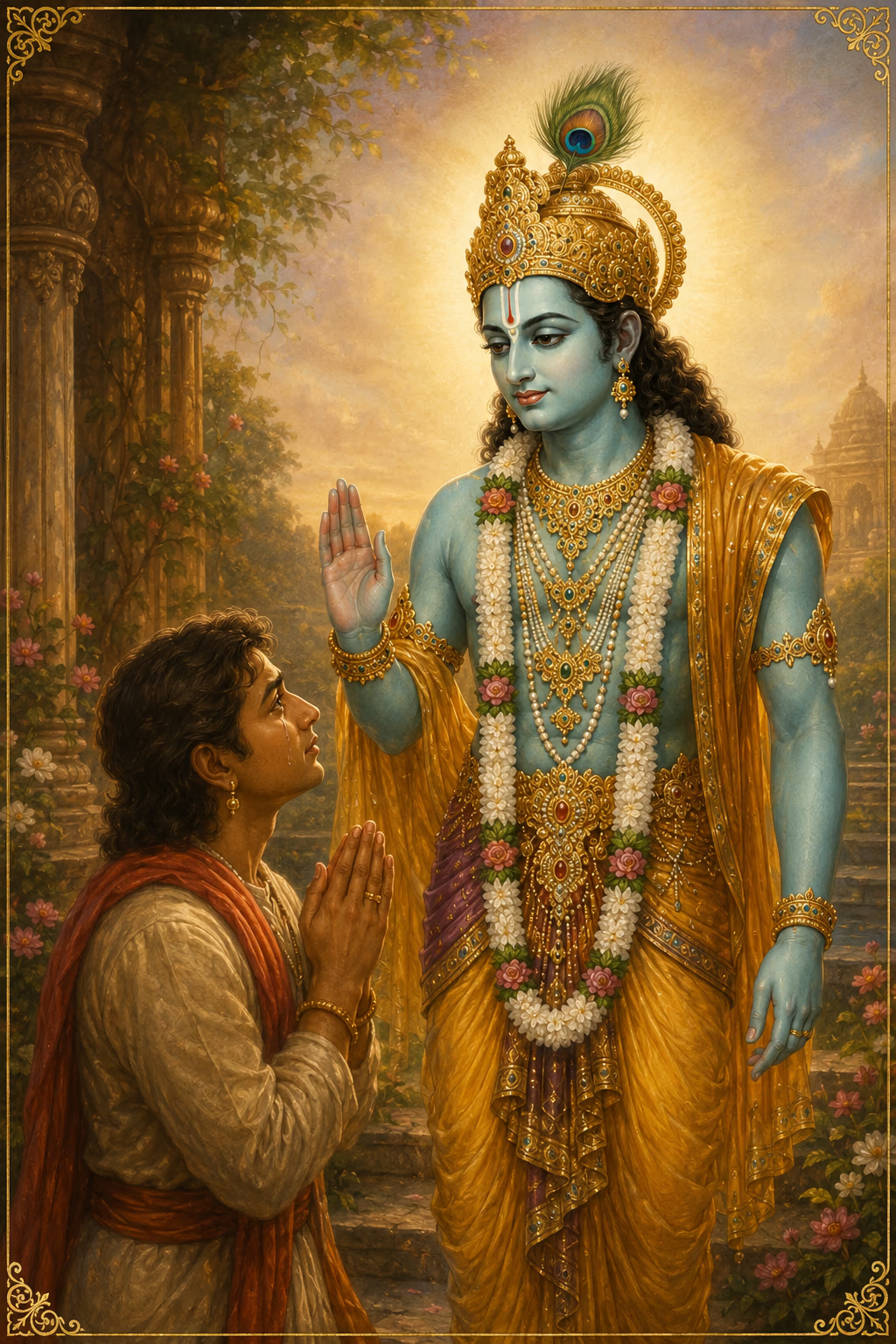
“भक्तियोग — प्रेम की राह” ॥ १३–१४ ॥ · मूल चित्र — इस परियोजना हेतु
एक भक्त हृदय भर आँसुओं से हाथ जोड़े तेजोमय श्रीकृष्ण की ओर देखता है; वे स्नेह-भरी दृष्टि से आशीर्वाद देते हैं — भक्ति की मधुरता और समर्पण।
A devotee, heart brimming, gazes up with folded hands at the radiant Krishna, who blesses him with tender grace — the sweetness and surrender of bhakti.
arjuna uvāca evaṁ satatayuktā ye bhaktāstvāṁ paryupāsate । ye cāpyakṣaramavyaktaṁ teṣāṁ ke yogavittamāḥ ॥
अर्जुन बोले—जो अनन्य प्रेमी भक्तजन पूर्वोक्त प्रकार से निरन्तर आपके भजन-ध्यान में लगे रहकर आप सगुणरूप परमेश्वर को और दूसरे जो केवल अविनाशी सच्चिदानन्दघन निराकार ब्रह्मको ही अतिश्रेष्ठ भाव से भजते हैं—उन दोनों प्रकारके उपासकोंमें अति उत्तम योगवेत्ता कौन है ?
Arjuna said: Those devotees who, ever steadfast, thus worship You, and those again who worship the imperishable Unmanifest — of these, who are the better knowers of yoga?
सरल अर्थ: अर्जुन ने पूछा — जो भक्त इस प्रकार निरन्तर आपमें लगे रहकर सगुण-साकार रूप में आपकी उपासना करते हैं, और जो दूसरे लोग अविनाशी निराकार (निर्गुण-अव्यक्त) ब्रह्म की उपासना करते हैं — इन दोनों में से योग को उत्तम रीति से जानने वाले कौन हैं?In simple words: Arjuna asks: some devotees lovingly worship You as the personal God with form; others worship the formless, unchanging Absolute. Which of these two truly knows yoga best?
śrībhagavānuvāca mayyāveśya mano ye māṁ nityayuktā upāsate । śraddhayā parayopetāste me yuktatamā matāḥ ॥
श्रीभगवान् बोले—मुझमें मन को एकाग्र करके निरन्तर मेरे भजन-ध्यानमें लगे हुए जो भक्तजन अतिशय श्रेष्ठ श्रद्धासे युक्त होकर मुझ सगुण रूप परमेश्वरको भजते हैं, वे मुझको योगियोंमें अति उत्तम योगी मान्य हैं
The Blessed Lord said: Those who fix their mind on Me and, ever steadfast, worship Me with supreme faith — they, in My view, are the most perfectly established in yoga.
सरल अर्थ: श्रीभगवान् ने कहा — जो भक्त अपने मन को मुझमें लगाकर, निरन्तर मेरे ध्यान में जुटे रहकर, परम श्रद्धा के साथ मेरी उपासना करते हैं, वे ही मेरी दृष्टि में सर्वश्रेष्ठ योगी हैं।In simple words: The Lord answers: those who rest their mind on Me, stay constantly devoted, and worship Me with the highest faith — I consider them the very best at yoga.
ye tvakṣaramanirdeśyamavyaktaṁ paryupāsate । sarvatragamacintyañca kūṭasthamacalandhruvam ॥
संयुक्त अनुवाद ↓joint translation ↓
सरल अर्थ: परन्तु जो लोग अविनाशी, अनिर्वचनीय (जो शब्दों से बताया न जा सके), अव्यक्त (इन्द्रियों से न दीखने वाले), सर्वव्यापी, अचिन्त्य (मन से न सोचे जा सकने वाले), कूटस्थ (निर्विकार), अचल और नित्य निराकार ब्रह्म की उपासना करते हैं —In simple words: Now those who instead worship the formless Absolute — which is imperishable, beyond words, invisible, everywhere at once, unthinkable, unchanging, fixed and eternal — (the sentence continues into the next verse).
sanniyamyendriyagrāmaṁ sarvatra samabuddhayaḥ । te prāpnuvanti māmeva sarvabhūtahite ratāḥ ॥
॥ ३–४ ॥
परन्तु जो पुरुष इन्द्रियोंके समुदायको भली प्रकार वशमें करके मन-बुद्धिसे परे सर्वव्यापी, अकथनीय स्वरूप और सदा एकरस रहनेवाले, नित्य, अचल, निराकार, अविनाशी सच्चिदानन्दघन ब्रह्मको निरन्तर एकीभावसे ध्यान करते हुए भजते हैं, वे सम्पूर्ण भूतोंके हितमें रत और सबमें समान भाववाले योगी मुझको ही प्राप्त होते हैं
But those who worship the Imperishable, the Indefinable, the Unmanifest — the all-pervading, the unthinkable, the unchanging, the immovable, the eternal — having restrained the whole host of the senses, even-minded everywhere, and devoted to the welfare of all beings — they too attain Me alone.
सरल अर्थ: — वे भी, अपनी सम्पूर्ण इन्द्रियों को भली-भाँति वश में करके, सब जगह समान बुद्धि रखते हुए और समस्त प्राणियों के हित में लगे रहते हुए, अन्ततः मुझको ही प्राप्त होते हैं।In simple words: Such seekers, having brought all their senses under control, keeping an even mind toward everything, and working for the good of all beings — they reach Me too in the end.
kleśo'dhikatarasteṣāmavyaktāsaktacetasām । avyaktā hi gatirduḥkhaṁ dehavadbhiravāpyate ॥
उन सच्चिदानन्दघन निराकार ब्रह्ममें आसक्त चित्तवाले पुरुषोंके साधनमें परिश्रम विशेष है, क्योंकि देहाभिमानियोंके द्वारा अव्यक्त विषयक गति दुःखपूर्वक प्राप्त की जाती है
Greater is the trouble for those whose minds are set on the Unmanifest; for the goal of the Unmanifest is reached only with difficulty by the embodied.
सरल अर्थ: उन निराकार ब्रह्म में आसक्त चित्तवाले साधकों को साधना में कठिनाई अधिक होती है; क्योंकि देहधारियों के द्वारा अव्यक्त (निराकार) ब्रह्म की प्राप्ति बड़े कष्ट से होती है। (शरीर-अभिमानी जीव के लिए निराकार पर मन टिकाना कठिन है।)In simple words: The formless path is harder. Those who fix their mind on the unmanifest face greater struggle, because for beings who still feel themselves as a body, reaching the formless comes only with much difficulty.
ye tu sarvāṇi karmāṇi mayi saṁnyasya matparāḥ । ananyenaiva yogena māṁ dhyāyanta upāsate ॥
परन्तु जो मेरे परायण रहनेवाले भक्तजन सम्पूर्ण कर्मोंको मुझमें अर्पण करके मुझ सगुण रूप परमेश्वरको ही अनन्य भक्तियोगसे निरन्तर चिन्तन करते हुए भजते हैं
But those who, surrendering all actions to Me and holding Me as the supreme goal, worship Me, meditating on Me with undeviating yoga —
सरल अर्थ: परन्तु जो भक्त अपने समस्त कर्म मुझे समर्पित करके, मुझे ही परम लक्ष्य मानकर, अनन्य भक्तियोग के द्वारा मेरा ही ध्यान करते हुए मेरी उपासना करते हैं —In simple words: But those who hand over all their actions to Me, make Me their highest aim, and worship Me with single-pointed devotion, meditating on Me alone — (continues in the next verse).
हे अर्जुन ! उन मुझमें चित्त लगानेवाले प्रेमी भक्तोंका मैं शीघ्र ही मृत्यु रूप संसार-समुद्रसे उद्धार करनेवाला होता हूँ
of these whose minds are absorbed in Me, I soon become the deliverer from the ocean of death-bound worldly existence, O Pārtha.
सरल अर्थ: — हे पार्थ! जिनका चित्त मुझमें ही लगा हुआ है, उन भक्तों का मैं शीघ्र ही मृत्युरूपी संसार-समुद्र से उद्धार करने वाला बन जाता हूँ। (अर्थात् उन्हें जन्म-मरण के बन्धन से शीघ्र पार लगा देता हूँ।)In simple words: For these devotees whose hearts are absorbed in Me, O Arjuna, I quickly become their rescuer, lifting them out of the ocean of birth and death.
śrībhagavānuvāca mayyeva mana ādhatsva mayi buddhiṃ niveśaya । nivasiṣyasi mayyeva ata ūrdhvaṃ na saṃśayaḥ ॥
✦ tap a glowing wordचमकते शब्द छुएँ ✦
मुझमें मनको लगा और मुझमें ही बुद्धिको लगा; इसके उपरान्त तू मुझमें ही निवास करेगा, इसमें कुछ भी संशय नहीं है
Fix your mind on Me alone, let your intellect rest in Me; thereafter you shall dwell in Me alone. Of this there is no doubt.
सरल अर्थ: अपने मन को केवल मुझमें ही लगा दे और अपनी बुद्धि को भी मुझमें ही स्थिर कर। ऐसा करने पर इसके बाद तू मुझमें ही निवास करेगा — इसमें कोई संदेह नहीं।In simple words: Put your whole mind and thinking on Me. Do that, and afterward you will live in Me for sure.
atha cittaṃ samādhātuṃ na śaknoṣi mayi sthiram । abhyāsayogena tato māmicchāptuṃ dhanañjaya ॥
✦ tap a glowing wordचमकते शब्द छुएँ ✦
यदि तू मन को मुझमें अचल स्थापन करने के लिये समर्थ नहीं है तो हे अर्जुन ! अभ्यास रूप योग के द्वारा मुझको प्राप्त होने के लिये इच्छा कर
If you are unable to fix your mind steadily on Me, then seek to reach Me by the yoga of repeated practice, O Dhanañjaya.
सरल अर्थ: यदि तू अपने मन को मुझमें भली-भाँति स्थिर रूप से नहीं लगा सकता, तो हे धनंजय! अभ्यास-योग के द्वारा मुझे पाने की इच्छा कर।In simple words: If you cannot hold your mind firmly on Me, then try to reach Me by practicing again and again, Arjuna.
यदि तू उपर्युक्त अभ्यास में भी असमर्थ है तो केवल मेरे लिये कर्म करने के ही परायण हो जा। इस प्रकार मेरे निमित्त कर्मों को करता हुआ भी मेरी प्राप्ति रूप सिद्धि को ही प्राप्त होगा
If you are incapable even of such practice, be intent on doing works for My sake; performing actions for My sake you shall attain perfection.
सरल अर्थ: यदि तू अभ्यास करने में भी असमर्थ है, तो मेरे लिये कर्म करने में तत्पर हो जा। मेरे लिये कर्म करता हुआ भी तू सिद्धि को प्राप्त कर लेगा।In simple words: If even practice is too hard, then just do your work for My sake. Doing your actions for Me will still bring you to the goal.
athaitadapyaśakto'si kartuṃ madyogamāśritaḥ । sarvakarmaphalatyāgaṃ tataḥ kuru yatātmavān ॥
✦ tap a glowing wordचमकते शब्द छुएँ ✦
यदि मेरी प्राप्ति रूप योग के आश्रित होकर उपर्युक्त साधन को करने में भी तू असमर्थ है तो मन-बुद्धि आदि पर विजय प्राप्त करने वाला होकर सब कर्मों के फल का त्याग कर
But if you are unable to do even this, then, taking refuge in union with Me, renounce the fruit of all action, with the self subdued.
सरल अर्थ: यदि तू यह भी करने में असमर्थ है, तो मेरी शरण लेकर, मन को वश में करके, सब कर्मों के फल का त्याग कर।In simple words: If you cannot do even that, then take shelter in Me, control yourself, and give up the rewards of all your actions.
śreyo hi jñānamabhyāsājjñānāddhyānaṃ viśiṣyate । dhyānātkarmaphalatyāgastyāgācchāntiranantaram ॥
मर्मको न जानकर किये हुए अभ्यास से ज्ञान श्रेष्ठ है, ज्ञान से मुझ परमेश्वर के स्वरूप का ध्यान श्रेष्ठ है और ध्यान से भी सब कर्मों के फल का त्याग श्रेष्ठ है; क्योंकि त्याग से तत्काल ही परम शान्ति होती है
Knowledge is indeed better than practice; meditation excels knowledge; renunciation of the fruit of action surpasses meditation — peace immediately follows such renunciation.
सरल अर्थ: अभ्यास से ज्ञान श्रेष्ठ है, ज्ञान से ध्यान बढ़कर है, और ध्यान से कर्मफल का त्याग श्रेष्ठ है; क्योंकि ऐसे त्याग से तुरंत ही शान्ति प्राप्त होती है।In simple words: Knowing is better than blind practice, meditation is better than just knowing, and giving up the fruits of action is better than meditation — because such letting-go brings peace at once.
adveṣṭā sarvabhūtānāṃ maitraḥ karuṇa eva ca । nirmamo nirahaṅkāraḥ samaduḥkhasukhaḥ kṣamī ॥
✦ tap a glowing wordचमकते शब्द छुएँ ✦
संयुक्त अनुवाद ↓joint translation ↓
सरल अर्थ: जो किसी भी प्राणी से द्वेष नहीं करता, सबका मित्र और करुणावान है, ममता और अहंकार से रहित है, सुख-दुःख में समान है और क्षमाशील है;In simple words: The one who hates no living being, is friendly and kind to all, has no sense of "mine" or ego, stays the same in pain and pleasure, and forgives easily;
santuṣṭaḥ satataṃ yogī yatātmā dṛḍhaniścayaḥ । mayyarpitamanobuddhiryo madbhaktaḥ sa me priyaḥ ॥
॥ १३–१४ ॥
जो पुरुष सब भूतों में द्वेषभाव से रहित, स्वार्थरहित, सबका प्रेमी और हेतु रहित दयालु है तथा ममता से रहित, अहंकार से रहित, सुख-दुःखों की प्राप्ति में सम और क्षमावान् है अर्थात् अपराध करने वाले को भी अभय देने वाला है; तथा जो योगी निरन्तर संतुष्ट है, मन-इन्द्रियों सहित शरीर को वश में किये हुए है और मुझमें दृढ़ निश्चय वाला है—वह मुझमें अर्पण किये हुए मन-बुद्धि वाला मेरा भक्त मुझको प्रिय है
He who hates no creature, who is friendly and compassionate, free from "mine" and from egoism, even-minded in pain and pleasure, forgiving; ever content, steadfast in yoga, self-controlled, firm in resolve, with mind and intellect dedicated to Me — such a devotee of Mine is dear to Me.
सरल अर्थ: जो सदा संतुष्ट रहता है, योग में लगा रहता है, मन को वश में रखे हुए है, दृढ़ निश्चय वाला है और जिसने अपना मन-बुद्धि मुझमें अर्पित कर दिया है — मेरा ऐसा भक्त मुझे प्रिय है।In simple words: always content, steady in yoga, self-controlled, firm in his decisions, and has given his mind and intellect to Me — such a devotee is dear to Me.
yasmān nodvijate loko lokān nodvijate ca yaḥ । harṣāmarṣabhayodvegair mukto yaḥ sa ca me priyaḥ ॥
जिससे कोई भी जीव उद्वेग को प्राप्त नहीं होता और जो स्वयं भी किसी जीव से उद्वेग को प्राप्त नहीं होता; तथा जो हर्ष, अमर्ष, भय और उद्वेगादि से रहित है—वह भक्त मुझको प्रिय है
He by whom the world is not agitated, and who is not agitated by the world, who is freed from joy, impatience, fear, and anxiety — he too is dear to Me.
सरल अर्थ: जिससे संसार को कोई कष्ट या उद्वेग नहीं होता, और जो स्वयं भी संसार से उद्वेग को प्राप्त नहीं होता; जो हर्ष, ईर्ष्या (असहनशीलता), भय और चिन्ता—इन सबसे मुक्त है, वह भक्त भी मुझे प्रिय है।In simple words: The devotee who never disturbs others and is never disturbed by them — free of excitement, irritation, fear, and worry — is dear to God. He neither causes anxiety nor lives in it.
anapekṣaḥ śucir dakṣa udāsīno gatavyathaḥ । sarvārambhaparityāgī yo madbhaktaḥ sa me priyaḥ ॥
जो पुरुष आकांक्षा से रहित, बाहर-भीतर से शुद्ध, चतुर, पक्षपात से रहित और दुःखों से छूटा हुआ है—वह सब आरम्भों का त्यागी मेरा भक्त मुझको प्रिय है
He who is free from wants, pure, skilful, indifferent, untroubled, and has renounced all undertakings — he who is thus devoted to Me is dear to Me.
सरल अर्थ: जो किसी वस्तु की अपेक्षा नहीं रखता, भीतर-बाहर से शुद्ध है, कार्य में दक्ष है, उदासीन (पक्षपात-रहित) है, जिसका कोई दुःख-व्यथा नहीं रही, और जिसने सब कामनापूर्ण नये आरम्भों का त्याग कर दिया है—ऐसा मेरा भक्त मुझे प्रिय है।In simple words: The devotee who needs nothing, is clean inside and out, capable, neutral toward all sides, free of distress, and not always starting selfish new projects — such a one is dear to God.
yo na hṛṣyati na dveṣṭi na śocati na kāṅkṣati । śubhāśubhaparityāgī bhaktimān yaḥ sa me priyaḥ ॥
जो न कभी हर्षित होता है, न द्वेष करता है, न शोक करता है, न कामना करता है तथा जो शुभ और अशुभ सम्पूर्ण कर्मों का त्यागी है—वह भक्ति युक्त पुरुष मुझको प्रिय है
He who neither rejoices nor hates, neither grieves nor craves, who has renounced both the auspicious and the inauspicious, and is full of devotion — he is dear to Me.
सरल अर्थ: जो न तो (इष्ट पाकर) हर्षित होता है, न (अनिष्ट पाकर) द्वेष करता है, न शोक करता है और न किसी वस्तु की आकांक्षा करता है; जो शुभ और अशुभ दोनों कर्मफलों का त्यागी है—ऐसा भक्तिमान् पुरुष मुझे प्रिय है।In simple words: The devotee who is not thrilled by good news nor hateful at bad, who does not mourn or hanker, and who lets go of clinging to both good and bad outcomes — full of devotion, he is dear to God.
samaḥ śatrau ca mitre ca tathā mānāpamānayoḥ । śītoṣṇasukhaduḥkheṣu samaḥ saṅgavivarjitaḥ ॥
जो शत्रु-मित्र में और मान-अपमान में सम है तथा सरदी, गरमी और सुख-दुःखादि द्वन्द्वों में सम है और आसक्ति से रहित है
He who is the same to foe and friend, and also in honour and disgrace, the same in cold and heat, in pleasure and pain, and is free from attachment;
सरल अर्थ: जो शत्रु और मित्र में तथा मान और अपमान में समान भाव रखता है, जो सर्दी-गर्मी और सुख-दुःख में सम रहता है और सब प्रकार की आसक्ति से रहित है—In simple words: The devotee who treats enemy and friend alike, and stays the same whether honoured or insulted, in cold or heat, in joy or sorrow, with no clinging attachment —
जो निन्दा-स्तुति को समान समझने वाला, मननशील और जिस किसी प्रकार से भी शरीर का निर्वाह होने में सदा ही सन्तुष्ट है और रहने के स्थान में ममता और आसक्ति से रहित है—वह स्थिर बुद्धि भक्तिमान् पुरुष मुझको प्रिय है
To whom blame and praise are equal, who is silent, content with anything whatever, without a fixed abode, steady of mind, and full of devotion — that man is dear to Me.
सरल अर्थ: जिसको निन्दा और स्तुति समान हैं, जो मननशील (मौनी) है, जो जिस किसी प्रकार से भी (जो कुछ मिल जाये उसी से) सन्तुष्ट रहता है, जिसका कोई नियत निवास-स्थान नहीं है, जो स्थिर बुद्धिवाला है—ऐसा भक्तिमान् मनुष्य मुझे प्रिय है।In simple words: The devotee to whom insult and praise feel the same, who is quiet and reflective, satisfied with whatever comes, not tied to any home, firm in mind, and full of devotion — that person is dear to God.
ye tu dharmyāmṛtam idaṁ yathoktaṁ paryupāsate । śraddadhānā matparamā bhaktās te 'tīva me priyāḥ ॥
परन्तु जो श्रद्धायुक्त पुरुष मेरे परायण होकर इस ऊपर कहे हुए धर्ममय अमृत को निष्काम प्रेम भाव से सेवन करते हैं, वे भक्त मुझको अतिशय प्रिय हैं
But those devotees who follow this nectar of dharma as here declared, full of faith, holding Me as the supreme goal — they are exceedingly dear to Me.
सरल अर्थ: परन्तु जो श्रद्धावान् भक्त मुझे ही परम लक्ष्य (परम गति) मानकर इस ऊपर कहे हुए धर्ममय अमृत का भली-भाँति सेवन (आचरण) करते हैं, वे मुझे अत्यन्त प्रिय हैं।In simple words: Those faithful devotees who live by this nectar-like teaching of dharma just as described, keeping God as their highest aim — they are most dear of all to God.
प्रेम की सीढ़ी — जहाँ हो, वहीं से आरम्भ करो (१२·८-१२)The ladder of love — wherever you are, begin there (12.8–12)
१२·८-१२ में श्रीकृष्ण गीता की सबसे करुणामयी शिक्षा देते हैं: भक्ति की एक क्रमिक सीढ़ी जो तुम्हें ठीक वहीं मिलती है जहाँ तुम हो। पहले, अपना पूरा मन परमात्मा में लगाओ (१२·८)। न कर सको? तो अभ्यास से उन्हें पाओ (१२·९)। वह भी नहीं? तो बस उनके लिये अपना कर्म करो (१२·१०)। और यदि अभी वह भी कठिन हो, तो उनकी शरण लेकर अपने सब कर्मों के फल को छोड़ दो (१२·११) — क्योंकि, वे वचन देते हैं, 'फल का त्याग तुरन्त शान्ति देता है' (१२·१२)। कोई बाहर नहीं; सदा एक सीढ़ी है जिस तक तुम पहुँच सकते हो।In 12.8–12 Krishna gives the kindest teaching in the Gita: a graded ladder of devotion that meets you exactly where you are. First, fix your whole mind on the Divine (12.8). Can't? Then reach Him through repeated practice (abhyāsa, 12.9). Can't even that? Then simply do your work for His sake (12.10). And if even that is beyond you right now, take refuge in Him and let go of the fruits of all you do (12.11) — for, He promises, 'renunciation of the fruit brings peace at once' (12.12). No one is excluded; there is always a rung you can reach.
आज अपनी सीढ़ी ईमानदारी से खोजो। शान्ति से बैठो और सबसे ऊँची आज़माओ: अपना पूरा ध्यान परमात्मा पर टिकाओ (कोई रूप, कोई नाम, कोई अनुभूत उपस्थिति)। यदि टिक जाए, तो बस वहीं रहो।Honestly find your rung today. Sit quietly and try the highest: rest your whole attention on the Divine (a form, a name, a felt presence). If it holds, simply stay there.
यदि मन न ठहरे, तो अगली सीढ़ी पर उतरो — अभ्यास: कोमलता से, बार-बार उसे लौटाओ, फिर-फिर, बिना ज़ोर के। यह लौटाना ही अभ्यास है।If the mind won't settle, drop to the next rung — practice: gently, repeatedly bring it back, again and again, without strain. The returning itself is the practice (abhyāsa).
यदि आज बैठकर अभ्यास भी दूर लगे, तो फिर उतरो — अपने साधारण कर्म को अर्पण बनाओ: 'यह मैं तुम्हारे लिये करता हूँ।' कर्म को ही भक्ति बनने दो (मत्कर्म)।If even sitting practice feels far today, drop again — make your ordinary work an offering: 'I do this for You.' Let action itself become the devotion (mat-karma).
और सबसे कठिन दिनों में, सबसे नीची, सबसे निश्चित सीढ़ी लो: जो करना है करो, और फल सौंप दो — 'परिणाम तुम्हारा है।' श्रीकृष्ण वचन देते हैं कि इस त्याग के पीछे तुरन्त शान्ति आती है (१२·११-१२)।And on the hardest days, take the lowest, surest rung: do what you must, and hand over the result — 'the outcome is Yours.' Krishna promises peace follows this letting-go at once (12.11–12).
क्या देखें: What to notice: ध्यान दो कि यहाँ कोई असफलता नहीं, केवल सीढ़ियाँ हैं — और नीची सीढ़ियाँ चुपचाप तुम्हें ऊँची की ओर उठाती हैं: जिस दिन तुम कोई फल छोड़ देते हो, अगले दिन मन परमात्मा पर टिकने को अधिक स्वतन्त्र होता है।Notice there is no failure here, only rungs — and that the lower rungs quietly lift you toward the higher ones: the day you let a result go, the mind is freer to rest on the Divine tomorrow.
अनुभव · स्वयं देखेंAnubhava · see for yourself
आज अपनी सच्ची सीढ़ी खोजो और उस पर खड़े हो जाओ — चाहे वह अन्तिम ही क्यों न हो: किसी एक फल को सौंप देना जिसकी तुम्हें चिन्ता थी। उस शाम पूछो: क्या उस एक फल को छोड़ने से एक छोटी, तत्काल शान्ति आई? वही शान्ति १२·१२ का वचन है — 'त्यागाच्छान्तिरनन्तरम्, त्याग के पीछे तुरन्त शान्ति' — जो तुमने अपने ही दिन में चखा।
Today, find your honest rung and stand on it — even if it is only the last one: handing over a single result you were anxious about. That evening, ask: did letting go of that one fruit bring a small, immediate quiet? That quiet is what 12.12 promises — 'tyāgāc chāntir anantaram, peace follows renunciation at once' — tasted in your own day.
ॐ तत्सदिति श्रीमद्भगवद्गीतासूपनिषत्सु ब्रह्मविद्यायां योगशास्त्रे श्रीकृष्णार्जुनसंवादे भक्तियोगो नाम द्वादशोऽध्यायः ॥ १२ ॥
॥ इस प्रकार उपनिषद्, ब्रह्मविद्या तथा योगशास्त्र रूप श्रीमद्भगवद्गीता के श्रीकृष्ण-अर्जुन संवाद में 'भक्तियोग' नामक बारहवाँ अध्याय पूर्ण हुआ ॥