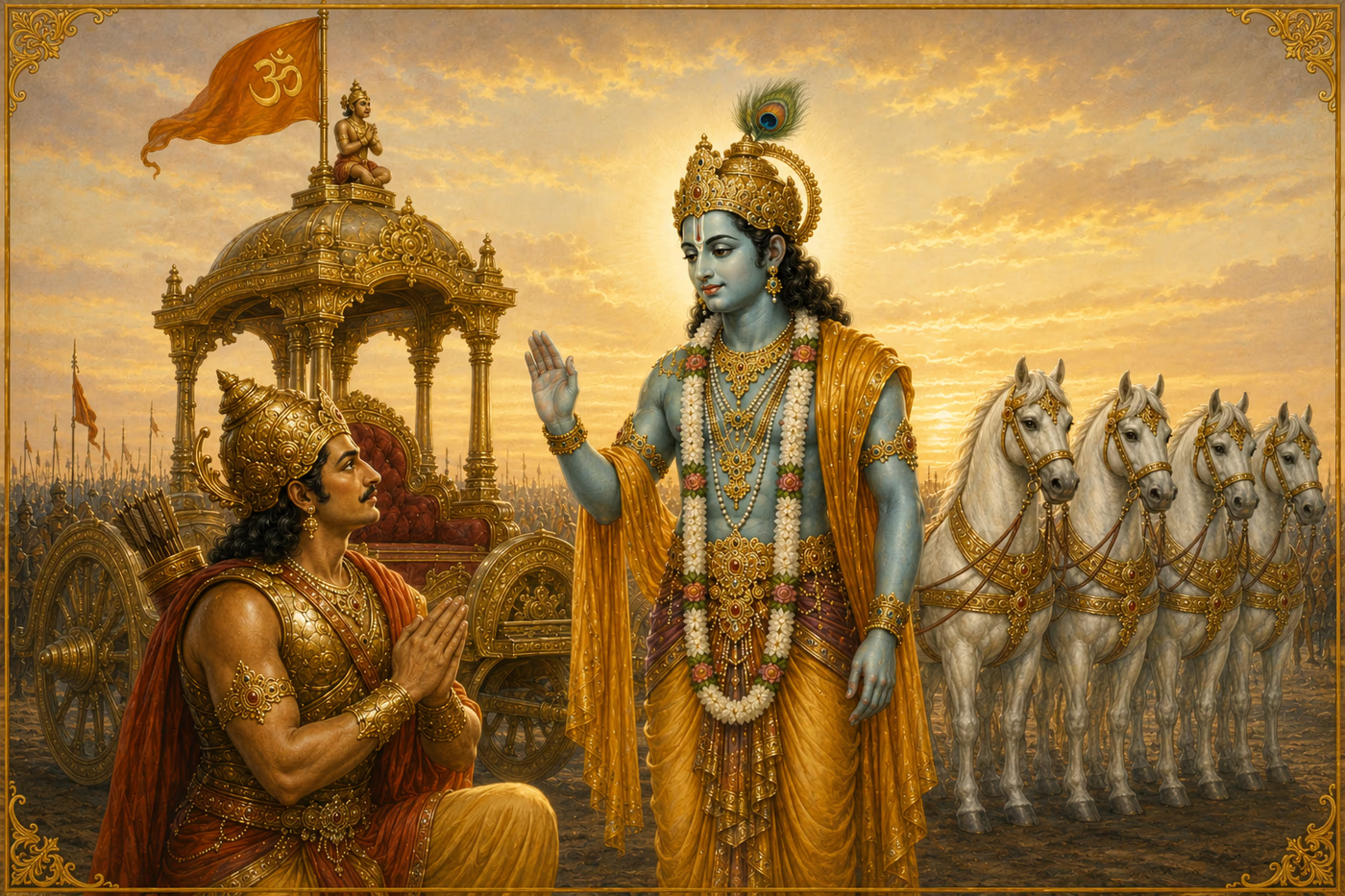
ग्यारहवाँ अध्याय गीता का महान् विश्वरूप-दर्शन है। भगवान् की विभूतियाँ सुनकर अर्जुन उस परम विराट् रूप को देखना चाहते हैं, और श्रीकृष्ण उन्हें 'दिव्य चक्षु' देते हैं, क्योंकि मनुष्य की आँखें उसे सह नहीं सकतीं (११·१-८)। सञ्जय विश्वरूप का वर्णन करते हैं — अनन्त, असंख्य मुख और नेत्रों वाला, एक साथ उगे हज़ार सूर्यों-सा देदीप्यमान, सारा जगत् जिसमें एकत्र समाया है (११·९-१४)। विस्मित और फिर भयभीत होकर अर्जुन उसमें सब देवताओं और प्राणियों को देखते हैं, और दोनों सेनाओं के योद्धाओं को उसके प्रज्वलित मुखों में विनाश की ओर दौड़ते देखते हैं (११·१५-३१)। तब श्रीकृष्ण वह वचन कहते हैं जो युगों से गूँजता आया है: 'कालोऽस्मि लोकक्षयकृत् — मैं लोकों का नाश करने वाला महाकाल हूँ; ये योद्धा पहले ही मारे जा चुके हैं; उठो, और केवल मेरा निमित्त बन जाओ' (निमित्तमात्रं भव, ११·३२-३४)। काँपते हुए अर्जुन प्रणाम करते हैं, अपनी हर असावधानी की क्षमा माँगते हैं, और प्रार्थना करते हैं कि वे उस भयंकर रूप को समेटकर सौम्य रूप में लौट आएँ (११·३५-४६)। श्रीकृष्ण कहते हैं कि यह रूप वेद, यज्ञ या तप से नहीं, केवल अनन्य भक्ति से ही जाना, देखा और प्रवेश किया जा सकता है (११·४७-५४)। और वे उस श्लोक पर समाप्त करते हैं जिसे बहुत-से आचार्य पूरी गीता का सार कहते हैं: 'जो मेरे लिये कर्म करता है, मुझे परम मानता है, मेरा भक्त है, आसक्ति-रहित है, और किसी प्राणी से वैर नहीं रखता — वही मुझे प्राप्त होता है' (११·५५)।
Chapter 11 is the Gita's great theophany. Having heard of God's glories, Arjuna longs to see the supreme cosmic form, and Krishna grants him a 'divine eye' (divya-cakṣus), for mortal eyes cannot bear it (11.1–8). Sañjaya describes the Viśvarūpa — boundless, with countless faces and eyes, blazing like a thousand suns risen at once, the whole universe gathered into one (11.9–14). Awestruck and then terrified, Arjuna sees all gods and beings within it, and the warriors of both armies rushing into its flaming mouths to their destruction (11.15–31). Krishna then speaks the verse that has echoed through the ages: 'kālo 'smi loka-kṣaya-kṛt — I am Time, the mighty destroyer of worlds; these warriors are already slain; arise, and become merely My instrument' (nimitta-mātraṁ bhava, 11.32–34). Trembling, Arjuna offers homage, begs forgiveness for every careless familiarity, and prays Him to withdraw the terrifying form and return as the gentle Lord (11.35–46). Krishna says this form cannot be won by Veda, sacrifice, or austerity — only by ananya-bhakti, undivided love, can He be known, seen, and entered (11.47–54). And He closes on the verse many call the essence of the whole Gita: 'do My work, hold Me supreme, love Me, be free of attachment, bear enmity toward no being — such a one comes to Me' (11.55).
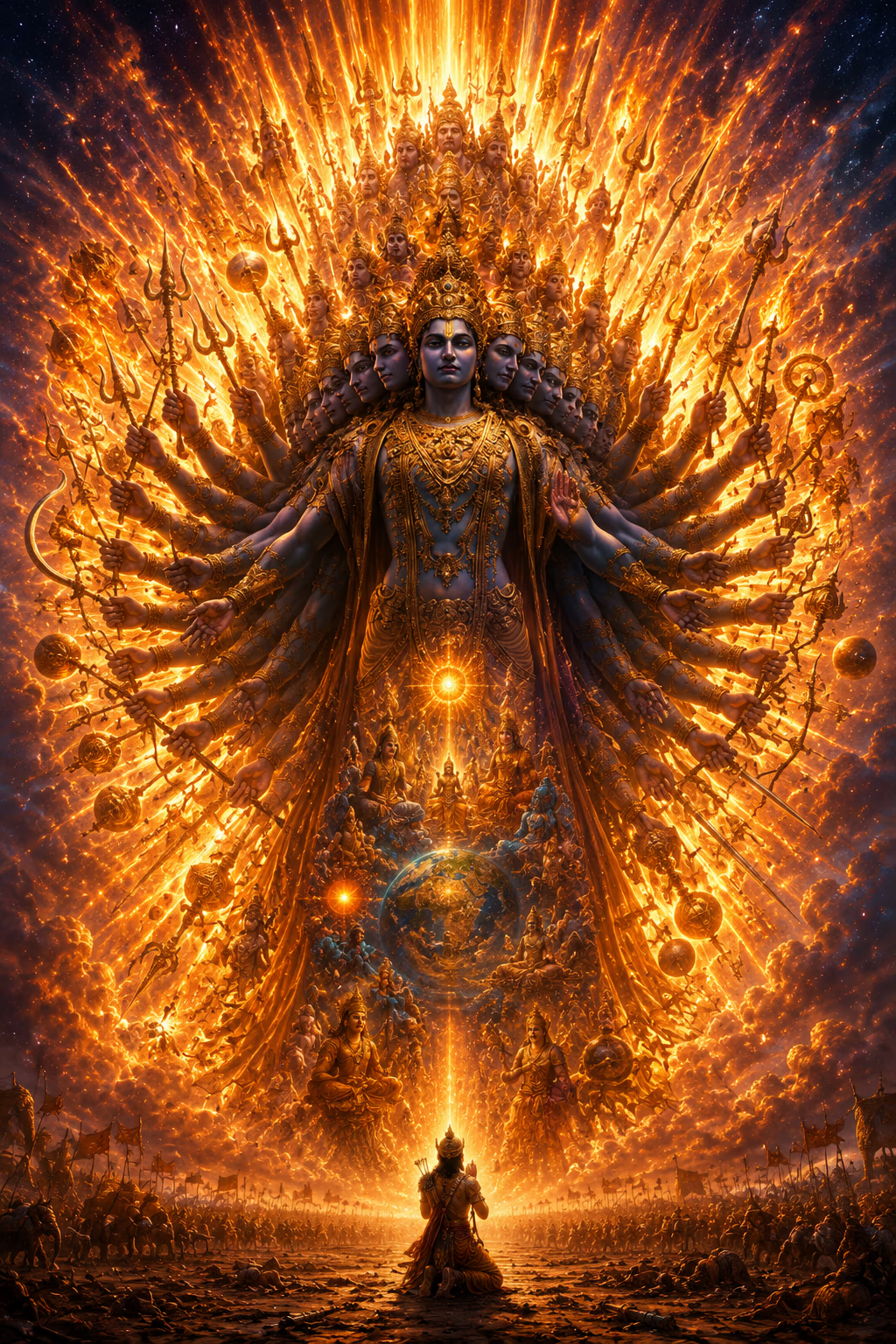
“विश्वरूप-दर्शन — सहस्र सूर्यों का तेज” ॥ १३ ॥ · मूल चित्र — इस परियोजना हेतु
सम्पूर्ण आकाश में विराट् विश्वरूप — असंख्य भुजाओं, मुखों और लोकों से युक्त, सहस्र सूर्यों-सा तेज; नीचे प्रकाश-किरण में नत-मस्तक लघु अर्जुन।
The colossal Universal Form fills the sky — countless arms, faces and worlds, blazing like a thousand suns; below, a tiny bowed Arjuna in a single shaft of light.
अर्जुन बोले—मुझ पर अनुग्रह करने के लिये आपने जो परम गोपनीय अध्यात्मविषयक वचन अर्थात् उपदेश कहा, उससे मेरा यह अज्ञान नष्ट हो गया है
Arjuna said: By the supremely confidential words concerning the Self that You have spoken out of compassion for me, this delusion of mine has been dispelled.
सरल अर्थ: अर्जुन ने कहा - मुझ पर कृपा करने के लिए आपने जो अध्यात्म-विषयक परम गोपनीय वचन कहे, उनसे मेरा यह मोह दूर हो गया है।In simple words: Arjuna says: the deeply secret teaching about the Self that You kindly gave me has cleared away my confusion.
क्योंकि हे कमलनेत्र! मैंने आपसे भूतों की उत्पत्ति और प्रलय विस्तारपूर्वक सुने हैं तथा आपकी अविनाशी महिमा भी सुनी है
For I have heard from You in detail about the origin and dissolution of beings, O lotus-eyed One, and also of Your imperishable greatness.
सरल अर्थ: हे कमलनयन! मैंने आपसे प्राणियों की उत्पत्ति और प्रलय के विषय में विस्तारपूर्वक सुना है, और आपकी अविनाशी महिमा को भी सुना है।In simple words: O lotus-eyed Lord, I have heard in full from You how beings come and go, and about Your never-fading greatness.
evametadyathāttha tvamātmānaṁ parameśvara । draṣṭumicchāmi te rūpamaiśvaraṁ puruṣottama ॥
हे परमेश्वर! आप अपने को जैसा कहते हैं, यह ठीक ऐसा ही है; परंतु हे पुरुषोत्तम! आपके ज्ञान, ऐश्वर्य, शक्ति, बल, वीर्य और तेजसे युक्त ऐश्वर-रूप को मैं प्रत्यक्ष देखना चाहता हूँ
It is just as You have declared Yourself, O Supreme Lord. Yet I wish to see Your divine form, O Supreme Person.
सरल अर्थ: हे परमेश्वर! आप अपने को जैसा कहते हैं, यह ठीक वैसा ही है। फिर भी हे पुरुषोत्तम! मैं आपके उस ऐश्वर्ययुक्त (ईश्वरीय) रूप को प्रत्यक्ष देखना चाहता हूँ।In simple words: O Supreme Lord, everything is exactly as You say. Even so, O best of persons, I long to actually see Your majestic divine form.
manyase yadi tacchakyaṁ mayā draṣṭumiti prabho । yogeśvara tato me tvaṁ darśayātmānamavyayam ॥
हे प्रभो! यदि मेरे द्वारा आपका वह रूप देखा जाना शक्य है—ऐसा आप मानते हैं, तो हे योगेश्वर! उस अविनाशी स्वरूप का मुझे दर्शन कराइये
If You think it possible for me to behold it, O Lord, then, O Master of yoga, show me Your imperishable Self.
सरल अर्थ: हे प्रभो! यदि आप समझते हैं कि वह रूप मेरे द्वारा देखा जाना संभव है, तो हे योगेश्वर! आप मुझे अपना वह अविनाशी रूप दिखलाइए।In simple words: O Lord, if You think I am able to see it, then, O master of all yoga, please reveal Your eternal form to me.
śrībhagavānuvāca paśya me pārtha rūpāṇi śataśo'tha sahasraśaḥ । nānāvidhāni divyāni nānāvarṇākṛtīni ca ॥
श्रीभगवान् बोले—हे पार्थ! अब तू मेरे सैकड़ों-हजारों नाना प्रकार के और नाना वर्ण तथा नाना आकृति वाले अलौकिक रूपों को देख
The Blessed Lord said: Behold, O Pārtha, My forms by the hundreds and by the thousands, of various kinds, divine, and of many colours and shapes.
सरल अर्थ: श्रीभगवान् ने कहा - हे पार्थ! मेरे सैकड़ों-हजारों नाना प्रकार के, दिव्य और भाँति-भाँति के रंग तथा आकृतिवाले रूपों को देख।In simple words: The Lord says: Arjuna, look at My hundreds and thousands of forms, of many kinds, divine, in many colours and shapes.
हे भरतवंशी अर्जुन! तू आदित्यों के अर्थात् अदिति के बारह पुत्रों को, आठ वसुओं को, एकादश रुद्रों को, दोनों अश्विनी कुमारों को और उनचास मरुद्गणों को देख तथा और भी बहुत-से पहले न देखे हुए आश्चर्यमय रूपों को देख
Behold the Ādityas, the Vasus, the Rudras, the two Aśvins, and the Maruts; behold, O Bhārata, many wonders never seen before.
सरल अर्थ: हे भारत! आदित्यों को, वसुओं को, रुद्रों को, दोनों अश्विनीकुमारों को तथा मरुद्गणों को देख; और भी बहुत-से पहले कभी न देखे हुए आश्चर्यमय रूपों को देख।In simple words: See the Adityas, Vasus, Rudras, the two Ashvins and the Maruts; O Bharata, see many marvels you have never seen before.
ihaikasthaṁ jagatkṛtsnaṁ paśyādya sacarācaram । mama dehe guḍākeśa yaccānyaddraṣṭumicchasi ॥
हे अर्जुन! अब इस मेरे शरीर में एक जगह स्थित चराचरसहित सम्पूर्ण जगत् को देख तथा और भी जो कुछ देखना चाहता हो सो देख
Behold now, O Guḍākeśa, the whole universe, with all that moves and does not move, standing together here in My body — and whatever else you wish to see.
सरल अर्थ: हे गुडाकेश! अब इस मेरे शरीर में एक साथ स्थित चराचर सहित सम्पूर्ण जगत् को देख, और इसके सिवा भी जो कुछ तू देखना चाहता है, उसे देख।In simple words: O Arjuna, see now the entire universe, everything moving and unmoving, gathered together in one place in My body — and anything else you wish to see.
na tu māṁ śakyase draṣṭum anenaiva svacakṣuṣā । divyaṁ dadāmi te cakṣuḥ paśya me yogam aiśvaram ॥
परन्तु मुझको तू इन अपने प्राकृत नेत्रों द्वारा देखने में निःसंदेह समर्थ नहीं है; इसी से मैं तुझे दिव्य अर्थात् अलौकिक चक्षु देता हूँ; उससे तू मेरी ईश्वरीय योग शक्ति को देख
But you cannot see Me merely with this eye of yours. I give you a divine eye; behold My majestic power of yoga.
सरल अर्थ: परन्तु इन अपनी सामान्य आँखों से तुम मुझे (इस विश्वरूप को) नहीं देख सकते। इसलिए मैं तुम्हें दिव्य दृष्टि देता हूँ — उससे तुम मेरे ईश्वरीय योग-सामर्थ्य को देखो। अर्थात् यह रूप साधारण नेत्रों का विषय नहीं है, इसे देखने के लिए भगवान् स्वयं विशेष दृष्टि प्रदान करते हैं।In simple words: Krishna tells Arjuna that ordinary human eyes cannot perceive this cosmic form. So He grants Arjuna a divine eye, a special inner sight, and invites him to behold His sovereign, mystic power.
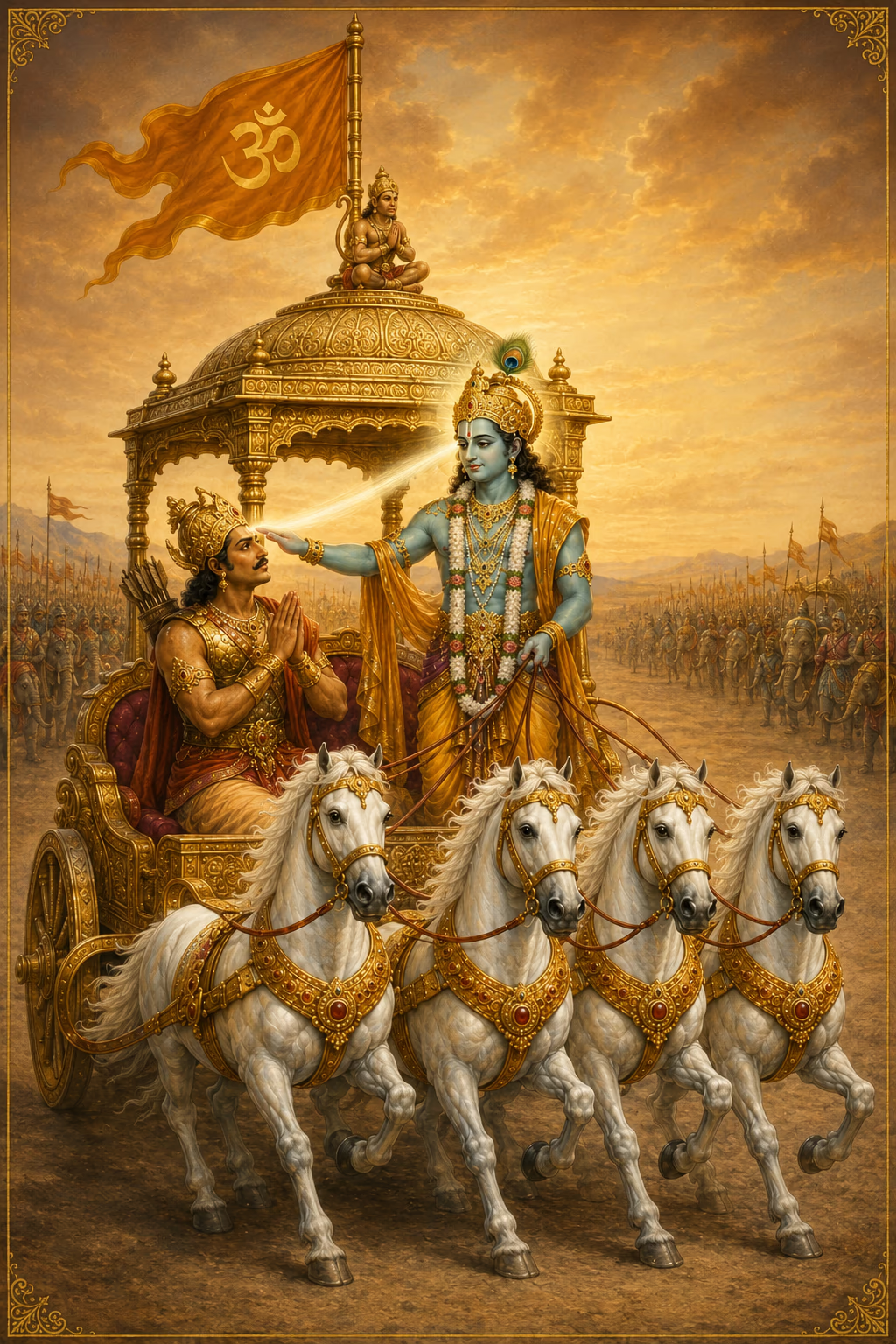
“दिव्य चक्षु — दिव्यं ददामि ते चक्षुः” ॥ ८ ॥ · मूल चित्र — इस परियोजना हेतु
रथ पर श्रीकृष्ण करुणा-भरी मुस्कान से अर्जुन को दिव्य दृष्टि प्रदान करते हैं; एक कोमल प्रकाश-किरण उनके भाल की ओर बहती है।
On the chariot Krishna, with a compassionate smile, grants Arjuna the divine eye; a soft beam of light passes toward his brow.
सञ्जय बोले—हे राजन्! महायोगेश्वर और सब पापों के नाश करने वाले भगवान् ने इस प्रकार कहकर उसके पश्चात् अर्जुन को परम ऐश्वर्य युक्त दिव्य स्वरूप दिखलाया
Sañjaya said: Having spoken thus, O King, Hari, the great Lord of yoga, then revealed to Arjuna His supreme, majestic form.
सरल अर्थ: संजय (धृतराष्ट्र से) कहते हैं — हे राजन्! ऐसा कहकर महायोगेश्वर भगवान् श्रीहरि ने अर्जुन को अपना परम ऐश्वर्यमय (विश्व) रूप दिखाया। अर्थात् इसी क्षण भगवान् ने वह अद्भुत दिव्य रूप प्रकट कर दिया।In simple words: Sañjaya, narrating to the blind king Dhritarashtra, says: after speaking these words, Krishna — the great master of all yoga — showed Arjuna His supreme, glorious universal form.
सरल अर्थ: उस रूप में अनेक मुख और अनेक नेत्र थे, अनेक अद्भुत दृश्य थे, अनेक दिव्य आभूषण थे और अनेक दिव्य अस्त्र-शस्त्र उठाए हुए थे। अर्थात् वह रूप असंख्य मुखों, आँखों, गहनों और उठे हुए हथियारों से भरा हुआ था।In simple words: The form had countless faces and eyes, countless astonishing sights, many divine ornaments, and many divine weapons held raised — an overwhelming, dazzling vision.
divyamālyāmbaradharaṁ divyagandhānulepanam । sarvāścaryamayaṁ devam anantaṁ viśvatomukham ॥
॥ १०–११ ॥
अनेक मुख और नेत्रों से युक्त, अनेक अद्भुत दर्शनों वाले, बहुत-से दिव्य भूषणों से युक्त और बहुत-से दिव्य शस्त्रों को हाथों में उठाये हुए, दिव्य माला और वस्त्रों को धारण किये हुए और दिव्य गन्ध का सारे शरीर में लेप किये हुए, सब प्रकार के आश्चर्यों से युक्त, सीमा रहित और सब ओर मुख किये हुए विराट् स्वरूप परमदेव परमेश्वर को अर्जुन ने देखा
With many mouths and eyes, with many wondrous sights, with many divine ornaments, holding many divine uplifted weapons; Wearing divine garlands and garments, anointed with divine fragrances, the all-wondrous, infinite God, facing in every direction.
सरल अर्थ: वह दिव्य मालाएँ और वस्त्र धारण किए हुए था, दिव्य सुगन्धों से लिपा हुआ था; वह सर्व-आश्चर्यमय, अनन्त और सब ओर मुख वाला देव था। अर्थात् हर दिशा में उसका मुख था और वह पूरी तरह आश्चर्यों से भरा हुआ था।In simple words: He wore heavenly garlands and clothes and was anointed with divine perfumes — the wholly wondrous, endless Lord whose faces turned toward every direction at once.
आकाश में हजार सूर्यों के एक साथ उदय होने से उत्पन्न जो प्रकाश हो, वह भी उस विश्व रूप परमात्मा के प्रकाश के सदृश कदाचित् ही हो
If the radiance of a thousand suns were to blaze forth all at once in the sky, that might resemble the splendour of that great Being.
सरल अर्थ: यदि आकाश में हजार सूर्य एक साथ उदित हो जाएँ, तो उनका प्रकाश भी शायद उस महान् स्वरूप के तेज के समान हो सके। अर्थात् उस विश्वरूप का तेज इतना प्रचण्ड था कि हजार सूर्यों के एक साथ चमकने पर ही उसकी तुलना की जा सकती।In simple words: If a thousand suns were to rise together in the sky, their combined blaze might just resemble the radiance of that mighty form. Its brilliance was almost beyond comparison.
पाण्डु पुत्र अर्जुन ने उस समय अनेक प्रकार से विभक्त अर्थात् पृथक्-पृथक् सम्पूर्ण जगत् को देवों के देव श्रीकृष्ण भगवान् के उस शरीर में एक जगह स्थित देखा
There, in the body of the God of gods, Arjuna then beheld the whole universe, with its manifold divisions, gathered together in one place.
सरल अर्थ: उस समय अर्जुन ने देवों के देव भगवान् के शरीर में, एक ही स्थान पर स्थित, अनेक प्रकार से विभक्त सम्पूर्ण जगत् को देखा। अर्थात् सारा संसार अपने सब विभागों सहित भगवान् के उसी एक रूप में दिखाई दिया।In simple words: At that moment Arjuna saw the entire universe — with all its many divisions and worlds — gathered in one place within the body of Krishna, the God of gods.
उसके अनन्तर वह आश्चर्य से चकित और पुलकित शरीर, अर्जुन प्रकाशमय विश्व रूप परमात्मा को श्रद्धा-भक्ति सहित सिर से प्रणाम करके हाथ जोड़कर बोला
Then Arjuna, filled with wonder, his hair standing on end, bowing his head to the Lord and joining his palms, spoke.
सरल अर्थ: तब आश्चर्य से भर गए अर्जुन के शरीर के रोएँ खड़े हो गए और उन्होंने मस्तक झुकाकर भगवान् को प्रणाम किया और हाथ जोड़कर बोले। अर्थात् यह अद्भुत रूप देखकर अर्जुन विस्मय और भक्ति से भर उठे।In simple words: Overcome with awe, his body thrilling and hair bristling, Arjuna bowed his head to the Lord, folded his hands in reverence, and began to speak.
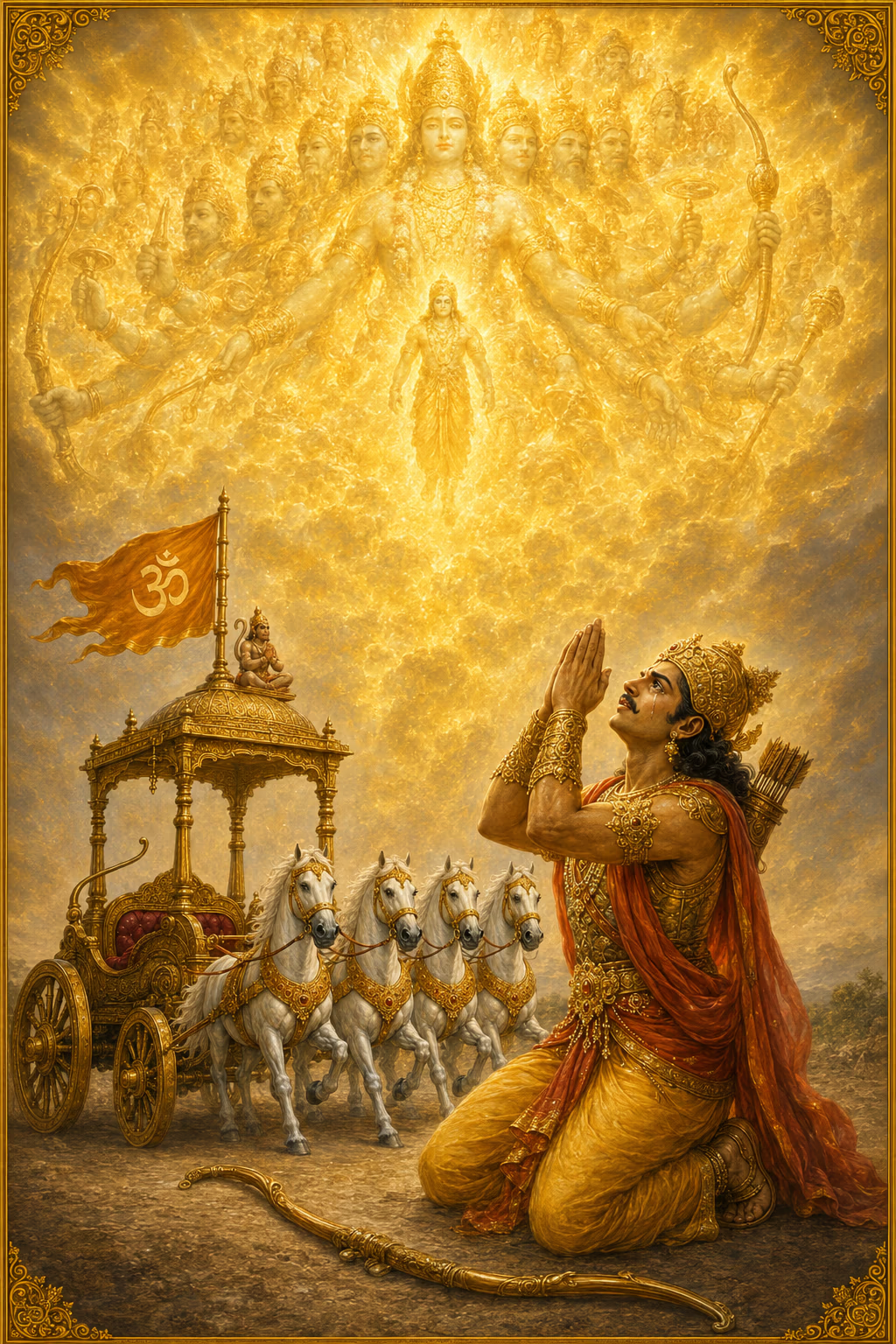
“अर्जुन का विस्मय — रोमांचित, नत-मस्तक” ॥ १४ ॥ · मूल चित्र — इस परियोजना हेतु
विराट् दर्शन से अभिभूत अर्जुन रोमांचित होकर, अश्रु-पूरित मुख से, हाथ जोड़े नत-मस्तक हो जाते हैं।
Overwhelmed by the vision, Arjuna kneels with hair on end and tear-lit face, palms joined over his bowed head.
अर्जुन बोले--हे देव ! मैं आपके शरीर में सम्पूर्ण देवों को तथा अनेक भूतों के समुदायों को, कमल के आसन पर विराजित ब्रह्मा को, महादेव को और सम्पूर्ण ऋषियों को तथा दिव्य सर्पों को देखता हूँ
Arjuna said: O Lord, I behold within Your body all the gods and the varied hosts of beings — Brahmā the creator seated upon the lotus, all the sages, and the divine serpents.
सरल अर्थ: अर्जुन बोले — हे देव! मैं आपके शरीर में सम्पूर्ण देवताओं को तथा भाँति-भाँति के प्राणियों के समूहों को देख रहा हूँ। कमल के आसन पर विराजमान सृष्टिकर्ता ब्रह्मा को, सब ऋषियों को और दिव्य नागों को भी देख रहा हूँ।In simple words: Arjuna says: inside Your form I can see all the gods and every kind of living being — Brahma the creator sitting on his lotus, all the great sages, and the divine serpents too.
anekabāhūdaravaktranetraṁ paśyāmi tvāṁ sarvato'nantarūpam । nāntaṁ na madhyaṁ na punastavādiṁ paśyāmi viśveśvara viśvarūpa ॥
हे सम्पूर्ण विश्व के स्वामिन् ! आपको अनेक भुजा, पेट, मुख और नेत्रों से युक्त तथा सब ओर से अनन्त रूपों वाला देखता हूँ । हे विश्व रूप ! मैं आपके न अन्त को देखता हूँ, न मध्य को और न आदि को ही
I behold You on every side, with countless arms, bellies, mouths, and eyes, infinite in form. I see no end, no middle, nor again any beginning of You, O Lord of all, O Form of the universe.
सरल अर्थ: हे विश्व के ईश्वर! हे विश्वरूप! मैं आपको अनेक भुजाओं, उदरों, मुखों और नेत्रों वाला, सब ओर से अनन्त रूप वाला देख रहा हूँ। आपका न तो अन्त दिखता है, न मध्य और न आदि — आप अनादि-अनन्त हैं।In simple words: I see You everywhere, with countless arms, stomachs, faces and eyes, endless in every direction. I cannot find any end, middle, or beginning to You, O Lord of all, O Universal Form.
आपको मैं मुकुट युक्त, गदायुक्त और चक्र युक्त तथा सब ओर से प्रकाशमान तेज के पुञ्ज, प्रज्वलित अग्नि और सूर्य के सदृश ज्योतियुक्त, कठिनता से देखे जाने योग्य और सब ओर से अप्रमेय स्वरूप देखता हूँ
I behold You wearing the crown, bearing the mace and the discus — a mass of radiance blazing on all sides, hard to gaze upon, immeasurable, with the brilliance of blazing fire and the sun on every hand.
सरल अर्थ: मैं आपको मुकुट धारण किए, गदा और चक्र लिए हुए, सब ओर से प्रकाशमान तेज की राशि के रूप में देख रहा हूँ। आप प्रज्वलित अग्नि और सूर्य के समान कान्ति वाले, सब ओर से देखने में अति कठिन और अप्रमेय (माप से परे) हैं।In simple words: I see You crowned, holding the mace and discus, a heap of light glowing on all sides — blazing like fire and the sun, too dazzling to look at directly, and beyond all measure.
आप ही जानने योग्य परम अक्षर अर्थात् परब्रह्म परमात्मा हैं, आप ही इस जगत् के परम आश्रय हैं, आप ही अनादि धर्म के रक्षक हैं और आप ही अविनाशी सनातन पुरुष हैं । ऐसा मेरा मत है
You are the supreme Imperishable, the one to be known; You are the ultimate resting-place of all this universe. You are the undying guardian of the eternal dharma; You, I hold, are the everlasting Person.
सरल अर्थ: आप ही परम अक्षर (अविनाशी) और जानने योग्य परब्रह्म हैं। आप ही इस सम्पूर्ण विश्व के परम आश्रय हैं। आप अविनाशी हैं, सनातन धर्म के रक्षक हैं — मेरे मत में आप ही सनातन (नित्य) पुरुष हैं।In simple words: You are the highest imperishable Reality, the one worth truly knowing, and the final shelter of this whole universe. You are changeless, the protector of the eternal law of righteousness — I am convinced You are the everlasting Supreme Person.
आपको आदि, अन्त और मध्य से रहित, अनन्त सामर्थ्य से युक्त, अनन्त भुजावाले, चन्द्र-सूर्यरूप नेत्रों वाले, प्रज्वलित अग्नि रूप मुखवाले और अपने तेज से इस जगत् को संतप्त करते हुए देखता हूँ
I behold You without beginning, middle, or end, of infinite power, with countless arms, the moon and the sun for Your eyes, Your mouth a blazing fire, scorching this whole universe with Your own radiance.
सरल अर्थ: मैं आपको आदि, मध्य और अन्त से रहित, अनन्त सामर्थ्य वाला, अनन्त भुजाओं वाला देख रहा हूँ। चन्द्रमा और सूर्य आपके नेत्र हैं, मुख प्रज्वलित अग्नि के समान है, और आप अपने तेज से इस सम्पूर्ण जगत् को तपा रहे हैं।In simple words: I see You with no beginning, middle, or end, with limitless might and countless arms; the sun and moon are Your eyes, Your mouth is like blazing fire, and Your own brilliance is scorching this entire world.
हे महात्मन् ! यह स्वर्ग और पृथ्वी के बीच का सम्पूर्ण आकाश तथा सब दिशाएँ एक आपसे ही परिपूर्ण हैं; तथा आपके इस अलौकिक और भयंकर रूप को देखकर तीनों लोक अति व्यथा को प्राप्त हो रहे हैं
This space between heaven and earth, and all the quarters, are pervaded by You alone. Seeing this wondrous and terrible form of Yours, the three worlds tremble in dread, O great-souled One.
सरल अर्थ: हे महात्मन्! स्वर्ग और पृथ्वी के बीच का यह सारा अन्तराल तथा सम्पूर्ण दिशाएँ केवल आप एक से ही व्याप्त हैं। आपके इस अद्भुत और उग्र (भयंकर) रूप को देखकर तीनों लोक अत्यन्त व्यथित (भयभीत) हो रहे हैं।In simple words: O great soul, You alone fill all the space between heaven and earth and every direction. Seeing this amazing yet terrifying form of Yours, all three worlds are shaking with fear.
वे ही देवताओं के समूह आप में प्रवेश करते हैं और कुछ भयभीत होकर हाथ जोड़कर आपके नाम और गुणों का उच्चारण करते हैं तथा महर्षि और सिद्धों के समुदाय 'कल्याण हो' ऐसा कहकर उत्तम-उत्तम स्तोत्रों द्वारा आपकी स्तुति करते हैं
These hosts of gods enter into You; some, afraid, praise You with folded palms. And crying out "May it be well!", the throngs of great sages and perfected ones extol You with abundant hymns.
सरल अर्थ: ये देवताओं के समूह आप में ही प्रवेश कर रहे हैं। कुछ भयभीत होकर हाथ जोड़े आपकी स्तुति कर रहे हैं। महर्षियों और सिद्धों के समूह 'कल्याण हो' कहकर उत्तम स्तोत्रों द्वारा आपका गुणगान कर रहे हैं।In simple words: These crowds of gods are entering into You; some, frightened, praise You with joined hands. And the assemblies of great sages and perfected beings, calling out "May all be well," glorify You with rich hymns of praise.
rudrādityā vasavo ye ca sādhyā viśve'śvinau marutaścoṣmapāśca । gandharvayakṣāsurasiddhasaṅghā vīkṣante tvāṁ vismitāścaiva sarve ॥
जो ग्यारह रुद्र और बारह आदित्य तथा आठ वायु, साध्यगण, विश्वेदेव, अश्विनीकुमार तथा मरुद्गण और पितरों का समुदाय तथा गन्धर्व, यक्ष, राक्षस और सिद्धों के समुदाय हैं — वे सब ही विस्मित होकर आपको देखते हैं
The Rudras, the Ādityas, the Vasus, and the Sādhyas, the Viśvedevas, the two Aśvins, the Maruts, and the forefathers who drink hot oblations, and the hosts of Gandharvas, Yakṣas, Asuras, and Siddhas — all of them gaze upon You, and all are amazed.
सरल अर्थ: ग्यारह रुद्र, बारह आदित्य, आठ वसु, साध्यगण, विश्वेदेव, दोनों अश्विनीकुमार, मरुद्गण, पितरों के समूह, तथा गन्धर्व, यक्ष, असुर और सिद्ध — ये सब आपके इस विराट् रूप को आश्चर्यचकित होकर देख रहे हैं।In simple words: Every class of celestial being — the Rudras, Adityas, Vasus, Sadhyas, Vishvadevas, Ashvins, Maruts, the ancestors, and crowds of Gandharvas, Yakshas, Asuras, and Siddhas — is staring at You in wonder.
हे महाबाहो ! आपके बहुत मुखों और नेत्रों वाले, बहुत हाथों, जंघा और पैरोंवाले, बहुत उदरों वाले और बहुत-सी दाढ़ों के कारण अत्यन्त विकराल महान् रूप को देखकर सब लोग व्याकुल हो रहे हैं तथा मैं भी व्याकुल हो रहा हूँ
Seeing Your mighty form with its many mouths and eyes, O mighty-armed one — with many arms, thighs, and feet, with many bellies, and terrible with many fangs — the worlds are gravely troubled, and so am I.
सरल अर्थ: हे महाबाहो! आपके इस महान् रूप को, जिसमें अनेक मुख और नेत्र हैं, अनेक भुजाएँ, जाँघें और पैर हैं, अनेक उदर हैं और जो अनेक भयंकर दाढ़ों के कारण विकराल है, देखकर सब लोक अत्यन्त व्याकुल हो रहे हैं और वैसे ही मैं भी।In simple words: Your huge form has countless mouths, eyes, arms, thighs, feet, and bellies, and it is frightening with many sharp fangs. Seeing it, all the worlds are deeply shaken — and so am I.
nabhaḥspṛśaṁ dīptamanekavarṇaṁ vyāttānanaṁ dīptaviśālanetram । dṛṣṭvā hi tvāṁ pravyathitāntarātmā dhṛtiṁ na vindāmi śamaṁ ca viṣṇo ॥
क्योंकि हे विष्णो ! आकाशको स्पर्श करनेवाले, देदीप्यमान, अनेक वर्णों से युक्त तथा फैलाये हुए मुख और प्रकाशमान विशाल नेत्रों से युक्त आपको देखकर भयभीत अन्तःकरण वाला मैं धीरज और शान्ति नहीं पाता हूँ
Seeing You touching the sky, blazing with many colours, with gaping mouths and great flaming eyes, my inmost being is shaken; I find neither steadiness nor peace, O Viṣṇu.
सरल अर्थ: हे विष्णो! आकाश को छूने वाले, देदीप्यमान, अनेक वर्णों वाले, खुले हुए मुखों वाले और प्रज्वलित विशाल नेत्रों वाले आपको देखकर मेरा अन्तःकरण भयभीत हो उठा है; मुझे न धैर्य मिल रहा है और न शान्ति।In simple words: You reach up to the sky, glowing in many colours, with wide-open mouths and huge blazing eyes. Seeing this, O Vishnu, I am terrified inside and can find no courage and no calm.
daṁṣṭrākarālāni ca te mukhāni dṛṣṭvaiva kālānalasannibhāni । diśo na jāne na labhe ca śarma prasīda deveśa jagannivāsa ॥
दाढ़ों के कारण विकराल और प्रलयकालकी अग्नि के समान प्रज्वलित आपके मुखों को देखकर मैं दिशाओं को नहीं जानता हूँ और सुख भी नहीं पाता हूँ । इसलिये हे देवेश ! हे जगन्निवास ! आप प्रसन्न हों
Seeing Your mouths, terrible with fangs and resembling the fires of universal dissolution, I lose all sense of direction and find no refuge. Be gracious, O Lord of the gods, O abode of the universe.
सरल अर्थ: दाढ़ों के कारण विकराल और प्रलयकाल की अग्नि के समान आपके मुखों को देखते ही मुझे दिशाओं का ज्ञान नहीं रहता और कहीं सुख-शान्ति नहीं मिलती। हे देवेश! हे जगन्निवास! प्रसन्न होइए।In simple words: Your mouths are full of dreadful fangs and look like the all-destroying fire at the end of time. Seeing them, I am totally disoriented and find no safety. O Lord of all gods, O home of the whole universe, please be kind to me.
सरल अर्थ: और ये धृतराष्ट्र के सब पुत्र, राजाओं के समूहों के सहित, तथा भीष्म, द्रोण और वह सूतपुत्र कर्ण — हमारी ओर के प्रमुख योद्धाओं के सहित भी (आपमें प्रवेश कर रहे हैं)।In simple words: All of Dhritarashtra's sons, along with the crowds of allied kings — and Bhishma, Drona, and Karna the charioteer's son, together with our side's leading warriors too —
वे सभी धृतराष्ट्र के पुत्र राजाओं के समुदाय सहित आपमें प्रवेश कर रहे हैं और भीष्म पितामह, द्रोणाचार्य तथा वह कर्ण और हमारे पक्ष के भी प्रधान योद्धाओं के सहित सब-के-सब आपके दाढ़ों के कारण विकराल भयानक मुखों में बड़े वेग से दौड़ते हुए प्रवेश कर रहे हैं और कई एक चूर्ण हुए सिरोंसहित आपके दाँतों के बीच में लगे हुए दीख रहे हैं
And all these sons of Dhṛtarāṣṭra, together with the hosts of kings — Bhīṣma, Droṇa, and that son of a charioteer, Karṇa, along with our own chief warriors as well — — rush headlong into Your mouths, fearful and terrible with fangs. Some are seen caught between Your teeth, their heads crushed to powder.
सरल अर्थ: — वे सब बड़ी तेज़ी से आपके दाढ़ों के कारण विकराल और भयानक मुखों में प्रवेश कर रहे हैं। उनमें से कुछ तो दाँतों के बीच में फँसे हुए, अपने सिरों के चूर्ण हो जाने के साथ दिखाई दे रहे हैं।In simple words: They are hurriedly entering Your terrifying, fang-filled mouths. Some can be seen stuck between Your teeth, their heads ground to powder.
जैसे नदियों के बहुत-से जल के प्रवाह स्वाभाविक ही समुद्र के ही सम्मुख दौड़ते हैं अर्थात् समुद्र में प्रवेश करते हैं, वैसे ही वे नरलोक के वीर भी आपके प्रज्वलित मुखों में प्रवेश कर रहे हैं
As the many torrents of rivers race straight toward the ocean, so do these heroes of the world of men enter Your blazing mouths.
सरल अर्थ: जैसे नदियों के अनेक जल-प्रवाह स्वाभाविक रूप से समुद्र की ओर ही दौड़ते हुए उसमें समा जाते हैं, वैसे ही ये मनुष्यलोक के वीर आपके प्रज्वलित मुखों में प्रवेश कर रहे हैं।In simple words: Just as many rushing rivers flow naturally toward the sea and merge into it, these warriors of the human world are pouring into Your flaming mouths.
जैसे पतंग मोहवश नष्ट होने के लिये प्रज्वलित अग्नि में अतिवेग से दौड़ते हुए प्रवेश करते हैं, वैसे ही ये लोग भी अपने नाश के लिये आपके मुखों में अतिवेग से दौड़ते हुए प्रवेश कर रहे हैं
As moths rush with quickening speed into a blazing fire only to perish, so too do these worlds, with quickening speed, rush into Your mouths only to perish.
सरल अर्थ: अर्जुन कहते हैं — जैसे पतंगे (कीट-पतिंगे) अपने ही नाश के लिए बड़े वेग से जलती हुई आग में दौड़कर गिरते हैं, वैसे ही ये सब लोग (योद्धा) भी अपने नाश के लिए बड़े वेग से आपके मुखों में प्रवेश कर रहे हैं।In simple words: Arjuna says: just as moths fly fast into a burning flame and are destroyed, in the very same way all these people are rushing headlong into Your mouths and being destroyed.
आप उन सम्पूर्ण लोकों को प्रज्वलित मुखों द्वारा ग्रास करते हुए सब ओर से बार-बार चाट रहे हैं, हे विष्णो ! आपका उग्र प्रकाश सम्पूर्ण जगत् को तेज के द्वारा परिपूर्ण करके तपा रहा है
Devouring all the worlds on every side with Your flaming mouths, You lick them up. Filling the whole universe with radiance, Your fierce rays scorch it, O Viṣṇu.
सरल अर्थ: आप अपने जलते हुए मुखों से सब लोकों को सब ओर से ग्रसते (निगलते) हुए बार-बार जीभ से चाट रहे हैं। हे विष्णो! आपका उग्र तेज सम्पूर्ण जगत् को अपनी प्रचण्ड किरणों से भरकर तपा रहा है — जला रहा है।In simple words: Arjuna says: with Your blazing mouths You are swallowing all the worlds from every direction, licking them up. O Vishnu, Your terrible brilliance fills the entire universe and its fierce rays burn everything.
ākhyāhi me ko bhavānugrarūpo namo'stu te devavara prasīda । vijñātumicchāmi bhavantamādyaṃ na hi prajānāmi tava pravṛttim ॥
मुझे बतलाइये कि आप उग्ररूप वाले कौन हैं ? हे देवों में श्रेष्ठ ! आपको नमस्कार हो । आप प्रसन्न होइये । आदि पुरुष आपको मैं विशेष रूप से जानना चाहता हूँ, क्योंकि मैं आपकी प्रवृत्ति को नहीं जानता
Tell me who You are, so fierce of form. Obeisance to You, O best of the gods; be gracious. I long to know You, the Primeval One, for I do not understand Your working.
सरल अर्थ: मुझे बताइए कि इतने उग्र (भयंकर) रूप वाले आप कौन हैं? हे देवताओं में श्रेष्ठ! आपको नमस्कार है; आप प्रसन्न होइए। मैं आदिपुरुष आपको ठीक-ठीक जानना चाहता हूँ, क्योंकि आपकी यह प्रवृत्ति (लीला, कार्य का प्रयोजन) मेरी समझ में नहीं आ रही।In simple words: Arjuna says: please tell me who You are in this fearsome form. I bow to You, O greatest of gods — be kind to me. I want to truly know You, the Original Being, because I cannot grasp what You are doing or why.
श्रीभगवान् बोले—मैं लोकों का नाश करने वाला बढ़ा हुआ महाकाल हूँ। इस समय इन लोकों को नष्ट करने के लिये प्रवृत्त हुआ हूँ। इसलिये जो प्रतिपक्षियों की सेना में स्थित योद्धा लोग हैं वे सब तेरे बिना भी नहीं रहेंगे अर्थात् तेरे युद्ध न करने पर भी इन सबका नाश हो जायेगा
The Blessed Lord said: I am Time, the mighty destroyer of the worlds, now grown full, here engaged in annihilating these people. Even without you, none of these warriors arrayed in the opposing ranks shall survive.
सरल अर्थ: श्रीभगवान् कहते हैं — मैं लोकों का नाश करने वाला बढ़ा हुआ (प्रचण्ड) काल हूँ, और इस समय इन सब लोगों का संहार करने में लगा हूँ। तुम्हारे (युद्ध किए) बिना भी, जो योद्धा शत्रु-सेना में खड़े हैं, वे सब नहीं बचेंगे।In simple words: Krishna says: I am Time itself, the great destroyer of all worlds, and right now I am at work wiping out these armies. Even if you do not fight, all these warriors standing in the enemy ranks are going to die anyway.
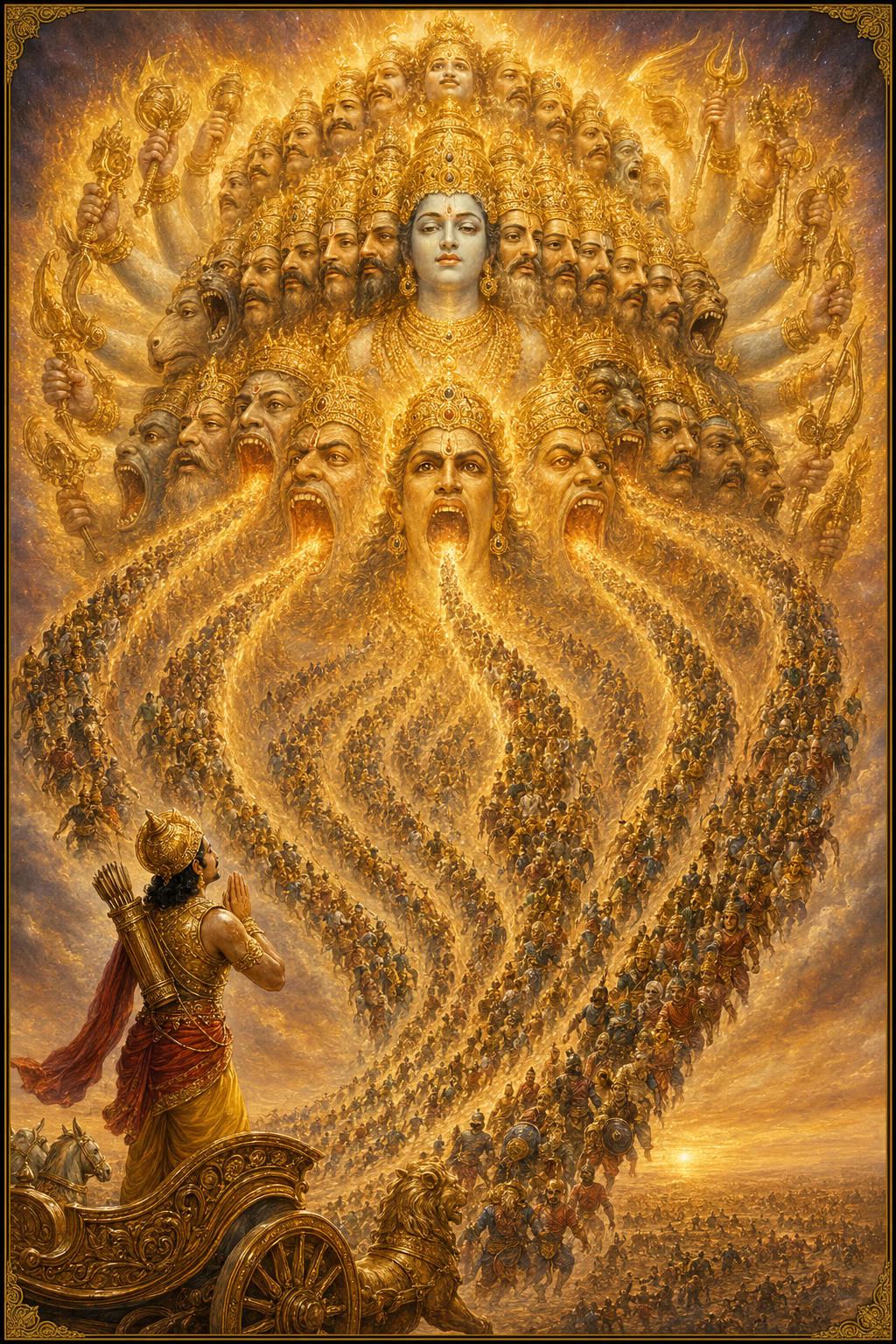
“कालोऽस्मि — मैं महाकाल हूँ” ॥ ३२ ॥ · मूल चित्र — इस परियोजना हेतु
विराट् तेजोमय रूप के मुखों की ओर दोनों सेनाओं के असंख्य योद्धा प्रकाश-धाराओं की भाँति खिंचे जाते हैं — काल की अनिवार्यता, बिना रक्त, केवल तेज।
Toward the mouths of the blazing cosmic form the warriors of both armies stream like rivers of light — the inevitability of Time, no blood, only radiance.
अतएव तू उठ ! यश प्राप्त कर और शत्रुओं को जीतकर धन-धान्य से सम्पन्न राज्य को भोग । ये सब शूरवीर पहले ही से मेरे ही द्वारा मारे हुए हैं। हे सव्यसाचिन् ! तू तो केवल निमित्तमात्र बन जा
Therefore arise and win glory. Conquering your foes, enjoy a prosperous kingdom. By Me alone have these already been slain beforehand; be merely an instrument, O Savyasācin (Arjuna).
सरल अर्थ: इसलिए तुम उठो और यश प्राप्त करो। शत्रुओं को जीतकर समृद्ध राज्य का भोग करो। ये सब तो मेरे द्वारा पहले ही मारे जा चुके हैं; हे सव्यसाचिन् (बायें हाथ से भी बाण चलाने वाले अर्जुन)! तुम तो केवल निमित्त-मात्र बन जाओ।In simple words: Krishna says: so stand up and earn fame. Defeat your enemies and enjoy a thriving kingdom. I have already killed all of them long before this; you, Arjuna, only need to become My instrument — the outward means through which it happens.
droṇaṃ ca bhīṣmaṃ ca jayadrathaṃ ca karṇaṃ tathānyānapi yodhavīrān । mayā hatāṃstvaṃ jahi mā vyathiṣṭhā yudhyasva jetāsi raṇe sapatnān ॥
द्रोणाचार्य और भीष्म पितामह तथा जयद्रथ और कर्ण तथा और भी बहुत-से-मेरे द्वारा मारे हुए शूरवीर योद्धाओं को तू मार। भय मत कर। निस्सन्देह तू युद्ध में वैरियों को जीतेगा। इसलिये युद्ध कर
Droṇa and Bhīṣma and Jayadratha and Karṇa, and the other warrior-heroes as well — already slain by Me, slay them; do not be distressed. Fight! You shall conquer your rivals in battle.
सरल अर्थ: द्रोण को, भीष्म को, जयद्रथ को, कर्ण को तथा और भी जो शूरवीर योद्धा हैं — इन सबको, जो मेरे द्वारा पहले ही मारे जा चुके हैं, तुम (निमित्त बनकर) मारो। घबराओ मत। युद्ध करो; तुम युद्ध में अपने शत्रुओं को अवश्य जीतोगे।In simple words: Krishna says: Drona, Bhishma, Jayadratha, Karna, and the other brave fighters too — I have already killed them, so you just carry out the act. Do not lose heart. Fight, and you will surely defeat your enemies in the battle.
संजय बोले—केशव भगवान् के इस वचन को सुनकर मुकुटधारी अर्जुन हाथ जोड़कर काँपता हुआ नमस्कार करके, फिर भी अत्यन्त भयभीत होकर प्रणाम करके भगवान् श्रीकृष्ण के प्रति गद्गद वाणी से बोला—
Sañjaya said: Having heard this word of Keśava, the diademed Arjuna, trembling and with folded hands, made obeisance, and bowing down again, overcome with fear, spoke to Kṛṣṇa in a faltering voice.
सरल अर्थ: संजय कहते हैं — भगवान् केशव के इस वचन को सुनकर मुकुटधारी अर्जुन हाथ जोड़े हुए, काँपते हुए, नमस्कार करके, और भयभीत होकर बार-बार प्रणाम करते हुए, गद्गद (रुँधे हुए) कण्ठ से श्रीकृष्ण से बोले।In simple words: Sanjaya says: after hearing these words of Krishna (Keshava), the crowned Arjuna, shaking and with his palms joined, bowed to Him. Filled with fear, he prostrated again and again, and with a choked, trembling voice he spoke to Krishna.
arjuna uvāca । sthāne hṛṣīkeśa tava prakīrtyā jagatprahṛṣyatyanurajyate ca । rakṣāṁsi bhītāni diśo dravanti sarve namasyanti ca siddhasaṅghāḥ ॥
अर्जुन बोले—हे अन्तर्यामिन् ! यह योग्य ही है कि आपके नाम, गुण और प्रभाव के कीर्तन से जगत् अति हर्षित हो रहा है और अनुराग को भी प्राप्त हो रहा है तथा भयभीत राक्षस लोग दिशाओं में भाग रहे हैं और सब सिद्धगणों के समुदाय नमस्कार कर रहे हैं
Arjuna said: O Hṛṣīkeśa, it is fitting that the world rejoices and is gladdened by Your glory. The Rākṣasas, struck with fear, flee in all directions, and all the hosts of Siddhas bow down to You.
सरल अर्थ: अर्जुन कहते हैं — हे हृषीकेश! यह उचित ही है कि आपकी महिमा का गुणगान सुनकर सारा जगत हर्षित होता है और आपमें अनुराग करता है। राक्षस लोग भयभीत होकर दसों दिशाओं में भाग रहे हैं और सिद्धों के समूह आपको नमस्कार कर रहे हैं।In simple words: Arjuna says: it is right that the whole world feels joy and love hearing Your glories. Demons run away in fear, while the perfected sages all bow to You.
kasmācca te na nameranmahātman garīyase brahmaṇo'pyādikartre । ananta deveśa jagannivāsa tvamakṣaraṁ sadasattatparaṁ yat ॥
हे महात्मन् ! ब्रह्मा के भी आदि कर्ता और सबसे बड़े आपके लिये ये कैसे नमस्कार न करें; क्योंकि हे अनन्त ! हे देवेश ! हे जगन्निवास ! जो सत्, असत् और उनसे परे अक्षर अर्थात् सच्चिदानन्दघन ब्रह्म है, वह आप ही हैं
And why should they not bow to You, O great-souled one, who are greater even than Brahmā, the original creator? O Infinite One, O Lord of the gods, O Abode of the universe — You are the imperishable, the being and the non-being, and that which is beyond both.
सरल अर्थ: और हे महात्मन्! वे आपको नमस्कार क्यों न करें, क्योंकि आप तो आदि-स्रष्टा ब्रह्मा से भी बड़े हैं। हे अनन्त! हे देवेश! हे जगन्निवास! आप ही अक्षर हैं, आप ही सत् और असत् हैं, और जो इन दोनों से परे है वह भी आप ही हैं।In simple words: Why would they not bow? You are even greater than Brahmā, the first creator. O endless Lord of gods, home of all worlds — You are the imperishable, both the manifest and unmanifest, and what lies beyond both.
tvamādidevaḥ puruṣaḥ purāṇa- stvamasya viśvasya paraṁ nidhānam । vettāsi vedyaṁ ca paraṁ ca dhāma tvayā tataṁ viśvamanantarūpa ॥
आप आदि देव और सनातन पुरुष हैं, आप इस जगत् के परम आश्रय और जानने वाले तथा जानने योग्य और परम धाम हैं । हे अनन्त रूप ! आपसे ही यह सब जगत् व्याप्त अर्थात् परिपूर्ण है
You are the primal Deity, the ancient Puruṣa; You are the supreme resting-place of this universe. You are the knower and that which is to be known, and the supreme abode. By You, O One of infinite form, the universe is pervaded.
सरल अर्थ: आप ही आदिदेव हैं, सनातन पुरुष हैं; आप ही इस सम्पूर्ण विश्व के परम आश्रय हैं। आप ही जानने वाले हैं और जानने योग्य भी आप ही हैं, और परम धाम भी आप ही हैं। हे अनन्तरूप! यह सारा विश्व आपसे ही व्याप्त है।In simple words: You are the first God, the ancient Person, the supreme support of this whole universe. You are the knower, the thing to be known, and the highest goal. O endless-formed one, the entire universe is filled by You.
vāyuryamo'gnirvaruṇaḥ śaśāṅkaḥ prajāpatistvaṁ prapitāmahaśca । namo namaste'stu sahasrakṛtvaḥ punaśca bhūyo'pi namo namaste ॥
आप वायु, यमराज, अग्नि, वरुण, चन्द्रमा, प्रजा के स्वामी ब्रह्मा और ब्रह्मा के भी पिता हैं । आपके लिये हजारों बार नमस्कार ! नमस्कार हो !! आपके लिये फिर भी बार-बार नमस्कार ! नमस्कार !!
You are Vāyu, Yama, Agni, Varuṇa, and the Moon; You are Prajāpati and the great-grandfather of all. Salutations, salutations be unto You a thousand times, and again and yet again salutations, salutations unto You!
सरल अर्थ: आप ही वायु हैं, यमराज हैं, अग्नि हैं, वरुण हैं और चन्द्रमा हैं; आप ही प्रजापति हैं और सबके परदादा (ब्रह्मा के भी पिता) हैं। आपको हजारों बार नमस्कार हो, नमस्कार हो; और फिर भी बार-बार आपको नमस्कार हो, नमस्कार हो!In simple words: You are the wind, death, fire, the sea-god, and the moon; You are the lord of creatures and the great-grandfather of all. I bow to You a thousand times, and again and again I bow to You.
namaḥ purastādatha pṛṣṭhataste namo'stu te sarvata eva sarva । anantavīryāmitavikramastvaṁ sarvaṁ samāpnoṣi tato'si sarvaḥ ॥
हे अनन्त सामर्थ्य वाले ! आपके लिये आगे से और पीछे से भी नमस्कार ! हे सर्वात्मन् ! आपके लिये सब ओर से ही नमस्कार हो । क्योंकि अनन्त पराक्रमशाली आप सब संसार को व्याप्त किये हुए हैं, इससे आप ही सर्वरूप हैं
Salutations to You from the front and from behind; salutations to You from every side, O All! Of infinite power and boundless might, You pervade all; therefore You are all.
सरल अर्थ: हे सर्वस्वरूप! आपको आगे से नमस्कार, पीछे से नमस्कार, और सब ओर से ही नमस्कार हो। हे अनन्त सामर्थ्य और असीम पराक्रम वाले! आप सबको व्याप्त किए हुए हैं, इसीलिए आप ही सब कुछ हैं।In simple words: I bow to You from the front, from behind, and from every direction, O You who are everything. With endless strength and limitless power, You fill all things — so You are all.
sakheti matvā prasabhaṁ yaduktaṁ he kṛṣṇa he yādava he sakheti । ajānatā mahimānaṁ tavedaṁ mayā pramādātpraṇayena vāpi ॥
संयुक्त अनुवाद ↓joint translation ↓
सरल अर्थ: आपको केवल अपना सखा मानकर मैंने जो कुछ हठपूर्वक (बेधड़क) कह दिया — 'हे कृष्ण! हे यादव! हे सखा!' ऐसा कहकर — आपकी इस महिमा को न जानते हुए, चाहे प्रमादवश हो या प्रेमवश;In simple words: Thinking of You as just a friend, I boldly said things like 'Hey Krishna! Hey Yadava! Hey friend!' — not realizing this greatness of Yours, whether out of carelessness or out of love.
आपके इस प्रभाव को न जानते हुए, आप मेरे सखा हैं ऐसा मानकर प्रेम से अथवा प्रमाद से भी मैंने 'हे कृष्ण !', 'हे यादव !', 'हे सखे !' इस प्रकार जो कुछ बिना सोचे-समझे हठात् कहा है; और हे अच्युत ! आप जो मेरे द्वारा विनोद के लिये विहार, शय्या, आसन और भोजनादि में अकेले अथवा उन सखाओं के सामने भी अपमानित किये गये हैं—वह सब अपराध अप्रमेय स्वरूप अर्थात् अचिन्त्य प्रभाव वाले आपसे मैं क्षमा करवाता हूँ
Whatever I have presumptuously said, thinking of You merely as a friend — calling out "O Kṛṣṇa! O Yādava! O friend!" — not knowing this greatness of Yours, out of carelessness or out of affection; And in whatever way I may have slighted You in jest — while at play, while resting, while sitting, or while dining, whether alone or in the presence of others — for all that, O Acyuta, O immeasurable One, I beg Your forgiveness.
सरल अर्थ: और हे अच्युत! हँसी-मजाक में मैंने जो आपका अनादर किया हो — खेलते समय, सोते समय, बैठते समय या भोजन करते समय, अकेले में अथवा दूसरों के सामने — हे अप्रमेय (अनन्त महिमा वाले)! उन सब अपराधों के लिए मैं आपसे क्षमा माँगता हूँ।In simple words: And wherever I disrespected You as a joke — while playing, resting, sitting, or eating, whether alone or in front of others — for all of that, O immeasurable Acyuta, I beg Your forgiveness.
आप इस चराचर जगत् के पिता और सबसे बड़े गुरु एवं अति पूजनीय हैं, हे अनुपम प्रभाव वाले ! तीनों लोकों में आपके समान भी दूसरा कोई नहीं है, फिर अधिक तो कैसे हो सकता है
You are the father of this world of moving and unmoving beings; You are its object of worship and its venerable Teacher, greater than all. There is none equal to You — how then could there be one greater, in all the three worlds, O You of incomparable power!
सरल अर्थ: आप ही इस चराचर जगत् के पिता हैं, आप ही सबके पूज्य और सबसे बड़े गुरु हैं। हे अतुलनीय प्रभावशाली प्रभो! तीनों लोकों में आपके समान भी कोई नहीं है, फिर आपसे बढ़कर तो कोई हो ही कैसे सकता है।In simple words: You are the father of this whole world, of everything that moves and does not move. You are the one worthy of worship and the highest teacher. In all three worlds no one is even equal to You, so how could anyone be greater? Your power has no match.
अतएव हे प्रभो ! मैं शरीर को भलीभाँति चरणों में निवेदित कर, प्रणाम करके, स्तुति करने योग्य आप ईश्वर को प्रसन्न होने के लिये प्रार्थना करता हूँ । हे देव ! पिता जैसे पुत्र के, सखा जैसे सखा के और पति जैसे प्रियतमा पत्नी के अपराध सहन करते हैं—वैसे ही आप भी मेरे अपराध को सहन करने योग्य हैं
Therefore, bowing down and prostrating my body, I beg Your grace, O adorable Lord. As a father bears with his son, a friend with his friend, a lover with the beloved, so, O God, may You bear with me.
सरल अर्थ: इसलिए मैं भलीभाँति प्रणाम करके, शरीर को आपके चरणों में झुकाकर, आप पूजनीय ईश्वर को प्रसन्न करना चाहता हूँ। हे देव! जैसे पिता पुत्र के, मित्र मित्र के और प्रेमी अपने प्रिय के अपराध सह लेता है, वैसे ही आप मेरे अपराधों को क्षमा करने योग्य हैं।In simple words: So I bow down, laying my whole body before You, and beg You — the worshipful Lord — to be pleased with me. The way a father forgives his son, a friend his friend, and a lover the beloved, please bear with me and forgive my faults.
adṛṣṭapūrvaṁ hṛṣito'smi dṛṣṭvā bhayena ca pravyathitaṁ mano me । tadeva me darśaya deva rūpaṁ prasīda deveśa jagannivāsa ॥
मैं पहले न देखे हुए आपके इस आश्चर्यमय रूप को देखकर हर्षित हो रहा हूँ और मेरा मन भय से अति व्याकुल भी हो रहा है, इसलिये आप उस अपने चतुर्भुज विष्णु रूप को ही मुझे दिखलाइये ! हे देवेश ! हे जगन्निवास ! प्रसन्न होइये
Having seen what was never seen before, I am thrilled with joy; yet my mind trembles with fear. Show me, O God, only that form of Yours; be gracious, O Lord of gods, O Abode of the universe.
सरल अर्थ: पहले कभी न देखे हुए इस रूप को देखकर मैं हर्षित हूँ, परन्तु साथ ही मेरा मन भय से अत्यन्त व्याकुल हो रहा है। इसलिए हे देव! आप मुझे वही (पहले वाला सौम्य) रूप दिखाइए। हे देवेश! हे जगन्निवास! मुझ पर प्रसन्न होइए।In simple words: Seeing this form that no one has ever seen before fills me with joy, but my mind is also shaking with fear. O God, please show me again that gentle familiar form of Yours. Be kind to me, O Lord of all gods, in whom the whole world rests.
मैं वैसे ही आपको मुकुट धारण किये हुए तथा गदा और चक्र हाथ में लिये हुए देखना चाहता हूँ, इसलिये हे विश्व स्वरूप ! हे सहस्रबाहो ! आप उसी चतुर्भुज रूप से प्रकट होइये
I wish to see You just as before — wearing the crown, bearing the mace, holding the discus in Your hand. O You of a thousand arms, O Form of the universe, take on again that four-armed form.
सरल अर्थ: मैं आपको पहले की ही भाँति मुकुट धारण किए, हाथ में गदा और चक्र लिए हुए देखना चाहता हूँ। हे हजार भुजाओं वाले! हे विश्वरूप! आप उसी चतुर्भुज रूप में फिर प्रकट हो जाइए।In simple words: I want to see You as You were before — wearing Your crown, carrying Your mace, and holding the discus. O Lord with a thousand arms, O form of the whole universe, please return to that familiar four-armed form.
श्रीभगवान् बोले—हे अर्जुन ! अनुग्रहपूर्वक मैंने अपनी योगशक्ति के प्रभाव से यह मेरा परम तेजोमय, सबका आदि और सीमारहित विराट् रूप तुझ को दिखलाया है, जिसे तेरे अतिरिक्त दूसरे किसी ने पहले नहीं देखा था
The Blessed Lord said: Out of grace toward you, O Arjuna, I have shown you, by My own power, this supreme form — radiant, all-pervading, infinite, and primal — which no one but you has ever seen before.
सरल अर्थ: श्रीभगवान् कहते हैं — हे अर्जुन! तुझ पर प्रसन्न होकर मैंने अपनी योगशक्ति से तुझे यह परम, तेजोमय, सबका आदिरूप और अनन्त विश्वरूप दिखाया है, जिसे तुझसे पहले किसी ने भी नहीं देखा।In simple words: Krishna says: Pleased with you, Arjuna, I showed you this highest form by My own divine power. It is full of light, all-pervading, endless, and the very first source of all — and no one except you has ever seen it before.
na vedayajñādhyayanairna dānairna ca kriyābhirna tapobhirugraiḥ । evaṁrūpaḥ śakya ahaṁ nṛloke draṣṭuṁ tvadanyena kurupravīra ॥
हे अर्जुन ! मनुष्य लोक में इस प्रकार विश्व रूप वाला मैं न वेद और यज्ञों के अध्ययन से, न दान से, न क्रियाओं से और न उग्र तपों से ही तेरे अतिरिक्त दूसरे के द्वारा देखा जा सकता हूँ
Not by the study of the Vedas and sacrifices, nor by gifts, nor by rituals, nor by severe austerities can I be seen in such a form in the world of men by anyone other than you, O foremost hero of the Kurus.
सरल अर्थ: हे कुरुप्रवीर अर्जुन! इस मनुष्य-लोक में, वेदों के अध्ययन से, यज्ञों से, दान से, क्रियाओं से या उग्र तपस्याओं से भी, तेरे सिवा और कोई इस विश्वरूप में मुझे नहीं देख सकता।In simple words: O best of the Kurus, in this human world no one besides you can see Me in this universal form — not through studying the Vedas, performing sacrifices, giving charity, doing rituals, or even harsh austerities.
mā te vyathā mā ca vimūḍhabhāvo dṛṣṭvā rūpaṁ ghoramīdṛṅmamedam । vyapetabhīḥ prītamanāḥ punastvaṁ tadeva me rūpamidaṁ prapaśya ॥
मेरे इस प्रकार के इस विकराल रूप को देखकर तुझको व्याकुलता नहीं होनी चाहिये और मूढभाव भी नहीं होना चाहिये । तू भयरहित और प्रीतियुक्त मनवाला होकर उसी मेरे इस शंख-चक्र-गदा-पद्मयुक्त चतुर्भुज रूप को फिर देख
Let there be no fear in you, nor any bewilderment, at seeing this terrible form of Mine. Free from fear and with a gladdened heart, behold once again this very form of Mine.
सरल अर्थ: मेरे इस प्रकार के भयानक रूप को देखकर तुझे न तो व्याकुलता होनी चाहिए और न मोह। तू भय से रहित और प्रसन्न मन वाला होकर फिर से मेरे इसी (सौम्य चतुर्भुज) रूप को भलीभाँति देख।In simple words: Do not be frightened or confused at having seen this terrifying form of Mine. Let go of all fear, and with a happy and settled mind, look once more at this familiar gentle form of Mine.
सञ्जय बोले—वासुदेव भगवान् ने अर्जुन के प्रति इस प्रकार कहकर फिर वैसे ही अपने चतुर्भुज रूप को दिखलाया और फिर महात्मा श्रीकृष्ण ने सौम्यमूर्ति होकर इस भयभीत अर्जुन को धीरज दिया
Sañjaya said: Having thus spoken to Arjuna, Vāsudeva again showed His own form; and the great-souled One, becoming once more of gentle aspect, consoled the terrified Arjuna.
सरल अर्थ: संजय कहते हैं — अर्जुन से ऐसा कहकर भगवान् वासुदेव ने फिर अपना (चतुर्भुज) रूप दिखाया, और डरे हुए अर्जुन को सौम्य रूप धारण करके धैर्य बँधाया।In simple words: Sanjaya says: after speaking, Krishna returned to His own gentle form and comforted the frightened Arjuna.
अर्जुन बोले—हे जनार्दन ! आपके इस अति शान्त मनुष्य रूप को देखकर अब मैं स्थिरचित्त हो गया हूँ और अपनी स्वाभाविक स्थिति को प्राप्त हो गया हूँ
Arjuna said: O Janārdana, seeing this gentle human form of Yours, I am now composed and have regained my own nature and my senses.
सरल अर्थ: अर्जुन कहते हैं — हे जनार्दन! आपके इस सौम्य मनुष्य-रूप को देखकर अब मैं शान्त-चित्त हो गया हूँ और अपनी स्वाभाविक स्थिति में लौट आया हूँ।In simple words: Arjuna says: seeing Krishna's calm human form again, his fear is gone and he feels normal once more.
“सौम्य रूप — पुनः शान्त, करुण मुख” ॥ ५०–५१ ॥ · मूल चित्र — इस परियोजना हेतु
भयावह तेज शान्त होकर कोमल स्वर्ण-आभा में बदल जाता है; श्रीकृष्ण पुनः अपने सौम्य रूप में मुस्कुराते हैं, अर्जुन आश्वस्त होकर श्रद्धा से देखते हैं।
The terrifying radiance settles into a gentle golden glow; Krishna smiles again in his tender human form, and Arjuna, steadied, gazes back in reverence.
śrībhagavān uvāca sudurdarśam idaṁ rūpaṁ dṛṣṭavān asi yan mama । devā apy asya rūpasya nityaṁ darśana-kāṅkṣiṇaḥ ॥
श्रीभगवान् बोले—मेरा जो चतुर्भुज रूप तुमने देखा है, यह सुदुर्दर्श है अर्थात् इसके दर्शन बड़े ही दुर्लभ हैं । देवता भी सदा इस रूप के दर्शन की आकाङ्क्षा करते रहते हैं
The Blessed Lord said: This form of Mine which you have seen is very hard to behold; even the gods ever long for the sight of this form.
सरल अर्थ: श्रीभगवान् कहते हैं — मेरा जो यह रूप तुमने देखा है, वह अत्यन्त दुर्लभ है; देवता भी सदा इस रूप के दर्शन की इच्छा करते रहते हैं।In simple words: The Lord says: this cosmic form is extremely rare to see — even the gods always wish to behold it.
nāhaṁ vedair na tapasā na dānena na cejyayā । śakya evaṁ-vidho draṣṭuṁ dṛṣṭavān asi māṁ yathā ॥
जिस प्रकार तुमने मुझको देखा है—इस प्रकार चतुर्भुज रूप वाला मैं न वेदों से, न तपसे, न दानसे, और न यज्ञ से ही देखा जा सकता हूँ
Not by the Vedas, nor by austerity, nor by charity, nor by sacrifice can I be seen in such a form as you have seen Me.
सरल अर्थ: न वेदों के अध्ययन से, न तप से, न दान से और न यज्ञ से — इस प्रकार के रूप में, जैसा तुमने मुझे देखा है, मैं देखा जाना सम्भव नहीं हूँ।In simple words: Krishna says: study of scriptures, penance, charity, or rituals alone cannot reveal this form the way Arjuna just saw it.
bhaktyā tv ananyayā śakya aham evaṁ-vidho 'rjuna । jñātuṁ draṣṭuṁ ca tattvena praveṣṭuṁ ca paraṁtapa ॥
✦ tap a glowing wordचमकते शब्द छुएँ ✦
परन्तु हे परंतप अर्जुन ! अनन्य भक्ति के द्वारा इस प्रकार चतुर्भुज रूप वाला मैं प्रत्यक्ष देखने के लिये, तत्त्व से जानने के लिये तथा प्रवेश करने के लिये अर्थात् एकीभाव से प्राप्त होने के लिये भी शक्य हूँ
But by undivided devotion alone, O Arjuna, can I, in this form, be known and truly seen and entered into, O scorcher of foes.
सरल अर्थ: परन्तु हे अर्जुन! हे परन्तप! अनन्य भक्ति के द्वारा ही मैं इस प्रकार के रूप में तत्त्वतः जाना, देखा और प्राप्त (प्रवेश) किया जा सकता हूँ।In simple words: Only through one-pointed, exclusive devotion can Krishna in this form be truly known, seen, and reached.
mat-karma-kṛn mat-paramo mad-bhaktaḥ saṅga-varjitaḥ । nirvairaḥ sarva-bhūteṣu yaḥ sa mām eti pāṇḍava ॥
✦ tap a glowing wordचमकते शब्द छुएँ ✦
हे अर्जुन ! जो पुरुष केवल मेरे ही लिये सम्पूर्ण कर्तव्य कर्मों को करने वाला है, मेरे परायण है, मेरा भक्त है, आसक्तिरहित है और सम्पूर्ण भूतप्राणियों में वैरभाव से रहित है—वह अनन्य भक्ति युक्त पुरुष मुझको ही प्राप्त होता है
He who does work for Me, who holds Me as the supreme goal, who is devoted to Me, free from attachment, and bears enmity toward no being — he comes to Me, O Pāṇḍava.
सरल अर्थ: जो मनुष्य मेरे लिये ही कर्म करता है, मुझे ही परम लक्ष्य मानता है, मेरा भक्त है, आसक्ति से रहित है और समस्त प्राणियों में वैरभाव से रहित है — हे पाण्डव! वह मुझको ही प्राप्त होता है।In simple words: The one who acts for Krishna, makes Him his highest goal, is devoted to Him, free from clinging, and hates no creature — that person reaches Him.
मत्कर्मकृत् — एक श्लोक जिससे जीवन जिया जाए (११·५५)Mat-karma-kṛt — the one verse to live by (11.55)
विश्वरूप के अभिभूत कर देने वाले दर्शन के बाद, श्रीकृष्ण पूरे मार्ग को एक ही श्लोक (११·५५) में निचोड़ देते हैं — पाँच सरल, जीने योग्य शर्तें जो मिलकर मनुष्य को उन तक पहुँचा देती हैं: मेरे लिये कर्म करो (मत्कर्मकृत्), मुझे परम लक्ष्य मानो (मत्परमः), मुझसे प्रेम करो (मद्भक्तः), आसक्ति छोड़ो (सङ्गवर्जितः), और किसी प्राणी से वैर मत रखो (निर्वैरः सर्वभूतेषु)। बहुत-से आचार्य इसे पूरी गीता का सार कहते हैं। यह अभ्यास उसी एक श्लोक को जीवन की रोज़ की कसौटी बना लेता है।After the overwhelming vision of the Cosmic Form, Krishna distills the whole path into a single verse (11.55) — five simple, livable conditions that together bring one to Him: do your work for Me (mat-karma-kṛt), hold Me as your highest aim (mat-paramaḥ), love Me (mad-bhaktaḥ), let go of clinging (saṅga-varjitaḥ), and bear enmity toward no being (nirvairaḥ sarva-bhūteṣu). Many commentators call it the essence of the entire Gita. This practice takes that one verse as a daily measure for living.
हर सुबह इन पाँचों को शान्ति से पढ़ो और दिन के लिये अपना लो: 'आज मेरा कर्म तुम्हारा है; तुम मेरे लक्ष्य हो; मैं तुमसे प्रेम करता हूँ; मैं किसी से चिपकता नहीं; मैं किसी से वैर नहीं रखता।'Each morning, read the five quietly and take them for the day: 'today my work is Yours; You are my aim; I love You; I cling to nothing; I hold enmity toward no one.'
पाँचों में से वह एक चुनो जो इस समय तुम्हारे लिये सबसे कठिन है — शायद किसी फल को छोड़ना जिससे तुम चिपके हो, या किसी के प्रति बैर को त्यागना — और उसी को दिन का केन्द्र बनाओ।Pick the one of the five that is hardest for you right now — perhaps releasing a result you are clinging to, or letting go of a grudge against someone — and make that your focus for the day.
दिनभर, जब तुम स्वयं को फिसलते पकड़ो (पकड़ते, बैर करते, लक्ष्य भूलते), कोमलता से उस श्लोक पर लौट आओ — यह तो स्वयं भगवान् की दी हुई सूची है।Through the day, when you catch yourself slipping (grasping, resenting, forgetting the aim), gently return to the verse — it is a checklist the Lord Himself gave.
शाम को पाँचों को ईमानदारी से देखो: दिन कहाँ इनसे मिला, कहाँ नहीं? कोई अपराध-भाव नहीं — केवल अगले दिन का आरम्भ-बिन्दु।In the evening, run through the five honestly: where did the day match them, where not? No guilt — only the next day's starting point.
क्या देखें: What to notice: ध्यान दो कि ये पाँच अलग-अलग साधनाएँ नहीं, एक ही गति हैं — जब कर्म अर्पित हो और लक्ष्य परमात्मा हो, तो आसक्ति और वैर लगभग अपने आप ढीले पड़ जाते हैं; श्लोक तुम्हें जीने लगता है, बजाय इसके कि तुम उस पर ज़ोर लगाओ।Notice that the five are not separate disciplines but one movement — when work is offered and the aim is God, attachment and enmity loosen almost on their own; the verse begins to live you, rather than you straining at it.
अनुभव · स्वयं देखेंAnubhava · see for yourself
आज पाँचों में से केवल एक लो — सबसे प्रबल रूप से 'निर्वैरः सर्वभूतेषु', किसी प्राणी से वैर नहीं — और एक कठिन प्रसंग में उसे थामे रखो। उस शाम पूछो: एक बार भी वैर छोड़ देने से क्या तुम अधिक हल्के, और किसी विराट् के निकट अनुभव हुए? वही निकटता ११·५५ का वचन है — 'स मामेति, वह मुझे प्राप्त होता है' — जो तुमने अपने ही दिन में चखा।
Today, take just one of the five — most powerfully, 'nirvairaḥ sarva-bhūteṣu,' enmity toward no being — and hold it through one difficult encounter. That evening, ask: did dropping the enmity, even once, leave you lighter, and nearer to something vast? That nearness is what 11.55 promises — 'sa mām eti, he comes to Me' — tasted in your own day.
ॐ तत्सदिति श्रीमद्भगवद्गीतासूपनिषत्सु ब्रह्मविद्यायां योगशास्त्रे श्रीकृष्णार्जुनसंवादे विश्वरूपदर्शनयोगो नाम एकादशोऽध्यायः ॥ ११ ॥
॥ इस प्रकार उपनिषद्, ब्रह्मविद्या तथा योगशास्त्र रूप श्रीमद्भगवद्गीता के श्रीकृष्ण-अर्जुन संवाद में 'विश्वरूपदर्शनयोग' नामक ग्यारहवाँ अध्याय पूर्ण हुआ ॥