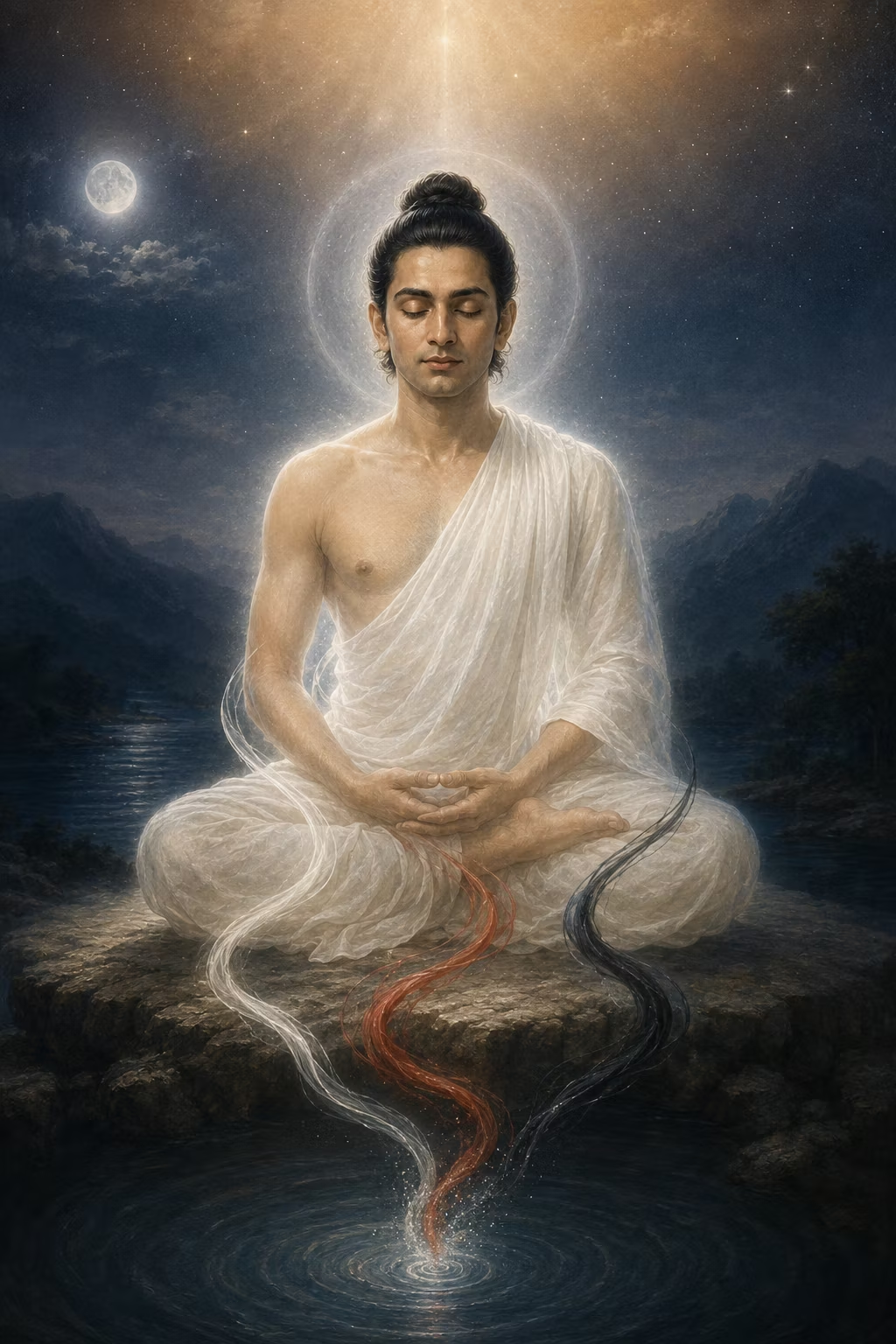
अन्तिम ग्रन्थ शिखर है। मन को शान्त कर (पाद I), साधना चल कर (पाद II) और संयम से भीतर मुड़ कर (पाद III), शास्त्र अब अपना एक ही तर्क पूरा करता है — बँधा मन अन्ततः कैसे मुक्त होता है। पतञ्जलि पूरा यन्त्र दिखाते हैं: सिद्धियों के स्रोत (४·१), कर्म और उसके संस्कारों का व्यापार (४·७–११), भूत और भविष्य की सत्ता (४·१२–१३), और वह महान् विवेक — मन स्वप्रकाश नहीं बल्कि एक दृश्य वस्तु है (४·१९), सदा एक अपरिणामी साक्षी को ज्ञात (४·१८), दूसरे के प्रयोजन से क्रियाशील (४·२४)। जैसे-जैसे वह विवेक परिपक्व होता है, मन स्वयं मुक्ति की ओर झुकता है (४·२६); वैराग्य अपनी ही अन्तर्दृष्टि तक के प्रति पूर्ण हो जाता है (४·२९); और धर्ममेघ समाधि उदित होती है, क्लेश और कर्म का अन्त करती हुई (४·३०)। तब गुण, अपना काम पूरा कर, अपने मूल में लौट जाते हैं, और चितिशक्ति अपने स्वरूप में ठहर जाती है। वही कैवल्य है (४·३४) — वह मुक्ति जिसकी ओर पूरा मार्ग सदा चल रहा था। कोई झपटी हुई शक्ति नहीं, बल्कि एक बोझ, जो कभी तुम्हारा था ही नहीं, अन्ततः उतार दिया गया।
The last book is the summit. Having stilled the mind (Pada I), walked the practice (Pada II) and turned inward through samyama (Pada III), the treatise now completes its one argument — how the bound mind is finally set free. Patanjali maps the whole machinery: the sources of the powers (IV.1), the working of karma and its latent impressions (IV.7–11), the reality of past and future (IV.12–13), and the great discernment — the mind is not self-luminous but a seen thing (IV.19), always known by an unchanging witness (IV.18), acting for another\'s sake (IV.24). As that discernment ripens, the mind inclines of itself toward freedom (IV.26); dispassion completes itself even toward one\'s own insight (IV.29); and dharma-megha samadhi dawns, ending affliction and karma (IV.30). Then the gunas, their work done, resolve into their source, and the power of consciousness rests in its own nature. That is kaivalya (IV.34) — the freedom the whole path was always walking toward. Not a power seized, but a burden, never yours, at last laid down.
“The guṇas resolve into their source; consciousness rests in its own nature — kaivalya.”
तीन रंगीन धागे साधक से खुलकर मूल-सर में लौटते; रूप अपने प्रकाश में ठहरता — कैवल्य (४·३४)।
Three coloured threads unwind from the meditator into a source-pool as his form rests in its own light — kaivalya (IV.34).
॥ ४ · १ ॥
जन्मौषधिमन्त्रतपःसमाधिजाःसिद्धयः॥
janmauṣadhi-mantra-tapaḥ-samādhi-jāḥ siddhayaḥ ॥
जन्मसे, ओषधिसे, मन्त्रसे, तपसे और समाधिसे होनेवाली — इस प्रकार पाँच प्रकारकी सिद्धियाँ होती हैं।
The attainments (siddhis) arise from birth, herbs, mantra, austerity, or samādhi.
सरल अर्थ: व्यास कहते हैं — सिद्धियाँ पाँच प्रकार के मूलों से उत्पन्न होती हैं। जन्म से प्राप्त सिद्धि देहान्तर के साथ जन्मजात होती है; ओषधियों से — जैसे असुरों के भवनों में रसायन आदि से — सिद्धि मिलती है; मन्त्रों से आकाशगमन तथा अणिमा आदि की प्राप्ति होती है; तप से संकल्पसिद्धि — इच्छानुसार रूप धारण करना और जहाँ चाहे वहाँ पहुँच जाना — प्राप्त होती है; और समाधि से उत्पन्न सिद्धियाँ पहले ही कही जा चुकी हैं।In simple words: Vyāsa enumerates the five roots of the siddhis. Perfection "by birth" is inborn, carried over with the new body; "by herbs" refers to elixirs (rasāyana) such as those found in the dwellings of the asuras; "by mantra" yields powers like moving through space and aṇimā; "by austerity" gives fulfilment of will — taking any form and going anywhere at will; and the perfections "born of samādhi" have already been explained earlier. Opening the Kaivalya Pāda, this sūtra sets these lesser powers apart from the liberation that is the book's true aim.
॥ ४ · २ ॥
जात्यन्तरपरिणामःप्रकृत्यापूरात्॥
jāty-antara-pariṇāmaḥ prakṛty-āpūrāt ॥
एक जातिसे दूसरी जातिमें बदल जानारूप जात्यन्तर-परिणाम प्रकृतिके आपूरण — पूर्ण हो जाने — से होता है।
The transformation into another species (or birth) comes about through the filling-in of primal nature (prakṛti).
सरल अर्थ: व्यास कहते हैं — जब पूर्व परिणाम का लोप होता है तब उत्तर परिणाम की उत्पत्ति नये अपूर्व अवयवों के प्रवेश से होती है। शरीर और इन्द्रियों की प्रकृतियाँ अपने-अपने विकार को प्रकृति के आपूर (भरण) द्वारा पुष्ट करती हैं, और इसमें धर्म आदि निमित्त की अपेक्षा रहती है। इस प्रकार एक जाति से दूसरी जाति में परिणाम प्रकृति के आपूरण से ही सम्पन्न होता है।In simple words: Vyāsa explains that when the earlier transformation lapses, the later one arises through the influx of new constituent particles that were not present before. The material natures (prakṛtis) of body and senses nourish their own respective modifications by this "overflow" (āpūra) of prakṛti, in dependence on causes such as dharma. Thus a change into another species is accomplished not by any external agency but by nature's own self-filling.
nimittam aprayojakaṃ prakṛtīnāṃ varaṇa-bhedas tu tataḥ kṣetrika-vat ॥
निमित्त — जन्म, ओषधि आदि — प्रकृतियोंको चलानेवाला नहीं है; उससे तो किसानकी भाँति केवल रुकावटका छेदन किया जाता है, फिर प्रकृति अपने-आप बह चलती है।
An incidental cause does not impel the primal natures (prakṛtis); rather, from it their barrier is breached — like a farmer.
सरल अर्थ: व्यास कहते हैं — धर्म आदि निमित्त प्रकृतियों का प्रेरक नहीं होता, क्योंकि कार्य के द्वारा कारण प्रवृत्त नहीं किया जाता; वह तो केवल आवरण (रुकावट) को भेदता है। जैसे किसान ऊँचे भरे खेत से नीचे खेत में पानी ले जाना चाहे तो हाथ से पानी नहीं धकेलता, बल्कि मेड़ को तोड़ देता है और पानी स्वयं बह निकलता है — वैसे ही धर्म प्रकृतियों के आवरण को तोड़ता है और प्रकृतियाँ स्वयं अपने-अपने विकार में बहने लगती हैं। इसी प्रकार किसान खेत से घास-खरपतवार हटा देता है तो रस स्वयं जड़ों में पहुँच जाते हैं; अतः धर्म केवल अधर्म की निवृत्ति का हेतु है, प्रकृति की प्रवृत्ति का नहीं।In simple words: Vyāsa gives the celebrated farmer simile. Dharma (the incidental cause) does not push the prakṛtis into action, for a cause does not directly propel its effect; it only removes the obstruction. Just as a farmer irrigating a lower field does not shove the water by hand but merely breaches the dyke, whereupon the water flows on its own, so dharma breaks the barrier veiling the natures, and they of themselves flood into their appropriate transformations — much as clearing the weeds lets nutrients reach the roots. Thus dharma is only a cause of the cessation of adharma (impurity), not of nature's positive activity.
॥ ४ · ४ ॥
निर्माणचित्तान्यस्मितामात्रात्॥
nirmāṇa-cittāny asmitā-mātrāt ॥
बनाये हुए — निर्माण — चित्त केवल अस्मितामात्रसे ही उत्पन्न होते हैं।
The created minds (nirmāṇa-cittas) arise from pure I-am-ness (asmitā-mātra) alone.
सरल अर्थ: व्यास कहते हैं — योगी चित्त के कारणभूत केवल अस्मितामात्र को उपादान बनाकर निर्माणचित्तों की रचना करता है, और उन्हीं से वे सचित्त (चेतनायुक्त) बन जाते हैं। अर्थात् अनेक शरीरों के लिए योगी अस्मितामात्र से ही अनेक चित्तों का निर्माण कर लेता है।In simple words: Vyāsa explains that the yogin, taking only bare I-am-ness (asmitā-mātra) — the root-cause of mind — as his material, fashions the "created minds," and through these the many bodies become endowed with consciousness (sacitta). This accounts for how an accomplished yogin who produces many bodies can animate each of them.
॥ ४ · ५ ॥
प्रवृत्तिभेदेप्रयोजकंचित्तमेकमनेकेषाम्॥
pravṛtti-bhede prayojakaṃ cittam ekam anekeṣām ॥
अनेक निर्मित चित्तोंको नाना प्रकारकी प्रवृत्तियोंमें नियुक्त करनेवाला एक ही मूल चित्त होता है।
In the diversity of their activity, one mind is the director of the many.
सरल अर्थ: व्यास कहते हैं — प्रश्न उठता है कि अनेक चित्तों की प्रवृत्ति एक ही चित्त के अभिप्राय के अनुसार कैसे चलती है। उत्तर यह है कि योगी का एक मुख्य चित्त ही सब निर्माणचित्तों का प्रयोजक (प्रेरक) होकर उनका निर्माण करता है, और उसी से उन अनेक चित्तों की भिन्न-भिन्न प्रवृत्ति होती है।In simple words: Vyāsa raises the question of how the actions of many created minds can proceed in harmony, as if led by a single intention. The answer is that one principal mind directs and produces all the created minds, and from this single controlling mind arises the differentiated activity of the many.
॥ ४ · ६ ॥
तत्रध्यानजमनाशयम्॥
tatra dhyāna-jam anāśayam ॥
उन पाँच प्रकारके चित्तोंमेंसे जो ध्यानसे उत्पन्न होता है, वही कर्म-संस्कारोंसे रहित — अनाशय — होता है।
Of these, [the mind] born of meditation (dhyāna) is free from karmic residue (āśaya).
सरल अर्थ: व्यास कहते हैं — निर्माणचित्त पाँच प्रकार का है — जन्म, ओषधि, मन्त्र, तप और समाधि से उत्पन्न। इनमें जो चित्त ध्यान से उत्पन्न होता है वही अनाशय अर्थात् वासना-रहित होता है; उसमें राग आदि की प्रवृत्तिरूप आशय नहीं रहता, इसलिए उसका पुण्य-पाप से सम्बन्ध नहीं होता, क्योंकि योगी के क्लेश क्षीण हो चुके हैं। परन्तु शेष चार प्रकार के चित्तों में कर्माशय विद्यमान रहता है।In simple words: Vyāsa notes that the created mind is fivefold (born of birth, herbs, mantra, austerity, or samādhi), but only the mind born of meditation is anāśaya — free of any karmic deposit. It alone has no residue of attachment and the like, and so no bond with merit or demerit, because the meditating yogin's afflictions (kleśas) are burnt away; the other kinds still carry a karmic store. This begins the pāda's turn from powers to the purification of karma that leads toward kaivalya.
॥ ४ · ७ ॥
कर्माशुक्लाकृष्णंयोगिनस्त्रिविधमितरेषाम्॥
karmāśuklākṛṣṇaṃ yoginas trividham itareṣām ॥
योगीके कर्म न शुक्ल होते हैं न कृष्ण; दूसरोंके कर्म तीन प्रकारके — शुक्ल, कृष्ण और शुक्ल-कृष्ण — होते हैं।
The yogin's karma is neither white nor black; for others it is of three kinds.
सरल अर्थ: व्यास कहते हैं — कर्म चार प्रकार का है — कृष्ण (काला), शुक्ल-कृष्ण (सफेद-काला), शुक्ल (सफेद) और अशुक्ल-अकृष्ण (न सफेद न काला)। कृष्ण कर्म दुरात्माओं का होता है; शुक्ल-कृष्ण बाह्य साधनों से सिद्ध होता है, जिसमें दूसरों को पीड़ा या उपकार पहुँचता है; शुक्ल कर्म तप, स्वाध्याय और ध्यान करने वालों का है, जो केवल मन के अधीन है और किसी को पीड़ा दिये बिना होता है। अशुक्ल-अकृष्ण कर्म क्षीणक्लेश संन्यासियों का, अन्तिम देहवालों का होता है — योगी फल का त्याग करने से अशुक्ल और नया कर्म ग्रहण न करने से अकृष्ण होता है; शेष प्राणियों का कर्म तो पहले कहे अनुसार तीन ही प्रकार का रहता है।In simple words: Vyāsa classifies karma as fourfold: black (of the wicked), white-and-black (worked through external means and involving harm or help to others), white (of those given to austerity, study and meditation, depending on the mind alone and harming no one), and neither-white-nor-black. This last belongs only to the renunciate yogin whose afflictions are destroyed and who is in his final body — "not-white" because he renounces the fruit of action, "not-black" because he takes on no new karma. For all other beings karma remains threefold, and this severing of the karmic chain is what opens the way to liberation.
उन तीन प्रकारके कर्मोंसे, उनके फलभोगके अनुकूल वासनाओंकी ही अभिव्यक्ति — उत्पत्ति — होती है।
From that [threefold karma] follows the manifestation only of those latent impressions (vāsanās) that accord with its ripening (vipāka).
सरल अर्थ: व्यास कहते हैं — "ततः" अर्थात् उस तीन प्रकार के कर्म से; और "तद्विपाकानुगुणानाम् एव" अर्थात् जिस जाति के कर्म का जो विपाक होता है उसके अनुकूल जो वासनाएँ उस कर्मविपाक के पीछे सोई रहती हैं, उन्हीं की अभिव्यक्ति होती है। जैसे देव-कर्म के विपाक के समय नरक, तिर्यक् या मनुष्य की वासनाएँ प्रकट नहीं होतीं, बल्कि देव-योनि के अनुकूल वासनाएँ ही व्यक्त होती हैं; और इसी प्रकार नरक, तिर्यक् तथा मनुष्य योनियों में भी समझना चाहिए।In simple words: Vyāsa explains that "from that" means from the threefold karma, and that only those vāsanās corresponding to the ripening (vipāka) of a given class of karma — the impressions lying dormant behind that fruition — become manifest. A divine karma coming to fruition cannot occasion the impressions of a hell-being, an animal, or a human; only impressions in keeping with the divine birth are activated, and the same reasoning holds for the other destinies. This shows how karma selectively awakens matching latent impressions, preparing the analysis of their beginningless continuity that follows.
जाति, देश और कालका व्यवधान रहनेपर भी कर्म-संस्कारोंमें व्यवधान नहीं पड़ता, क्योंकि स्मृति और संस्कार दोनोंका एक ही स्वरूप है।
Even though separated by species, place, and time, there is uninterrupted continuity [of the vāsanās], because memory and latent impression (saṃskāra) are of one and the same form.
सरल अर्थ: व्यास कहते हैं — बिल्ली (वृषदंश) के जन्म का जो विपाक है, वह अपने व्यंजक निमित्तों से प्रकट होता है; चाहे सौ जन्मों का, दूर देश का, या सौ कल्पों का व्यवधान क्यों न हो, जब वैसा ही व्यंजक निमित्त फिर उपस्थित होता है तब पूर्वानुभूत उसी जाति की वासना तत्काल प्रकट हो जाती है। ऐसा इसलिए होता है कि स्मृति और संस्कार एकरूप हैं — जैसा अनुभव वैसे संस्कार, जैसी कर्मवासना वैसी स्मृति। अतः जाति, देश और काल से व्यवहित होने पर भी निमित्त-नैमित्तिक-भाव का उच्छेद न होने से वासनाओं का आनन्तर्य अर्थात् अटूट क्रम सिद्ध होता है।In simple words: Vyāsa illustrates with the karmic fruition of a cat: though hidden behind a hundred births, a remote place, or a hundred aeons, the vāsanā springs up the instant its like manifesting cause reappears. This works because memory and latent impression share one form — experience shapes saṃskāra, saṃskāra conforms to the karmic vāsanā, and memory conforms to the vāsanā. Since the chain of cause and effect is never severed, an unbroken succession of vāsanās persists across separated lives, explaining how past conditioning silently governs present bondage that liberation must eventually undo.
॥ ४ · १० ॥
तासामनादित्वंचाशिषोनित्यत्वात्॥
tāsām anāditvaṃ cāśiṣo nityatvāt ॥
उन वासनाओंकी अनादिता है, क्योंकि जीनेकी इच्छा — आशिष् — प्राणीमें अनादिकालसे नित्य बनी रहती है।
And these [vāsanās] are beginningless, because the will-to-live — the wish "may I be" — is eternal.
सरल अर्थ: व्यास कहते हैं — वासनाओं का अनादित्व इसलिए है कि आशी अर्थात् जीने की इच्छा नित्य है। "मैं न रहूँ ऐसा न हो, मैं बना रहूँ" — यह आत्माशी सब प्राणियों में देखी जाती है और स्वाभाविक अर्थात् इसी जन्म में स्वतःसिद्ध नहीं हो सकती; क्योंकि जिस अभी-जन्मे जीव ने मरण का अनुभव कभी नहीं किया, उसे द्वेष और दुःख की अनुस्मृति से उत्पन्न होने वाला मरण-त्रास कैसे होगा? यह भय पूर्व-जन्मों के अनुभव की ओर संकेत करता है, अतः अनादि वासनाओं से अनुविद्ध यह चित्त निमित्तवश कुछ वासनाओं को पाकर पुरुष के भोग के लिए प्रवृत्त होता है।In simple words: Vyāsa grounds the beginninglessness of the vāsanās in the eternal will-to-live — the self-blessing "may I never cease to be, may I continue" seen in every creature. This urge cannot be innate to this single birth, for a just-born being that has never experienced death could feel no dread of dying arising from the remembered pain of a prior aversion; the fear therefore points back to endless past lives. Thus the mind, threaded through with beginningless latent impressions, takes up certain vāsanās as occasion prompts and turns toward experience for the sake of puruṣa — a bondage that liberation must unravel at its very root.
हेतु, फल, आश्रय और आलम्बन — इन चारोंसे वासनाओंका संग्रह होता है; अतः इन चारोंका अभाव होनेपर उन वासनाओंका भी अभाव हो जाता है।
Because [the vāsanās] are held together by cause, effect, substratum, and object, in the absence of these there is the absence of the vāsanās as well.
सरल अर्थ: व्यास कहते हैं — हेतु वह है जिससे धर्म से सुख, अधर्म से दुःख, सुख से राग, दुःख से द्वेष और फिर प्रयत्न होता है; इस प्रकार यह छह अरों वाला संसार-चक्र चलता रहता है, जिसकी मूल-प्रेरक तथा समस्त क्लेशों का मूल अविद्या है। फल वह है जिसके आश्रय से धर्मादि की वर्तमानता होती है; आश्रय वह मन है जिसमें अधिकार रहते वासनाएँ निराश्रय होकर टिक नहीं पातीं; और आलम्बन वह अभिमुख वस्तु है जो वासना को व्यक्त करती है। इन चारों से समस्त वासनाएँ संगृहीत रहती हैं, अतः इन हेतु, फल, आश्रय और आलम्बन के अभाव में उन पर आश्रित वासनाओं का भी अभाव हो जाता है।In simple words: Vyāsa unpacks the four supports. Cause: righteousness yields pleasure, unrighteousness pain, which breed attachment and aversion and then effort, turning the six-spoked wheel of saṃsāra whose driving root is nescience, the source of all afflictions. Effect: that upon which the present arising of dharma and the rest depends. Substratum: the mind, in which the vāsanās can lodge only so long as it still has work to do. Object: the confronting thing that awakens a given vāsanā. Since every vāsanā is bound together by these four, in their absence the vāsanās resting on them also vanish — a direct step toward the mind's release into kaivalya.
धर्मोंमें कालका भेद होनेके कारण जो धर्म अतीत हो चुके हैं और जो अनागत हैं — अभी प्रकट नहीं हुए — वे भी स्वरूपसे विद्यमान रहते हैं।
The past and the future exist in their own real form, because of the difference in the temporal paths of the characteristics (dharmas).
सरल अर्थ: व्यास कहते हैं — अनागत वह है जिसकी व्यक्ति भविष्य में होगी, अतीत वह है जिसकी व्यक्ति अनुभूत हो चुकी, और वर्तमान वह है जो अपने व्यापार में आरूढ़ है; ये तीनों ही ज्ञान के ज्ञेय हैं। यदि अतीत और अनागत स्वरूप से न होते तो उन्हें विषय करने वाला यह ज्ञान निर्विषय होकर उत्पन्न न होता; अतः वे स्वरूप से विद्यमान हैं। धर्मी अनेक धर्म-स्वभाव वाला है और उसके धर्म अध्व-भेद अर्थात् काल-मार्ग के भेद से व्यवस्थित रहते हैं — अनागत अपने व्यंग्य स्वरूप से, अतीत अपने अनुभूत स्वरूप से; व्यक्ति केवल वर्तमान अध्व की होती है, इसलिए किसी वस्तु का अभूत्वा-भाव अर्थात् न होकर होना नहीं होता।In simple words: Vyāsa explains that the future is that whose manifestation is yet to come, the past that whose manifestation has been experienced, and the present that engaged in its own operation — all three being objects of knowledge. If past and future did not exist in their own form, the cognition bearing upon them would arise without an object, which is impossible; hence they truly are. The one substrate bears many characteristics distributed across the three temporal paths — the future present in its latent form, the past in its experienced form, while explicit manifestation belongs only to the present path. Nothing therefore comes into being out of sheer non-existence, a realist ontology undergirding the account of how the guṇas and their transformations are real yet ultimately to be transcended.
॥ ४ · १३ ॥
तेव्यक्तसूक्ष्मागुणात्मानः॥
te vyakta-sūkṣmā guṇātmānaḥ ॥
वे समस्त धर्म — व्यक्त और सूक्ष्म दोनों स्थितियोंमें — सदैव गुणस्वरूप ही हैं।
These [characteristics], whether manifest or subtle, are of the nature of the guṇas.
सरल अर्थ: व्यास कहते हैं — तीनों अध्वों वाले ये धर्म वर्तमान में व्यक्तात्मक और अतीत-अनागत में सूक्ष्मात्मक हैं तथा छह अविशेष रूप वाले हैं। यह समस्त जगत् गुणों — सत्त्व, रजस् और तमस् — के संनिवेश-विशेष मात्र है, अतः परमार्थतः इन सबका स्वरूप गुणात्मक ही है। इसी विषय में शास्त्र का अनुशासन है — "गुणों का परम रूप दृष्टि-पथ में नहीं आता, और जो दृष्टि-पथ को प्राप्त हुआ वह माया के समान अत्यन्त तुच्छ है।"In simple words: Vyāsa notes that these characteristics across the three time-paths are manifest in the present and subtle (yet real) in past and future, resolvable into the six "undifferentiated" forms. All this world is merely a particular configuration of the three guṇas — sattva, rajas, and tamas — so ultimately every phenomenon is guṇa-natured; as scripture teaches, the supreme form of the guṇas never enters the field of sight, and whatever does enter it is utterly trifling, like māyā. This reduces the entire objective world to the guṇas whose activity the yogin must finally still for kaivalya.
॥ ४ · १४ ॥
परिणामैकत्वाद्वस्तुतत्त्वम्॥
pariṇāmaikatvād vastu-tattvam ॥
परिणामकी एकतासे ही वस्तुका एक-रूप — वस्तुत्व — बनता है।
Because the transformation [of the guṇas] is unitary, the object has [real] essential existence.
सरल अर्थ: व्यास कहते हैं — प्रख्या, क्रिया और स्थिति स्वभाव वाले तथा ग्रहणात्मक गुणों का करण-भाव से एक परिणाम श्रोत्र-इन्द्रिय है, और ग्राह्य-भाव से एक परिणाम शब्द-तन्मात्र रूप विषय है; इन शब्दादि का एक परिणाम पृथ्वी-परमाणु और उनका एक परिणाम पृथ्वी, गौ, वृक्ष, पर्वत आदि स्थूल वस्तु है। इस प्रकार परिणाम की एकता से वस्तु की तत्त्व-सत्ता सिद्ध होती है। जो विज्ञानवादी वस्तु के स्वरूप को स्वप्न-विषय के समान केवल ज्ञान की परिकल्पना मात्र मानकर उसका अपलाप करते हैं, वे अपने ही अप्रमाण विकल्प-ज्ञान के बल से अपने माहात्म्य से उपस्थित वस्तु को त्यागकर श्रद्धेय-वचन कैसे हो सकते हैं?In simple words: Vyāsa argues against idealism: the guṇas — whose nature is illumination, activity, and inertia — transform in unison as the perceiving organ (e.g., the ear), as the perceptible tanmātra (sound), as the atom of earth, and thence as the gross object such as earth, cow, tree, or mountain. This single coordinated transformation establishes that the object is a real "thatness," not a mere construction of cognition. He rebukes those who, holding awareness alone real and objects dream-like fabrications, would deny the self-evident object on the strength of baseless conceptual cognition — for the yogic path presupposes real objects as the field of discriminative insight.
वस्तुकी एकता होनेपर भी अनेक चित्तोंका भेद प्रत्यक्ष है; इसलिये चित्त और उसके द्वारा देखी जानेवाली वस्तु — इन दोनोंका मार्ग अलग-अलग है।
Since the object is the same yet the minds [cognizing it] differ, the paths of the two — object and mind — are distinct.
सरल अर्थ: व्यास कहते हैं — एक ही साधारण वस्तु अनेक चित्तों का आलम्बन बनती है; वह न एक चित्त की परिकल्पना है और न अनेक चित्तों की, अपितु स्वप्रतिष्ठ है। वस्तु के समान रहने पर भी धर्म के कारण किसी को सुख-ज्ञान, अधर्म के कारण दुःख-ज्ञान, अविद्या के कारण मूढ-ज्ञान और सम्यग्दर्शन के कारण माध्यस्थ्य-ज्ञान होता है — यह भेद भला किस एक चित्त के द्वारा परिकल्पित होगा? दूसरे के चित्त से परिकल्पित अर्थ से अन्य के चित्त का उपराग नहीं बन सकता, अतः ग्राह्य और ग्रहण के भेद से भिन्न वस्तु तथा ज्ञान का मार्ग विभक्त है, इन दोनों में संकर की गन्ध भी नहीं है।In simple words: Vyāsa shows that one common object supports many minds, being neither the fabrication of a single mind nor of several, but self-established. Faced with the very same object, one mind has a pleasurable cognition (through merit), another a painful one (through demerit), another a deluded one (through nescience), and another an indifferent one (through right vision) — differences no single mind could have imposed, and no mind can be colored by an object imagined by another's mind. Hence object and cognition, divided as the grasped and the grasping, follow wholly separate paths without a trace of intermixture — a distinction the discriminating yogin must grasp in order to separate seer from seen.
॥ ४ · १६ ॥
नचैकचित्ततन्त्रंवस्तुतदप्रमाणकंतदाकिंस्यात्॥
na caika-citta-tantraṃ vastu tad-apramāṇakaṃ tadā kiṃ syāt ॥
दृश्य वस्तु किसी एक चित्तके अधीन नहीं है; यदि वह चित्तका विषय न रह जाय, तब वस्तुका क्या होगा — वह तब भी विद्यमान रहती है।
And an object is not dependent on a single mind; for [if it were], when it is not evidenced by that mind, what then would it be?
सरल अर्थ: व्यास कहते हैं — यदि वस्तु किसी एक चित्त के अधीन होती, तो उस चित्त के व्यग्र या निरुद्ध हो जाने पर वह वस्तु उसके द्वारा अस्पृष्ट, अन्य के लिए अविषय-भूत और अप्रमाणक अर्थात् अगृहीत-स्वभाव होकर उस समय क्या रह जाती? और फिर से चित्त से संबद्ध होने पर वह कहाँ से उत्पन्न होती? जिस समय जो भाग अनुपस्थित रहते वे उसके होते ही नहीं — इस प्रकार पीठ न होने से पेट भी न पकड़ में आता। अतः अर्थ स्वतन्त्र और सब पुरुषों के लिए साधारण है, तथा चित्त स्वतन्त्र होकर प्रति-पुरुष प्रवृत्त होते हैं; इन दोनों के संबंध से जो उपलब्धि होती है वही पुरुष का भोग है।In simple words: Vyāsa refutes making the object depend on one mind: if it did, then whenever that mind were distracted or stilled, the object — untouched by it and unavailable to any other — would become un-evidenced, its nature ungrasped; what could it be at that moment, and whence would it re-arise when the mind reconnected? Parts unpresented to the mind would simply not exist for it, so with no "back" even the "front" could not be grasped. Therefore the object is independent and common to all persons, while minds too are independent and operate person by person; from their conjunction arises cognition, which is the experience (bhoga) of puruṣa — a realist grounding for the seer-seen analysis that leads toward release.
॥ ४ · १७ ॥
तदुपरागापेक्षित्वाच्चित्तस्यवस्तुज्ञाताज्ञातम्॥
tad-uparāgāpekṣitvāc cittasya vastu jñātājñātam ॥
चित्त वस्तुके उपराग — अपनेमें उसका प्रतिबिम्ब पड़ने — की अपेक्षा रखता है; इसी कारण वस्तु कभी ज्ञात और कभी अज्ञात रहती है।
An object is known or unknown according as the mind is or is not colored by it.
सरल अर्थ: व्यास कहते हैं — विषय लोहचुम्बक-मणि के समान हैं और चित्त लोहे के समान है; विषय चित्त से संबंध करके उसे उपरक्त अर्थात् रँग देते हैं। जिस विषय से चित्त उपरक्त होता है वह विषय ज्ञात कहलाता है, और उससे भिन्न अन्य विषय अज्ञात रहता है। इस प्रकार वस्तु के ज्ञात और अज्ञात दोनों स्वरूप होने से यह सिद्ध होता है कि चित्त परिणामी अर्थात् परिवर्तनशील है।In simple words: Vyāsa compares objects to a magnet and the mind to iron: objects make contact with the mind and color (tinge) it. Whatever object colors the mind is thereby "known," while any other object remains "unknown"; and since a thing is thus known at one moment yet unknown at another, the mind must be mutable and ever-changing (pariṇāmin). This sets up the contrast, developed in the next sūtra, with the ever-knowing, unchanging puruṣa — the witness whose isolation is kaivalya.
चित्तकी वृत्तियाँ अपने स्वामी पुरुषको सदा ज्ञात रहती हैं, क्योंकि पुरुष अपरिणामी है।
The modifications of the mind are always known [to the Puruṣa], because the Puruṣa, their master, is changeless.
सरल अर्थ: व्यास कहते हैं — यदि स्वामी पुरुष भी चित्त की भाँति परिणामी होता, तो उसके विषयभूत चित्तवृत्तियाँ शब्दादि विषयों की तरह कभी ज्ञात और कभी अज्ञात रहतीं। परन्तु वे सदा ज्ञात ही रहती हैं — यही नित्य-ज्ञातता उनके स्वामी पुरुष के अपरिणामी अर्थात् अविकारी स्वरूप का अनुमान कराती है।In simple words: Vyāsa argues that if the Puruṣa, the mind's lord, were mutable like the mind itself, then the mental modifications—being its objects—would be alternately known and unknown, just as external objects like sound are. Since instead they are always known, this constant knownness proves that their master, the Puruṣa, is changeless. The unchanging witness thus stands apart from the ever-shifting mind, advancing the discernment of the seer from the seen.
वह साक्षी जो बदलता नहींThe witness that does not change
४·१८ कहता है कि चित्त की वृत्तियाँ अपने स्वामी पुरुष को सदा ज्ञात रहती हैं, क्योंकि वह अपरिणामी है। यही पूरे पाद के विवेक का बीज है: जो भी अवस्था तुम देख सकते हो — विचार, भाव, संवेदना — वह ज्ञात है; और जिसे वह ज्ञात है वह स्वयं टिमटिमाता नहीं। बीतती अवस्थाओं के रूप में नहीं, उस ज्ञाता के रूप में ठहरना सीखना — यही विवेक का सरलतम, स्वयं-साध्य रूप है।IV.18 says the mind's fluctuations are always known to their master, the Purusha, because he is changeless. This is the seed of the whole pada's discernment: every state you can notice — a thought, a mood, a sensation — is known; and the one to whom it is known does not itself flicker. Learning to rest as that knower, rather than as the passing states, is viveka in its simplest, self-serve form.
शान्त बैठो और विचारों, भावों, संवेदनाओं को आने-जाने दो — न उनसे लड़ो, न उन्हें बढ़ाओ।Sit quietly and let thoughts, feelings and sensations come and go — do not fight them or feed them.
हर बीतती अवस्था से पूछो: "क्या यह ज्ञात है? क्या इसका बोध है?" सदा है। ध्यान को अवस्था से हटाकर इस मात्र तथ्य पर लाओ कि वह ज्ञात है।Of each passing state ask: "Is this known? Is there awareness of it?" There always is. Turn attention from the state to the bare fact that it is known.
देखो कि अवस्थाएँ निरन्तर बदलती हैं, पर जिसे वे प्रतीत होती हैं वह आता-जाता नहीं। उस साक्षी रूप में ठहरो, कुछ थामे बिना।Notice that the states change ceaselessly, but that to which they appear does not come and go. Rest as that witness, holding nothing.
अवधि: Duration: १०–२० मिनट10–20 minutes
क्या देखें: What to notice: मनोदशाएँ अब भी बीतती हैं; जो स्थिर होता है वह तुम्हारा दृष्टिकोण है। समय के साथ तुम मन के मौसम से कम, और जिस आकाश में वह चलता है उससे अधिक तादात्म्य करते हो — यही वह विवेकख्याति है जिसे पूरा पाद परिपक्व करता है, चित्त धीरे-धीरे मुक्ति की ओर झुकता हुआ (४·२६)।The moods still pass; what steadies is your standpoint. Over time you identify less with the weather of the mind and more with the sky it moves in — this is the discernment (viveka-khyati) that the whole pada matures, the mind slowly inclining toward freedom (IV.26).
॥ ४ · १९ ॥
नतत्स्वाभासंदृश्यत्वात्॥
na tat svābhāsaṃ dṛśyatvāt ॥
वह चित्त स्वप्रकाश — प्रकाश-स्वरूप — नहीं है, क्योंकि वह स्वयं दृश्य है।
That [mind] is not self-luminous, because it is itself an object of perception (something seen).
सरल अर्थ: व्यास कहते हैं — जैसे अन्य इन्द्रियाँ और शब्दादि विषय दृश्य होने के कारण स्वयंप्रकाश नहीं हैं, वैसे ही मन भी दृश्य होने से स्वयंप्रकाश नहीं है। अग्नि का दृष्टान्त यहाँ नहीं ठहरता, क्योंकि अग्नि अपने स्वरूप को प्रकाशित नहीं करती; प्रकाश तो प्रकाश्य और प्रकाशक के संयोग में ही दीखता है। यदि चित्त स्वप्रकाश होता तो वह किसी के भी द्वारा ग्राह्य न होता; किन्तु "मैं क्रुद्ध हूँ, मैं भयभीत हूँ" — ऐसा स्वबुद्धि का प्रतिसंवेदन होता है, जो सिद्ध करता है कि चित्त पुरुष के द्वारा जाना जाता है।In simple words: Vyāsa explains that the mind, like the senses and objects such as sound, is not self-illuminating precisely because it too is something perceived. Fire is no valid counter-example, since illumination occurs only in the meeting of an illuminator and an illuminable, and the mind cannot be both the seen and its own seer. Were it self-luminous it could never become an object for anything; yet our very self-awareness ('I am angry,' 'I am afraid') shows the intellect is grasped—by the Puruṣa. This establishes the seer as distinct from and prior to the mind, a step toward the discernment that liberates.
॥ ४ · २० ॥
एकसमयेचोभयानवधारणम्॥
eka-samaye cobhayānavadhāraṇam ॥
तथा एक ही कालमें चित्त और उसका विषय — इन दोनोंके स्वरूपको जानना भी नहीं हो सकता।
And [the mind] cannot determine both [itself and its object] at one and the same time.
सरल अर्थ: व्यास कहते हैं — एक ही क्षण में स्वरूप और पररूप, अर्थात् अपने आपको और विषय को — दोनों का अवधारण अथवा ग्रहण सम्भव नहीं है। क्षणिकवादी का तो यही सिद्धान्त है कि जो उत्पत्ति है वही क्रिया है और वही कारक भी है; अतः एक क्षण में चित्त अपने को और विषय को — दोनों को एक साथ नहीं जान सकता।In simple words: Vyāsa points out that in a single moment the mind cannot grasp both its own form and the form of its object. Even on the momentarist's own premises—where arising, action, and agent collapse into one instant—simultaneous self-cognition and object-cognition is impossible. This further refutes the notion of a self-illuminating mind and points beyond it to a distinct knower.
cittāntara-dṛśye buddhi-buddher atiprasaṅgaḥ smṛti-saṃkaraś ca ॥
यदि एक चित्तको दूसरे चित्तका दृश्य मान लें, तो वह चित्त फिर तीसरेका दृश्य होगा — यों अनवस्था दोष आयेगा, और स्मृतियोंका भी मिश्रण हो जायगा।
If [one] mind were cognized by another mind, there would follow an infinite regress of cognition cognizing cognition, and also a confusion of memories.
सरल अर्थ: व्यास कहते हैं — यदि एक चित्त को दूसरे चित्त के द्वारा जाना जाए, तो उस बुद्धि की बुद्धि को किससे जाना जाएगा? उसे भी अन्य से, और उसे भी अन्य से — इस प्रकार अनवस्था अर्थात् अतिप्रसङ्ग दोष आता है। साथ ही जितने बुद्धि-बुद्धि के अनुभव होंगे उतनी ही स्मृतियाँ होंगी, जिनके सङ्कर से एक स्मृति का निश्चय ही असम्भव हो जाएगा। इसी से बुद्धि के भोक्ता पुरुष का लोप करने वाले वैनाशिकों ने सब कुछ अस्तव्यस्त कर दिया; जबकि सांख्य-योग पुरुष को ही चित्त का स्वामी और भोक्ता स्वीकार करते हैं।In simple words: Vyāsa shows that if one mind were known by another mind, that second cognition would require a third to know it, and so on endlessly (atiprasaṅga, infinite regress); moreover, the piling up of cognitions would breed an unmanageable tangle of memories, making any single determinate memory impossible. He charges the Buddhist 'annihilationists,' who deny a Puruṣa that experiences the intellect, with reducing everything to chaos. Sāṅkhya and Yoga instead affirm the Puruṣa himself as the mind's changeless master and experiencer—the true knower toward whom the movement to kaivalya proceeds.
यद्यपि चेतन-शक्ति — पुरुष — क्रियासे रहित और असंग है, तो भी उसके आकारवाली बुद्धिमें प्रतिबिम्बित होनेपर उसे अपनी बुद्धिका ज्ञान होता है।
The power of consciousness (citi), which does not pass over [into objects], in taking on the form of that [intellect] gives rise to the cognition of its own intellect.
सरल अर्थ: व्यास कहते हैं — भोक्ता की चितिशक्ति अपरिणामी और अप्रतिसङ्क्रम है, अर्थात् वह विषय की ओर सरकती नहीं, फिर भी परिणामी बुद्धि में मानो संक्रान्त होकर उसकी वृत्ति का अनुसरण करती है। चैतन्य का उपग्रह पाकर, बुद्धिवृत्ति के अनुकार-मात्र से जो ज्ञानवृत्ति उत्पन्न होती है, वह बुद्धिवृत्ति से अभिन्न-सी कही जाती है। इसी को कवि "बुद्धिवृत्ति में निहित शाश्वत ब्रह्म की गुहा" कहकर वर्णन करते हैं।In simple words: Vyāsa clarifies that the power of consciousness (the experiencer) is itself changeless and does not literally move into objects; nevertheless, when the mutable intellect takes on its reflected form, consciousness appears to follow the intellect's modifications. The resulting cognition is really only a copy of consciousness imprinted upon the buddhi, so it is spoken of as if inseparable from the intellect's own activity. Recognizing that awareness merely seems to transmigrate—while truly remaining unmoved—is essential to isolating the seer, the very heart of the path to kaivalya.
॥ ४ · २३ ॥
द्रष्टृदृश्योपरक्तंचित्तंसर्वार्थम्॥
draṣṭṛ-dṛśyoparaktaṃ cittaṃ sarvārtham ॥
द्रष्टा और दृश्य — इन दोनोंसे रँगा हुआ चित्त सब अर्थोंको ग्रहण करनेवाला — सर्वार्थ — हो जाता है।
The mind, colored by both the seer and the seen, comprehends all objects (is all-apprehending).
सरल अर्थ: व्यास कहते हैं — मन एक ओर मन्तव्य विषय से उपरक्त अर्थात् रँगा होता है, और स्वयं विषय होने से अपनी वृत्ति द्वारा विषयी पुरुष से सम्बद्ध होता है; इस प्रकार द्रष्टा और दृश्य दोनों से उपरक्त यह चित्त स्फटिकमणि की भाँति चेतन-सा तथा अचेतन-सा, विषय-सा तथा विषयी-सा प्रतीत होकर "सर्वार्थ" कहलाता है। इसी सारूप्य से भ्रमित होकर कोई चित्त को ही चेतन कहते हैं और कोई "सब चित्तमात्र है, बाह्य जगत् नहीं" ऐसा कहते हैं — वे दयनीय हैं। किन्तु समाधिप्रज्ञा में प्रतिबिम्बित अर्थ आलम्बन होने से प्रज्ञा से भिन्न है, और उसका जो अवधारण करता है वही पुरुष है; इस प्रकार ग्रहीता, ग्रहण और ग्राह्य के भेद से जो तीनों को पृथक् देखते हैं, वे सम्यग्दर्शी पुरुष को पा लेते हैं।In simple words: Vyāsa explains that the mind is tinged on one side by the object it contemplates and on the other by the Puruṣa, the subject to whom it is joined; thus 'colored by both seer and seen,' it appears—like a clear crystal—as both conscious and unconscious, subject and object, and so is called 'all-comprehending.' Misled by this chameleon quality, some mistake the mind itself for consciousness, and others (the idealists) deny the external world entirely; but the reflected object in meditative insight, being its support, is other than the insight, and the one who ultimately determines it is the Puruṣa. Rightly discriminating the mind into knower, knowing, and known lets the true seer reach the Puruṣa—decisive progress toward liberation.
tad asaṃkhyeya-vāsanābhiś citram api parārthaṃ saṃhatya-kāritvāt ॥
वह चित्त असंख्य वासनाओंसे चित्रित होनेपर भी दूसरे — पुरुष — के लिये है, क्योंकि यह मिल-जुलकर कार्य करनेवाला — संहत्यकारी — है।
That [mind], though variegated by countless latent impressions (vāsanās), exists for another's sake, because it acts in combination (as a composite).
सरल अर्थ: व्यास कहते हैं — यह चित्त असंख्य वासनाओं से विचित्र अर्थात् नाना-रूप होने पर भी अपने लिए नहीं, अपितु दूसरे अर्थात् पुरुष के भोग और अपवर्ग के लिए है — क्योंकि यह घर की भाँति संहत्यकारी है, अर्थात् अनेक अवयवों के संयोग से कार्य करने वाला है। जो वस्तु संघात-रूप से कार्य करती है वह अपने प्रयोजन की नहीं होती; सुखचित्त सुख के लिए नहीं, न ज्ञान ज्ञान के लिए — दोनों परार्थ ही हैं। वह "पर" कोई सामान्यमात्र नहीं, अपितु असंहत विशेष — पुरुष ही है।In simple words: Vyāsa argues that the mind, however richly patterned by its countless latent impressions, does not exist for its own sake but for another's—for that other's experience and liberation—because, like a house, it is a composite that works only in combination. Whatever operates as an aggregate serves something beyond itself; neither a pleasurable state nor an act of knowledge exists for its own sake. That 'other' for whom it exists is no mere abstraction but the distinct, non-composite Puruṣa—establishing the independent seer whose isolation is kaivalya.
॥ ४ · २५ ॥
विशेषदर्शिनआत्मभावभावनानिवृत्तिः॥
viśeṣa-darśina ātma-bhāva-bhāvanā-nivṛttiḥ ॥
समाधिजनित विवेकज्ञानसे चित्त और आत्माके भेदको प्रत्यक्ष कर लेनेवाले योगीकी आत्मभावविषयक भावना सर्वथा निवृत्त हो जाती है।
For one who sees the distinction [between mind and Puruṣa], the cultivation of the notion of a self [in the mind] ceases.
सरल अर्थ: व्यास कहते हैं — जैसे वर्षा में तृण-अंकुर के फूटने से उसके बीज की सत्ता का अनुमान होता है, वैसे ही मोक्षमार्ग सुनकर जिसके रोमांच और अश्रुपात होते हैं, उसमें अपवर्ग की ओर ले जाने वाले कर्म से उत्पन्न विशेष-दर्शन का बीज अनुमान किया जाता है। जिसमें यह बीज नहीं, उसकी "मैं कौन था, कैसे था, यह क्या है, हम क्या होंगे" — ऐसी आत्मभाव-भावना स्वाभाविक रूप से चलती रहती है। किन्तु विशेषदर्शी की यह भावना निवृत्त हो जाती है, क्योंकि यह विचित्र परिणाम तो चित्त का ही है; पुरुष तो अविद्या के अभाव में शुद्ध और चित्तधर्मों से अस्पृष्ट है।In simple words: Vyāsa observes that just as a sprouting shoot reveals a hidden seed, so the thrill and tears that arise in someone hearing of the path to freedom betray a latent seed of discriminative vision, planted by karma tending toward liberation. In those lacking it, the restless self-questioning—'Who was I? What am I? What shall I become?'—runs on by itself; but for one who sees the distinction between mind and Puruṣa, this preoccupation with a self dies away. Realizing that all this variegated flux belongs to the mind alone, while the Puruṣa remains ever pure and untouched, dissolves the false self-identification and brings the aspirant to the threshold of kaivalya.
॥ ४ · २६ ॥
तदाविवेकनिम्नंकैवल्यप्राग्भारंचित्तम्॥
tadā viveka-nimnaṃ kaivalya-prāgbhāraṃ cittam ॥
उस समय योगीका चित्त विवेककी ओर झुका हुआ, कैवल्यके अभिमुख हो जाता है।
Then the mind, inclined toward discrimination, gravitates toward kaivalya (liberation).
सरल अर्थ: व्यास कहते हैं — उस समय जो चित्त पहले विषयों की ओर झुका हुआ और अज्ञान की ओर प्रवण था, वह इस साधक के लिए अन्यथा अर्थात् बदला हुआ हो जाता है — अब वह कैवल्य की ओर प्रवण और विवेकज ज्ञान की ओर झुका हुआ हो जाता है।In simple words: Vyāsa notes that the very mind which once sloped toward sense-objects and sank toward ignorance is now transformed: it inclines toward discriminative knowledge and gravitates toward kaivalya. Having achieved the discernment of seer from seen, the mind's whole momentum reverses—drawn now, as if by gravity, toward liberation rather than bondage.
॥ ४ · २७ ॥
तच्छिद्रेषुप्रत्ययान्तराणिसंस्कारेभ्यः॥
tac-chidreṣu pratyayāntarāṇi saṃskārebhyaḥ ॥
उस समाधिके अन्तरालोंमें — छिद्रोंमें — पूर्वसंस्कारोंके कारण दूसरे प्रकारकी प्रतीतियाँ, अन्य वस्तुओंके प्रत्यय, उठ आते हैं।
In the gaps of that [discriminative flow], other cognitions [arise] from the [residual] latent impressions.
सरल अर्थ: व्यास कहते हैं — जो चित्त केवल सत्त्व और पुरुष के भेद के ज्ञान (अन्यताख्याति) की धारा में बहता हुआ विवेक की ओर झुका रहता है, उसके बीच-बीच के छिद्रों में "मैं हूँ", "यह मेरा है", "मैं जानता हूँ", "मैं नहीं जानता" — इस प्रकार के दूसरे प्रत्यय उठ आते हैं। ये कहाँ से आते हैं? जिनके बीज क्षीण हो रहे हैं, उन पूर्व संस्कारों से ही ये उत्पन्न होते हैं।In simple words: Vyāsa explains that the mind now flows steadily in the single stream of discerning buddhi-sattva from puruṣa, inclined wholly toward discrimination. Yet in the momentary gaps of this discernment, other cognitions — "I am," "this is mine," "I know," "I do not know" — still surface. These arise not from any fresh cause but from the older saṃskāras whose seeds are already being burnt away, showing that the very last residues of the ego-sense must still be exhausted on the road to kaivalya.
॥ ४ · २८ ॥
हानमेषांक्लेशवदुक्तम्॥
hānam eṣāṃ kleśavad uktam ॥
इन शेष संस्कारोंका नाश भी क्लेशोंके नाशकी भाँति ही — भूने हुए बीजके समान — कहा गया है; वे विद्यमान रहकर भी पुनर्जन्मके हेतु नहीं बन सकते।
Their removal is said to be like that of the afflictions (kleśas).
सरल अर्थ: व्यास कहते हैं — जैसे जले हुए बीज वाले क्लेश फिर अंकुरित होने में समर्थ नहीं रहते, वैसे ही ज्ञान रूपी अग्नि से जिसका बीजभाव जल गया है, वह पूर्व संस्कार फिर किसी प्रत्यय को जन्म नहीं देता। किन्तु ज्ञान के संस्कार तो चित्त के अधिकार की समाप्ति तक बने रहकर स्वयं ही शान्त हो जाते हैं, इसलिए उनकी चिन्ता नहीं की जाती।In simple words: Vyāsa likens the removal of these residual saṃskāras to the removal of the kleśas: just as afflictions whose seeds are scorched can never sprout again, so a saṃskāra whose seed-power has been burnt by the fire of knowledge can no longer generate any cognition. The saṃskāras of knowledge itself simply persist until the mind's appointed task is finished and then dissolve of their own accord, so they call for no further concern.
जिस योगीको विवेकज्ञानकी उस महिमामें — सर्वज्ञतारूप ऐश्वर्यमें — भी कुछ लोभ नहीं रहता, जो उससे भी सर्वथा विरक्त रहता है, उसे निरन्तर प्रकाशमान विवेकख्यातिके कारण धर्ममेघ नामक समाधि प्राप्त हो जाती है।
For one who is without interest even in the highest elevated discernment (prasaṃkhyāna), through discriminative discernment in every respect, there arises the samādhi called dharma-megha, the cloud of dharma.
सरल अर्थ: व्यास कहते हैं — जब यह ब्राह्मण (विवेकी योगी) प्रसंख्यान अर्थात् उच्चतम विवेक-प्रज्ञा में भी अकुसीद रहता है, उससे भी कुछ नहीं चाहता, तब उस प्रज्ञा से भी विरक्त उसमें सर्वथा विवेकख्याति ही बनी रहती है। संस्कारों के बीज के क्षय हो जाने से उसमें कोई और प्रत्यय उत्पन्न नहीं होता; तब उसे धर्ममेघ नामक समाधि प्राप्त होती है।In simple words: Vyāsa says that when the practitioner is unattached even to prasaṃkhyāna — the very highest meditative insight — and desires nothing whatever even from that, only constant discriminative discernment (vivekakhyāti) remains. Since the seeds of all saṃskāras are destroyed, no further cognitions arise for him, and there dawns the samādhi named dharma-megha, the "cloud of dharma," the threshold of liberation.
साधना · अभ्यासSādhana · Practiceपरिपक्व साधक के लियेFor the ripening practitioner
कुछ न चाहना — अपनी ही अन्तर्दृष्टि से भी नहींWanting nothing — even from your own insight
४·२९ उच्चतम समाधि — धर्ममेघ — का द्वार बताता है: वह उसे मिलती है जो प्रसंख्यान (सर्वोच्च ध्यानजन्य ज्ञान) में भी अकुसीद है — जिसमें रत्ती भर भी स्वार्थ नहीं। अन्तिम और सूक्ष्मतम पकड़ है अपनी ही उपलब्धि की पकड़: शान्ति, स्वच्छता, अन्तर्दृष्टि, "सिद्ध हो जाने" का भाव। इनसे भी कुछ न चाहना — यही वह अन्तिम वैराग्य है जो धर्म का मेघ खोलता है।IV.29 names the gate of the highest samadhi, dharma-megha: it comes to one who is akusida — without the least self-interest — even in prasamkhyana, the loftiest meditative knowledge. The last and subtlest grasping is the grasping after one's own attainment: peace, clarity, insight, the standing of being "realized". To want nothing even from these is the final dispassion that opens the cloud of dharma.
जब साधना फल दे — शान्ति, स्वच्छता, अन्तर्दृष्टि की कौंध — तब उसे अपना बनाने, सँजोने, उससे कोई बन जाने की मौन प्रेरणा को पहचानो।When a practice bears fruit — calm, clarity, a flash of insight — notice the quiet impulse to claim it, to prize it, to become someone through it.
फल को बस रहने दो, और उस प्रेरणा को नीचे रख दो। अपनी अनुभूति का सौदा मत करो; उससे शान्ति भी मत माँगो।Let the fruit simply be, and set the impulse down. Do not trade on your realization; do not even ask it for peace.
सरल, निष्प्रयोजन ध्यान में लौटो। कुछ न चाहना — इससे भी नहीं — वही द्वार है (४·२९)।Return to simple, motiveless attention. Wanting nothing — not even from this — is itself the doorway (IV.29).
क्या देखें: What to notice: एक हल्कापन। जब आध्यात्मिक लाभ भी नहीं पकड़ा जाता, तब मन नये संस्कार गढ़ना बन्द कर देता है (४·२८–२९), और जो शेष रहता है वह अधिक फीका नहीं, अधिक मुक्त जीवन है — कैवल्य का निकट आगमन।A lightening. When even spiritual gain is no longer grasped, the mind stops manufacturing fresh impressions (IV.28–29), and what remains is not a duller life but a freer one — the near approach of kaivalya.
सावधानी: Take care: यह वैराग्य का शिखर है, आरम्भ-बिन्दु नहीं। इसे तभी छुओ जब पाद I–II की स्थिरता और ४·१८ का साक्षीभाव रोज़मर्रा में सच्चे हो जाएँ। वैराग्य को ज़बरन मत लाओ, न जड़ता या उदासीनता को मुक्ति समझो — सच्चा वैराग्य हल्का और स्वच्छ है, धूसर नहीं।This is the summit of vairagya, not a beginner's starting point. Approach it only once the steadiness of Padas I–II and the witnessing of IV.18 are real in daily life. Do not force detachment or mistake dullness or indifference for freedom — true dispassion is light and clear, not grey.
“Wanting nothing even from insight, the cloud of dharma rains down light.” ॥ २९ ॥
देदीप्य मेघ शांत साधक पर कोमल प्रकाश बरसाता, अंतिम छायाएँ धुलतीं — धर्ममेघ समाधि (४·२९)।
A luminous cloud rains soft light over the still meditator, the last shadows washing away — dharma-megha samādhi (IV.29).
॥ ४ · ३० ॥
ततःक्लेशकर्मनिवृत्तिः॥
tataḥ kleśa-karma-nivṛttiḥ ॥
उस धर्ममेघ समाधिसे क्लेश और कर्म — दोनोंका सर्वथा नाश हो जाता है; तब वह योगी जीवन्मुक्त कहलाता है।
From that follows the cessation of the afflictions and of karma.
सरल अर्थ: व्यास कहते हैं — उस समाधि के प्राप्त होने से अविद्या आदि सब क्लेश मूल से उखड़कर नष्ट हो जाते हैं और शुभ-अशुभ कर्माशय भी जड़ से मारे जाते हैं। क्लेश और कर्म के निवृत्त हो जाने पर विद्वान् जीते-जी ही मुक्त (जीवन्मुक्त) हो जाता है। क्योंकि विपर्यय अर्थात् मिथ्या-ज्ञान ही संसार-भव का कारण है, और जिसका विपर्यय क्षीण हो गया, वह फिर कहीं किसी से जन्म लेता हुआ नहीं देखा जाता।In simple words: Vyāsa explains that from attaining dharma-megha samādhi the afflictions beginning with avidyā are burnt out root and all, and the stores of karma, good and bad alike, are destroyed at their very root. With affliction and karma ended, the knower becomes liberated while still living (jīvanmukta); for error (viparyaya) is the cause of continued becoming, and no one whose error is destroyed is ever seen to be born again anywhere.
उस समय जिसके सब आवरण और मल हट चुके हैं, ऐसे योगीका ज्ञान अनन्त — सीमारहित — हो जाता है; इस कारण जाननेयोग्य पदार्थ उसके सामने अल्प — थोड़े-से — रह जाते हैं।
Then, because of the infinity of knowledge freed from all veiling impurities, what remains to be known is little.
सरल अर्थ: व्यास कहते हैं — सब क्लेश और कर्म के आवरणों से मुक्त हुए ज्ञान की अनन्तता हो जाती है। यह अनन्त ज्ञान-सत्त्व आवरण करने वाले तमस् से ढका रहता है, और रजस् के द्वारा कहीं-कहीं थोड़ा प्रकट होकर ही वस्तुओं को ग्रहण करने योग्य बनता है। जब वह सब आवरण-मलों से रहित हो जाता है, तब उसकी अनन्तता प्रकट होती है; और ज्ञान के अनन्त हो जाने से जानने योग्य वस्तु आकाश में जुगनू के समान अत्यन्त अल्प रह जाती है।In simple words: Vyāsa says that knowledge freed from every veil of affliction and karma becomes infinite. Ordinarily this infinite knowledge-sattva is smothered by the covering darkness of tamas and only partly activated by rajas, just enough to grasp objects; once all the covering impurities fall away, its infinity shines forth. Because knowledge is now infinite, whatever remains to be known is trifling — like a firefly against the whole sky.
उसके बाद अपने कामको पूरा कर चुकनेवाले गुणोंके परिणामका क्रम — निरन्तर बदलते रहनेका सिलसिला — समाप्त हो जाता है; अतः वे भावी शरीरका निर्माण नहीं कर सकते।
From that, the guṇas — their purpose now accomplished — reach the end of their sequence of transformations.
सरल अर्थ: व्यास कहते हैं — उस धर्ममेघ समाधि के उदय से कृतार्थ हुए अर्थात् अपना प्रयोजन पूरा कर चुके गुणों के परिणाम का क्रम समाप्त हो जाता है। जिन गुणों ने भोग और अपवर्ग दोनों प्रयोजन पूर्ण कर लिए और जिनका क्रम समाप्त हो गया, वे एक क्षण भी टिके रहने में समर्थ नहीं रहते।In simple words: Vyāsa explains that with the rise of dharma-megha the guṇas have fulfilled their entire purpose — providing the puruṣa both experience (bhoga) and liberation (apavarga) — so their sequence of transformations comes to its end. Having accomplished all they were to do and their sequence being complete, these guṇas cannot persist even for a single moment, and their mutations cease.
जो क्षणोंका प्रतियोगी है और जिसका स्वरूप परिणामके अन्तमें समझमें आता है, वह क्रम है।
Sequence (krama) is the correlate of the moment, apprehended at the final end of a transformation.
सरल अर्थ: व्यास कहते हैं — क्षणों की निरन्तर परम्परा ही क्रम है, जो परिणाम के अन्त (अपरान्त) से ग्रहण किया जाता है; जैसे वस्त्र की पुरानी अवस्था बिना क्षणों के क्रम का अनुभव किए अन्त में नहीं आती। नित्य वस्तुओं में भी क्रम दिखाई देता है — नित्यता दो प्रकार की है: पुरुष की कूटस्थ-नित्यता और गुणों की परिणामि-नित्यता। यह प्रश्न कि संसार का अन्त है या नहीं, एकान्त रूप से नहीं, बल्कि विभाग करके ही उत्तर देने योग्य है — कुशल विवेकी के लिए संसार-क्रम की समाप्ति है, पर दूसरे के लिए नहीं।In simple words: Vyāsa defines krama (sequence) as the uninterrupted succession of moments, grasped only at the final terminus of a transformation — as the ageing of a cloth is apprehended at its end. He distinguishes two eternalities: the immutable eternality (kūṭastha-nityatā) of the puruṣa and the mutable eternality (pariṇāmi-nityatā) of the guṇas. Whether saṃsāra has an end, he says, must be answered not one-sidedly but with due discrimination (vibhajya-vacanīya): for the discerning, accomplished one its sequence ends, while for the others it continues.
जिन गुणोंका पुरुषके लिये कोई प्रयोजन शेष नहीं रहा, उनका अपने कारणमें विलीन हो जाना कैवल्य है; अथवा यों कहिये कि चित्-शक्ति — द्रष्टा पुरुष — का अपने स्वरूपमें प्रतिष्ठित हो जाना ही कैवल्य है — यही इस शास्त्रका अन्तिम वचन है।
Kaivalya is the reabsorption of the guṇas, now devoid of any purpose for the puruṣa; or, it is the power of consciousness (citi-śakti) established in its own nature.
सरल अर्थ: व्यास कहते हैं — जिन गुणों ने भोग और अपवर्ग पूरा कर लिया और जो अब पुरुष के लिए किसी प्रयोजन से रहित हैं, कार्य-कारण रूप उन गुणों का अपने मूल में लौट जाना (प्रतिप्रसव) ही कैवल्य है। अथवा, बुद्धि-सत्त्व से सम्बन्ध न रहने के कारण पुरुष की केवल चितिशक्ति का अपने स्वरूप में प्रतिष्ठित रहना — उसका सदा उसी रूप में बने रहना — यही कैवल्य है।In simple words: Vyāsa gives the culminating definition of kaivalya: for the guṇas which, having accomplished the puruṣa's experience and liberation, are now empty of any further purpose, their reverse-dissolution back into their source (pratiprasava) — being of the nature of cause and effect — is kaivalya. Equivalently, kaivalya is the puruṣa's power of consciousness (citi-śakti) resting alone in its own nature, no longer linked to the buddhi-sattva and abiding forever just so — the final liberation with which the whole treatise closes.
अनुभव · स्वयं देखेंAnubhava · see for yourself
अन्तिम सूत्र को धीरे पढ़ो, शास्त्र के आख़िरी वचन की तरह। कैवल्य किसी झपटी हुई पुरस्कार या पायी हुई शक्ति के रूप में नहीं कहा गया — वह गुणों का, अपना प्रयोजन पूरा कर, चुपचाप अपने मूल में लौट जाना है, और चेतना का अन्ततः अपने स्वरूप में ठहरना। इसके साथ बैठो: पूरा मार्ग जिस मुक्ति की ओर है वह तुममें जोड़ी गयी कोई वस्तु नहीं, बल्कि एक बोझ का उतरना है जो कभी ढोने को तुम्हारा था ही नहीं। अभी, इसी क्षण, एक चीज़ पहचानो जिसे तुम पकड़े हो — कोई भय, कोई चाह, अपनी कोई छवि — और एक श्वास भर के लिये, उसे बस नीचे रख दो। वह छोटा-सा छूटना ही, इसी जीवन में, उसका स्वाद है जिसे ४·३४ नाम देता है।
Read the last sutra slowly, as the treatise's final word. Kaivalya is not described as a prize you seize or a power you gain — it is the gunas, their purpose for you fulfilled, quietly returning to their source, and consciousness resting at last in its own nature. Sit with this: the freedom the whole path aims at is not something added to you, but the setting-down of a weight that was never yours to carry. Notice, even now, one thing you are gripping — a fear, a wanting, an image of yourself — and, for one breath, simply set it down. That small release is the taste, in this life, of what IV.34 names.
साधना · अभ्यासSādhana · Practiceपहले पढ़ोRead first
कैवल्य — चित्त का अपने मूल में विलयKaivalya — the mind released into its source
अन्तिम ग्रन्थ नयी विधियों का संग्रह कम, शिखर का नक्शा अधिक है — और एक स्पष्ट आदेश। पतञ्जलि दिखाते हैं कि पूरा तन्त्र कैसे चलता है: सिद्धियाँ कैसे उठती हैं (४·१), कर्म अपने संस्कारों को कैसे संचित और परिपक्व करता है (४·७–११), मन स्वप्रकाश नहीं बल्कि एक दृश्य वस्तु है (४·१९), सदा एक अपरिणामी साक्षी को ज्ञात (४·१८), और दूसरे के प्रयोजन से है (४·२४)। करने की एक ही बात इन सबमें बहती है: द्रष्टा को दृश्य से तब तक अलग करते रहो जब तक विवेक की ओर झुका चित्त स्वयं मुक्ति की ओर न ढल जाये (४·२५–२६); और अपनी ही अन्तर्दृष्टि से भी कुछ मत चाहो (४·२९)। तब धर्ममेघ समाधि उदित होती है, क्लेश और कर्म शान्त होते हैं (४·३०), गुण — भोग और अपवर्ग का अपना काम पूरा कर — अपने मूल में लौट जाते हैं, और चितिशक्ति अपने स्वरूप में ठहर जाती है। वही ठहरना कैवल्य है (४·३४): वह मंज़िल जिसकी ओर पूरा शास्त्र चल रहा था — कोई पायी हुई शक्ति नहीं, बल्कि एक बोझ, जो कभी सचमुच तुम्हारा था ही नहीं, अन्ततः उतार दिया गया।The final book is less a set of new techniques than the map of the summit — and one clear instruction. Patanjali shows how the whole apparatus works: how the powers arise (IV.1), how karma stores and ripens its impressions (IV.7–11), how the mind is not self-luminous but a seen thing (IV.19), always known by an unchanging witness (IV.18), and existing for another's sake (IV.24). The one thing to DO runs through it all: keep discriminating the seer from the seen until the mind, inclined toward discrimination, gravitates of itself toward freedom (IV.25–26); and want nothing even from your own insight (IV.29). Then dharma-megha samadhi dawns, affliction and karma cease (IV.30), the gunas — their work of experience and liberation done — resolve back into their source, and the power of consciousness rests in its own nature. That resting is kaivalya (IV.34): the destination the whole treatise has been walking toward — not a power gained, but a weight, never truly yours, at last set down.
एक ही साधना आगे ले चलो: बदलते मन को दृश्य रूप में देखो, और उस द्रष्टा रूप में ठहरो जो बदलता नहीं (४·१८, ४·२५–२६)।Carry forward the one practice: witness the changing mind as the seen, and rest as the seer who does not change (IV.18, IV.25–26).
वैराग्य को पूर्ण होने दो — स्वच्छता, शान्ति या अन्तर्दृष्टि से भी कुछ मत चाहो (४·२९)। यही गिरने वाली अन्तिम पकड़ है।Let dispassion complete itself — want nothing even from clarity, peace or insight (IV.29). This is the last grasping to fall.
कैवल्य को पकड़ने योग्य अवस्था मानकर मत दौड़ो। वह वही है जो शेष रहता है जब गुण अपना काम रख देते हैं (४·३४); तुम्हारा भाग केवल विवेक करते रहना और पकड़ना छोड़ देना है।Do not chase kaivalya as a state to seize. It is what remains when the gunas lay down their work (IV.34); your part is only to keep discerning and to stop grasping.
क्या देखें: What to notice: मुक्ति पायी हुई अनुभूति के रूप में कम, उतरे हुए बोझ के रूप में अधिक दिखती है — मन के मौसम से कम तादात्म्य, कम विवशता, कम भय। इसे अपने जीवन में परखो: कैवल्य वहीं सिद्ध होता है, किसी भीतरी आतिशबाज़ी में नहीं।Freedom shows less as an experience gained than as weight lost — less identification with the mind's weather, less compulsion, less fear. Test it in your own life: that is where kaivalya is verified, not in any inner fireworks.