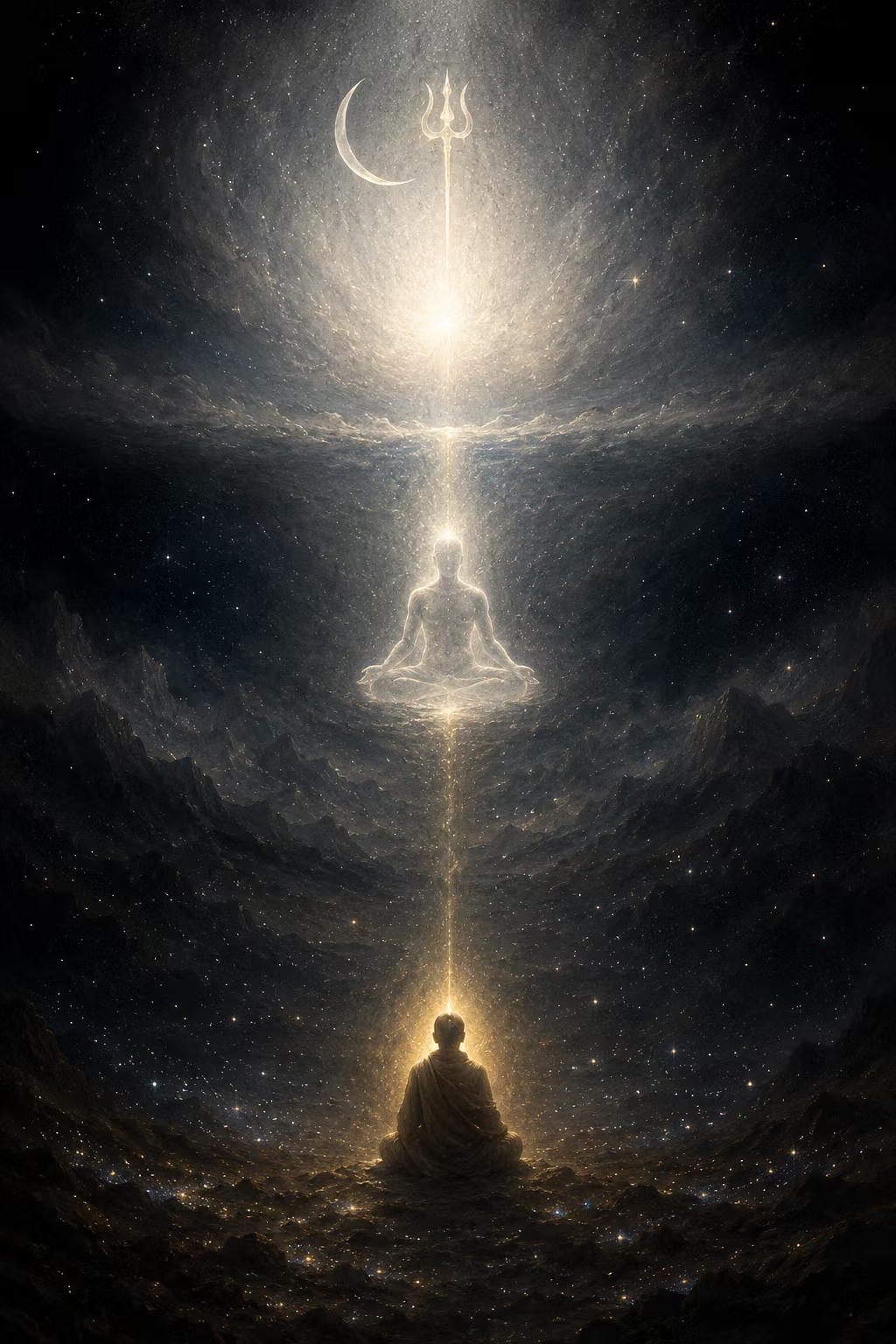
पिछले कक्ष का तेल-सेचन एक चूक भी जानता है, और शास्त्र उसे बिना संकोच कहता है। तुर्य का स्वाद केवल दो छोरों पर लो और उसी पर सन्तुष्ट हो जाओ, तो मध्य-दशा में अवर — हीन — प्रसव उठ खड़ा होता है (३·२३): बिना भीगे हिस्से में भेद का पुराना जगत् फिर उग आता है। वापसी उतनी ही व्यावहारिक है जितनी चूक: अपना ही प्रत्यय 'मात्राओं' से — इन्द्रियों के विषयों से ही — फिर जोड़ दो, और जो खोया था वह फिर उभर आता है (३·२४): जिस वस्तु ने भटकाया, उसी में प्रकाश खोजो। यों पकते-पकते योगी शिव-तुल्य जन्मता है (३·२५) — तुल्य, टीका कहती है, बस देह की उस झीनी परत भर से जो अभी गिरनी है। और शिव-तुल्य दिन-भर करता क्या है? कुछ भी अलौकिक नहीं: देह की चलती हुई वृत्ति ही उसका व्रत है (३·२६) — न कोई चिह्न, न वेश; एक शास्त्र कहता है, रश्मियाँ उसी से बतियाती हैं जिसके चिह्न छिपे हों।
The oil-pouring of the last Room has a failure mode, and the text names it without embarrassment. Taste turya only at the two end-points and settle for that, and in the middle state a lesser begetting arises (III.23) — the old world of division grows back in the unsoaked stretch. The recovery is as practical as the lapse: rejoin your own conviction to the 'measures' — the very objects of sense — and what was lost surfaces again (III.24): seek the light in the very thing that distracted you. Ripened so, the yogi is born equal to Shiv (III.25) — equal, says the commentary, only by the thin film of a body still to fall. And what does a Shiv-equal do all day? Nothing exotic: the body's ongoing life is his vow (III.26) — no badge, no costume; the rays, one text says, converse only with the one whose signs are hidden.
madhye 'varaprasavaḥ ॥
(तुर्य-रस केवल छोरों पर चखा जाये तो) मध्य में अवर — हीन — प्रसव होता है: भेद फैलाने वाली दशा फिर जन्म लेती है।
(If turya's relish is tasted only at the end-points,) in the middle an inferior begetting arises — the state that spreads division is born again.
सरल अर्थ: क्षेमराज सटीक हैं: यह २·१० वाला सदा-भटकाव नहीं — मध्य-दशा की चूक है, और वहीं होती है जहाँ तुर्यातीत में प्रवेश के बदले साधक कोटियों के चमत्कार-मात्र से सन्तुष्ट बैठ जाता है। मालिनीविजय की वही चेतावनी यहाँ लौटती है जो २·१० में थी: 'वासना-मात्र पाकर भी जो अप्रमत्त नहीं रहता, उसे विनायक अनित्य भोगों में जोत देते हैं।' In simple words: Kshemaraja is precise: this is not II.10's total relapse — it is a lapse of the middle stretch, and it happens exactly where the practitioner, instead of pressing into what is beyond turya, settles for the flash at the edges. The Malinivijaya's warning from II.10 returns: 'one who gains the merest trace and does not stay vigilant, the Vinayakas yoke to fleeting pleasures.'
mātrāsvapratyayasaṁdhāne naṣṭasya punarutthānam ॥
मात्राओं में — विषय-पदार्थों में ही — अपने प्रत्यय का संधान करने पर, जो नष्ट हुआ था उसका पुनरुत्थान हो जाता है।
By rejoining one's own conviction to the measures — to the very objects of experience — what was lost rises and surfaces again.
सरल अर्थ: वापसी का सूत्र, और उसकी दिशा चौंकाती है: विषयों से हटकर नहीं — विषयों में ही। स्वच्छन्द: 'आँख जो जोड़े, वाणी जिसे छुए, मन जो सोचे, बुद्धि जो निश्चित करे, अहंकार जो अपनाये — और जो है ही नहीं, वह भी — उसी में उसे यत्नपूर्वक खोजो।' 'विश्व यह मैं हूँ, चिद्घन' — यह अनुसंधान बार-बार; क्षेमराज: उसी से खोया हुआ तुर्य-चमत्कार पूर्णता में फिर उन्मज्जित होता है। In simple words: The recovery sutra, and its direction is the surprise: not away from objects — into them. The Svacchanda: 'what the eye joins, what speech touches, what the mind thinks, what the intellect determines, what the ego claims — even what does not exist — precisely there let Him be sought, with effort.' Re-fusing 'this universe is I, one mass of awareness' again and again — by that, says Kshemaraja, the lost relish of turya resurfaces entire.
śivatulyo jāyate ॥
(तुर्य-परिशीलन के प्रकर्ष से) वह शिव-तुल्य हो जाता है — परिपूर्ण, स्वच्छ, स्वच्छन्द चिदानन्दघन शिव के समान; देह-कला भर का अन्तर शेष।
(By the intensity of that cultivation) he is born equal to Shiv — like the Lord who is full, clear, free, one mass of conscious joy; only the thin film of the body still between.
सरल अर्थ: 'तुल्य' में टीका की सूक्ष्मता: जैसे 'मुखेन्दु' — मुख चन्द्र-सा — में ज़रा-सी न्यूनता रहती है, वैसे देह-कला के न गलने भर से समता है; वह गली, तो साक्षात् शिव ही। कालिकाक्रम गुरु-द्वार भी जोड़ता है: 'गुरु-मुख से योग असंदिग्ध जानकर, निर्विकल्प भाव से तन्मय होकर भावना करे — जब तक उसकी समता न आ जाये; ऐसा भगवान् भैरव ने कहा।' In simple words: The commentary's finesse lives in 'equal': as in 'a face like the moon' a hair of difference remains, so here only the unmelted film of embodiment holds the likeness short — let it melt, and he is Shiv outright. The Kalikakrama adds the guru-door: 'having learnt this yoga beyond doubt from the guru's mouth, contemplate with thought-free being, one with it, until equality with Him arrives — so spoke the Lord, Bhairav.'
śarīravṛttir vratam ॥
(ऐसे शिव-तुल्य का) शरीर में रहना-बरतना ही व्रत है — शिव-अहंभाव में जीते हुए देह की साधारण वृत्ति ही उसकी नित्य पूजा।
(For such a one) the body's ongoing life is itself the vow — dwelling as the Shiv-'I', the ordinary round of embodied living is his perpetual worship.
सरल अर्थ: कोई अलग अनुष्ठान शेष नहीं: जीना ही व्रत। स्वच्छन्द का दृष्टान्त गहरा है — काठ, अरणि, अग्नि, शिखा, आकाश: प्रज्वलित अग्नि की शिखा ईंधन जलाकर आकाश में लीन होती है; वैसे देह-प्राण में बैठा आत्मा देह-काठ जलाकर तुर्यातीत में। त्रिकसार: 'देह से ही उठी मुद्राओं से जो सदा मुद्रित है, वही मुद्राधर।' कुलपंचाशिका: 'अव्यक्त-चिह्न को देखकर रश्मियाँ बतियाती हैं; चिह्नधारी के पास नहीं फटकतीं — क्योंकि वे अति गुप्त हैं।' छिपा हुआ योगी — इस परम्परा का आदर्श। In simple words: No separate observance remains: living IS the vow. The Svacchanda's simile runs deep — wood, kindling-stick, fire, flame, sky: the kindled flame burns its fuel and rests in space; so the Self seated in body and breath burns the body-fuel and rests beyond the fourth. The Trikasara: 'sealed always by the mudras that rise from the body itself — he is the true mudra-bearer.' The Kulapanchashika: 'the rays converse with the one whose signs are unmanifest; they do not approach the badge-wearer — for they are exceedingly secret.' The hidden yogi — this tradition's ideal.
साधारण दिन के लिए ३·२४ पूरी पुस्तक का सबसे दयालु सूत्र है: खोई हुई उपस्थिति बल या पछतावे से नहीं लौटती — जो सामने पहले से है, उसी के भीतर बोध को फिर जोड़ देने से लौटती है। यह अभ्यास उस वापसी का रियाज़ है, जब तक सूत्र छूटना हार लगना बन्द न हो जाये।III.24 is the kindest sutra in the book for an ordinary day: presence, once lost, is not re-won by force or regret but by rejoining awareness inside whatever is already in front of you. This practice rehearses the recovery until losing the thread stops being a defeat.
अवधि: Duration: जब भी उपस्थिति छूटे — एक मिनटWhenever presence slips — one minute
क्या देखें: What to notice: देखो — वस्तु ने कभी तुमसे लड़ा ही नहीं: वही परदा या चिन्ता जिसने अवधान 'चुराया' था, लौटने का द्वार बन जाती है। दिनों में वापसी का औसत समय घटता जाता है; ३·२४ उसी घटने को पुनरुत्थान कहता है।Notice that the object itself never fought you — the same screen or worry that 'stole' attention becomes the doorway back. Over days, the average time-to-recovery shortens; III.24 calls that shortening punarutthana, the rising again.
आज ३·२६: एक नितान्त साधारण देह-कार्य — थाली धोना, सीढ़ियाँ चढ़ना — स्वयं व्रत की तरह करो: न अतिरिक्त श्रद्धा, न आडम्बर; बस यह शान्त जानकारी कि सूत्र जिसका वर्णन करते हैं, उसके लिए यही पूरी पूजा है। देखो — जब काम किसी और चीज़ के रास्ते में नहीं होता, तो कैसा लगता है।
III.26 today: do one utterly ordinary bodily task — washing a plate, climbing stairs — as the vow itself: no extra reverence, no ceremony, just the quiet knowledge that for the one the sutras describe, THIS is the whole liturgy. See how the task feels when it is not on the way to anything.