चतुर्थ उपदेश वह शिखर है जिसकी ओर पहले तीन चढ़ते रहे। आसन ने देह को स्थिर किया, प्राणायाम ने श्वास को शुद्ध व एकत्र किया, मुद्राओं ने सुप्त शक्ति को जगाया — और यह सब केवल इसी की भूमि था: समाधि, जिसे स्वात्माराम उसके अनेक नामों को एक साथ गिनाकर खोलते हैं — राजयोग, उन्मनी, लय, सहजा, तुर्या, जीवन्मुक्ति — 'एक ही के वाचक' (४·३–४)। वे इसे सरलतम उपमा से परिभाषित करते हैं: जैसे नमक जल में घुलकर अलग नहीं रहता, वैसे मन आत्मा में घुल जाता है (४·५)। और वे पूरे अध्याय का नियम कहते हैं — मन और प्राण दूध-जल की भाँति मिले हैं, एक को शान्त करना दूसरे को शान्त करना है (४·२१–२५), ताकि दोनों के विलीन होने पर मोक्ष खड़ा हो। उस विलय के प्रबल साधन — प्राण को सुषुम्णा में ले जाना, ब्रह्मरन्ध्र में बन्द करना — ग्रन्थ स्वयं एक द्वार के पीछे रखता है: 'ज्ञान, मुक्ति, सिद्धि गुरु-वाक्य से' (४·८), और 'सहज-अवस्था सद्गुरु की करुणा के बिना दुर्लभ' (४·९)। इसलिये यह उपदेश पढ़ा जाता है, किया नहीं: पाठक को इसका उपहार है — यह देखना कि श्वास और मन एक-साथ कैसे चलते हैं, और यह जानना कि द्वार कहाँ है, और उसे कौन-सा हाथ खोलता है।
The fourth teaching is the summit toward which the first three climbed. Āsana steadied the body, prāṇāyāma cleansed and gathered the breath, the mudrās roused the sleeping power — and all of it was only the ground for this: samādhi, which Svatmarama opens by naming its many names at once — rāja-yoga, unmanī, laya, sahajā, turyā, jīvanmukti — 'words for one and the same thing' (4.3–4). He defines it with the plainest of images: as salt dissolves into water and is no longer separate, so the mind dissolves into the Self (4.5). And he states the mechanism that governs the whole chapter — mind and breath are mixed like milk and water, and to still one is to still the other (4.21–25), so that when both dissolve, liberation stands. The potent means to that dissolution — driving the prāṇa into the suṣumṇā, sealing it in the brahma-randhra — the text itself keeps behind a door: 'knowledge, liberation, attainment are had by the guru's word' (4.8), and 'the innate state is unattainable without the compassion of a true guru' (4.9). So this teaching is read, not performed: its gift to a reader is the seeing of how breath and mind move as one — and the knowledge of where the door is, and whose hand opens it.
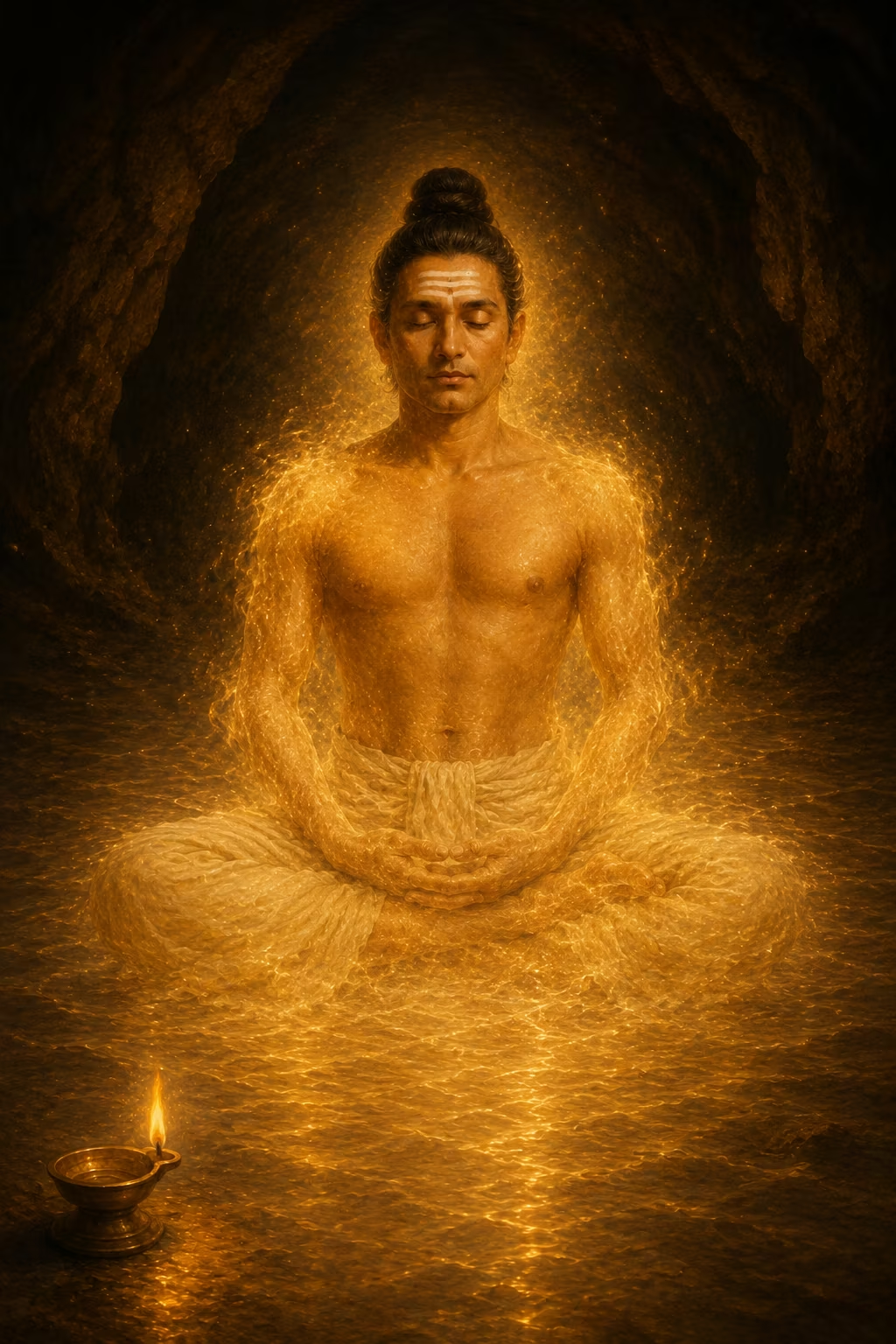
“As salt dissolves into water — the mind melting into the Self. This is samādhi.”
साधक का रूप गर्म स्वर्ण-भूमि में घुलता — जल में नमक-सा विलय (४·५)।
The meditator dissolving at the edges into a ground of warm gold — salt melting into water (4.5).
नाद-बिन्दु-कला-स्वरूप शिव को, गुरु को, प्रणाम; जिस [शिव-गुरु] में सदा तत्पर (परायण) रहता है, वह निरञ्जन-पद (निर्मल परम पद) को प्राप्त होता है।
Salutation to Śiva, the guru, whose very self is nāda (sound), bindu (point), and kalā (ray); he who is ever devoted to whom (that Śiva-guru) goes to the stainless state (niraṅjana-pada).
सरल अर्थ: मङ्गलाचरण: शिव = गुरु = नाद-बिन्दु-कला। पूरा उपदेश गुरु-निष्ठा से खुलता — जो गुरु में परायण, वही निरञ्जन-पद पाता। (पाठान्तर: क्षेमराज-मुद्रण 'यत्र', अन्य 'तत्र'; अर्थ एक।)In simple words: Invocation: Śiva = the guru = nāda-bindu-kalā. The whole Teaching opens on devotion to the guru — he who is devoted to the guru reaches the stainless state. (Variant: the Khemraj print reads yatra, others tatra; the sense is the same.)
और अब मैं उत्तम समाधि-क्रम कहूँगा — जो मृत्यु का नाशक, सुखद उपाय, और परम ब्रह्मानन्द देने वाला है।
And now I shall declare the supreme sequence of samādhi — the destroyer of death, the easy means, the giver of the highest bliss of Brahman.
सरल अर्थ: प्रतिज्ञा: 'समाधि-क्रम' — मृत्यु-नाशक, सुखद, ब्रह्मानन्द-दायक। यही पूरे हठ का लक्ष्य (cf. १·२ राजयोग-भूमिका)।In simple words: The thesis: the 'sequence of samādhi' — death-destroying, easy, brahmānanda-giving. This is the goal of all haṭha (cf. the rāja-yoga prelude at 1.2).
सरल अर्थ: समाधि के पर्याय (१/२): राजयोग, उन्मनी, मनोन्मनी, अमरत्व, लय, तत्त्व, शून्याशून्य, परम पद — एक ही अनुभव के अनेक नाम।In simple words: Synonyms of samādhi (1 of 2): rāja-yoga, unmanī, manonmanī, immortality, laya, tattva, śūnyāśūnya, the supreme abode — many names for one experience.
अमनस्क, अद्वैत, निरालम्ब, निरञ्जन, जीवन्मुक्ति, सहजा, और तुर्या — ये [सब] एक ही के वाचक (नाम) हैं।
amanaska (mindlessness), non-duality, the supportless, the stainless, living-liberation, the innate (sahajā), and the fourth (turyā) — these are words for one and the same thing.
सरल अर्थ: समाधि के पर्याय (२/२): अमनस्क, अद्वैत, निरालम्ब, निरञ्जन, जीवन्मुक्ति, सहजा, तुर्या — 'एकवाचकाः' (सब एक ही के नाम)। भारत की धाराओं का सङ्गम एक बिन्दु पर।In simple words: Synonyms of samādhi (2 of 2): amanaska, advaita, nirālamba, niraṅjana, jīvanmukti, sahajā, turyā — 'eka-vācakāḥ' (all names of one). India's streams converging on a single point.
जैसे नमक जल में मिलकर एकता (साम्य) को प्राप्त होता है, वैसे ही आत्मा और मन का ऐक्य समाधि कहलाता है।
Just as salt, through union, comes to oneness with water, so the oneness of the self and the mind is called samādhi.
सरल अर्थ: ★ नमक-जल का रूपक: जैसे नमक जल में घुलकर अभिन्न हो जाता, वैसे मन आत्मा में घुल जाना = समाधि। सबसे सुलभ उपमा।In simple words: ★ The salt-water image: as salt dissolves indistinguishably into water, so the mind dissolving into the Self = samādhi. The most accessible simile.
yadā saṁkṣīyate prāṇo mānasaṁ ca pralīyate । tadā samarasatvaṁ ca samādhir abhidhīyate ॥
जब प्राण क्षीण हो जाता और मन प्रलीन हो जाता है, तब वह समरसता (एक-रस भाव) ही समाधि कहलाती है।
When the prāṇa is exhausted and the mind dissolves, then the state of even-savour (samarasatva) — that is called samādhi.
सरल अर्थ: समाधि की परिभाषा: प्राण-क्षय + मन-प्रलय → समरसता। अगले सूत्रों की भूमिका।In simple words: A definition of samādhi: exhaustion of prāṇa + dissolution of mind → even-savour (samarasatva). A prelude to the coming verses.
tat-samaṁ ca dvayor aikyaṁ jīvātma-paramātmanoḥ । pranaṣṭa-sarva-saṅkalpaḥ samādhiḥ so 'bhidhīyate ॥
वह समान अवस्था — जीवात्मा और परमात्मा दोनों का ऐक्य, जिसमें समस्त सङ्कल्प नष्ट हो गये — वही समाधि कही जाती है।
That equal state, the oneness of the two — the individual self and the supreme Self — in which all volitions have utterly perished: that is called samādhi.
सरल अर्थ: गहनतम परिभाषा: जीवात्मा-परमात्मा का ऐक्य, सर्व-सङ्कल्प का नाश = समाधि। वेदान्त और योग एक स्वर में।In simple words: The deepest definition: the union of the individual and supreme Self, the ceasing of all volition = samādhi. Vedānta and Yoga in one voice.
राजयोग की महिमा को तत्त्वतः कौन जानता है? ज्ञान, मुक्ति, स्थिति और सिद्धि — [ये सब] गुरु के वचन से ही प्राप्त होते हैं।
Who indeed truly knows the greatness of rāja-yoga? Knowledge, liberation, steadfastness, and attainment are obtained by the word of the guru.
सरल अर्थ: ★ द्वार-सूत्र: 'ज्ञान, मुक्ति, स्थिति, सिद्धि — गुरुवाक्येन लभ्यते' (गुरु के वचन से ही)। राजयोग की महिमा गुरु-गम्य — यही इस उपदेश का गेट-आधार।In simple words: ★ The gating verse: 'knowledge, liberation, steadfastness, attainment — obtained by the guru's word.' The greatness of rāja-yoga is teacher-gated — this is the gate-anchor of the Teaching.
विषयों का त्याग दुर्लभ, तत्त्व-दर्शन दुर्लभ, और सहज-अवस्था दुर्लभ है — सद्गुरु की करुणा के बिना।
Hard to attain is the renunciation of objects, hard the vision of truth, hard the innate state (sahajāvasthā) — without the compassion of a true guru (sad-guru).
सरल अर्थ: ★ द्वार-सूत्र (पुनः): सहज-अवस्था 'सद्गुरोः करुणां विना' दुर्लभ। यह ग्रन्थ का अपना वचन — इसीलिये समाधि की प्रबल क्रियाएँ जीवित गुरु-गम्य (देखो ४·१६ का द्वार)।In simple words: ★ The gating verse (again): the innate state is unattainable 'without the compassion of a true guru.' The text's own word — hence samādhi's potent techniques are living-teacher-gated (see the gate at 4.16).
विविध आसनों, कुम्भकों, और विचित्र करणों (मुद्राओं) से भी — जब महाशक्ति (कुण्डलिनी) जाग जाती है, तब प्राण शून्य में प्रलीन हो जाता है।
By various āsanas, kumbhakas, and by wondrous karaṇas (mudrās) too, when the great śakti (kuṇḍalinī) is awakened, the prāṇa dissolves into the void.
सरल अर्थ: पूर्व तीन उपदेशों की संगति: आसन+कुम्भक+मुद्रा → महाशक्ति (कुण्डलिनी) जागरण → प्राण का शून्य में लय। सब मिलकर इसी लक्ष्य पर।In simple words: The three prior Teachings knit together: āsana + kumbhaka + mudrā → awakening of the mahā-śakti (kuṇḍalinī) → dissolution of prāṇa into the void. All converging on this goal.
utpanna-śakti-bodhasya tyakta-niḥśeṣa-karmaṇaḥ । yoginaḥ sahajāvasthā svayam eva prajāyate ॥
जिस योगी को शक्ति का बोध (जागरण) उत्पन्न हो गया और जिसने समस्त कर्म त्याग दिये, उसकी सहज-अवस्था स्वयं ही प्रकट हो जाती है।
For the yogi in whom the awakening of the śakti has arisen and who has abandoned every last action, the innate state (sahajāvasthā) arises of its own accord.
सरल अर्थ: शक्ति-बोध + निष्काम-कर्म-त्याग → सहज-अवस्था स्वयं प्रकट। प्रयास से नहीं, परिपक्वता से।In simple words: Awakened śakti + abandonment of all self-willed action → the innate state appears of itself. Not by effort, but by ripeness.
जब प्राण सुषुम्णा में बहता है और मन शून्य में प्रवेश करता है, तब योगवित् समस्त कर्मों को निर्मूल कर देता है।
When the prāṇa flows in the suṣumṇā and the mind enters the void, then the knower of yoga uproots all karmas.
सरल अर्थ: प्राण सुषुम्णा में + मन शून्य में → योगवित् कर्मों को निर्मूल करता। समाधि का कर्म-क्षयकारी फल।In simple words: Prāṇa in suṣumṇā + mind in the void → the knower of yoga uproots karmas. Samādhi's karma-dissolving fruit.
हे अमर! तुझे प्रणाम — वह काल (मृत्यु) भी तूने जीत लिया, जिसके मुख में यह सम्पूर्ण चराचर जगत् गिर पड़ता है।
Salutation to you, O immortal one! Even that Kāla (Time/Death) has been conquered by you — into whose mouth this whole world, moving and unmoving, has fallen.
सरल अर्थ: अमर योगी की स्तुति: उसने काल (मृत्यु) को जीत लिया जिसके मुख में सारा जगत् गिरता है। फल-स्तुति।In simple words: Praise of the immortal yogi: he has conquered Kāla (Death) into whose mouth the whole world falls. Praise of the fruit.
जब चित्त समता को प्राप्त होता और वायु मध्य (सुषुम्णा) में चलता है, तब अमरोली, वज्रोली, सहजोली [अवस्था-रूप में] स्वयं प्रकट होती हैं।
When the mind has attained equanimity and the vāyu moves in the middle (suṣumṇā), then amarolī, vajrolī, and sahajolī arise [of themselves, as states].
सरल अर्थ: जब मन सम + वायु मध्य में — तब अमरोली/वज्रोली/सहजोली स्वयं फलती (क्रिया नहीं, अवस्था); उपदेश ३ के वज्रोली-परिवार से जुड़ाव।In simple words: When the mind is even + vāyu in the middle — amarolī/vajrolī/sahajolī fruit of themselves (as states, not acts); the link to Teaching 3's vajrolī family.
jñānaṁ kuto manasi sambhavatīha tāvat prāṇo 'pi jīvati mano mriyate na yāvat । prāṇo mano dvayam idaṁ vilayaṁ nayed yo mokṣaṁ sa gacchati naro na kathaṁcid anyaḥ ॥
जब तक प्राण जीवित है और मन नहीं मरा, तब तक मन में ज्ञान कहाँ से सम्भव? जो इन दोनों — प्राण और मन — को विलय में ले जाता है, वही मनुष्य मोक्ष पाता है, अन्य कोई किसी प्रकार नहीं।
How can knowledge arise in the mind here, so long as the prāṇa still lives and the mind has not died? He who brings both these two — prāṇa and mind — to dissolution, that man attains liberation; no other, in any way.
सरल अर्थ: ★★ केन्द्रीय सूत्र: जब तक प्राण जीवित व मन जीवित, ज्ञान असम्भव; दोनों का विलय ही मोक्ष — अन्य कोई मार्ग नहीं। पूरे उपदेश का हृदय।In simple words: ★★ The central verse: while prāṇa lives and the mind lives, knowledge is impossible; the dissolution of both alone is liberation — no other way. The heart of the whole Teaching.
सुषुम्णा के यथार्थ भेदन को जानकर, वायु को मध्य में ले जाकर, सदा उत्तम स्थान में स्थित होकर, [उसे] ब्रह्मरन्ध्र में निरुद्ध करे।
Having known the true piercing of the suṣumṇā and made the vāyu move in the middle, ever staying in a good place, one should confine [it] in the brahma-randhra.
सरल अर्थ: प्रबल लय-क्रिया: सुषुम्णा-भेदन + वायु को ब्रह्मरन्ध्र में निरोध — यह दीक्षा-गम्य है (नीचे का द्वार-कार्ड)। ग्रन्थ स्वयं इसे ४·८–९ में गुरु-गम्य कहता।In simple words: A potent laya-technique: piercing the suṣumṇā + confining the vāyu in the brahma-randhra — this is dīkṣā-bound (the gate-card below). The text itself binds it to the guru at 4.8–9.
साधना · अभ्यासSādhana · Practice
समाधि और लय — जीवित गुरु और दीक्षा का क्षेत्रSamādhi and laya — the domain of a living Guru and dīkṣā
यह चतुर्थ उपदेश समाधि (राजयोग) का है — पूरे हठ का लक्ष्य: प्राण और मन का पूर्ण विलय। इसका मार्ग — प्राण को सुषुम्णा में ले जाकर ब्रह्मरन्ध्र में निरुद्ध करना (४·१६), अग्नि सहित कुण्डली को जगाना (४·१९), मन को शून्य में लीन करना — हठयोग की चरम, प्रबल क्रिया है। यह कार्ड बताता है कि यह क्या है और क्यों यह गुरु-गम्य है; 'कैसे करें' यहाँ नहीं — और जान-बूझकर नहीं।This fourth teaching is samādhi (rāja-yoga) — the goal of all haṭha: the complete dissolution of prāṇa and mind. Its path — leading prāṇa into the suṣumṇā and confining it in the brahma-randhra (4.16), waking the kuṇḍalī with the fire (4.19), dissolving the mind into the void — is hatha's ultimate, most potent work. This card says what it is and why it is teacher-gated; the 'how' is not here — and deliberately so.
🪔
प्राण का सुषुम्णा-प्रवेश, ब्रह्मरन्ध्र-निरोध, लय, उन्मनी/मनोन्मनी और शाम्भवी — ये इस मार्ग की दीक्षा-गम्य, गहनतम क्रियाएँ हैं, जो पुस्तक या स्वयं-प्रयोग से कभी नहीं सीखी जातीं। ग्रन्थ इन्हें गुरु-वाक्य और सद्गुरु-करुणा से बाँधता है (४·८–९)। अन्तर्यात्रा यहाँ केवल द्वार तक ले जाती है — यह क्या है, क्यों वास्तविक; पर इसमें उतरने का सामर्थ्य और सुरक्षा केवल किसी जीवित, प्रामाणिक परम्परा के गुरु की दीक्षा और प्रत्यक्ष मार्गदर्शन में है। तब तक जो तुमने सीखा — स्थिर आसन (उपदेश १), कोमल रोक-रहित नाड़ी-शोधन व त्राटक (उपदेश २) — वही तुम्हारी भूमि है; और नीचे दिया मन-प्राण-सम्बन्ध का सरल दर्शन स्वयं देखने-योग्य है।Prāṇa entering the suṣumṇā, confinement in the brahma-randhra, laya, unmanī/manonmanī, and śāmbhavī — these are the initiatory, deepest practices of this path, never learned from a book or self-experiment. The text binds them to the guru's word and the sad-guru's grace (4.8–9). Antaryaatra brings you only to the door — what this is, why it is real; but the capacity and the safety to enter it lie only in the dīkṣā and direct guidance of a living teacher in an authentic lineage. Until then, what you have learned — steady āsana (Teaching 1), gentle retention-free nāḍī-śodhana and trāṭaka (Teaching 2) — is your ground; and the simple seeing of the mind-breath link below is yours to observe directly.
सूर्य और चन्द्र रात्रि-दिन रूप काल को धारण (उत्पन्न) करते हैं; सुषुम्णा उस काल की भोक्त्री (ग्रसने वाली) है — यह रहस्य कहा गया।
The sun and the moon make time, consisting of night and day; the suṣumṇā is the devourer of time — this secret has been declared.
सरल अर्थ: रूपक: सूर्य-चन्द्र (पिंगला-इडा) से 'काल' (श्वास-गति = आयु-क्षय); सुषुम्णा उस काल को ग्रस लेती — कालातीत अवस्था का रहस्य।In simple words: An image: sun-moon (piṅgalā-iḍā) make 'time' (breath-movement = the wasting of life); the suṣumṇā devours that time — the secret of the timeless state.
dvā-saptati-sahasrāṇi nāḍī-dvārāṇi pañjare । suṣumṇā śāmbhavī śaktiḥ śeṣās tv eva nirarthakāḥ ॥
शरीर-पिंजर में बहत्तर हजार नाड़ी-द्वार हैं; सुषुम्णा शाम्भवी शक्ति है, शेष तो निरर्थक ही हैं।
There are seventy-two thousand nāḍī-doors in the cage [of the body]; the suṣumṇā is the śāmbhavī śakti, and the rest are truly useless.
सरल अर्थ: ७२,००० नाड़ियों में एक ही सार्थक — सुषुम्णा, 'शाम्भवी शक्ति'; शेष गौण। सारी साधना का एक ही निशाना।In simple words: Of the 72,000 nāḍīs only one matters — the suṣumṇā, the 'śāmbhavī śakti'; the rest are secondary. All practice aims at this one.
क्योंकि अभ्यस्त (परिचित) वायु अग्नि सहित कुण्डली को जगाकर, बिना रुकावट के सुषुम्णा में प्रवेश करता है —
Because the vāyu, when made familiar (practised), together with the fire, having awakened the kuṇḍalī, enters the suṣumṇā without obstruction —
सरल अर्थ: अभ्यस्त वायु + अग्नि → कुण्डली-जागरण → सुषुम्णा-प्रवेश। यह प्रबल क्रिया दीक्षा-गम्य (देखो ४·१६ का द्वार); यहाँ 'कैसे' नहीं।In simple words: Practised vāyu + fire → awakening the kuṇḍalī → entering the suṣumṇā. This potent act is dīkṣā-bound (see the gate at 4.16); the 'how' is not here.
suṣumṇā-vāhini prāṇe siddhyaty eva manonmanī । anyathā tv itarābhyāsāḥ prayāsāyaiva yoginām ॥
जब प्राण सुषुम्णा में बहता है, तब मनोन्मनी (मन-रहित अवस्था) सिद्ध होती है; अन्यथा शेष अभ्यास योगियों के लिये केवल परिश्रम मात्र हैं।
when the prāṇa flows in the suṣumṇā, manonmanī (the mindless state) succeeds; otherwise the other practices are mere toil for yogis.
सरल अर्थ: ★ मर्म: प्राण सुषुम्णा में बहे तभी मनोन्मनी सिद्ध; अन्यथा शेष सब केवल श्रम — इसीलिये गुरु-गम्य लय-क्रिया अनिवार्य।In simple words: ★ The crux: only when prāṇa flows in suṣumṇā does manonmanī succeed; else all else is mere toil — hence the teacher-gated laya-technique is indispensable.
pavano badhyate yena manas tenaiva badhyate । manaś ca badhyate yena pavanas tena badhyate ॥
जिससे प्राण बँधता है, उसी से मन भी बँधता है; और जिससे मन बँधता है, उसी से प्राण बँधता है।
By that [means] by which the breath is bound, by that very [means] the mind is bound; and by that by which the mind is bound, by that the breath is bound.
सरल अर्थ: ★ मन-प्राण की परस्पर-बद्धता: एक को साधो, दूसरा सधता। यही उपदेश ४ का सार्वभौम, स्वयं-देखने-योग्य सत्य (शान्त श्वास → शान्त मन)।In simple words: ★ The mind-breath reciprocity: master one and the other is mastered. This is Teaching 4's universal, self-observable truth (calm breath → calm mind).
hetu-dvayaṁ tu cittasya vāsanā ca samīraṇaḥ । tayor vinaṣṭa ekasmin tau dvāv api vinaśyataḥ ॥
चित्त के दो कारण हैं — वासना और प्राण (समीरण); इन दोनों में से एक के नष्ट होने पर दोनों ही नष्ट हो जाते हैं।
The mind (citta) has two causes: latent impression (vāsanā) and the breath (samīraṇa); when one of the two is destroyed, both are destroyed.
सरल अर्थ: चित्त के दो कारण — वासना + प्राण; एक मिटे तो दोनों मिटें। मन को सीधे नहीं, प्राण के द्वार से भी साधा जा सकता।In simple words: Citta's two causes — vāsanā + breath; kill one and both die. The mind can be mastered not only directly but through the door of the breath.
mano yatra vilīyeta pavanas tatra līyate । pavano līyate yatra manas tatra vilīyate ॥
जहाँ मन विलीन होता है, वहीं प्राण लीन होता है; और जहाँ प्राण लीन होता है, वहीं मन विलीन होता है।
Where the mind dissolves, there the breath dissolves; where the breath dissolves, there the mind dissolves.
सरल अर्थ: मन-लय और प्राण-लय एक साथ घटते — २१ की पुनरुक्ति, गहराते हुए। अनुभव-योग्य।In simple words: Mind-dissolution and breath-dissolution occur together — a deepening restatement of 21. Observable.
dugdhāmbuvat saṁmilitāv ubhau tau tulya-kriyau mānasa-mārutau hi । yato marut tatra manaḥ-pravṛttir yato manas tatra marut-pravṛttiḥ ॥
दूध और जल की भाँति परस्पर मिले हुए ये दोनों — मन और प्राण — तुल्य क्रिया वाले हैं; जहाँ प्राण [चलता है] वहाँ मन की प्रवृत्ति, और जहाँ मन वहाँ प्राण की प्रवृत्ति।
Mixed together like milk and water, these two — the mind and the breath — act as one; where the breath [moves], there is the activity of the mind; where the mind, there is the activity of the breath.
सरल अर्थ: ★ दूध-जल का रूपक: मन और प्राण अभिन्न, तुल्य-क्रिय; एक चले तो दूसरा चले। प्राणायाम का पूरा तर्क इसी में।In simple words: ★ The milk-water image: mind and breath are inseparable, equal-acting; when one moves the other moves. The whole rationale of prāṇāyāma lies here.
वहाँ एक के नाश से दूसरे का नाश, एक की प्रवृत्ति से दूसरे की प्रवृत्ति; जब तक दोनों नष्ट नहीं, तब तक इन्द्रिय-समूह की प्रवृत्ति; दोनों के नष्ट होने पर मोक्ष-पद की सिद्धि।
There, by the destruction of one, the destruction of the other; by the activity of one, the activity of the other; while the two are undestroyed, the activity of the group of senses [continues]; when the two are destroyed, comes the attainment of the state of liberation.
सरल अर्थ: निष्कर्ष: दोनों अनष्ट → इन्द्रिय-प्रवृत्ति (संसार); दोनों नष्ट → मोक्ष-पद की सिद्धि। द्वार-श्लोक — इसी पर यह कक्ष विरमता है।In simple words: The conclusion: both undestroyed → sense-activity (the world); both destroyed → the attainment of liberation. The room closes on this verse.
rasasya manasaś caiva cañcalatvaṁ svabhāvataḥ । raso baddho mano baddhaṁ kiṁ na siddhyati bhūtale ॥
पारे (रस) और मन का चञ्चल होना उनके स्वभाव से ही है; किन्तु यदि पारा बाँध लिया जाए और मन बाँध लिया जाए, तो इस पृथ्वी पर क्या सिद्ध नहीं होता?
The restlessness of mercury (rasa) and of the mind is natural to them; but if mercury is bound and the mind is bound, what cannot be accomplished on this earth?
सरल अर्थ: यह अध्याय लय को पारे की उपमा से आरम्भ करता है: मन और पारा दोनों स्वभाव से चञ्चल हैं, पर जिसे बाँध लो उससे कुछ असाध्य नहीं रहता। लय = मन को स्थिर करना।In simple words: The chapter opens laya by likening the mind to mercury in alchemy: both are restless by nature, but 'bind' either and nothing on earth is out of reach. Sets up laya as the stilling of the mind. Gate none.
मूर्च्छित (मूर्च्छन-संस्कार) किया हुआ [पारा] रोगों को हर लेता है, मारित किया हुआ स्वयं जीवन देता है, और बाँधा हुआ खेचरता (आकाशगमन की शक्ति) प्रदान करता है — हे पार्वती! पारा और वायु (प्राण) दोनों ऐसे ही हैं।
When 'swooned' (mūrcchita) it removes diseases, when 'killed' (mṛta) it itself restores life, and when 'bound' (baddha) it grants the power of moving through space (khecaratā) — such, O Pārvatī, are both mercury (rasa) and the vital air (vāyu).
सरल अर्थ: पारे और प्राण की समानता आगे बढ़ती है: पारे के जो संस्कार (मूर्च्छन, मारण, बन्धन) उसे प्रभावी बनाते हैं, वही हठ प्राण के साथ करता है — और 'बँधने' पर दोनों मुक्त करते हैं। यह उपमा है, विधि नहीं।In simple words: Extends the mercury↔prāṇa correspondence: the very stages that make mercury potent (swooned, killed, bound) are what haṭha does to prāṇa — and 'bound,' both liberate. Analogy, not a procedure. Gate none.
वायु (प्राण) के स्थिर होने पर मन की स्थिरता होती है, और उससे बिन्दु (वीर्य/जीवन-सार) भी स्थिर हो जाता है; बिन्दु की स्थिरता से सदा सत्त्व (ओज) रहता है और पिण्ड (शरीर) की स्थिरता उत्पन्न होती है।
[There is] steadiness of mind [when] the breath (vāyu) is steady; from that the bindu (vital essence) too becomes steady. From the bindu's steadiness comes lasting sattva (vital purity), and steadiness of the body (piṇḍa) arises.
सरल अर्थ: एक कारण-शृंखला — स्थिर श्वास → स्थिर मन → स्थिर बिन्दु → सत्त्व और स्थिर शरीर। इसीलिए पूरा ग्रन्थ श्वास को स्थिर करने में लगा है।In simple words: A causal chain — steady breath → steady mind → steady bindu → sattva and a steady body. This is why the whole book labours to still the breath. Gate none.
indriyāṇāṁ mano nātho mano-nāthas tu mārutaḥ । mārutasya layo nāthaḥ sa layo nādam āśritaḥ ॥
इन्द्रियों का स्वामी मन है, मन का स्वामी वायु (मारुत/प्राण) है, वायु का स्वामी लय है, और वह लय नाद (अन्तर्नाद) के आश्रित है।
The mind is the lord of the senses; the breath (māruta) is the lord of the mind; laya (dissolution [of activity]) is the lord of the breath; and that laya rests upon nāda (the inner sound).
सरल अर्थ: ★ मूल क्रम: इन्द्रियाँ मन के, मन वायु (प्राण) के, वायु लय के, और लय नाद (अन्तर्नाद) के अधीन है। इसीलिए आगे अध्याय नाद-श्रवण की ओर मुड़ता है (द्रष्टव्य ४·६६)।In simple words: ★ The master map: senses obey the mind, the mind the breath, the breath is mastered by laya, and laya rests on nāda. This is why the chapter will later turn to listening to the inner sound (cf. 4.66). Gate none.
चाहे इसी को मोक्ष कहा जाए, या किसी अन्य मत में न भी कहा जाए — मन और प्राण के लय होने पर एक अनिर्वचनीय आनन्द प्रकट होता है।
Let this very [state] be called liberation (mokṣa), or, in another school's view, let it not be — either way, when mind and prāṇa dissolve (laya), a certain [indescribable] bliss arises.
सरल अर्थ: यह इस विवाद को टाल देता है कि लय 'मोक्ष' है या नहीं: कहो या न कहो — तथ्य अनुभवगम्य है: मन और प्राण के लय होते ही एक अनिर्वचनीय आनन्द उदित होता है।In simple words: Sidesteps the sectarian quarrel over whether laya 'is' mokṣa: call it that or not, the fact is experiential — when mind and breath dissolve, an indescribable bliss appears. Gate none.
pranaṣṭa-śvāsa-niśvāsaḥ pradhvasta-viṣaya-grahaḥ । niśceṣṭo nirvikāraś ca layo jayati yoginām ॥
जिसमें श्वास-प्रश्वास मिट गया है, विषयों का ग्रहण नष्ट हो गया है, जो निश्चेष्ट (क्रियारहित) और निर्विकार है — योगियों का वह लय सर्वोत्कृष्ट रूप से विजयी होता है।
With inhalation and exhalation vanished, the grasping of sense-objects destroyed, motionless and changeless — the laya (absorption) of the yogins reigns supreme.
सरल अर्थ: लय-अवस्था का चित्र — श्वास शान्त, इन्द्रियाँ विषयों को न पकड़तीं, निश्चेष्ट और निर्विकार। यह लक्ष्य का वर्णन है, उसे बलपूर्वक लाने की विधि नहीं।In simple words: A portrait of the laya-state — breath stilled, senses no longer grasping objects, motionless and changeless. It describes the goal, not a way to force it. Gate none.
जिसमें समस्त सङ्कल्प उच्छिन्न (कट) गए हैं और समस्त चेष्टाएँ पूर्णतः शान्त हो गई हैं — ऐसा कोई अनिर्वचनीय लय, जो केवल स्वयं के अनुभव से जाना जाता है (स्वावगम्य) और वाणी का अविषय है, उत्पन्न होता है।
With all volitions (saṅkalpa) cut off and every activity utterly ceased, there arises a certain laya — knowable only by oneself (svāvagamya) and beyond the reach of speech.
सरल अर्थ: लय का पुनः लक्षण: समस्त सङ्कल्प कटे, समस्त चेष्टा शान्त; यह अवस्था स्वयं-अनुभवगम्य और वाणी से परे है — इसे जिया जा सकता है, कहा नहीं।In simple words: Laya defined again: every intention cut off, all doing ceased; the state is self-known and beyond words — it can only be lived, not told. Gate none.
yatra dṛṣṭir layas tatra bhūtendriya-sanātanī । sā śaktir jīva-bhūtānāṁ dve alakṣye layaṁ gate ॥
जहाँ दृष्टि जाती है, वहीं लय (मन का लय) होता है; भूतों और इन्द्रियों की जो सनातन शक्ति है — वही जीवमात्र की शक्ति है — जब वे दोनों (दृष्टि और शक्ति) अलक्ष्य (अगोचर परमतत्त्व) में लय को प्राप्त हो जाते हैं, तब लय होता है।
Wherever the gaze (dṛṣṭi) rests, there is laya. That eternal power (śakti) which underlies the elements and senses of all living beings — when the two [gaze and śakti] dissolve into the unseeable (alakṣya), laya has come to pass.
सरल अर्थ: आगे आने वाली दृष्टि-मुद्राओं का सिद्धान्त: जहाँ दृष्टि टिकती है, वहीं मन लीन होता है; दृष्टि और जीव-शक्ति दोनों जब अलक्ष्य में डूब जाती हैं, तब लय पूर्ण होता है। यह जिस दृष्टि-साधना की ओर संकेत करता है वह गुरुगम्य है (द्रष्टव्य ४·३६–३७)।In simple words: A principle behind the gaze-mudrās to come: where the gaze rests, the mind dissolves; when gaze and the living power both sink into the 'unseeable,' laya is complete. The gaze-technique it points to is teacher-bound (cf. 4.36–37). Gate none.
"लय, लय" — ऐसा सब कहते हैं, किन्तु लय का लक्षण कैसा है? वासनाओं के फिर न उठने के कारण जो विषयों का विस्मरण है, वही लय है।
'Laya, laya,' they all say — but what is the mark of laya? Laya is the forgetting of sense-objects that comes from the latent tendencies (vāsanā) not rising again.
सरल अर्थ: लय का सटीक लक्षण — यह कोई शून्य मूर्च्छा नहीं, बल्कि वासनाओं का फिर न उठना है, जिससे विषय स्वयं चित्त से लुप्त हो जाते हैं।In simple words: Defines laya precisely — not a blank trance but the non-return of vāsanās (latent tendencies), so sense-objects simply drop from awareness. Gate none.
वेद, शास्त्र और पुराण सामान्य गणिका (वेश्या) के समान सर्वसुलभ हैं; किन्तु एक शाम्भवी मुद्रा कुलवधू (कुलीन घर की स्त्री) के समान गुप्त रखी जाती है।
The Vedas, śāstras and Purāṇas are like a common courtesan [available to all]; the śāmbhavī mudrā alone is kept secret, like a lady of good family.
सरल अर्थ: गोपनीयता का सजीव चित्र: शास्त्र वेश्या-से सर्वसुलभ हैं, पर शाम्भवी मुद्रा कुलवधू-सी सुरक्षित — अर्थात् गुरु से शिष्य को एकान्त में दी जाती है (द्रष्टव्य ४·८–४·९)। मुद्रा स्वयं ४·३६–३७ पर द्वार-बद्ध है।In simple words: A vivid image of secrecy: scriptures are public like a courtesan, but śāmbhavī mudrā is guarded like a highborn wife — passed on privately, teacher to student (cf. 4.8–4.9). The technique itself is gated at 4.36–37. Gate none.
लक्ष्य (ध्यान का विषय) भीतर हो और दृष्टि बाहर, तथा पलकों का झपकना-खुलना (निमेष-उन्मेष) रहित हो — यही वह शाम्भवी मुद्रा है, जो वेद-शास्त्रों में गुप्त रखी गई है।
The [inner] target held within while the gaze is turned outward, free of blinking and opening [of the eyes] — this is that śāmbhavī mudrā, concealed within the Vedas and śāstras.
सरल अर्थ: यहाँ शाम्भवी मुद्रा का नाम आता है — दृष्टि बाहर, चित्त भीतर के लक्ष्य पर, पलकें निश्चल। यह प्रबल दृष्टि-साधना है जिसे ग्रन्थ स्वयं "गुप्त" कहता है; यह जीवित गुरु से ही सीखी जाती है (द्रष्टव्य ४·८ गुरु-वाक्येन लभ्यते, ४·९ सद्गुरु की करुणा बिना; द्वार ४·१६), पुस्तक से नहीं। यहाँ विधि नहीं।In simple words: This names śāmbhavī mudrā — gaze held outward while awareness rests on an inner target, eyes unblinking. A potent gaze-technique the text itself calls 'concealed'; learned only under a living teacher (cf. 4.8 guru-vākyena labhyate, 4.9 sad-guroḥ karuṇāṁ vinā; gate at 4.16), never from a page. No how-to here.
जब योगी अन्तःलक्ष्य में चित्त और प्राण (पवन) को विलीन करके, निश्चल तारावाली (स्थिर पुतली) दृष्टि से बाहर और नीचे की ओर देखता हुआ भी न देखता-सा रहता है — तब यही शाम्भवी मुद्रा होती है, जो गुरु के प्रसाद (कृपा) से ही प्राप्त होती है; तब शून्य और अशून्य दोनों से विलक्षण वह तत्त्व, शाम्भव पद, स्फुरित होता है।
When the yogī abides with mind and breath (citta-pavana) dissolved into the inner target, with the gaze motionless-pupilled, looking outward and downward yet seeing nothing — this indeed is the śāmbhavī mudrā, obtained [only] by the guru's grace (prasādād guroḥ). Then that reality (tattva), the śāmbhava state, distinct from both void and non-void, shines forth.
सरल अर्थ: ★ पूर्ण शाम्भवी: चित्त और प्राण अन्तःलक्ष्य में लीन, पुतलियाँ निश्चल, "देखते हुए भी न देखना।" श्लोक स्वयं कहता है यह गुरु-प्रसाद से ही मिलती है (द्रष्टव्य ४·८, ४·९; द्वार ४·१६)। प्रबल एवं गुरुगम्य; इसका फल शून्य-अशून्य से परे शाम्भव पद है। स्वयं-अभ्यास की विधि नहीं।In simple words: ★ The full śāmbhavī: mind and breath dissolved on the inner target, pupils motionless, 'seeing yet not seeing.' The verse itself says it is won prasādād guroḥ — by the guru's grace alone (cf. 4.8, 4.9; gate 4.16). Potent and teacher-transmitted; its fruit is the śāmbhava state beyond void and non-void. No self-study steps.
śrī-śāmbhavyāś ca khecaryā avasthā-dhāma-bhedataḥ । bhavec citta-layānandaḥ śūnye cit-sukha-rūpiṇi ॥
श्रीशाम्भवी और खेचरी मुद्रा से — यद्यपि दोनों अवस्था और स्थान (धाम) की दृष्टि से भिन्न हैं — चित्सुखरूप शून्य में चित्त के लय का आनन्द (चित्तलयानन्द) उत्पन्न होता है।
From śāmbhavī and khecarī [mudrās], though they differ in state and locus (avasthā-dhāma), there arises the bliss of the mind's dissolution (citta-laya-ānanda) in the void that is of the nature of consciousness-bliss (cit-sukha).
सरल अर्थ: शाम्भवी और खेचरी — यद्यपि अवस्था और स्थान में भिन्न — एक ही फल पर मिलती हैं: चित्सुखरूप शून्य में चित्त के लय का आनन्द। दोनों मुद्राएँ गुरुगम्य हैं (शाम्भवी द्रष्टव्य ४·३६–३७; खेचरी द्रष्टव्य ४·४३ आगे)। यहाँ केवल साझा फल कहा गया है।In simple words: Both śāmbhavī and khecarī, differing in posture and site, converge on one fruit — the bliss of mind dissolving into the consciousness-bliss void. The mudrās are teacher-bound (śāmbhavī cf. 4.36–37; khecarī cf. 4.43ff). Gate none — this only names the shared result.
तारों (आँखों की पुतलियों) को ज्योति में संयुक्त करके, भौंहों को कुछ ऊपर उठाकर, पूर्व-योग (पहले कही शाम्भवी साधना) से मन को युक्त करने पर — यह क्षणमात्र में उन्मनी (मन के परे की अवस्था) का करने वाला होता है।
Joining the pupils (tāra) to the light, raising the eyebrows a little, and uniting the mind with the former practice [the śāmbhavī], one becomes a maker of the unmanī (mind-transcended) state in an instant.
सरल अर्थ: दृष्टि और भौंह की एक विधि जो पूर्वोक्त शाम्भवी पर आधारित होकर क्षणमात्र में उन्मनी (मन के परे की) अवस्था लाती कही गई है। प्रबल; दीक्षा-सापेक्ष, जीवित गुरु से ही सीखी जाती है (द्वार ४·१६; ४·८, ४·९)। यहाँ संकेत जान-बूझकर संक्षिप्त — विधि नहीं।In simple words: A gaze-and-brow method said to trigger the unmanī (mind-transcended) state in an instant, built on the śāmbhavī just taught. Potent; dīkṣā-bound and learned only from a living teacher (cf. 4.16 gate; 4.8, 4.9). The mention is deliberately terse — no self-study steps.
कोई आगमों (शास्त्रों) के जाल में, कोई निगमों (वेदादि) के समूह में, और कोई तर्क में उलझकर मोहित होते हैं — किन्तु तारक (तार देने वाले उस अनुभव/प्रकाश) को कोई नहीं जानता।
Some are deluded by the tangle of āgamas (tantric scriptures), some by the thickets of nigamas (Vedic scriptures), some by logic — none of them know the tāraka (the delivering [light/experience]).
सरल अर्थ: शास्त्र-पाण्डित्य पर प्रहार: आगमों, वेदों या तर्क में उलझे विद्वान भी तारक — उस तार देने वाले साक्षात् अनुभव — को चूक जाते हैं। यह मार्ग अनुभवगम्य और गुरुदत्त है, पुस्तक से नहीं मिलता।In simple words: A rebuke of scholasticism: tangled in tantras, Vedas, or logic, the learned still miss the tāraka — the liberating direct experience. Reinforces that this path is lived and teacher-given, not book-won. Gate none.
ardhonmīlita-locanaḥ sthira-manā nāsāgra-dattekṣaṇaś candrārkāv api līnatām upanayan niṣpanda-bhāvena yaḥ । jyotī-rūpam aśeṣa-bījam akhilaṁ dedīpyamānaṁ paraṁ tattvaṁ tat-padam eti vastu paramaṁ vācyaṁ kim atrādhikam ॥
जो साधक अर्ध-उन्मीलित (आधी खुली) आँखों से, स्थिर मन से, दृष्टि नासिका के अग्रभाग पर रखकर, चन्द्र और सूर्य (इडा-पिंगला) को भी लीन करता हुआ, निष्पन्द (निश्चल) भाव में स्थित रहता है — वह ज्योतिःस्वरूप, समस्त का बीज, अखण्ड, देदीप्यमान परम तत्त्व, उस पद को प्राप्त कर लेता है। यही परम वस्तु कहने योग्य है; इससे अधिक यहाँ क्या कहा जाए?
He who, with eyes half-open, mind steady, gaze fixed on the tip of the nose, dissolving even sun and moon (piṅgalā and iḍā), abides in a motionless state (niṣpanda-bhāva) — he reaches that supreme reality, that abode: of the form of light, the seed of all, entire and ever-blazing. This is the supreme thing to be spoken of — what more is there to say here?
सरल अर्थ: अर्ध-खुली आँखों और नासाग्र-दृष्टि से निष्पन्द (निश्चल) समाधि, जो "सूर्य-चन्द्र को लीन" करती है — अर्थात् इडा-पिंगला को मिलाकर प्राण को भीतर खींचती है। प्रबल लय/दृष्टि-साधना; दीक्षा-सापेक्ष, केवल जीवित गुरु से (द्वार ४·१६; ४·८, ४·९)। इसका फल सदा देदीप्यमान परम ज्योति है; विधि नहीं दी गई।In simple words: A motionless absorption with half-open eyes and nose-tip gaze that 'dissolves sun and moon' — i.e. merges iḍā and piṅgalā, drawing prāṇa inward. A potent laya/gaze practice; dīkṣā-bound, from a living teacher only (cf. 4.16 gate; 4.8, 4.9). Its fruit is the ever-blazing supreme light; no steps given.
divā na pūjayel liṅgaṁ rātrau caiva na pūjayet । sarvadā pūjayel liṅgaṁ divārātri-nirodhataḥ ॥
न दिन में लिङ्ग की पूजा करे, न ही रात में पूजा करे; दिन और रात के निरोध (रोक) से लिङ्ग की सदा पूजा करनी चाहिए।
One should not worship the liṅga by day, nor should one worship it by night; one should worship the liṅga always, by restraining both day and night.
सरल अर्थ: सन्ध्या-भाषा (गूढ़): 'दिन' = सूर्य-नाडी पिंगला, 'रात' = चन्द्र-नाडी इडा; "दोनों को रोककर सदा लिङ्ग-पूजा" का अर्थ — प्राण को किसी पार्श्व-नाडी में न बहने देकर मध्य सुषुम्णा में निरन्तर धारण करना, यही मूल प्रबल साधना है। दीक्षा-सापेक्ष, केवल जीवित गुरु से (द्रष्टव्य ४·१६; ४·८, ४·९)। विधि नहीं।In simple words: Coded language (sandhyā-bhāṣā): 'day' = the sun-channel piṅgalā, 'night' = the moon-channel iḍā; 'worship the liṅga always by restraining both' decodes to holding prāṇa in neither side-channel but in the central suṣumṇā, unceasingly — the core potent practice. Dīkṣā-bound, from a living teacher only (cf. 4.16; 4.8, 4.9). No how-to.
जो वायु (मारुत) सामान्यतः बायीं और दायीं नाड़ी (इडा-पिंगला) में बहती है, वही जब मध्य नाड़ी (सुषुम्ना) में चलने लगती है, तब उस अवस्था में खेचरी मुद्रा स्थिर हो जाती है — इसमें कोई संशय नहीं।
When the breath (māruta), which [normally] courses in the left and right nāḍīs (iḍā and piṅgalā), instead moves through the middle channel (suṣumṇā), khecarī mudrā stands established in that state — of this there is no doubt.
सरल अर्थ: खेचरी वास्तव में तभी "ठहरती" है जब श्वास पार्श्व-नाड़ियों (इडा/पिंगला) को छोड़कर मध्य सुषुम्ना में बहे — यही पूरे समाधि-अध्याय की धुरी है। सुषुम्ना में प्राण को प्रवेश कराने वाली यह प्रबल क्रिया केवल जीवित गुरु से प्रत्यक्ष सीखी जाती है (द्रष्टव्य ४·८–४·९), पन्ने से नहीं — ४·१६ का द्वार देखें; यहाँ कोई विधि नहीं दी गई।In simple words: Khecarī truly "holds" only when the breath leaves the side channels (iḍā/piṅgalā) and flows in the central suṣumṇā — the hinge of the whole samādhi chapter. This forcing of prāṇa into suṣumṇā is a potent practice, learned only face-to-face from a living guru (cf. 4.8–4.9), never from a page — see the 4.16 gate; no how-to is given.
इडा और पिंगला के बीच के शून्य में वायु (अनिल) का ग्रास (लय) कर लेना चाहिए; वहीं खेचरी मुद्रा स्थिर रहती है — यह बात बार-बार, सचमुच सत्य है।
In the void (śūnya) between iḍā and piṅgalā let the breath (anila) be swallowed up (absorbed); there khecarī mudrā holds firm — this is true, truly, again and again.
सरल अर्थ: यह ४·४३ का ही दोहराव है: श्वास को इडा-पिंगला के बीच के शून्य में "ग्रस" लिया जाता है (अर्थात् सुषुम्ना में खींचा जाता है), जहाँ खेचरी स्थिर होती है। यही प्रबल श्वास-लय क्रिया केवल गुरु से मिलती है (द्रष्टव्य ४·१६, ४·८–४·९); यहाँ कोई विधि नहीं।In simple words: A restatement of 4.43: the breath is "swallowed" into the void between iḍā and piṅgalā (i.e. drawn into suṣumṇā), where khecarī steadies. The same potent breath-absorption practice — teacher-transmitted only (cf. 4.16, 4.8–4.9); no steps here.
सूर्य और चन्द्र (पिंगला-इडा) के मध्य, फिर निरालम्ब (आश्रयरहित) अन्तराल में, जो व्योमचक्र में स्थित रहती है — वही खेचरी नामक मुद्रा है।
Between the sun and moon (piṅgalā and iḍā), again in the unsupported inner space (nirālamba), that which abides in the ether-wheel (vyoma-cakra) — that is the mudrā named khecarī.
सरल अर्थ: यह परिभाषा है: सूर्य-चन्द्र नाड़ियों के बीच के निरालम्ब अन्तराल में, "व्योमचक्र" में स्थित रहने वाली मुद्रा ही खेचरी है। परिभाषा होने पर भी यह प्रबल, दीक्षा-सापेक्ष मुद्रा है; इसका वास्तविक अभ्यास इन सांकेतिक शब्दों से नहीं, केवल जीवित गुरु से सीखा जाता है (द्रष्टव्य ४·१६)।In simple words: A definition: khecarī is the mudrā that abides in the "ether-wheel" (vyoma-cakra) in the unsupported space between the sun and moon channels. Even as a definition it names a potent, dīkṣā-bound mudrā; the actual practice is learned only from a living teacher (cf. 4.16), not reconstructed from these coded terms.
यहाँ चन्द्र (सोम) से जो अमृत की धारा उदित होती है, वह साक्षात् शिव की प्रिया (वल्लभा) है; उससे पश्चिम मुख (पीछे के द्वार) पर उस अनुपम दिव्य सुषुम्ना को भर देना चाहिए।
The stream of nectar (dhārā) that rises here from the moon (soma) is verily the beloved of Śiva; let it fill the peerless, divine suṣumṇā at the rear mouth (paścima mukha).
सरल अर्थ: चन्द्र की अमृत-धारा "शिव की प्रिया" है; खेचरी जिह्वा को उलटकर इस अमृत से पीछे के द्वार (पश्चिम मुख) से सुषुम्ना को भर देती है। यह अन्तः-अमृत/खेचरी की साधना प्रबल है और केवल गुरु से मिलती है (द्रष्टव्य ४·१६); ये सांकेतिक शब्द स्वयं-अभ्यास का नुस्खा नहीं।In simple words: The moon's nectar-stream (amṛta) is "Śiva's beloved"; khecarī turns the tongue back so this nectar floods suṣumṇā from the rear opening (paścima mukha). This is inner-nectar/khecarī alchemy — potent and teacher-only (cf. 4.16); the coded terms are not a self-help recipe.
और जब आगे की ओर से (पुरस्तात्) भी पूरण हो जाए, तब खेचरी निश्चित (सिद्ध) हो जाती है; तथा अभ्यास की हुई खेचरी मुद्रा से उन्मनी अवस्था (मन के परे की दशा) उत्पन्न होती है।
And when it is filled from the front (purastāt) as well, khecarī becomes assured (perfected); and khecarī mudrā, once practised, brings the transmental state (unmanī) to birth.
सरल अर्थ: ★ खेचरी-प्रकरण का फल: जब सुषुम्ना आगे-पीछे दोनों ओर से भर जाती है, तब खेचरी सिद्ध होती है, और उसका अभ्यास उन्मनी को जन्म देता है — वही "अ-मन", मन के परे की दशा जो समाधि का द्वार है (द्रष्टव्य ४·३९, ४·६१)। फिर भी यह प्रबल, गुरु-सापेक्ष क्रिया है (द्रष्टव्य ४·१६); यहाँ कोई विधि नहीं।In simple words: ★ The payoff of the khecarī set: once suṣumṇā is filled front and back, khecarī is perfected, and its practice gives birth to unmanī — the "no-mind," transmental state that is the door to samādhi (cf. 4.39, 4.61). Still a potent, guru-bound technique (cf. 4.16); no steps here.
bhruvor madhye śiva-sthānaṁ manas tatra vilīyate । jñātavyaṁ tat-padaṁ turyaṁ tatra kālo na vidyate ॥
भौंहों के मध्य शिव का स्थान है; वहीं मन विलीन हो जाता है। उस परमपद को तुरीय (चौथी अवस्था) जानना चाहिए; वहाँ काल (मृत्यु) नहीं रहता।
Between the eyebrows is the abode of Śiva; there the mind dissolves (vilīyate). That state is to be known as the Fourth (turya); there time — and so death — does not exist.
सरल अर्थ: यह वर्णन है, अभ्यास-विधि नहीं: भ्रूमध्य "शिव का स्थान" है, जहाँ मन तुरीय (चौथी अवस्था) में विलीन हो जाता है — जहाँ काल, और इसलिए मृत्यु, का बल नहीं चलता। यह गोपित भ्रू-ध्यान (द्रष्टव्य ४·३९) के लक्ष्य को बताता है, सिखाता नहीं।In simple words: A description, not a drill: the eyebrow-center is "Śiva's abode," where the mind dissolves into the Fourth state (turya) in which time — and therefore death — has no grip. It names the goal of the gated bhrū-dhyāna (cf. 4.39) rather than teaching it.
जब तक योगनिद्रा (समाधिरूप योगनिद्रा) प्राप्त न हो, तब तक खेचरी का अभ्यास करते रहना चाहिए; जिसे योगनिद्रा प्राप्त हो गई, उसके लिए काल (मृत्यु) कभी नहीं रहता।
Let one practise khecarī until one becomes absorbed in yogic sleep (yoga-nidrā, i.e. samādhi); for one who has attained yoga-nidrā, time (death) exists no more.
सरल अर्थ: खेचरी का अभ्यास तब तक करते रहो जब तक वह "योगनिद्रा" (= समाधि) में परिपक्व न हो; ऐसे लीन साधक पर मृत्यु का बल नहीं। यह निरन्तर खेचरी-अभ्यास का विधान है — प्रबल और गुरु-प्रदत्त (द्रष्टव्य ४·१६); यहाँ स्वयं-शिक्षा नहीं।In simple words: Keep practising khecarī until it ripens into "yogic sleep" (yoga-nidrā = samādhi); for one so absorbed, death loses its hold. It prescribes sustained khecarī practice — potent and guru-transmitted (cf. 4.16); no self-instruction here.
nirālambaṁ manaḥ kṛtvā na kiṁcid api cintayet । sa-bāhyābhyantaraṁ vyomni ghaṭavat tiṣṭhati dhruvam ॥
मन को निरालम्ब (किसी विषय के आश्रय से रहित) करके कुछ भी चिन्तन न करे; तब भीतर-बाहर सब ओर मनुष्य आकाश (व्योम) में घड़े के समान स्थिर हो जाता है (घट के भीतर-बाहर का आकाश एक हो जाता है)।
Having made the mind unsupported (nirālamba, resting on no object), let one think of nothing whatever; then, within and without, one stands firm in space (vyoman) like a pot — steadily (the space inside and outside becoming one).
सरल अर्थ: प्राण-लय प्रकरण (४·५०–४·५२) का आरम्भ: मन को किसी आश्रय पर न टिकाओ और कुछ न सोचो, जब तक भीतर-बाहर का आकाश "आकाश में रखे घड़े" की भाँति एक न हो जाए। चूँकि आगे के श्लोकों में यह श्वास के लय पर आधारित है, इसे श्वास-सहित प्रबल लय-क्रिया मानें — गुरु-सापेक्ष (द्रष्टव्य ४·१६), अकेले करने की विधि नहीं।In simple words: The prāṇa-laya cluster (4.50–4.52) opens: rest the mind on nothing and think of nothing, until inner and outer space merge "like a pot in the sky." Because in the next verses this rides on the breath dissolving, treat it as a potent laya-with-breath practice — guru-bound (cf. 4.16), not a solo drill.
bāhya-vāyur yathā līnas tathā madhyo na saṁśayaḥ । sva-sthāne sthiratām eti pavano manasā saha ॥
जैसे बाहर की वायु लीन होती है, वैसे ही मध्य की वायु भी लीन हो जाती है — इसमें संशय नहीं; वायु (पवन) मन के साथ अपने स्थान में स्थिर हो जाती है।
As the outer breath (bāhya-vāyu) dissolves, so too does the middle one — of this there is no doubt; the breath (pavana), together with the mind, comes to rest in its own place.
सरल अर्थ: ४·५० की क्रियाविधि: जैसे बाहरी श्वास शान्त होता है, वैसे ही "मध्य" श्वास (सुषुम्ना का) भी शान्त हो जाता है, और श्वास व मन एक साथ अपने स्थान में स्थिर हो जाते हैं। यह प्रबल प्राण-लय साधना का अंग है — गुरु-निर्देशित (द्रष्टव्य ४·१६)।In simple words: The mechanism of 4.50: as the outer breath subsides, the "middle" breath (in suṣumṇā) subsides too, and breath and mind come to rest together in their own place. Part of the potent prāṇa-laya practice — teacher-led (cf. 4.16).
इस प्रकार जो रात-दिन वायु-मार्ग पर अभ्यास करता है, उसकी वायु अभ्यास से क्षीण (जीर्ण) हो जाती है और मन वहीं विलीन हो जाता है।
For one who thus practises upon the path of the breath (vāyu-mārga) day and night, by practice the breath is consumed (jīryate) and the mind dissolves in that very place.
सरल अर्थ: ४·५०–४·५२ की साधना का फल: रात-दिन "वायु-मार्ग पर" अभ्यास से श्वास क्षीण (जीर्ण) हो जाता है और मन वहीं विलीन हो जाता है। यह प्रबल श्वास-निरोधरूप लय है — केवल गुरु-प्रदत्त (द्रष्टव्य ४·१६, ४·९); कोई विधि नहीं।In simple words: The fruit of the 4.50–4.52 practice: by day-and-night practice "on the path of the breath," the breath is spent (jīryate) and the mind dissolves right there. A potent breath-cessation laya — guru-transmitted only (cf. 4.16, 4.9); no how-to.
amṛtaiḥ plāvayed deham āpāda-tala-mastakam । siddhyaty eva mahā-kāyo mahā-bala-parākramaḥ ॥
पाँवों के तलवे से लेकर मस्तक तक सारे शरीर को अमृत से आप्लावित (सराबोर) कर देना चाहिए; तब मनुष्य महाकाय, महाबली और महापराक्रमी सिद्ध हो जाता है।
One should flood the body with the nectars (amṛta), from the soles of the feet to the crown; then one surely attains a great body, of great strength and prowess.
सरल अर्थ: "पाँव से मस्तक तक शरीर को अमृत से सराबोर करना" खेचरी की चन्द्र-अमृत साधना (द्रष्टव्य ४·४६) के बाद की अमृत-प्लावना है: इसका फल है सुदृढ़, बलवान शरीर। यह खेचरी-सापेक्ष प्रबल अन्तः-अमृत साधना है — केवल गुरु से (द्रष्टव्य ४·१६); कोई विधि नहीं।In simple words: "Flooding the body with nectar from sole to crown" is the amṛta-plāvana that follows the khecarī moon-nectar (cf. 4.46): its fruit is a strong, resilient body. A potent inner-nectar practice bound to khecarī — teacher-only (cf. 4.16); no steps.
मन को शक्ति (कुण्डलिनी) के मध्य में और शक्ति को मन के मध्य में स्थापित करके, मन से मन को देखते हुए, परमपद को धारण करना चाहिए।
Placing the mind within the śakti (kuṇḍalinī) and the śakti within the mind, beholding the mind with the mind, let one hold fast the supreme state (paramaṃ padam).
सरल अर्थ: यह कुण्डलिनी-साधना है: मन को शक्ति (कुण्डलिनी) में और शक्ति को मन में स्थापित करके, "मन से मन को देखते हुए" परमपद को धारण करो। शक्ति का जागरण/उससे एकत्व प्रबल और दीक्षा-सापेक्ष है (द्रष्टव्य ४·१६, ४·८); ये शब्द स्वयं-अभ्यास की विधि नहीं।In simple words: A kuṇḍalinī practice: place the mind within the śakti (kuṇḍalinī) and the śakti within the mind, and hold the supreme state by "seeing mind with mind." Rousing and uniting with śakti is potent and dīkṣā-bound (cf. 4.16, 4.8); the words are not a self-serve method.
kha-madhye kuru cātmānam ātma-madhye ca khaṁ kuru । sarvaṁ ca kha-mayaṁ kṛtvā na kiṁcid api cintayet ॥
अपने को आकाश (ख) के मध्य में करो और आकाश को अपने मध्य में करो; सब कुछ को आकाशमय करके कुछ भी चिन्तन न करो।
Set the self within space (kha), and space within the self; making everything full of space, think of nothing at all.
सरल अर्थ: यह निराकार भावना है, कोई शारीरिक क्रिया नहीं: सीमित "मैं" के भाव को आकाश में और आकाश को स्वयं में घोल दो, जब तक "सब आकाशमय" न हो जाए और विचार शान्त न पड़ जाएँ। ग्रहण करने योग्य अभ्यास इतना ही है कि मन को विस्तृत और निर्विषय रहने दें; गहरी समाधि गुरु के सान्निध्य में ही सधती है।In simple words: A formless contemplation, not a somatic drill: dissolve the sense of a bounded self into space and space into the self, until "all is space" and thought falls silent. The transferable practice is simply letting the mind rest spacious and objectless; deeper absorption is best steadied under a teacher.
भीतर शून्य, बाहर शून्य — आकाश में रखे घड़े के समान शून्य; भीतर पूर्ण, बाहर पूर्ण — समुद्र में डूबे घड़े के समान पूर्ण।
Void within, void without, void like a pot in the open sky; full within, full without, full like a pot immersed in the ocean.
सरल अर्थ: यह विधि नहीं, स्वयं वह अवस्था है, दो चित्रों में: रिक्त हुए मन को स्व और जगत् "आकाश में रखे घड़े की भाँति शून्य" प्रतीत होते हैं; उसी मन को वे "समुद्र में डूबे घड़े की भाँति पूर्ण" — शून्यता और पूर्णता एक ही रूप में। सार है अद्वैत-दृष्टि, कोई क्रिया नहीं।In simple words: Not an instruction but the state itself, in two images: to the emptied mind, self and world are "void like a pot in the open sky," and equally "full like a pot sunk in the ocean" — emptiness and fullness seen as one. The point is the non-dual seeing, not a technique.
bāhya-cintā na kartavyā tathaivāntara-cintanam । sarva-cintāṁ parityajya na kiṁcid api cintayet ॥
न बाहरी चिन्ता करनी चाहिए और न ही भीतरी चिन्तन; समस्त चिन्ता को त्यागकर कुछ भी चिन्तन न करे।
No outward thought should be entertained, nor likewise any inward thinking; abandoning all thought, let one think of nothing whatever.
सरल अर्थ: अध्याय की सबसे सरल लय-सूचना: बाहरी हो या भीतरी, हर विचार को छोड़ दो और कुछ भी चिन्तन न करो। ग्रहण करने योग्य अभ्यास के रूप में यह केवल विचारों को जाने देना है (खुली जागरूकता में विश्राम की भाँति); इसमें कोई बलप्रयोग नहीं, कोई द्वार नहीं।In simple words: The simplest laya instruction in the chapter: drop every thought, outer and inner alike, and think of nothing at all. As a transferable practice this is plain thought-releasing (like resting in open awareness); it needs no forcing, and no gate.
यह सम्पूर्ण जगत् केवल संकल्पमात्र का विलास है, और मन का यह सारा खेल भी केवल संकल्पमात्र का विलास है। हे राम! संकल्पमात्र वाली बुद्धि को त्याग दो; निर्विकल्प (संकल्परहित) का आश्रय लेकर दृढ़ शान्ति प्राप्त करो।
The whole universe is but a play of mere volition (saṅkalpa); the mind's display too is but a play of mere volition. Cast off the mind that is only volition; taking refuge in the volition-free (nirvikalpa), attain, O Rāma, firm peace.
सरल अर्थ: योगवासिष्ठ से: समस्त जगत् और मन का सारा खेल केवल संकल्प (कल्पना/इच्छा) है; संकल्प-बद्ध मन को छोड़ो, निर्विकल्प में विश्राम करो, और शान्ति दृढ़ हो जाती है। यह लय-प्रकरण की दार्शनिक कुंजी है — अन्तर्दृष्टि, कोई शारीरिक विधि नहीं।In simple words: From the Yoga-Vāsiṣṭha: the entire world and the mind's whole show are only saṅkalpa (volition/imagining); drop the volition-bound mind, rest in the volition-free (nirvikalpa), and peace stands firm. A philosophical key to the laya section — insight, not a somatic method.
जैसे कपूर अग्नि में और नमक जल में [घुल जाता है], वैसे ही तत्त्व से जुड़ा हुआ मन तत्त्व में विलीन हो जाता है।
As camphor [dissolves] in fire and salt in water, so the mind, being joined [to reality], dissolves into the Real (tattva).
सरल अर्थ: विलय का प्रसिद्ध दृष्टान्त: जैसे कपूर अग्नि में और नमक जल में विलीन हो जाता है, वैसे ही तत्त्व से जुड़ा हुआ मन निःशेष रूप से उसी में घुल जाता है। यह बताता है कि लय क्या है, न कि उसे बलपूर्वक कैसे करें।In simple words: The famous analogy of merging: as camphor vanishes into flame and salt into water, the mind — once joined to Reality — dissolves into it without residue. It describes what laya is, not how to force it.
jñeyaṁ sarvaṁ pratītaṁ ca jñānaṁ ca mana ucyate । jñānaṁ jñeyaṁ samaṁ naṣṭaṁ nānyaḥ panthā dvitīyakaḥ ॥
ज्ञेय (जानने योग्य), समस्त प्रतीत होने वाला, और ज्ञान — यह सब मन ही कहलाता है; जब ज्ञान और ज्ञेय दोनों समान रूप से नष्ट हो जाते हैं, तब कोई दूसरा मार्ग नहीं रहता।
The knowable, all that is perceived, and knowledge itself — [all] this is called "mind"; when knowledge and the knowable perish together, there is no other, second path.
सरल अर्थ: ज्ञेय, समस्त प्रतीत, और ज्ञान — सब "मन" ही हैं; जब ज्ञाता और ज्ञेय साथ ही नष्ट हो जाते हैं, तब कोई दूसरा मार्ग नहीं बचता — ज्ञान और उसका विषय एक में समा जाते हैं। यह लय के मूल की शुद्ध अद्वैत-दृष्टि है।In simple words: The knowable, the perceived, and knowing are all just "mind"; when knower and known perish together, no second path remains — knowledge and its object collapse into one. Pure non-dual philosophy underlying laya.
जो कुछ भी यह चराचर जगत् है, वह सब मन का ही दृश्य है; मन के उन्मनीभाव से द्वैत का अनुभव ही नहीं रहता।
All this, whatever there is with its moving and unmoving beings, is [but] the mind's appearance; through the transmental state (unmanī-bhāva) of the mind, duality is no longer experienced.
सरल अर्थ: यह समस्त चराचर जगत् केवल मन का दृश्य है; उन्मनीभाव में द्वैत का अनुभव ही नहीं रहता। यहाँ "उन्मनी" परिणाम-रूप अवस्था का नाम है, कोई बलात् क्रिया नहीं — अतः वर्णन है, अभ्यास नहीं।In simple words: All this moving-and-unmoving world is only the mind's appearance; in the transmental state (unmanī-bhāva) the very perception of duality ceases. Here "unmanī" names the resulting state, not a forced technique — so description, not drill.
ज्ञेय वस्तु के परित्याग से मन विलय को प्राप्त होता है; और मन के विलीन हो जाने पर केवल कैवल्य ही शेष रहता है।
By relinquishing the knowable object, the mind melts into dissolution; and when the mind has dissolved, only aloneness (kaivalya) remains.
सरल अर्थ: ★ समस्त लय-उपदेश का हृदय: ज्ञेय वस्तु को छोड़ दो, और मन विलीन हो जाता है; मन के विलीन होने पर केवल कैवल्य — अकेला, मुक्त आत्मा — शेष रहता है। यही वह लक्ष्य है जिसकी ओर अध्याय की सभी विधियाँ ले जाती हैं।In simple words: ★ The heart of the whole laya teaching: let go of the knowable object, and the mind melts away; when the mind has dissolved, only kaivalya — the Self standing alone, free — remains. This is the destination all the chapter's methods aim at.
इस प्रकार अपने-अपने आत्म-अनुभव से युक्त नाना प्रकार के उपाय — ये समाधि के मार्ग — पूर्वकाल के महात्मा आचार्यों ने कहे हैं।
Thus have the manifold means (upāyas), each attended by direct inner experience, been declared as the paths to samādhi by the great-souled teachers of old.
सरल अर्थ: विधियों का उपसंहार: ये सब नाना उपाय — प्रत्येक आचार्यों के अपने प्रत्यक्ष अनुभव से प्रमाणित — पूर्वकाल के महात्माओं द्वारा समाधि के मार्गों के रूप में सौंपे गए हैं। यह सारांश है, और स्मरण कि ये अनुभवी परम्परा से आते हैं, केवल पुस्तकों से नहीं।In simple words: The colophon of the methods: all these varied means — each verified in the teachers' own direct experience — have been handed down as paths to samādhi by the great ones of old. A summary, and a reminder that they come through experienced lineage, not books alone.
सुषुम्ना को, कुण्डलिनी को, चन्द्र से उत्पन्न सुधा (अमृत) को, मनोन्मनी को, तथा चिद्रूप (चैतन्यस्वरूप) महाशक्ति को — तुम्हें नमस्कार है।
Salutation to you — to suṣumṇā, to kuṇḍalinī, to the nectar (sudhā) born of the moon, to the transmental power (manonmanī), to the great Śakti whose very nature is Consciousness (cid-ātman).
सरल अर्थ: एक समापन-नमस्कार जो सब शक्तियों को एक बताता है: सुषुम्ना, कुण्डलिनी, चन्द्र-जन्य सुधा (अमृत), मनोन्मनी (मन के परे की शक्ति), महाशक्ति — सबको चिद्-आत्मा, स्वयं चैतन्य के रूप में प्रणाम। यह स्तुति है, जो अध्याय के सांकेतिक शब्दों को एक ही सत्य में समेट लेती है।In simple words: A closing salutation that names the powers as one: suṣumṇā, kuṇḍalinī, the moon-born nectar (sudhā), manonmanī (the transmental power), the great Śakti — all bowed to as cid-ātman, Consciousness itself. Praise, gathering the chapter's coded terms into one reality.
aśakya-tattva-bodhānāṁ mūḍhānām api saṁmatam । proktaṁ gorakṣa-nāthena nādopāsanam ucyate ॥
जो लोग तत्त्व (परम सत्य) का बोध नहीं कर सकते तथा मूढ़ (मन्दबुद्धि) जन भी हैं, उनके लिए भी गोरक्षनाथ द्वारा कही गई नादोपासना (भीतरी नाद की उपासना) उपयुक्त मानी गई है; अब उसका वर्णन किया जाता है।
For those unable to grasp the truth (tattva) [by subtle means], and even for the dull-witted, the nāda-upāsanā (contemplation of the inner sound) taught by Gorakṣanātha is agreed to be suitable; it is now expounded.
सरल अर्थ: यह नादोपासना का प्रवेश-श्लोक है — भीतरी नाद पर ध्यान वह मार्ग है जिसे गोरक्षनाथ ने उनके लिए भी बताया जो सूक्ष्म तर्क से सत्य तक नहीं पहुँच पाते; अब अध्याय कठिन लय-द्वारों से इस सरल श्रवण की ओर मुड़ता है।In simple words: Introduces nāda-upāsanā — attending to the inner sound — as a path Gorakṣanātha taught even for those who cannot reach truth by subtle reasoning; the chapter now turns from laya/samādhi's harder gates to this gentler listening.
श्री आदिनाथ (आदि गुरु शिव) द्वारा कहे गए लय (विलय) के सवा करोड़ (असंख्य) प्रकार जयवन्त हैं; फिर भी समस्त लयों में नादानुसन्धान (भीतरी नाद का अनुसन्धान) को ही हम सर्वश्रेष्ठ मानते हैं।
The methods of laya (absorption) taught by the revered Ādinātha number one and a quarter crore (i.e. countless) — glory to them! Yet of all the layas we hold nādānusandhāna (the pursuit of the inner sound) alone to be the foremost.
सरल अर्थ: आदिनाथ द्वारा बताए असंख्य लय-मार्गों में से यह ग्रन्थ नादानुसन्धान — भीतरी नाद का अनुसरण — को श्रेष्ठतम बताता है; यही सम्पूर्ण नाद-प्रकरण की मूल स्थापना है।In simple words: Of the countless laya (absorption) methods Ādinātha taught, the text singles out nādānusandhāna — following the inner sound — as the best; this is the thesis of the whole nāda section.
मुक्तासन में बैठकर और शाम्भवी मुद्रा धारण करके योगी एकाग्र चित्त से दाहिने कान में भीतर स्थित नाद को सुने।
Seated in muktāsana and assuming the śāmbhavī mudrā, the yogī, with one-pointed mind (ekadhī), should listen in the right ear to the inner sound (nāda) that dwells within.
सरल अर्थ: दाहिने कान में नाद सुनना नाद-साधना है, पर यहाँ यह शाम्भवी मुद्रा (उन्मनी को बलपूर्वक जगाने वाली सामर्थ्यशाली दृष्टि-मुद्रा) से जुड़ी है, अतः पूरी विधि जीवित गुरु से ही सीखें (द्रष्टव्य ४·८–४·९, ४·१६); यहाँ कोई विधि-निर्देश नहीं। सरल कान-बन्द रूप ४·८२ में है।In simple words: Listening in the right ear is the nāda practice, but here it is yoked to śāmbhavī mudrā — a potent gaze-mudrā that forces unmanī — so learn the full method only from a living teacher (cf. 4.8–4.9, 4.16); no how-to here. The simple ear-closing form is at 4.82.
कानों के छिद्र, दोनों नेत्र, नासिका और मुख — इन सबको बन्द कर लेना चाहिए; तब शुद्ध सुषुम्णा के मार्ग में स्पष्ट और निर्मल नाद सुनाई देता है।
One should close off the apertures of the ears, the pair of eyes, the nose, and the mouth; then, in the passage of the purified suṣumṇā, the nāda is heard clearly and pure.
सरल अर्थ: यह सब इन्द्रिय-द्वारों (कान, नेत्र, नासिका, मुख) को बन्द करके शुद्ध सुषुम्णा-मार्ग में निर्मल नाद सुनने की बात कहता है। नासिका और मुख बन्द करने से श्वास रुकता है और यह विधि शुद्ध सुषुम्णा पर निर्भर है, अतः इस षण्मुखी-प्रकार की क्रिया को जीवित गुरु से सीखें (द्रष्टव्य ४·८–४·९, ४·१६); सरल कान-बन्द रूप ४·८२ में है।In simple words: Describes sealing all the sense-gates (ears, eyes, nose, mouth) so the pure nāda sounds in the cleared suṣumṇā channel. Because closing the nose and mouth restrains the breath and it depends on a cleared suṣumṇā, learn this ṣaṇmukhī-type sealing from a living teacher (cf. 4.8–4.9, 4.16); the simple ear-closing form is at 4.82.
ārambhaś ca ghaṭaś caiva tathā paricayo'pi ca । niṣpattiḥ sarva-yogeṣu syād avasthā-catuṣṭayam ॥
आरम्भ, घट, परिचय तथा निष्पत्ति — ये चार अवस्थाएँ समस्त योगों में होती हैं।
Ārambha (the beginning), ghaṭa (the vessel/union), paricaya (the deepening acquaintance), and niṣpatti (the consummation) — these are the four stages (avasthās) [that occur] in all forms of yoga.
सरल अर्थ: यह चार अवस्थाओं — आरम्भ, घट, परिचय, निष्पत्ति — के नाम बताता है, जिन्हें आगे के श्लोक नाद-योग की गहराई के चिह्नों के रूप में वर्णित करते हैं; यह मानचित्र है, कोई विधि नहीं।In simple words: Names the four avasthās (stages) — ārambha, ghaṭa, paricaya, niṣpatti — that the following verses describe as marks of deepening nāda-yoga; a map, not a technique.
(आरम्भ अवस्था में) ब्रह्म-ग्रन्थि (पहली गाँठ) का भेदन होता है; शून्य से उत्पन्न आनन्द प्रकट होता है, और शरीर में एक विचित्र झंकार — अनाहत ध्वनि — सुनाई देती है।
[In the ārambha stage] the brahma-granthi (the first inner knot) is pierced; a bliss born of the void (śūnya) arises, and in the body a wondrous tinkling — the unstruck (anāhata) sound — is heard.
सरल अर्थ: यह आरम्भ अवस्था का वर्णन है: पहली ग्रन्थि — ब्रह्म-ग्रन्थि — का भेदन होता है, शून्य से आनन्द उपजता है, और अनाहत नाद पहली बार विचित्र झंकार-रूप में सुनाई देता है — यह प्रगति का चिह्न है, कोई निर्देश नहीं; ग्रन्थि-भेदन गुरु के मार्गदर्शन में होता है।In simple words: Describes the ārambha (beginning) stage: the first knot, the brahma-granthi, is pierced, a void-born bliss arises, and the unstruck anāhata sound is first heard as a wondrous tinkling — a sign of progress, not an instruction; such granthi-piercing unfolds under a teacher's guidance.
divya-dehaś ca tejasvī divya-gandhas tv arogavān । sampūrṇa-hṛdayaḥ śūnya ārambhe yogavān bhavet ॥
आरम्भ अवस्था में योगी दिव्य देह वाला, तेजस्वी, दिव्य गन्ध वाला, रोगरहित, पूर्ण हृदय वाला और शून्य में स्थित हो जाता है।
In the ārambha stage the yogī comes to possess a divine body, radiant, of divine fragrance, free from disease, full in heart, and [established] in the void (śūnya).
सरल अर्थ: आरम्भ अवस्था का क्रम: गहराती साधना के चिह्न — तेज, आरोग्य, दिव्य गन्ध, "पूर्ण हृदय", शून्य में स्थिति; ये फल हैं, कोई विधि नहीं।In simple words: Continues the ārambha stage: signs of the deepening practice — radiance, health, divine fragrance, a "full heart," resting in the void; descriptive fruits, no technique.
दूसरी (घट) अवस्था में वायु घटीकृत होकर (एकत्रित होकर) मध्य-मार्ग (सुषुम्णा) में गमन करती है; तब योगी दृढ़ आसन वाला, ज्ञानी और देवतुल्य हो जाता है।
In the second (ghaṭa) stage, the breath (vāyu), having become consolidated (ghaṭī-kṛtya, "vessel-fashioned"), moves in the central channel (madhya = suṣumṇā); then the yogī becomes firm in posture, wise, and equal to a god.
सरल अर्थ: घट (दूसरी) अवस्था: वायु एकत्रित होकर मध्य-मार्ग (सुषुम्णा) में चलती है, और योगी दृढ़, ज्ञानी, देवतुल्य होता है। यह पड़ाव के रूप में वर्णित है — मध्य-नाड़ी खोलने वाला प्राण-कार्य गुरु-सापेक्ष है, बलपूर्वक नहीं (द्रष्टव्य ४·१६)।In simple words: The ghaṭa (second) stage: the breath, consolidated, moves in the central channel (madhya = suṣumṇā), and the yogī grows firm, wise, godlike. Described as a milestone — the prāṇa-work that opens the central channel is teacher-bound and not to be forced (cf. 4.16).
viṣṇu-granthes tato bhedāt paramānanda-sūcakaḥ । atiśūnye vimardaś ca bherī-śabdas tadā bhavet ॥
तत्पश्चात् विष्णु-ग्रन्थि के भेदन से परमानन्द का सूचक (चिह्न) प्रकट होता है; अतिशून्य में एक गूँज होती है और तब भेरी (नगाड़े) का शब्द सुनाई देता है।
Then, from the piercing of the viṣṇu-granthi, [there arises] the herald of supreme bliss; in the "great void" (atiśūnya) there is a resounding, and the sound of a kettle-drum (bherī) is then heard.
सरल अर्थ: घट (दूसरी) अवस्था का क्रम: दूसरी ग्रन्थि — विष्णु-ग्रन्थि (हृदय में) — का भेदन होता है, परमानन्द उदित होता है, और "अतिशून्य" में भेरी (नगाड़े) का शब्द गूँजता है। यह वर्णित पड़ाव है — ग्रन्थि-भेदन गुरु के मार्गदर्शन में होता है (द्रष्टव्य ४·१६), बलपूर्वक नहीं।In simple words: The ghaṭa (second) stage continues: the second knot, the viṣṇu-granthi (at the heart), is pierced, a supreme bliss dawns, and a kettle-drum (bherī) sound resounds in the "great void." A described milestone — the granthi-piercing unfolds under a teacher's guidance (cf. 4.16), not by force.
tṛtīyāyāṁ tu vijñeyo vihāyo-mardala-dhvaniḥ । mahā-śūnyaṁ tadā yāti sarva-siddhi-samāśrayam ॥
तीसरी (परिचय) अवस्था में आकाश में मर्दल (मृदंग-सदृश ढोल) की ध्वनि जाननी चाहिए; तब योगी महा-शून्य को प्राप्त होता है, जो समस्त सिद्धियों का आश्रय है।
In the third (paricaya) stage, one should recognize the sound of a mardala-drum [resounding] in space (vihāyas); then [the yogī] attains the "great void" (mahā-śūnya), the abode of all the siddhis (attainments/powers).
सरल अर्थ: परिचय (तीसरी) अवस्था: और गहरी ढोल-ध्वनि गूँजती है और योगी "महा-शून्य" को पाता है, जिसे समस्त सिद्धियों का आश्रय कहा गया है। ग्रन्थ सिद्धियों को पड़ाव बताता है, लक्ष्य नहीं — लक्ष्य तो आगे का आनन्द/मुक्ति है (द्रष्टव्य ४·७८)।In simple words: The paricaya (third) stage: a deeper drum-sound resounds and the yogī reaches the "great void," said to hold all siddhis (powers). The text treats the powers as a waystation, not the aim — the goal is the bliss/liberation ahead (cf. 4.78).
तब चित्तानन्द (मन के आनन्द) को जीतकर सहजानन्द (स्वाभाविक आनन्द) उत्पन्न होता है; योगी दोष (त्रिदोष), दुःख, बुढ़ापा, रोग, भूख और निद्रा से रहित हो जाता है।
Then, having transcended the bliss of the mind (cittānanda), the innate bliss (sahajānanda) arises; [the yogī becomes] free from the doṣas (bodily faults), from pain, old age, disease, hunger, and sleep.
सरल अर्थ: यही परिचय अवस्था के फल: मन का आनन्द सहजानन्द (स्वाभाविक आनन्द) में बदल जाता है, और शरीर के खिंचाव — दुःख, बुढ़ापा, रोग, भूख, निद्रा — छूट जाते हैं; यह फल का वर्णन है, कोई विधि नहीं।In simple words: Still the paricaya stage: the mind's bliss gives way to sahajānanda (the innate, natural bliss), and the body's pulls — pain, aging, disease, hunger, sleep — fall away; a description of the fruit, not a method.
जब वायु (प्राण) रुद्र-ग्रन्थि का भेदन करके शर्व-पीठ (शिव के स्थान, भ्रूमध्य) में पहुँच जाती है, तब निष्पत्ति अवस्था में वैणव (वंशी-सदृश) शब्द उत्पन्न होता है — झंकारती वीणा की-सी क्वणन-ध्वनि।
When the breath (anila), having pierced the rudra-granthi, has reached the "seat of Śarva (Śiva)" (śarva-pīṭha, i.e. the brow centre), then in the niṣpatti (consummation) stage a flute-like (vaiṇava) sound arises — a resonance like the ringing of a vīṇā.
सरल अर्थ: निष्पत्ति (अन्तिम) अवस्था: अन्तिम ग्रन्थि — रुद्र-ग्रन्थि (भ्रूमध्य, "शिव का स्थान") — का भेदन होता है और सूक्ष्मतम वीणा-सदृश नाद बजता है। यह चार अवस्थाओं की चरम परिणति है — इसका ग्रन्थि-भेदन और प्राण-कार्य जीवित गुरु के सान्निध्य में होता है (द्रष्टव्य ४·१६), कभी बलपूर्वक नहीं।In simple words: The niṣpatti (final) stage: the last knot, the rudra-granthi (at the brow, "Śiva's seat"), is pierced, and the subtlest vīṇā-like sound sounds. The culmination of the four stages — its granthi-piercing and breath-work unfold under a living teacher (cf. 4.16), never by force.
तब चित्त एकीभूत होकर उस अवस्था को प्राप्त होता है जिसे राज-योग कहते हैं; वह योगी सृष्टि और संहार का कर्ता, योगीश्वर (योगियों के ईश्वर) के समान हो जाता है।
Then the mind (citta), having become unified (one), [reaches the state] designated rāja-yoga; that [yogī] becomes a doer of creation and dissolution, equal to the Lord of yogīs (Yogīśvara).
सरल अर्थ: ★ चारों अवस्थाओं की परिणति यहाँ है: एकीभूत चित्त ही राज-योग है, और योगी सृष्टि-संहार का स्वामी, देवतुल्य हो जाता है। यही अध्याय की मूल स्थापना है — समस्त हठ (नाद सहित) का प्रयोजन राज-योग/समाधि तक पहुँचना है (द्रष्टव्य ४·७८–७९)।In simple words: ★ The four stages culminate here: the unified mind IS rāja-yoga, and the yogī becomes godlike, master of creation and dissolution. This is the chapter's thesis — all haṭha (nāda included) exists to reach rāja-yoga/samādhi (cf. 4.78–4.79).
मुक्ति हो अथवा न हो — यहीं (इसी अवस्था में) अखण्ड सुख है; लय से उत्पन्न यह सुख राज-योग से ही प्राप्त होता है।
Whether liberation (mukti) exists [as some separate thing] or not, here [in this very state] there is unbroken (akhaṇḍita) happiness; this bliss, born of laya (absorption), is obtained through rāja-yoga.
सरल अर्थ: ग्रन्थ तत्त्व-विवाद को किनारे रखता है: "मुक्ति" कोई अलग वस्तु हो या न हो, लय से उपजा यह अखण्ड सुख यहीं, राज-योग से, वास्तव में मिलता है — यही व्यावहारिक दृष्टि ४·३० में भी है।In simple words: The text sets metaphysical debate aside: whether or not "liberation" is a separate thing, this unbroken bliss born of laya (absorption) is really had, here, through rāja-yoga — the same pragmatism as 4.30.
जो राज-योग को न जानकर केवल हठ-कर्म (हठ की क्रियाएँ) ही करते हैं, ऐसे अभ्यासियों को मैं परिश्रम के फल से वंचित मानता हूँ।
Those who, not knowing rāja-yoga, practise only the haṭha exercises (haṭha-karman) — such practitioners, I hold, are deprived of the fruit of their effort.
सरल अर्थ: एक स्पष्ट चेतावनी: राज-योग (समाधि) के लक्ष्य के बिना केवल हठ-कर्म करना परिश्रम को व्यर्थ कर देता है — यह दोहराता है कि ये सब क्रियाएँ भीतरी लक्ष्य का साधन हैं, साध्य नहीं (द्रष्टव्य ४·७७–७८)।In simple words: A pointed warning: haṭha practised for its own sake, without aiming at rāja-yoga (samādhi), wastes the effort — reinforcing that all these techniques are means to the inner goal, not ends (cf. 4.77–4.78).
उन्मनी (मन के पार की अवस्था) को शीघ्र प्राप्त करने के लिए मैं भ्रू-ध्यान (भ्रूमध्य पर ध्यान) की संस्तुति करता हूँ; अल्प-चेता (कम सामर्थ्य वाले) साधकों के लिए यह राज-योग-पद तक पहुँचने का सुगम उपाय है। नाद से उत्पन्न लय तत्काल उत्पन्न होता है और तुरन्त प्रत्यय (प्रत्यक्ष अनुभव/विश्वास) कराता है।
For quickly attaining unmanī (the trans-mental state), I recommend meditation on the brow (bhrū-dhyāna); for the less capable (alpa-cetas) it is an easy means to reach the state of rāja-yoga. The laya born of nāda arises at once, conferring immediate conviction (pratyaya, direct assurance).
सरल अर्थ: ग्रन्थ उन्मनी और राज-योग के लिए भ्रू-ध्यान (भ्रूमध्य पर ध्यान) को शीघ्र उपाय बताता है। भ्रूमध्य पर स्थिर दृष्टि से उन्मनी को बलपूर्वक जगाना सामर्थ्यशाली विधि है — इसे केवल जीवित गुरु से सीखें (द्रष्टव्य ४·८–४·९, ४·१६); यहाँ कोई विधि-निर्देश नहीं। अन्तिम पंक्ति आश्वासन है कि सरल नाद-जन्य लय शीघ्र और स्वयं-प्रमाणित रूप से आता है।In simple words: The text recommends brow-meditation (bhrū-dhyāna) as a quick means to unmanī and rāja-yoga. Forcing unmanī by fixed brow-focus is a potent technique — learn it only from a living teacher (cf. 4.8–4.9, 4.16); no how-to here. The closing line reassures that the gentler nāda-born laya comes swiftly and self-confirming.
नादानुसन्धान की समाधि में स्थित योगीश्वरों के हृदय में जो एकमेव, वाणी से अगम्य आनन्द बढ़ता रहता है — उस आनन्द को केवल श्री गुरुनाथ ही जानते हैं।
The one, incomparable bliss — beyond the reach of words — that grows in the hearts of the lords of yogīs who partake of the samādhi of nādānusandhāna: that bliss the revered Guru-nātha alone knows.
सरल अर्थ: नाद-समाधि का आनन्द एक, वाणी से परे, और केवल गुरु द्वारा ज्ञेय है — यही वह आधार है जिससे इस अध्याय की सामर्थ्यशाली विधियाँ गुरु-सापेक्ष हैं (द्रष्टव्य ४·८ "गुरु-वाक्येन लभ्यते," ४·९ "सद्गुरोः करुणां विना")।In simple words: The bliss of nāda-samādhi is one, wordless, and known only by the Guru — the very ground for why the potent techniques of this chapter are teacher-bound (cf. 4.8 "guru-vākyena labhyate," 4.9 "sad-guroḥ karuṇāṁ vinā").
जो मुनि अपने दोनों कानों को हाथों से बन्द करके भीतरी ध्वनि सुनता है, वह अपने चित्त को उसी में स्थिर करे — जब तक कि स्थिर-पद (अचल अवस्था) को प्राप्त न हो जाए।
The sage (muni) who, closing his ears with his hands, listens to the [inner] sound (dhvani), should steady his mind upon it until he reaches the steady state (sthira-pada, the state of stillness).
सरल अर्थ: नादानुसन्धान का सरलतम रूप: हाथों से कान बन्द करके भीतरी ध्वनि सुनें और चित्त को उसी पर तब तक टिकाए रखें जब तक स्थिरता न आ जाए। यह कोमल एकाग्रता-साधना है, स्वयं करने योग्य — त्राटक की तरह यह केवल ध्यान को एक भीतरी विषय देती है।In simple words: The plainest form of nādānusandhāna: close the ears with the hands, listen to the inner sound, and keep the mind settled on it until stillness comes. A gentle focused-attention practice, safe to try on one's own — like trāṭaka, it simply gives attention an inner object.
साधना · अभ्यासSādhana · Practiceआरम्भिक — सुरक्षित (त्राटक की तरह; कोई श्वास-रोक या दबाव नहीं)Beginner — safe (like trāṭaka; no breath-holding or pressure)
नादानुसन्धान — भीतरी ध्वनि का श्रवणNādānusandhāna — listening for the inner sound
मन को एक सहज, स्वयं-उपस्थित आलम्बन — भीतर की सूक्ष्म ध्वनि — पर टिकाकर शान्त और एकाग्र करना। ग्रन्थ इसे 'सब लयों में मुख्यतम' कहता है (४·६६) और 'मूढ़ के लिये भी सुलभ' (४·६५) — अर्थात् यही चतुर्थ उपदेश का पाठक के लिये सबसे सुलभ, स्वयं-अभ्येय द्वार है।To calm and gather the mind by resting it on a natural, always-available object — the subtle sound within. The text calls this 'the foremost of all the layas' (4.66) and 'accessible even to the dull' (4.65) — i.e. it is this chapter's most approachable, self-practicable door for a reader.
किसी शान्त स्थान में सीधी रीढ़ के साथ सुखपूर्वक बैठो; आँखें कोमलता से मूँद लो।Sit comfortably in a quiet place with the spine easy and upright; let the eyes close softly.
कुछ क्षण सहज श्वास को बहने दो (कोई रोक नहीं)। फिर दोनों हाथों की हथेलियों/अँगुलियों से कानों को हल्के-से ढक लो (४·८२)।Let the breath flow naturally for a few moments (no holding). Then gently cover the ears with the palms or fingers (4.82).
भीतर सुनाई देने वाली सूक्ष्म ध्वनि की ओर ध्यान मोड़ो — घंटी, भ्रमर-गुंजार, समुद्र या बाँसुरी जैसी कोई निरन्तर आवाज़ जो मौन में स्वयं उपस्थित रहती है।Turn attention to the subtle sound heard within — a bell, a bee's hum, an ocean- or flute-like continuous tone that is simply present in the silence.
मन को उसी ध्वनि पर टिका रहने दो; भटके तो कोमलता से लौटा लाओ (४·८२: 'चित्त को उसी पर स्थिर करे')।Let the mind rest on that sound; whenever it wanders, gently bring it back (4.82: 'steady the mind upon it').
जैसे-जैसे स्थिरता बढ़े, स्थूल ध्वनि पीछे हटती और सूक्ष्मतर सुनाई देने लगती है; जो सूक्ष्मतम प्रकट हो, उसी की ओर मुड़ते जाओ (४·८७) — पर पीछा मत करो, केवल टिके रहो।As steadiness grows, the gross sound recedes and subtler ones appear; keep turning toward whichever is subtlest (4.87) — without chasing, simply resting.
क्या देखें: What to notice: देखो कि जैसे ही मन ध्वनि में लगता है, वह विषयों की ओर दौड़ना छोड़ देता है (४·९०: 'नाद में लगा चित्त विषयों को नहीं चाहता') और एक सहज शान्ति आ बैठती है। यह मन-प्राण के सम्बन्ध का ही व्यावहारिक अनुभव है (cf. ४·२४)।Notice that the moment the mind engages the sound, it stops running toward objects (4.90: 'the mind fixed on nāda no longer craves objects') and a natural quiet settles in. This is the mind-breath link of 4.24, felt directly.
सावधानी: Take care: यह अभ्यास कोमल और सुरक्षित है — कोई श्वास-रोक, दबाव या बल नहीं। कानों को केवल हल्के-से ढको, ज़ोर से नहीं। यदि कोई ध्वनि तुरन्त न सुनाई दे तो कुछ नहीं — बस मौन में शान्त बैठे रहना ही पर्याप्त है। (गहन नाद-समाधि की चरम अवस्थाएँ ४·८१ के अनुसार अन्ततः जीवित गुरु के सान्निध्य में खुलती हैं; यहाँ केवल सुरक्षित प्रवेश है।)This practice is gentle and safe — no breath-holding, pressure, or force. Cover the ears only lightly, never hard. If no sound is heard at first, that is fine — simply sitting quietly in the silence is enough. (The deepest states of nāda-samādhi ultimately open, per 4.81, in the presence of a living teacher; this is only the safe entry.)
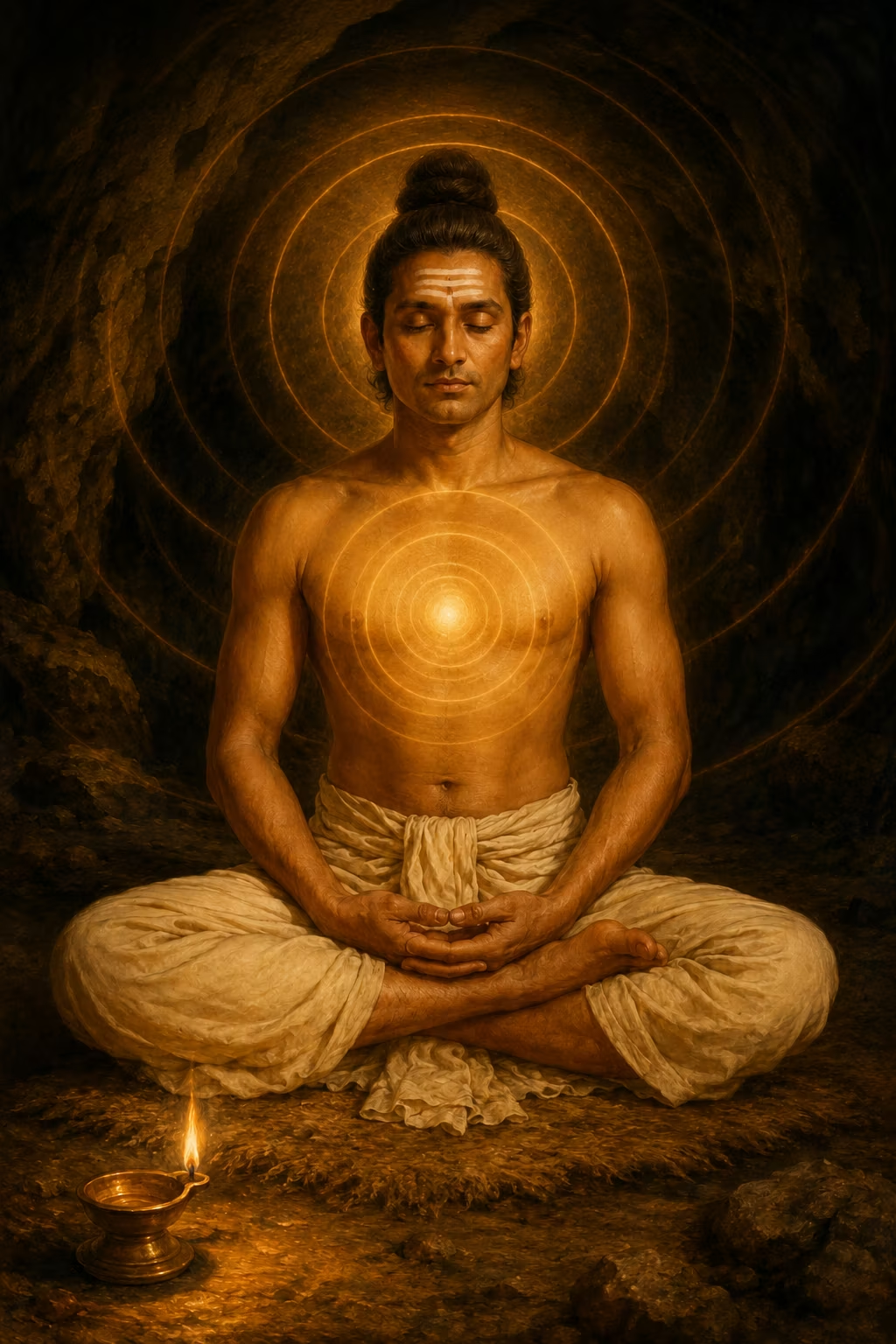
“Absorbed in the inner sound — the gentle nāda that draws the mind home.” ॥ ८२ ॥
साधक स्वर्ण-प्रकाश के वलयों में लीन — भीतरी नाद, नादानुसन्धान (४·८२ के बाद)।
The meditator wrapped in concentric rings of golden radiance — the inner sound, nādānusandhāna (after 4.82).
यह नाद जब अभ्यास किया जाता है, तब समस्त बाहरी ध्वनि को ढँक (दबा) देता है। एक पक्ष (पंद्रह दिन) में सारे विक्षेप (चित्त की चंचलता) को जीतकर योगी सुखी हो जाता है।
This nāda, when cultivated, covers over (drowns out) every external sound; within a fortnight (pakṣa), having conquered all distraction (vikṣepa), the yogī becomes happy.
सरल अर्थ: यहाँ से नादानुसन्धान का व्यावहारिक अभ्यास आरम्भ होता है — भीतरी नाद पर ध्यान बाहरी शोर को ढँक देता है, और लगभग एक पक्ष के अभ्यास में समस्त विक्षेप जीतकर योगी सुखी हो जाता है।In simple words: Begins the practical work of nādānusandhāna — attending to the inner sound drowns out external noise, and within about a fortnight of practice all distraction is conquered and the yogī grows content.
प्रथम अभ्यास में नाद ऊँचा और अनेक प्रकार का सुनाई देता है; फिर अभ्यास के परिपक्व होने पर वह सूक्ष्म से सूक्ष्मतर सुनाई पड़ता है।
In the early practice the nāda is heard loud and of many kinds; then, as practice matures, it is heard subtler and subtler.
सरल अर्थ: अभ्यास का क्रम बताता है: पहले नाद ऊँचा और अनेक प्रकार का होता है, अभ्यास गहराते ही वह उत्तरोत्तर सूक्ष्म सुनाई देता है — सम्पूर्ण अभ्यास की दिशा स्थूल से सूक्ष्म की ओर है (cf. ४·८७)।In simple words: Maps the progression: at first the inner sound is loud and of many kinds; as practice deepens it is heard ever subtler — the whole practice moves from gross to fine (cf. 4.87).
आरम्भ में समुद्र, मेघ, भेरी (नगाड़ा) और झर्झर (एक प्रकार का ढोल) जैसे नाद सुनाई देते हैं; मध्य अवस्था में मर्दल (मृदंग) और शंख के, तथा घण्टा और काहल (तुरही) के नाद सुनाई देते हैं।
At first arise sounds like those of the ocean, thunderclouds, the kettledrum (bherī) and the jharjhara drum; in the middle stage, those of the mardala drum and conch, and of the bell and the kāhala horn.
सरल अर्थ: आरम्भ से मध्य तक सुनाई देने वाले नादों की सूची (समुद्र, मेघ, भेरी; फिर शंख और घण्टा) — यह सुनने वाले को अवस्थाएँ पहचानने के लिए है, कोई क्रिया नहीं (cf. ४·८६)।In simple words: A catalogue of the coarse-to-middle sounds one may hear (ocean, thunder, kettledrum; then conch and bell) — offered so the listener recognises the stages, not as a technique (cf. 4.86).
ante tu kiṅkiṇī-vaṁśa-vīṇā-bhramara-niḥsvanāḥ । iti nānā-vidhā nādāḥ śrūyante deha-madhyagāḥ ॥
अन्त में किङ्किणी (छोटी घंटियों), वंशी (बाँसुरी), वीणा और भ्रमर (भौंरे) के समान नाद सुनाई देते हैं। इस प्रकार शरीर के भीतर उठने वाले नाना प्रकार के नाद सुनाई पड़ते हैं।
And at the end come the sounds of tinkling bells (kiṅkiṇī), flute (vaṃśa), vīṇā and the humming bee. Thus manifold nādas, arising within the body, are heard.
सरल अर्थ: सूची को पूर्ण करता है — अन्तिम व सूक्ष्मतम नाद किङ्किणी, वंशी, वीणा और भ्रमर-गुंजार हैं, जो सब शरीर के भीतर उठते हैं; यह क्रम सुनने वाले को सूक्ष्मतर नाद की ओर ले चलता है।In simple words: Completes the map — the final, subtlest sounds are tinkling bells, flute, vīṇā and the bee's hum, all arising within the body; the sequence keeps the listener moving toward the finer sound.
mahati śrūyamāṇe'pi megha-bhery-ādike dhvanau । tatra sūkṣmāt sūkṣmataraṁ nādam eva parāmṛśet ॥
यद्यपि मेघ, भेरी आदि की ऊँची ध्वनि सुनाई देती हो, तब भी उसमें से सूक्ष्म से सूक्ष्मतर नाद पर ही चित्त लगाना चाहिए।
Even while a loud sound is heard — that of thundercloud, kettledrum and the like — one should fix upon (parāmṛśet) only the nāda that is subtler than the subtle within it.
सरल अर्थ: ★ मुख्य नियम: मेघ-भेरी जैसी ऊँची ध्वनि सुनाई देने पर भी उसमें से सूक्ष्म-से-सूक्ष्मतर नाद को ही खोजना चाहिए — इसी से मन स्थूल से सूक्ष्म की ओर क्रमशः ले जाया जाता है।In simple words: ★ The operative rule: even when a louder sound (thunder, drum) presents itself, always seek out the subtler sound within it — the mind is thus led steadily from gross to fine.
ghanam utsṛjya vā sūkṣme sūkṣmam utsṛjya vā ghane । ramamāṇam api kṣiptaṁ mano nānyatra cālayet ॥
चाहे स्थूल (घन) नाद को छोड़कर सूक्ष्म में लगे, अथवा सूक्ष्म को छोड़कर स्थूल में — मन उसमें रमता हुआ भी नाद पर ही टिका रहे, उसे और कहीं न जाने दे।
Whether abandoning the gross (ghana) sound for the subtle, or the subtle for the gross — though the mind delights there, once cast upon the nāda it must not be let wander elsewhere.
सरल अर्थ: मन के रुचि अनुसार स्थूल-सूक्ष्म नाद के बीच आना-जाना स्वीकार है — पर मन किसी न किसी नाद पर टिका रहे, नाद के अतिरिक्त और कहीं न भटके (cf. ४·८७)।In simple words: Grants latitude to shift between coarse and fine sounds as the mind delights — but the mind must stay bound to some nāda and never stray to any other object (cf. 4.87).
जिस किसी भी नाद पर मन पहले लगता है, वहीं भली प्रकार स्थिर होकर वह उसी नाद के साथ लीन हो जाता है।
Upon whatever nāda the mind first fastens, becoming well-steadied there it dissolves (laya) together with that very sound.
सरल अर्थ: जिस नाद पर मन पहले लगे, वहीं दृढ़ स्थिर हो जाए; इस प्रकार स्थिर होकर वह उस नाद के साथ ही लीन (लय) हो जाता है — यह सहज लीनता है, बलपूर्वक नहीं।In simple words: Whatever sound the mind first catches, let it settle firmly there; so steadied, it dissolves (laya) together with that sound — a gentle absorption, not forced.
जैसे मकरन्द (पुष्परस) पीती हुई भ्रमरी गन्ध की अपेक्षा नहीं करती, वैसे ही नाद में आसक्त चित्त विषयों की इच्छा नहीं करता।
Just as the bee, drinking nectar (makaranda), heeds not the scent, so the mind absorbed in the nāda no longer craves the objects of sense (viṣaya).
सरल अर्थ: व्यवहार में दिखने वाला फल: जैसे मकरन्द पीती भ्रमरी गन्ध की परवाह नहीं करती, वैसे ही नाद में लीन चित्त विषय-भोगों की इच्छा नहीं करता।In simple words: The fruit seen in ordinary life: as the nectar-drinking bee ignores the flower's scent, a mind absorbed in the inner sound stops craving sense-pleasures.
विषयरूपी उद्यान में विचरने वाले मनरूपी मतवाले गजराज को वश में करने में यह नाद-ध्वनिरूपी तीक्ष्ण अंकुश समर्थ है।
For the rutting elephant-king that is the mind, roaming the pleasure-garden of the senses, this sharp goad (aṅkuśa) of the nāda-sound is able to restrain it.
सरल अर्थ: उसी प्रभाव का दूसरा चित्र — मन विषयों के उद्यान में घूमता मतवाला गजराज है, और भीतरी नाद वह तीक्ष्ण अंकुश है जो अकेला उसे वश में कर सकता है।In simple words: Another image for the same effect — the mind is a rutting elephant loose in the garden of the senses, and the inner sound is the sharp goad (aṅkuśa) that alone can rein it in.
नाद के बन्धन से बँधा मन अपनी चंचलता छोड़कर, कटे पंखों वाले पक्षी के समान, पूर्ण स्थिरता को प्राप्त हो जाता है।
The mind bound by the bond of nāda (nāda-bandha), its fickleness abandoned, attains complete steadiness — like a bird whose wings are clipped.
सरल अर्थ: नाद का बन्धन मन की चंचलता को इतना वश कर देता है कि वह कटे पंख वाले पक्षी की भाँति उड़ नहीं पाता — स्थिरता लीनता से आती है, दमन से नहीं।In simple words: The bond of sound (nāda-bandha) so thoroughly tames the mind's fickleness that, like a wing-clipped bird, it can no longer fly off — steadiness comes by absorption, not by suppression.
समस्त चिन्ता त्यागकर, सावधान (एकाग्र) चित्त से, योग के साम्राज्य (परमपद) को चाहने वाले को केवल नाद का ही अनुसन्धान करना चाहिए।
Abandoning all [other] thought, with an attentive mind, one who desires the sovereign empire of yoga (yoga-sāmrājya) should cultivate (anusandheya) the nāda alone.
सरल अर्थ: ★ इस प्रकरण का केन्द्रीय निर्देश: समस्त चिन्ता छोड़कर, सावधान चित्त से केवल नाद का अनुसन्धान करो — यही एक अभ्यास "योग-साम्राज्य" दिला देता है। यही वह निमन्त्रण है जिसे पाठक अपना सकता है।In simple words: ★ The section's central directive: drop every other thought and, with alert attention, pursue the inner sound alone — this single practice wins the "sovereign empire of yoga." This is the invitation the reader can act on.
nādo'ntaraṅga-sāraṅga-bandhane vāgurāyate । antaraṅga-kuraṅgasya vadhe vyādhāyate'pi ca ॥
नाद अन्तःकरणरूपी मृग (सारङ्ग) को बाँधने में जाल (वागुरा) का काम करता है, और अन्तःकरणरूपी मृग (कुरङ्ग) का वध करने में व्याध (शिकारी) का भी।
The nāda acts as the snare (vāgurā) for binding the deer (sāraṅga) that is the inner mind, and it acts too as the hunter (vyādha) for slaying that inner-mind deer (kuraṅga).
सरल अर्थ: शिकार के दो चित्र: नाद वह जाल (वागुरा) भी है जो अन्तःकरणरूपी मृग को फँसाता है और वह व्याध (शिकारी) भी जो उसका वध करता है — अर्थात् वह मन को पूर्णतः शान्त कर देता है।In simple words: Two hunting images: the sound is both the net (vāgurā) that snares the restless inner-mind deer and the hunter (vyādha) that slays it — i.e. it stills the mind completely.
वश में किए जाने योग्य अन्तःकरणरूपी अश्व के लिए नाद अर्गला (परिघ) का काम करता है; अतः योगी को सदा नाद की उपासना में रत रहने का दृढ़ निश्चय करना चाहिए।
For the horse of the inner mind that must be reined in, the nāda serves as the curbing-bar (parigha); therefore the yogī should firmly resolve to remain ever devoted to the worship (upāsti) of the nāda.
सरल अर्थ: वश में करने के तीन चित्रों (जाल, व्याध, अब अर्गला) को पूरा करता है: नाद मनरूपी अश्व को रोकता है — अतः योगी सदा नाद की उपासना में रत रहने का दृढ़ निश्चय करे।In simple words: Completes the taming trio (net, hunter, now curb-bar): the sound reins in the horse of the mind — so the yogī should firmly resolve to stay ever devoted to listening to the nāda.
नादरूपी गन्धक के द्वारा जारण (कल्क) करने से मनरूपी पारद बँध जाता है, चंचलता से मुक्त हो जाता है, और निरालम्ब (आधार-रहित) नामक आकाश में विचरण प्राप्त कर लेता है।
By the calcination (jāraṇa) worked by the sulphur of nāda (nāda-gandhaka), the quicksilver-mind (manaḥ-pārada) becomes fixed, freed of its restlessness, and gains its roaming (aṭana) in the sky called the support-less (nirālamba).
सरल अर्थ: रसायन का चित्र: जैसे गन्धक चंचल पारद को जारण द्वारा बाँध देता है, वैसे ही नाद पारदरूपी मन को बाँध देता है — चंचलता से मुक्त होकर वह निरालम्ब (आधार-रहित) आकाश में स्वच्छन्द विचरता है।In simple words: An alchemical image: as sulphur "fixes" volatile mercury (jāraṇa), the nāda fixes the quicksilver mind — steadied and freed of restlessness, it comes to move freely in the support-less inner space (nirālamba).
नाद के श्रवण से अन्तःकरणरूपी सर्प (भुजंग) शीघ्र ही सब कुछ भूलकर एकाग्र हो जाता है और कहीं नहीं दौड़ता।
Through hearing the nāda the serpent that is the inner mind, quickly forgetting everything, becomes one-pointed (ekāgra) and darts off nowhere.
सरल अर्थ: सँपेरे का चित्र: जैसे सर्प संगीत से स्तब्ध हो जाता है, वैसे ही नाद सुनकर अन्तःकरणरूपी सर्प सब कुछ भूलकर एकाग्र हो जाता है और इधर-उधर नहीं दौड़ता।In simple words: The snake-charmer image: as a serpent is stilled by music, the inner-mind serpent, hearing the sound, forgets all else, grows one-pointed and no longer darts about.
kāṣṭhe pravartito vahniḥ kāṣṭhena saha śāmyati । nāde pravartitaṁ cittaṁ nādena saha līyate ॥
काष्ठ में प्रज्वलित अग्नि काष्ठ के साथ ही शान्त हो जाती है; (वैसे ही) नाद में लगाया गया चित्त नाद के साथ ही लीन हो जाता है।
The fire kindled in wood dies down together with the wood; [so] the mind engaged in the nāda dissolves (laya) together with the nāda.
सरल अर्थ: ★ नादानुसन्धान की परिणति: जैसे अग्नि उस काष्ठ के साथ ही बुझ जाती है जिसे वह जलाती है, वैसे ही नाद में लगा चित्त नाद के साथ ही लीन हो जाता है — नाद निःशब्द में ले जाता है (cf. ४·१००)।In simple words: ★ The culmination of nādānusandhāna: as fire dies down together with the wood it consumes, the mind fixed on the sound dissolves along with the sound itself — sound leads into the soundless (cf. 4.100).
ghaṇṭādi-nāda-sakta-stabdhāntaḥ-karaṇa-hariṇasya । praharaṇam api sukaraṁ syāc chara-sandhāna-pravīṇaś cet ॥
घण्टा आदि के नाद में आसक्त होकर स्तब्ध हुए अन्तःकरणरूपी मृग का वध भी सुगम हो जाता है — यदि (योगीरूपी व्याध) शर-सन्धान (बाण चढ़ाने/निशाना साधने) में प्रवीण हो।
Of the deer that is the inner faculty (antaḥkaraṇa), rendered motionless through attachment to the sound of bells and the like, even the slaying is easy — if [the yogī] is skilled at taking aim with the arrow (śara-sandhāna).
सरल अर्थ: मृग-व्याध के चित्र पर लौटता है (cf. ४·९४): अन्तःकरणरूपी मृग घण्टादि नादों में आसक्त होकर स्तब्ध खड़ा है, अतः शर-सन्धान (निशाना) में प्रवीण योगी उसे सहज ही शान्त (वध) कर सकता है।In simple words: Returns to the deer-and-hunter image (cf. 4.94): the mind-deer stands transfixed by the bell-like inner sounds, so a yogī skilled at "taking aim" through the nāda can easily still (slay) it.
anāhatasya śabdasya dhvanir ya upalabhyate । dhvaner antargataṁ jñeyaṁ jñeyasyāntargataṁ manaḥ । manas tatra layaṁ yāti tad viṣṇoḥ paramaṁ padam ॥
अनाहत (बिना आघात के स्वयं उठने वाले) शब्द की जो ध्वनि सुनाई देती है, उस ध्वनि के भीतर ज्ञेय (चेतन ज्योति) है, और ज्ञेय के भीतर मन है। वहीं मन लय को प्राप्त हो जाता है — वही विष्णु का परम पद है।
The resonance (dhvani) of the unstruck sound (anāhata) that is perceived — within that resonance lies the object of knowledge (jñeya, the inner light of consciousness), and within that knowable lies the mind. There the mind attains dissolution (laya): that is the supreme abode of Viṣṇu.
सरल अर्थ: नाद-साधना की पराकाष्ठा: भीतरी अनाहत नाद का अनुसरण करते-करते — ध्वनि → उसके भीतर की ज्योति → मन — अन्ततः मन ही उसमें लय हो जाता है, जिसे यहाँ विष्णु का परम पद कहा गया है। केवल सुनना और मन को उसमें घुलने देना सरल एवं सुरक्षित है (cf. ४·६७–६८, ४·८२)।In simple words: The climax of nāda practice: follow the inner unstruck sound inward — resonance → the light it reveals → the mind — until the mind itself dissolves (laya) in it; the text names this Viṣṇu's supreme abode. Simply listening and letting the mind be absorbed is beginner-safe (cf. 4.67-68, 4.82).
जब तक आकाश का संकल्प (शब्द को धारण करने वाला भाव) बना रहता है, तभी तक शब्द (नाद) चलता रहता है। जो निःशब्द है, वही परब्रह्म है, जिसे परमात्मा कहा जाता है।
As long as the notion of ether/space (ākāśa-saṅkalpa) persists, so long does sound arise. The soundless — that is the supreme Brahman, celebrated as the Supreme Self (Paramātman).
सरल अर्थ: नाद अन्तिम देहली है, लक्ष्य नहीं: जब तक मन आकाश का संकल्प धारण करता है तभी तक शब्द रहता है; जहाँ शब्द थम जाता है वहाँ निःशब्द ब्रह्म (परमात्मा) शेष रहता है। नाद वह सीढ़ी है जिसे अन्त में छोड़ देना होता है।In simple words: Sound (nāda) is the last threshold, not the goal: as long as the mind still holds the sense of space, sound continues; where sound ceases, the soundless Brahman/Paramātman remains. Nāda is the ladder you finally let go of.
yat kiṁcin nāda-rūpeṇa śrūyate śaktir eva sā । yas tattvānto nirākāraḥ sa eva parameśvaraḥ ॥
जो कुछ भी नाद के रूप में सुनाई देता है, वह साक्षात् शक्ति ही है; और जो समस्त तत्त्वों के अन्त में स्थित निराकार है, वही परमेश्वर है।
Whatever is heard in the form of sound (nāda) is verily Śakti; and that which is formless, standing at the end of all principles (tattvānta), He alone is the Supreme Lord (Parameśvara).
सरल अर्थ: एक तान्त्रिक कुंजी: भीतर सुनाई देने वाला हर नाद शक्ति है (परमात्मा का श्रवण-योग्य रूप), और समस्त तत्त्वों के अन्त में स्थित निराकार मौन ही शिव/परमेश्वर है। यह श्लोक ४·१०१ को स्पष्ट करता है — शक्ति को सुनो, निराकार में विश्राम करो।In simple words: A tantric key: every inner sound you hear is Śakti (the audible face of the Divine), and the formless silence at the end of all principles is Śiva/Parameśvara. This pair reframes 4.101 — listen to Śakti, rest in the formless.
हठ और लय के समस्त उपाय राजयोग की सिद्धि के लिए ही हैं। जो पुरुष राजयोग पर आरूढ़ हो जाता है, वह काल (मृत्यु) को छलने वाला हो जाता है।
All the means of haṭha and laya are for the accomplishment of rāja-yoga. The one who has mounted to rāja-yoga becomes a cheater of Death (kāla-vañcaka).
सरल अर्थ: नादानुसन्धान खण्ड की समाप्ति पर ('इति नादानुसन्धानम्') इस अध्याय का सार: हठ और लय के सारे उपाय केवल राजयोग (समाधि) की सिद्धि के लिए हैं; उस पर आरूढ़ पुरुष 'काल को छल' लेता है। साधन कभी गन्तव्य नहीं।In simple words: The chapter's thesis, stated as the nādānusandhāna section closes ('iti nādānusandhānam' in the e-text): all of haṭha and laya exist only to accomplish rāja-yoga (samādhi); one established there 'cheats Death.' Technique is never the destination.
तत्त्व बीज है, हठ खेत है, और औदासीन्य (वैराग्य) जल है — इन तीनों से उन्मनी रूपी कल्पलता तत्काल ही उग आती है।
Truth (tattva) is the seed, haṭha the field, and dispassion (audāsīnya) the water; by these three the wish-granting creeper of unmanī (the transmental state) springs up at once.
सरल अर्थ: उन्मनी अवस्था का सूत्र, खेती के रूपक में: तत्त्व बीज है, हठ खेत है, औदासीन्य (वैराग्य) जल है — तीनों से उन्मनी रूपी कल्पलता तुरन्त उग आती है। ध्यान दें — जल बल नहीं, वैराग्य है।In simple words: The recipe for the transmental state (unmanī) as a farming image: tattva (truth) is the seed, haṭha the field, audāsīnya (dispassion) the water — with all three the 'wish-granting creeper' of unmanī springs up at once. Note that the water is dispassion, not force.
निरन्तर नादानुसन्धान से पापों के समूह क्षीण हो जाते हैं; और चित्त तथा प्राण दोनों निश्चित रूप से निरंजन (निर्मल ब्रह्म) में विलीन हो जाते हैं।
Through constant contemplation of the inner sound (nādānusandhāna) the heaps of demerit are destroyed; the mind and the vital air (citta and māruta) surely dissolve into the Stainless (nirañjana).
सरल अर्थ: स्थिर नाद-श्रवण का फल: संचित पापों के ढेर क्षीण हो जाते हैं, और चित्त तथा प्राण दोनों साथ-साथ निरंजन (निर्मल चेतना) में लीन हो जाते हैं। भीतरी नाद पर कोमल, निरन्तर ध्यान स्वयं यह कर देता है (cf. ४·१००)।In simple words: The fruit of steady nāda-listening: heaps of past demerit wear away, and mind and breath together dissolve into the 'Stainless' (nirañjana, pure awareness). Gentle sustained attention to the inner sound does this on its own (cf. 4.100).
śaṅkha-dundubhi-nādaṁ ca na śṛṇoti kadācana । kāṣṭhavaj jāyate deha unmanyāvasthayā dhruvam ॥
उस समय वह शंख और दुन्दुभि के नाद को भी कभी नहीं सुनता; उन्मनी अवस्था के कारण उसका शरीर निश्चय ही काठ के समान (जड़वत्) हो जाता है।
He never hears even the sound of conch or kettledrum; through the unmanī state the body becomes, for certain, like a log of wood (inert).
सरल अर्थ: गहन तन्मयता (उन्मनी) का लक्षण: इन्द्रिय-प्रत्याहार इतना पूर्ण कि शंख-दुन्दुभि तक सुनाई न दे और शरीर काठ-सा जड़ बैठा रहे। यह अवस्था का चिह्न है, बलपूर्वक करने की वस्तु नहीं; उन्मनी स्वयं गुरु-निर्देशन में परिपक्व होती है (cf. ४·१०४)।In simple words: A sign of deep absorption (unmanī): sense-withdrawal so complete that even a conch or drum goes unheard and the body sits inert as a log. This is a marker of the state, not a thing to force; unmanī itself ripens under a teacher's guidance (cf. 4.104).
समस्त अवस्थाओं से मुक्त, सारी चिन्ताओं से रहित, वह योगी मृतक के समान स्थित रहता है — वह मुक्त है, इसमें कोई संशय नहीं।
Freed from all states (avasthā), devoid of all care, the yogī abides as if dead — he is liberated; there is no doubt in this.
सरल अर्थ: जीवन्मुक्त के चित्र (श्लोक १०७–११३) की पहली रेखा: समस्त अवस्थाओं और चिन्ताओं से परे योगी 'मृतक के समान' बैठा रहता है — बाहर से निश्चल, भीतर से मुक्त। 'मृतवत्' का अर्थ है अस्पृष्ट, न कि अचेत।In simple words: The first stroke of the liberated-one portrait (vv.107-113): beyond all mental states and all care, the yogī sits 'as if dead' — outwardly still, inwardly free. 'Like dead' means untouched, not unconscious.
khādyate na ca kālena bādhyate na ca karmaṇā । sādhyate na sa kenāpi yogī yuktaḥ samādhinā ॥
समाधि में युक्त वह योगी न काल के द्वारा खाया जाता है, न कर्म के द्वारा बाँधा जाता है, और न किसी के द्वारा वश में किया जा सकता है।
He is not devoured by Time, not bound by karma, not subdued by anyone — the yogī who is joined in samādhi.
सरल अर्थ: समाधिस्थ योगी काल, कर्म और हर बाहरी शक्ति से परे है — न कोई उसे खा सकता है, न बाँध सकता है, न वश में कर सकता है। बाहर से देखी गई मुक्ति।In simple words: The samādhi-established yogī is beyond Time, karma, and every external power — none can devour, bind, or subdue him. Freedom described from the outside in.
na gandhaṁ na rasaṁ rūpaṁ na ca sparśaṁ na niḥsvanam । nātmānaṁ na paraṁ vetti yogī yuktaḥ samādhinā ॥
समाधि में युक्त वह योगी न गन्ध, न रस, न रूप, न स्पर्श और न शब्द को जानता है; और न अपने को, न किसी दूसरे को।
He knows neither smell, nor taste, nor form, nor touch, nor sound; neither himself nor another — the yogī who is joined in samādhi.
सरल अर्थ: समाधि में पाँचों इन्द्रियाँ मौन हो जाती हैं — न गन्ध, न रस, न रूप, न स्पर्श, न शब्द — और 'मैं/दूसरा' का भेद भी मिट जाता है। यह प्रत्याहार की पराकाष्ठा है।In simple words: In samādhi the five senses fall silent — no smell, taste, form, touch, or sound — and even the 'I / other' split dissolves. This is pratyāhāra carried to its end.
cittaṁ na suptaṁ nojāgrat smṛti-vismṛti-varjitam । na cāstam eti nodeti yasyāsau mukta eva saḥ ॥
जिसका चित्त न सोया हुआ है न जागा हुआ, जो स्मृति और विस्मृति से रहित है, जो न अस्त होता है न उदित होता है — वही मुक्त है।
He whose mind is neither asleep nor awake, free of memory and forgetting, which neither sets nor rises — he alone is liberated.
सरल अर्थ: 'तुरीय' का निषेध-द्वारा वर्णन: वह चित्त जो न सोया है न जागा, स्मृति-विस्मृति से रहित, जो न उदित होता है न अस्त — विचारों के आने-जाने के पीछे स्थिर चेतना।In simple words: The 'fourth' (turīya) described by negation: a mind neither asleep nor awake, free of remembering and forgetting, that neither rises nor sets — a steady awareness behind the coming and going of thought.
na vijānāti śītoṣṇaṁ na duḥkhaṁ na sukhaṁ tathā । na mānaṁ nopamānaṁ ca yogī yuktaḥ samādhinā ॥
समाधि में युक्त वह योगी न शीत-उष्ण को जानता है, न दुःख को, न सुख को, और न मान (आदर) को, न अपमान को।
He does not feel cold or heat, nor pain, nor pleasure, nor honour, nor dishonour — the yogī who is joined in samādhi.
सरल अर्थ: द्वन्द्व अपनी पकड़ खो देते हैं: समाधिस्थ योगी के लिए शीत-उष्ण, दुःख-सुख, मान-अपमान का कोई अनुभव ही नहीं रहता। समता एक जीवित तथ्य है, प्रयास नहीं।In simple words: The pairs of opposites lose their grip: cold/heat, pain/pleasure, honour/dishonour no longer register for the yogī fixed in samādhi. Equanimity as a lived fact, not an effort.
svastho jāgrad-avasthāyāṁ suptavad yo'vatiṣṭhate । niḥśvāsocchvāsa-hīnaś ca niścitaṁ mukta eva saḥ ॥
जो आत्मा में स्थित (स्वस्थ) रहते हुए जाग्रत अवस्था में भी सोए हुए के समान रहता है, और श्वास-प्रश्वास से रहित हो जाता है, वह निश्चय ही मुक्त है।
Abiding in the Self (svastha), he who in the waking state remains as if asleep, and is without out-breath and in-breath — he is surely liberated.
सरल अर्थ: जाग्रत रहते हुए भी सोए-से, आत्मस्थ, और श्वास-प्रश्वास स्वतः थमे हुए: समाधि में लीन पुरुष के लक्षण। यहाँ श्वास स्वयं शान्त होता है — यह फल है, कोई कुम्भक करने की वस्तु नहीं।In simple words: Awake yet as though asleep, self-abiding, with in- and out-breath spontaneously stilled: the marks of one absorbed in samādhi. The breath quiets on its own here — it is a fruit, not a breath-hold to attempt.
समाधि में युक्त वह योगी समस्त शस्त्रों से अवध्य (न मारा जा सकने वाला), समस्त प्राणियों के लिए अजेय, तथा मन्त्रों और यन्त्रों के द्वारा अग्राह्य (न पकड़ा जा सकने वाला) होता है।
Unslayable by all weapons, unassailable by all embodied beings, ungraspable by mantras and yantras — the yogī who is joined in samādhi.
सरल अर्थ: अभेद्यता का श्लोक: शस्त्रों से अवध्य, किसी प्राणी से अजेय, मन्त्र-यन्त्र से अग्राह्य। इसे उस पुरुष की अस्पृश्यता के रूप में समझें जो आत्मस्वरूप हो गया है — जहाँ किसी बल की पहुँच नहीं।In simple words: The invulnerability verse: unslayable by weapons, unconquerable by any being, ungraspable by mantra or yantra. Read it as the untouchability of one who has become the Self, beyond what any force can reach.
yāvan naiva praviśati caran māruto madhya-mārge yāvad bindur na bhavati dṛḍhaḥ prāṇa-vāta-prabandhāt । yāvad dhyāne sahaja-sadṛśaṁ jāyate naiva tattvaṁ tāvaj jñānaṁ vadati tad idaṁ dambha-mithyā-pralāpaḥ ॥
जब तक चलता हुआ प्राण-वायु मध्यमार्ग (सुषुम्ना) में प्रवेश नहीं करता, जब तक प्राण-वायु के निरोध से बिन्दु दृढ़ नहीं हो जाता, और जब तक ध्यान में सहज के समान तत्त्व प्रकट नहीं होता — तब तक जो 'ज्ञान' की बातें करता है, वह सब दम्भ और मिथ्या प्रलाप है।
As long as the moving prāṇa does not enter the central path (madhya-mārga, the suṣumṇā), as long as the bindu is not made firm through restraint of the breath, as long as reality does not dawn in meditation resembling the natural state (sahaja) — until then, whoever speaks of [true] knowledge, this of his is but arrogant, false prattle.
सरल अर्थ: ★ ग्रन्थ की अन्तिम कसौटी और उसका सुरक्षा-कवच: जब तक चलता प्राण वास्तव में सुषुम्ना (मध्यमार्ग) में प्रवेश न करे, बिन्दु सचमुच दृढ़ न हो, और ध्यान में सहज-सदृश तत्त्व उदित न हो — तब तक 'ज्ञान' की सारी बातें केवल दम्भ और मिथ्या प्रलाप हैं। ये उपलब्धियाँ — प्राण का सुषुम्ना में प्रवेश, बिन्दु का स्थिरीकरण — अत्यन्त प्रबल एवं दीक्षा-बद्ध हैं: ये केवल जीवित गुरु से प्राप्त होती हैं (४·८ 'गुरुवाक्येन लभ्यते'; ४·९ सद्गुरु की करुणा के बिना नहीं), पुस्तक से नहीं; यहाँ कोई विधि नहीं दी गई (cf. ४·१६)।In simple words: ★ The book's closing test, and its safeguard: unless the moving prāṇa actually enters the suṣumṇā (madhya-mārga), the bindu is truly steadied, and reality dawns in dhyāna as the natural (sahaja) state, all talk of 'knowledge' is mere arrogant prattle. These very attainments — prāṇa in the suṣumṇā, steadying the bindu — are potent and dīkṣā-bound: they come only through a living teacher (4.8, guru-vākyena labhyate; 4.9, not without the true guru's grace), never from a book; no how-to is given here (cf. 4.16).
अनुभव · स्वयं देखेंAnubhava · see for yourself
प्राण या मन को कहीं बलपूर्वक मत ठेलो। इसके बदले, यह अध्याय पाठक को जो एक उपहार देता है, उसे स्वयं परखो: शान्त बैठकर एक मिनट श्वास और मन को साथ-साथ देखो। जब श्वास तेज़ और रूखी हो, देखो मन बिखरा है; श्वास को स्वयं लम्बी और कोमल होने दो, और देखो मन भी उसके साथ बैठता जाता है। तुम कोई तकनीक नहीं कर रहे — तुम ४·२४ के दूध-जल-सत्य को देख रहे हो, कि मन और प्राण एक-साथ चलते हैं। इतना आज तुम्हारा है देखने को। दोनों का समाधि में विलय — इस अध्याय का असली विषय — वास्तविक है, पर वह किसी जीवित गुरु के हाथ से खुलता है, ठेलने से नहीं।
Do not force prāṇa or mind anywhere. Instead, take the one gift this chapter offers a reader, and test it yourself: sit quietly and watch the breath and the mind together for a minute. When the breath is quick and rough, notice the mind is scattered; let the breath lengthen and soften on its own, and notice the mind settle with it. You are not doing a technique — you are observing the milk-and-water fact of 4.24, that mind and breath move as one. That much is yours to see today. The dissolution of both into samādhi — the chapter's true subject — is real, but it opens under a living teacher's hand, not by pushing.
इति हठप्रदीपिकायां चतुर्थोपदेशः ॥
इस प्रकार हठप्रदीपिका का चतुर्थ (अन्तिम) उपदेश — समाधि, लय, नाद, और चार अवस्थाएँ। ॥ हठप्रदीपिका समाप्त ॥