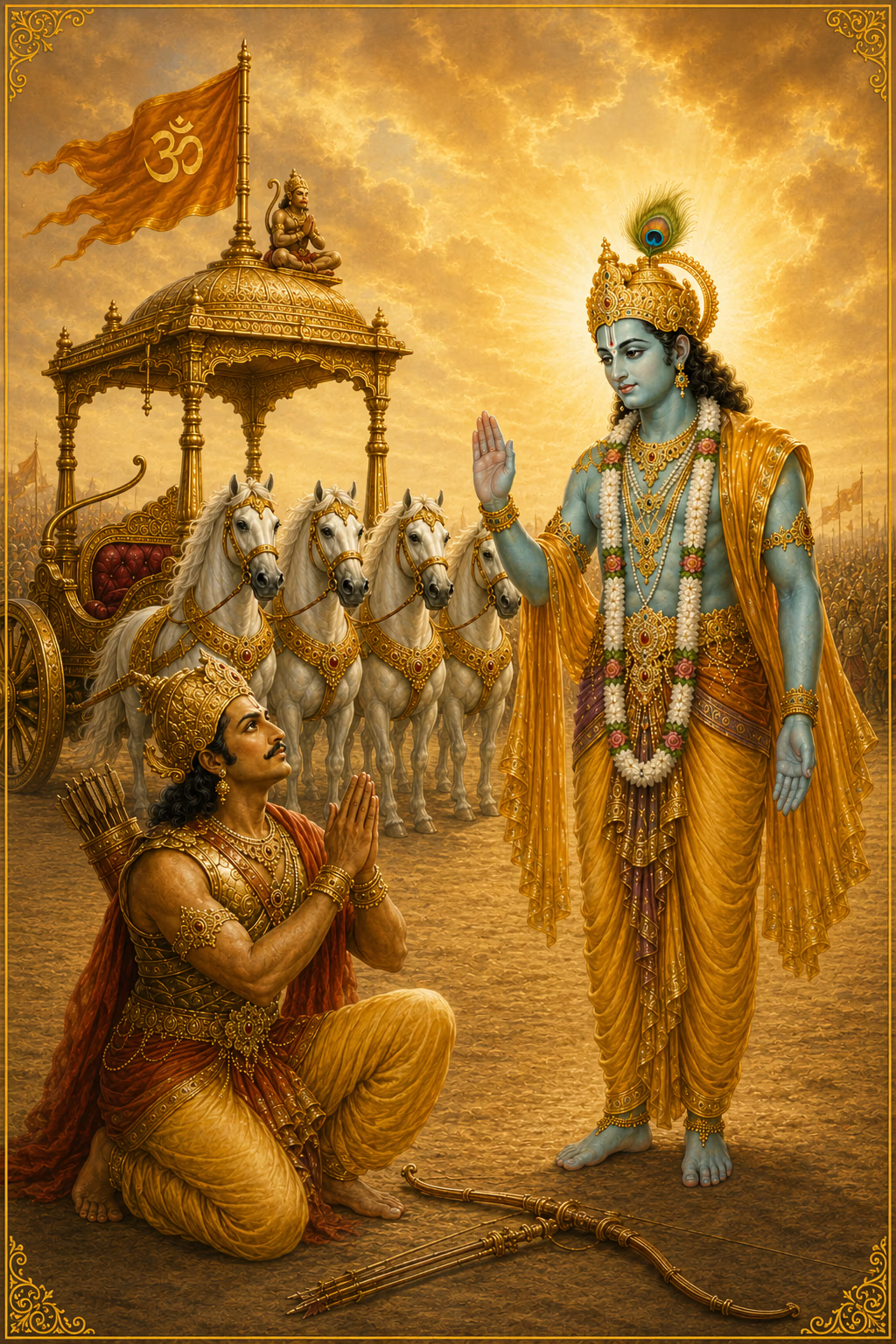
अठारहवाँ अध्याय गीता का महान् उपसंहार है — इसका सबसे बड़ा अध्याय, जो पिछले सत्रह अध्यायों के हर सूत्र को एक में समेट लेता है। अर्जुन संन्यास (कर्म-त्याग) और त्याग (कर्मफल-त्याग) का भेद पूछते हैं; श्रीकृष्ण इसका निर्णय देते हैं: यज्ञ, दान और तप कभी मत छोड़ो — केवल आसक्ति और फल की चाह छोड़ो (१८·२-१२)। वे हर कर्म के पीछे के पाँच कारण बताते हैं, ताकि अहंकार अकेले कर्तापन का दावा छोड़ दे (१८·१३-१७), और फिर एक विशाल सर्वेक्षण में ज्ञान, कर्म, कर्ता, बुद्धि, धृति और यहाँ तक कि सुख को भी तीन गुणों में बाँटते हैं (१८·१८-४०)। वे स्वधर्म की पुष्टि करते हैं — 'दूसरे के भलीभाँति किये धर्म से अपना गुणहीन धर्म श्रेष्ठ है' — और वह देदीप्यमान शिक्षा कि मनुष्य 'जिससे सब प्राणी उत्पन्न होते हैं उस परमात्मा की अपने कर्म से पूजा करके' सिद्धि पाता है (स्वकर्मणा तमभ्यर्च्य, १८·४५-४८)। यह आरोहण निष्काम कर्म से ज्ञान तक, ब्रह्म तक, और उस परा भक्ति तक चढ़ता है जिससे 'वह मुझे तत्त्व से जान लेता है' (१८·४९-५५)। 'सब कर्म मुझे अर्पण कर दे… ईश्वर सब प्राणियों के हृदय में स्थित होकर, अपनी माया से, उन्हें यन्त्र पर आरूढ़-सा घुमाता है; उसी की शरण सम्पूर्ण भाव से जा' (१८·५६-६२)। फिर वह परम वचन, स्वतन्त्रता-सहित दिया गया — 'इस पर पूर्ण विचार कर, फिर जैसा चाहे वैसा कर' (१८·६३) — और गीता का अन्तिम, सर्व-मुक्तिदायी वचन, चरम-श्लोक: 'सम्पूर्ण धर्मों को त्यागकर केवल मेरी शरण में आ; मैं तुझे सब पापों से मुक्त कर दूँगा — शोक मत कर' (सर्वधर्मान्परित्यज्य… १८·६६)। अर्जुन का मोह विलीन हो जाता है — 'मेरा मोह नष्ट हो गया, मैंने स्मृति पा ली; मैं आपका वचन करूँगा' (१८·७३) — और सञ्जय विस्मय से समाप्त करते हैं: 'जहाँ योगेश्वर श्रीकृष्ण हैं और जहाँ धनुर्धर अर्जुन है, वहीं श्री, विजय, विभूति और अटल नीति है' (१८·७८)।
Chapter 18 is the Gita's grand summation — its longest chapter, gathering every thread of the preceding seventeen into one. Arjuna asks the difference between sannyāsa (renouncing action) and tyāga (renouncing the fruit of action); Krishna settles it: never abandon sacrifice, charity and austerity — abandon only attachment and the craving for results (18.2–12). He names the five factors behind every deed, so the ego can stop claiming sole authorship (18.13–17), and then, in a sweeping survey, sorts knowledge, action, the doer, the intellect, firmness and even happiness into the three guṇas (18.18–40). He affirms svadharma — 'better one's own duty though imperfect than another's well performed' — and the luminous teaching that one reaches perfection by 'worshipping, through one's own work, Him from whom all beings arise' (sva-karmaṇā tam abhyarcya, 18.45–48). The ascent climbs through desireless action to knowledge, to Brahman, to supreme devotion by which 'he knows Me in truth' (18.49–55). 'Surrender all actions to Me… the Lord dwells in the heart of every being, turning them all as if mounted on a machine, by His māyā; take refuge in Him alone, with all your being' (18.56–62). Then the supreme word, freely given — 'reflect on this fully, and do as you wish' (18.63) — and the Gita's final, all-releasing promise, the carama-śloka: 'Abandoning all dharmas, take refuge in Me alone; I shall free you from all sins — do not grieve' (sarva-dharmān parityajya… 18.66). Arjuna's delusion dissolves — 'my confusion is gone, I have regained memory; I will do Your word' (18.73) — and Sañjaya closes with awe: 'wherever is Krishna, Lord of Yoga, and Arjuna the archer, there are fortune, victory, glory and unfailing righteousness' (18.78).
“शरणागति — सर्वधर्मान् परित्यज्य मामेकं शरणं व्रज” ॥ ६६ ॥ · मूल चित्र — इस परियोजना हेतु
मोह मिटने पर अर्जुन गाण्डीव रखकर पूर्ण शान्त समर्पण में हाथ जोड़े झुकते हैं; तेजोमय श्रीकृष्ण अनन्त कृपा से अभय-मुद्रा में — गीता का चरम, विजयी स्वर्ण-प्रकाश में।
His delusion gone, Arjuna lays down Gāṇḍīva and bows in complete, peaceful surrender; the radiant Krishna raises a hand in fearlessness — the Gītā's climax, bathed in triumphant golden light.
अर्जुन बोले—हे महाबाहो ! हे अन्तर्यामिन् ! हे वासुदेव ! मैं संन्यास और त्याग के तत्त्व को पृथक्-पृथक् जानना चाहता हूँ
Arjuna said: O mighty-armed one, O Hṛṣīkeśa, O slayer of Keśin, I wish to know truly the essence of renunciation of action (sannyāsa) and of renunciation of the fruit of action (tyāga), and the distinction between the two.
सरल अर्थ: अर्जुन ने कहा — हे महाबाहो! हे हृषीकेश! हे केशिनिषूदन! मैं संन्यास का और त्याग का तत्त्व अलग-अलग करके जानना चाहता हूँ। (संन्यास और त्याग — इन दोनों में क्या भेद है, यह मुझे ठीक-ठीक बताइए।)In simple words: Arjuna asks Krishna to explain the real meaning of two words: sannyasa (giving up actions) and tyaga (giving up the fruits of action), and how the two differ from each other.
श्रीभगवान् बोले—कितने ही पण्डितजन तो काम्यकर्मों के त्याग को संन्यास समझते हैं तथा दूसरे विचार कुशल पुरुष सब कर्मों के फल के त्याग को त्याग कहते हैं
The Blessed Lord said: The wise understand sannyāsa to be the giving up of actions done with desire for their fruits; and the discerning declare tyāga to be the abandonment of the fruits of all actions.
सरल अर्थ: श्रीभगवान् ने कहा — कितने ही विद्वान् काम्य कर्मों (फल की इच्छा से किए जाने वाले कर्मों) के त्याग को संन्यास समझते हैं; और दूसरे विचारशील पुरुष सम्पूर्ण कर्मों के फल के त्याग को त्याग कहते हैं।In simple words: The Lord answers: sages call sannyasa the dropping of all actions that are done out of desire for some result. Wise people call tyaga the giving up of the fruit of every action — doing the work but letting go of its reward.
tyājyaṁ doṣavadityeke karma prāhurmanīṣiṇaḥ । yajñadānatapaḥkarma na tyājyamiti cāpare ॥
कई एक विद्वान् ऐसा कहते हैं कि कर्ममात्र दोष युक्त हैं, इसलिये त्यागने के योग्य हैं और दूसरे विद्वान् यह कहते हैं कि यज्ञ, दान और तपरूप कर्म त्यागने योग्य नहीं हैं
Some thinkers declare that all action should be given up as an evil, while others say that acts of sacrifice, charity, and austerity should not be given up.
सरल अर्थ: कितने ही विद्वान् ऐसा कहते हैं कि कर्ममात्र दोषयुक्त है, इसलिए उसे त्याग देना चाहिए; और दूसरे कहते हैं कि यज्ञ, दान और तप — ये कर्म त्यागने योग्य नहीं हैं। (इस प्रकार त्याग के विषय में मतभेद है।)In simple words: Here are two opposing views. Some learned people say all action is faulty and should be abandoned. Others say that sacrifice, charity, and austerity must never be given up. Krishna is pointing out the confusion before settling it.
niścayaṁ śṛṇu me tatra tyāge bharatasattama । tyāgo hi puruṣavyāghra trividhaḥ samprakīrtitaḥ ॥
हे पुरुष श्रेष्ठ अर्जुन ! संन्यास और त्याग, इन दोनों में से पहले त्याग के विषय में मेरा निश्चय सुन। क्योंकि त्याग सात्त्विक, राजस और तामस भेद से तीन प्रकार का कहा गया है
Hear from Me, O best of the Bharatas, My firm conclusion regarding renunciation; for renunciation, O tiger among men, is declared to be of three kinds.
सरल अर्थ: हे भरतश्रेष्ठ! उस त्याग के विषय में तू मेरा निश्चय (अन्तिम निर्णय) सुन; क्योंकि हे पुरुषश्रेष्ठ! त्याग तीन प्रकार का कहा गया है। (सात्त्विक, राजस और तामस।)In simple words: Krishna now gives His own firm decision on the matter. He tells Arjuna to listen carefully, and says renunciation (tyaga) is of three kinds — which He will go on to describe (sattvic, rajasic, tamasic).
yajñadānatapaḥkarma na tyājyaṁ kāryameva tat । yajño dānaṁ tapaścaiva pāvanāni manīṣiṇām ॥
यज्ञ, दान और तपरूप कर्म त्याग करने के योग्य नहीं है, बल्कि वह तो अवश्य कर्तव्य है, क्योंकि यज्ञ, दान और तप—ये तीनों ही कर्म बुद्धिमान् पुरुषों को पवित्र करने वाले हैं
Acts of sacrifice, charity, and austerity should not be given up; they must indeed be performed; for sacrifice, charity, and austerity are purifiers of the wise.
सरल अर्थ: यज्ञ, दान और तप रूप कर्म त्यागने योग्य नहीं हैं, बल्कि वह तो अवश्य करने योग्य ही है; क्योंकि यज्ञ, दान और तप — ये तीनों ही बुद्धिमान् पुरुषों को पवित्र करने वाले हैं।In simple words: Krishna gives His verdict on the debate of verse 3: sacrifice, charity, and austerity should not be dropped — they must be done. These three actions purify even the wise.
etānyapi tu karmāṇi saṅgaṁ tyaktvā phalāni ca । kartavyānīti me pārtha niścitaṁ matamuttamam ॥
इसलिये हे पार्थ ! इन यज्ञ, दान और तपरूप कर्मों को तथा और भी सम्पूर्ण कर्तव्य कर्मों को आसक्ति और फलों का त्याग करके अवश्य करना चाहिये; यह मेरा निश्चय किया हुआ उत्तम मत है
But even these actions ought to be performed having given up attachment and the fruits; this, O Pārtha, is My definite and highest conviction.
सरल अर्थ: परन्तु हे पार्थ! इन यज्ञ, दान और तप रूप कर्मों को भी आसक्ति और फलों का त्याग करके ही करना चाहिए — यह मेरा निश्चित और उत्तम मत है। (कर्म छोड़ना नहीं है; आसक्ति और फल की इच्छा छोड़नी है।)In simple words: Even sacrifice, charity, and austerity must be done — but without attachment and without wanting the rewards. Krishna calls this His firm and best teaching: do not abandon the action, abandon the clinging and the craving for results.
niyatasya tu saṁnyāsaḥ karmaṇo nopapadyate । mohāttasya parityāgastāmasaḥ parikīrtitaḥ ॥
(निषिद्ध और काम्य कर्मों का तो स्वरूप से त्याग करना उचित ही है) परंतु नियत कर्म का स्वरूप से त्याग उचित नहीं है। इसलिये मोह के कारण उसका त्याग कर देना तामस त्याग कहा गया है
But the renunciation of a prescribed duty is not proper; the abandonment of it through delusion is declared to be of the nature of tamas (darkness).
सरल अर्थ: नियत (शास्त्र-विहित कर्तव्य) कर्म का त्याग करना तो उचित नहीं है; मोह के कारण उसका त्याग कर देना तामस त्याग कहा गया है।In simple words: Giving up a duty that one is obliged to do is wrong. If someone abandons such a duty out of delusion or confusion, that giving-up is called tamasic (born of darkness) — the lowest kind of renunciation.
जो कुछ कर्म है वह सब दुःख रूप ही है—ऐसा समझकर यदि कोई शारीरिक क्लेश के भय से कर्तव्य-कर्मों का त्याग कर दे, तो वह ऐसा राजस त्याग करके त्याग के फल को किसी प्रकार भी नहीं पाता
He who gives up a duty merely because it is troublesome, from fear of bodily affliction, performs renunciation of the nature of rajas, and shall not gain the fruit of renunciation.
सरल अर्थ: जो कर्म दुःखरूप है, ऐसा समझकर जो कोई शारीरिक क्लेश के भय से कर्तव्य कर्म का त्याग कर देता है, वह राजस त्याग करके भी त्याग के फल को नहीं पाता।In simple words: If a person drops a duty just because it is hard or because he is afraid of physical discomfort, his renunciation is rajasic (born of passion). Such a person gives things up, but gets none of the real reward of true renunciation.
हे अर्जुन ! जो शास्त्रविहित कर्म करना कर्तव्य है—इसी भाव से आसक्ति और फल का त्याग करके किया जाता है—वही सात्त्विक त्याग माना गया है
But when an obligatory action is performed simply because it ought to be done, O Arjuna, giving up attachment and the fruit as well — that renunciation is held to be sāttvika.
सरल अर्थ: परन्तु जो शास्त्रविहित नियत कर्म 'इसे करना ही कर्तव्य है' — ऐसा समझकर, आसक्ति और फल की कामना का त्याग करके किया जाता है, हे अर्जुन! उस त्याग को सात्त्विक त्याग माना गया है।In simple words: The highest form of renunciation: doing your prescribed duty purely because it is right to do, while letting go of attachment to it and of any desire for its reward. This is called sāttvika (pure) renunciation.
जो मनुष्य अकुशल कर्म से तो द्वेष नहीं करता और कुशल कर्म में आसक्त नहीं होता—वह शुद्ध सत्त्वगुण से युक्त पुरुष संशयरहित, बुद्धिमान् और सच्चा त्यागी है
He neither hates disagreeable work nor clings to agreeable work — such a renouncer, filled with sattva, is wise, and his doubts are cut away.
सरल अर्थ: जो न तो अप्रिय (कष्टदायक) कर्म से द्वेष करता है और न ही सुखकर कर्म में आसक्त होता है — वह सत्त्वगुण से युक्त त्यागी ही बुद्धिमान् है, और उसके सारे संशय छिन्न-भिन्न हो जाते हैं।In simple words: The true renouncer does not avoid unpleasant duties nor get attached to pleasant ones. Steady in sattva, he is genuinely wise and free of doubt about what he should do.
na hi dehabhṛtā śakyaṁ tyaktuṁ karmāṇyaśeṣataḥ । yastu karmaphalatyāgī sa tyāgītyabhidhīyate ॥
क्योंकि शरीरधारी किसी भी मनुष्य के द्वारा सम्पूर्णता से सब कर्मों का त्याग किया जाना शक्य नहीं है; इसलिये जो कर्मफल का त्यागी है, वही त्यागी है—यही कहा जाता है
Indeed, no embodied being can give up actions entirely; but he who renounces the fruit of action — he is called a true renouncer.
सरल अर्थ: जब तक शरीर है, तब तक देहधारी के लिए सम्पूर्ण कर्मों का त्याग कर देना सम्भव नहीं है; इसलिए जो कर्मों के फल का त्याग कर देता है, वही वास्तव में त्यागी कहा जाता है।In simple words: As long as we have a body, we cannot stop acting completely. So real renunciation is not giving up action itself, but giving up clinging to its results. That person is the true renouncer.
aniṣṭamiṣṭaṁ miśraṁ ca trividhaṁ karmaṇaḥ phalam । bhavatyatyāgināṁ pretya na tu saṁnyāsināṁ kvacit ॥
कर्मफल का त्याग न करने वाले मनुष्यों के कर्मों का तो अच्छा, बुरा और मिला हुआ—ऐसे तीन प्रकार का फल मरने के पश्चात् अवश्य होता है; किन्तु कर्मफल का त्याग कर देने वाले मनुष्यों के कर्मों का फल किसी काल में भी नहीं होता
Unwished, wished, and mixed — this threefold fruit of action accrues after death to those who do not renounce, but never to those who have truly renounced.
सरल अर्थ: अनिष्ट (बुरा), इष्ट (अच्छा) और मिला-जुला — कर्म का यह तीन प्रकार का फल, फल की कामना का त्याग न करने वालों को मरने के बाद भी अवश्य मिलता है; परन्तु संन्यासियों (फल का त्याग करने वालों) को कभी नहीं मिलता।In simple words: For those who still crave results, action bears three kinds of fruit after death — undesirable, desirable, and mixed. But for true renouncers, who act without grasping at outcomes, no such binding fruit ever comes.
हे महाबाहो! सम्पूर्ण कर्मों की सिद्धि के पाँच हेतु कर्मों का अन्त करने के लिये उपाय बतलाने वाले सांख्य-शास्त्र में कहे गये हैं, उनको तू मुझसे भलीभाँति जान
Learn from Me, O mighty-armed, these five factors declared in the Sāṅkhya doctrine — the conclusion of all wisdom — for the accomplishment of every action.
सरल अर्थ: हे महाबाहो! सम्पूर्ण कर्मों की सिद्धि (पूर्ति) के लिए जिन पाँच कारणों का वर्णन कर्मों का अन्त करने वाले सांख्य-सिद्धान्त (वेदान्त) में किया गया है, उन्हें तू मुझसे भलीभाँति समझ ले।In simple words: Krishna now lists the five things that together make any action happen. Knowing them corrects the mistaken belief that the Self alone is the doer. These are taught in the Sāṅkhya teaching that brings an end to action's bondage.
इस विषय में अर्थात् कर्मों की सिद्धि में अधिष्ठान और कर्ता तथा भिन्न-भिन्न प्रकार के करण एवं नाना प्रकार की अलग-अलग चेष्टाएँ और वैसे ही पाँचवाँ हेतु दैव कहा गया है
The seat of action, likewise the doer, the instruments of various kinds, the manifold and distinct efforts, and divine providence as the fifth among these —
सरल अर्थ: अधिष्ठान (शरीर), कर्ता (अहंकाररूप करने वाला), भिन्न-भिन्न प्रकार के करण (इन्द्रियाँ आदि साधन), अनेक प्रकार की अलग-अलग चेष्टाएँ (प्राणों की क्रियाएँ), और इन पाँचों में पाँचवाँ कारण है दैव (ईश्वर अथवा संस्कार)।In simple words: The five factors are: (1) adhiṣṭhāna, the body which is the basis; (2) kartā, the individual doer; (3) karaṇa, the various instruments such as the senses; (4) ceṣṭā, the many different efforts and vital functions; and (5) daiva, divine destiny or providence.
मनुष्य मन, वाणी और शरीर से शास्त्रानुकूल अथवा विपरीत जो कुछ भी कर्म करता है—उसके ये पाँचों कारण हैं
Whatever action a man undertakes with body, speech, or mind, whether right or wrong, these same five are its causes.
सरल अर्थ: मनुष्य शरीर, वाणी और मन के द्वारा जो भी कर्म आरम्भ करता है — चाहे वह न्यायसंगत (उचित) हो या विपरीत (अनुचित) — उसके यही पाँचों कारण होते हैं।In simple words: Every action a person does — through the body, words, or thoughts, and whether it is proper or improper — is brought about by these five factors working together, not by the Self acting alone.
tatraivaṁ sati kartāramātmānaṁ kevalaṁ tu yaḥ । paśyatyakṛtabuddhitvānna sa paśyati durmatiḥ ॥
परन्तु ऐसा होने पर भी जो मनुष्य अशुद्धबुद्धि होने के कारण उस विषय में यानी कर्मों के होने में केवल—शुद्ध स्वरूप आत्मा को कर्ता समझता है, वह मलिन बुद्धिवाला अज्ञानी यथार्थ नहीं समझता
This being so, he who, through an untrained understanding, sees the pure Self alone as the doer — that man of perverse mind does not truly see.
सरल अर्थ: इस प्रकार पाँच कारणों से कर्म होने पर भी, जो मनुष्य अशुद्ध बुद्धि के कारण केवल शुद्ध आत्मा को ही अकेला कर्ता मानता है, वह दुर्बुद्धि (मलिन बुद्धि वाला) मनुष्य यथार्थ को नहीं देखता — उसकी समझ गलत है।In simple words: Since action depends on all five factors, anyone who, out of an untrained mind, imagines the pure Self to be the sole doer is seeing wrongly. Such a person has not understood the truth.
yasya nāhaṅkṛto bhāvo buddhir yasya na lipyate । hatvāpi sa imāṁl lokān na hanti na nibadhyate ॥
जिस पुरुष के अन्तःकरण में 'मैं कर्ता हूँ' ऐसा भाव नहीं है तथा जिसकी बुद्धि सांसारिक पदार्थों में और कर्मों में लिपायमान नहीं होती, वह पुरुष इन सब लोकों को मारकर भी वास्तव में न तो मारता है और न पाप से बँधता है
He whose nature is free of the sense of 'I am the doer,' whose intelligence is untainted — though he slay these people, he slays not, nor is he bound.
सरल अर्थ: जिस मनुष्य के भीतर 'मैं करता हूँ' — यह अहंकार का भाव नहीं है, और जिसकी बुद्धि किसी कर्म में लिप्त नहीं होती, वह इन सब लोगों को मारकर भी न तो वास्तव में मारता है और न ही कर्म के बन्धन में बँधता है। यहाँ अर्जुन के युद्ध की उलझन का गूढ़ उत्तर छिपा है — बन्धन कर्म से नहीं, कर्तापन के अहंकार और आसक्ति से आता है।In simple words: This is the deep answer to Arjun's whole crisis about killing in war. What binds a person is not the action itself but the ego that says 'I am the doer' and the attachment that clings to it. One who has truly let go of that egoism — whose mind stays uncoloured — does his duty without being stained or bound by it, even in the most extreme act. Bondage lives in the attitude, not in the deed.
ज्ञाता, ज्ञान और ज्ञेय—यह तीन प्रकार की कर्म-प्रेरणा है और कर्ता, करण तथा क्रिया-यह तीन प्रकार का कर्म-संग्रह है
Knowledge, the object of knowledge, and the knower — these three are the impulse to action. The instrument, the act, and the doer — these three form the constituents of action.
सरल अर्थ: अब श्रीकृष्ण कर्म का विश्लेषण करते हैं। किसी भी कर्म को आरम्भ करने की प्रेरणा तीन से बनती है — ज्ञान (जानकारी), ज्ञेय (जो जानने योग्य वस्तु है) और ज्ञाता (जानने वाला)। और कर्म के घटित होने में तीन अंग होते हैं — करण (साधन या इन्द्रियाँ), कर्म (की गई क्रिया) और कर्ता (करने वाला)। यह आगे की चर्चा की भूमिका है, जहाँ इन्हें गुणों के अनुसार बाँटा जाएगा।In simple words: Krishna now breaks action down into its parts, almost like an anatomy lesson. What sets any action in motion comes from three things: the knowledge, the thing to be known, and the knower. And the action itself is made up of three: the instrument (the senses or means), the act being done, and the doer. This is the setup for what follows, where each of these will be sorted by the three guṇas (qualities of nature).
jñānaṁ karma ca kartā ca tridhaiva guṇabhedataḥ । procyate guṇasaṅkhyāne yathāvac chṛṇu tāny api ॥
गुणों की संख्या करने वाले शास्त्र में ज्ञान और कर्म तथा कर्ता गुणों के भेद से तीन-तीन प्रकार के ही कहे गये हैं, उनको भी तू मुझसे भलीभाँति सुन
Knowledge, action, and the doer are each declared to be of three kinds only, according to the distinction of the guṇas, in the science that enumerates the qualities. Hear of these too, as they truly are.
सरल अर्थ: गुणों के स्वभाव का वर्णन करने वाले शास्त्र (सांख्य) में ज्ञान, कर्म और कर्ता — ये तीनों भी तीन-तीन प्रकार के बताए गए हैं, जो सत्त्व, रज और तम — इन तीन गुणों के भेद से बनते हैं। श्रीकृष्ण अर्जुन से कहते हैं कि इन्हें भी ठीक-ठीक सुनो, क्योंकि ये भेद समझने से ही व्यक्ति अपने कर्म और ज्ञान की गुणवत्ता पहचान सकता है।In simple words: In the teaching that classifies the three guṇas (sattva, rajas, tamas — clarity, restless drive, and inertia), each of knowledge, action, and the doer is shown to come in three grades. Krishna tells Arjun to listen carefully to these as well. The practical point: by recognising which kind your own knowledge, work, and attitude belong to, you can see clearly where you stand and how to rise.
जिस ज्ञान से मनुष्य पृथक्-पृथक् सब भूतों में एक अविनाशी परमात्म भाव को—विभागरहित समभाव से स्थित देखता है, उस ज्ञान को तू सात्त्विक जान
That knowledge by which one sees in all beings a single, imperishable Reality — undivided amid the divided — know that knowledge to be sāttvika.
सरल अर्थ: वह ज्ञान सात्त्विक है जिससे मनुष्य सब अलग-अलग दिखने वाले प्राणियों में एक ही अविनाशी सत्ता को, जो विभाजित न होकर अखण्ड रूप से सबमें व्याप्त है, देख पाता है। शरीर और नाम भले अनेक हों, उनके भीतर का चैतन्य एक ही है — इस एकता को पहचानना ही सबसे ऊँचा, शुद्ध ज्ञान है।In simple words: The highest, clearest kind of knowledge is the one that sees one undivided, deathless Reality present in every being. Bodies and names look separate and countless, but the living awareness within them all is one and the same. Seeing that hidden unity behind all the apparent differences — that is sāttvika knowledge, the purest seeing there is.
pṛthaktvena tu yaj jñānaṁ nānābhāvān pṛthagvidhān । vetti sarveṣu bhūteṣu taj jñānaṁ viddhi rājasam ॥
किन्तु जो ज्ञान अर्थात् जिस ज्ञान के द्वारा मनुष्य सम्पूर्ण भूतों में भिन्न-भिन्न प्रकार के नाना भावों को अलग-अलग जानता है, उस ज्ञान को तू राजस जान
But that knowledge which, through a sense of separateness, sees in all beings only manifold existences of distinct kinds — know that knowledge to be rājasika.
सरल अर्थ: किन्तु वह ज्ञान राजसिक है जो सब प्राणियों में पृथक्ता का भाव लेकर देखता है — अर्थात् सबको एक-दूसरे से भिन्न, अनेक प्रकार की अलग-अलग सत्ताओं के रूप में जानता है, उनके भीतर की एकता को नहीं पकड़ पाता। यह केवल बाहरी भेदों तक सीमित रहता है।In simple words: The middle kind of knowledge sees only the differences. It looks at all beings as many separate, distinct existences and stops there — caught up in the variety on the surface, never reaching the one Reality that underlies them. This 'me versus everyone else' way of seeing, driven by restless separateness, is rājasika knowledge.
yat tu kṛtsnavad ekasmin kārye saktam ahaitukam । atattvārthavad alpaṁ ca tat tāmasam udāhṛtam ॥
परन्तु जो ज्ञान एक कार्य रूप शरीर में ही सम्पूर्ण के सदृश आसक्त है; तथा उसे बिना युक्ति वाला, तात्त्विक अर्थ से रहित और तुच्छ है—वह तामस कहा गया है
But that which clings to one single effect as if it were the whole, without reason, without grasp of the true nature of things, and is trivial — that is declared to be tāmasika.
सरल अर्थ: और वह ज्ञान तामसिक कहा गया है जो किसी एक काम या वस्तु में ही ऐसे आसक्त हो जाता है मानो वही सब-कुछ हो; जो बिना किसी युक्ति या कारण के, वास्तविकता को समझे बिना चलता है, और तुच्छ एवं सीमित होता है। यह सबसे निम्न कोटि का ज्ञान है — संकीर्ण, अंधा और सत्य से रहित।In simple words: The lowest kind of knowledge fixes blindly on one small thing — one belief, one object, one body — and treats it as if it were everything, with no reasoning and no sense of how things really are. It is narrow, irrational, and trivial. This is tāmasika knowledge: a darkened, clinging mind that mistakes a tiny fragment for the whole truth.
जो कर्म शास्त्रविधि से नियत किया हुआ और कर्तापन के अभिमान से रहित हो तथा फल न चाहने वाले पुरुष द्वारा बिना राग-द्वेष के किया गया हो—वह सात्त्विक कहा जाता है
That action which is enjoined as a duty, done without attachment, without liking or aversion, by one who seeks no reward — that is called sāttvika.
सरल अर्थ: वह कर्म सात्त्विक कहलाता है जो शास्त्र-विहित नियत कर्तव्य के रूप में किया जाए, जिसमें कोई आसक्ति न हो, जो राग और द्वेष से रहित होकर किया जाए, और जिसे करने वाला फल की इच्छा न रखता हो। अर्थात् कर्तव्य समझकर, बिना खिंचाव या चिढ़ के, फल की लालसा छोड़कर किया गया कर्म ही शुद्ध कर्म है।In simple words: The purest kind of action has four marks: it is one's proper, ordained duty; it is done without attachment; it is free of personal liking or dislike; and the doer wants nothing in return. In short, you do what is rightly yours to do, calmly, without being pulled by 'I want this' or 'I hate that,' and without craving the result. That clean, duty-bound work is sāttvika action.
yat tu kāmepsunā karma sāhaṅkāreṇa vā punaḥ । kriyate bahulāyāsaṁ tad rājasam udāhṛtam ॥
परन्तु जो कर्म बहुत परिश्रम से युक्त होता है तथा भोगों को चाहने वाले पुरुष द्वारा या अहंकार युक्त पुरुष द्वारा किया जाता है, वह कर्म राजस कहा गया है
But that action which is performed with great effort by one craving the fulfilment of desires, or done out of egoism — that is declared to be rājasika.
सरल अर्थ: किन्तु वह कर्म राजसिक कहा गया है जो भोगों की कामना रखने वाले मनुष्य द्वारा, अथवा 'मैं करता हूँ' इस अहंकार से युक्त होकर, बहुत परिश्रम एवं तनाव के साथ किया जाता है। इच्छाओं की पूर्ति और अहं — यही इस कर्म की प्रेरणा होती है, इसीलिए यह श्रम और बेचैनी से भरा रहता है।In simple words: The middle kind of action is driven by craving — done by someone chasing the things they desire — or by ego, the proud sense of 'look what I am achieving.' Because it is fuelled by wanting and self-importance, it is carried out with a great deal of strain and restless effort. This desire-and-ego-powered, exhausting kind of work is rājasika action.
anubandhaṁ kṣayaṁ hiṁsāmanapekṣya ca pauruṣam । mohādārabhyate karma yattattāmasamucyate ॥
जो कर्म परिणाम, हानि, हिंसा और सामर्थ्य को न विचार कर केवल अज्ञान से आरम्भ किया जाता है—वह तामस कहा जाता है
That action which is undertaken out of delusion, without regard for its consequence, for the loss and injury it causes, or for one's own capacity, is declared to be tāmasic.
सरल अर्थ: जो कर्म आगे होने वाले परिणाम का, हानि का, दूसरों को होने वाली पीड़ा का और अपनी सामर्थ्य का कोई विचार किये बिना, केवल मोह के वश में होकर आरम्भ कर दिया जाता है, वह तामसी कर्म कहलाता है।In simple words: Action begun in sheer delusion — with no thought for what will follow, for the loss or harm it brings to others, or for whether one is even able to do it — is called tāmasic (action born of darkness).
जो कर्ता संगरहित, अहंकार के वचन न बोलने वाला, धैर्य और उत्साह से युक्त तथा कार्य के सिद्ध होने और न होने में हर्ष-शोकादि विकारों से रहित है—वह सात्त्विक कहा जाता है
The doer who is free from attachment, who never speaks of himself as 'I', who is endowed with firmness and zeal, and who is unmoved by success or failure, is said to be sāttvic.
सरल अर्थ: जो कर्ता आसक्ति से रहित है, जो 'मैं करता हूँ' ऐसा अहंकार के वचन नहीं बोलता, जो धैर्य और उत्साह से युक्त है, तथा कार्य की सिद्धि और असिद्धि (सफलता और असफलता) में समान रहकर विकाररहित रहता है, वह सात्त्विक कर्ता कहा जाता है।In simple words: The sāttvic doer works without clinging, never boasts 'I did it', keeps steady courage and enthusiasm, and stays the same whether the work succeeds or fails.
जो कर्ता आसक्ति से युक्त, कर्मों के फल को चाहने वाला और लोभी है तथा दूसरों को कष्ट देने के स्वभाव वाला, अशुद्धाचारी और हर्ष-शोक से लिप्त है—वह राजस कहा गया है
The doer who is passionate, who craves the fruit of action, who is greedy, violent by nature, impure, and swayed by joy and grief, is declared to be rājasic.
सरल अर्थ: जो कर्ता रागी (विषयों में आसक्त) है, कर्म के फल को पाने की तीव्र इच्छा रखता है, लोभी है, दूसरों को कष्ट देने के स्वभाव वाला है, अशुद्ध आचरण वाला है, तथा हर्ष और शोक से युक्त रहता है, वह राजस कर्ता कहा गया है।In simple words: The rājasic doer is full of desire, hungry for results, greedy, prone to hurting others, impure in conduct, and tossed about by elation and sorrow.
जो कर्ता अयुक्त, शिक्षा से रहित, घमंडी, धूर्त और दूसरों की जीविका का नाश करनेवाला तथा शोक करनेवाला, आलसी और दीर्घसूत्री है—वह तामस कहा जाता है
The doer who is undisciplined, crude, stubborn, deceitful, malicious, lazy, despondent, and a procrastinator is said to be tāmasic.
सरल अर्थ: जो कर्ता अयुक्त (मन को वश में न रखने वाला) है, गँवार है, घमण्डी और अकड़ू है, धूर्त (कपटी) है, दूसरों की जीविका नष्ट करने वाला है, आलसी है, सदा शोक करने वाला है, और काम को टालते-टालते देर लगाने वाला है, वह तामस कर्ता कहलाता है।In simple words: The tāmasic doer is unsteady, coarse, arrogant and stiff, deceitful, spiteful, lazy, gloomy, and forever putting off what must be done.
हे धनंजय! अब तू बुद्धि का और धृति का भी गुणों के अनुसार तीन प्रकार का भेद मेरे द्वारा सम्पूर्णता से विभागपूर्वक कहा जाने वाला सुन
Now hear, O Dhanañjaya, the threefold division of intellect (buddhi) and of firmness (dhṛti) according to the guṇas, which I shall declare fully and distinctly.
सरल अर्थ: हे धनञ्जय (अर्जुन)! अब बुद्धि के और धृति (धैर्य) के भी गुणों के अनुसार तीन-तीन भेद हैं, जिन्हें मैं पूरी तरह और अलग-अलग करके कह रहा हूँ — उसे तू सुन।In simple words: Krishna now turns to intellect (buddhi) and steadiness (dhṛti), telling Arjuna that each of these too is of three kinds according to the guṇas — and He will spell them out one by one.
pravṛttiṁ ca nivṛttiṁ ca kāryākārye bhayābhaye । bandhaṁ mokṣaṁ ca yā vetti buddhiḥ sā pārtha sāttvikī ॥
हे पार्थ! जो बुद्धि प्रवृत्ति मार्ग और निवृत्ति मार्ग को, कर्तव्य और अकर्तव्य को, भय और अभय को तथा बन्धन और मोक्ष को यथार्थ जानती है—वह बुद्धि सात्त्विकी है
That intellect which knows the path of action and the path of withdrawal, what ought and ought not to be done, what is to be feared and not feared, bondage and liberation — that, O Pārtha, is sāttvic.
सरल अर्थ: हे पार्थ (अर्जुन)! जो बुद्धि प्रवृत्ति (कर्म में लगने) और निवृत्ति (कर्म से हटने) को, कर्तव्य और अकर्तव्य को, भय और अभय को, तथा बन्धन और मोक्ष को यथार्थ रूप से जानती है, वह बुद्धि सात्त्विकी है।In simple words: The sāttvic intellect rightly understands when to act and when to refrain, what should and should not be done, what is truly to be feared and what is safe, and what binds the soul versus what frees it.
yayā dharmamadharmaṁ ca kāryaṁ cākāryameva ca । ayathāvatprajānāti buddhiḥ sā pārtha rājasī ॥
हे पार्थ! मनुष्य जिस बुद्धि के द्वारा धर्म और अधर्म को तथा कर्तव्य और अकर्तव्य को भी यथार्थ नहीं जानता, वह बुद्धि राजसी है
That by which one wrongly understands dharma and adharma, and what ought and ought not to be done — that intellect, O Pārtha, is rājasic.
सरल अर्थ: हे पार्थ (अर्जुन)! जिस बुद्धि के द्वारा मनुष्य धर्म और अधर्म को, तथा कर्तव्य और अकर्तव्य को ठीक-ठीक नहीं, बल्कि गलत ढंग से (यथार्थ के विपरीत) समझता है, वह बुद्धि राजसी है।In simple words: The rājasic intellect gets dharma and adharma, and what should and should not be done, only partly or wrongly — it cannot see them as they really are.
हे अर्जुन! जो तमोगुण से घिरी हुई बुद्धि अधर्म को भी 'यह धर्म है' ऐसा मान लेती है तथा इसी प्रकार अन्य सम्पूर्ण पदार्थों को भी विपरीत मान लेती है, वह बुद्धि तामसी है
That intellect, wrapped in darkness, which takes adharma to be dharma and sees all things in a perverted, contrary way — that, O Pārtha, is tāmasic.
सरल अर्थ: हे पार्थ (अर्जुन)! जो बुद्धि तमोगुण से ढकी हुई होकर अधर्म को 'यही धर्म है' ऐसा मान लेती है, और इसी प्रकार सम्पूर्ण पदार्थों को उलटा (विपरीत) समझती है, वह बुद्धि तामसी है।In simple words: The tāmasic intellect, smothered in darkness, mistakes wrong for right — taking adharma to be dharma — and sees everything upside down, the very reverse of how it is.
हे पार्थ! जिस अव्यभिचारिणी धारण शक्ति से मनुष्य ध्यान योग के द्वारा मन, प्राण और इन्द्रियों की क्रियाओं को धारण करता है, वह धृति सात्त्विकी है
That unwavering firmness by which, through the practice of yoga, one holds in check the activities of the mind, the life-breath, and the senses — that firmness, O Pārtha, is of the nature of sattva.
सरल अर्थ: जिस अटल धृति (धैर्य) के द्वारा मनुष्य योग के अभ्यास से मन, प्राण और इन्द्रियों की क्रियाओं को (अपने वश में रखते हुए) धारण करता है — हे पार्थ! वह कभी न डगमगाने वाली धृति सात्त्विकी है।In simple words: Now Krishna explains 'firmness' (dhṛti — the steadiness that holds you to your path). The sattvic kind is the unshakeable steadiness, gained through yoga, by which a person keeps the mind, breath, and senses well in hand and turned toward the good.
हे पृथापुत्र! फल की इच्छावाला मनुष्य जिस धारणशक्ति के द्वारा अत्यन्त आसक्ति से धर्म, अर्थ और कामों को धारण करता है, वह धारणशक्ति राजसी है
But that firmness by which one holds fast to duty, pleasure, and wealth, O Arjuna, with deep attachment, craving their fruits — that firmness, O Pārtha, is of the nature of rajas.
सरल अर्थ: परन्तु हे अर्जुन! फल की इच्छा रखने वाला मनुष्य जिस धृति के द्वारा अत्यन्त आसक्ति के साथ धर्म, अर्थ और काम को (अर्थात् इन तीनों के फल को) धारण किये रहता है — हे पार्थ! वह धृति राजसी है।In simple words: The rajasic kind of firmness is the determination with which a person clings to duty, wealth, and pleasure — holding on out of strong attachment, always hungry for the rewards they bring.
yayā svapnaṁ bhayaṁ śokaṁ viṣādaṁ madameva ca । na vimuñcati durmedhā dhṛtiḥ sā pārtha tāmasī ॥
हे पार्थ! दुष्ट बुद्धिवाला मनुष्य जिस धारणशक्ति के द्वारा निद्रा, भय, चिन्ता और दुःख को तथा उन्मत्तता को भी नहीं छोड़ता अर्थात् धारण किये रहता है—वह धारणशक्ति तामसी है
That firmness by which a person of dull understanding does not let go of sleep, fear, grief, despair, and conceit — that firmness, O Pārtha, is of the nature of tamas.
सरल अर्थ: जिस धृति के द्वारा दुर्बुद्धि मनुष्य निद्रा (अधिक सोना), भय, शोक, विषाद (दुःख) और घमण्ड को — इनको नहीं छोड़ता, अर्थात् इन्हीं में जकड़ा रहता है — हे पार्थ! वह धृति तामसी है।In simple words: The tamasic kind of firmness is the stubbornness of a foolish person who refuses to give up oversleeping, fear, sorrow, depression, and arrogance — clinging tightly to these very faults.
sukhaṁ tvidānīṁ trividhaṁ śṛṇu me bharatarṣabha । abhyāsādramate yatra duḥkhāntaṁ ca nigacchati ॥
संयुक्त अनुवाद ↓joint translation ↓
सरल अर्थ: हे भरतवंशियों में श्रेष्ठ अर्जुन! अब तू मुझसे तीन प्रकार के सुख को सुन। जिस सुख में मनुष्य अभ्यास से (बार-बार लगे रहने से) आनन्द पाने लगता है और जिससे वह दुःखों के अन्त को प्राप्त हो जाता है (उसे आगे कहता हूँ)।In simple words: Krishna now turns to the last of the three: happiness, of which there are also three kinds. He first points to the true happiness — one you grow into by steady practice, and which finally puts an end to all your sorrow.
हे भरतश्रेष्ठ! अब तीन प्रकार के सुख को भी तू मुझसे सुन। जिस सुख में साधक मनुष्य भजन, ध्यान और सेवादि के अभ्यास से रमण करता है और जिससे दुःखों के अन्त को प्राप्त हो जाता है— ॥ ३६ ॥ जो ऐसा सुख है, वह आरम्भकाल में यद्यपि विष के तुल्य प्रतीत होता है, परन्तु परिणाम में अमृत के तुल्य है; इसलिये वह परमात्मविषयक बुद्धि के प्रसाद से उत्पन्न होने वाला सुख सात्त्विक कहा गया है
And now hear from Me, O best of the Bharatas, of the threefold happiness — the happiness in which one comes to delight through practice, and where one reaches the end of sorrow. That which is like poison at first but in the end is like nectar, born of the serene clarity of one's own understanding of the Self — that happiness is declared to be of the nature of sattva.
सरल अर्थ: जो सुख आरम्भ में विष के समान (कठिन और दुःखदायी) प्रतीत होता है, परन्तु परिणाम में अमृत के समान (हितकारी) होता है — और जो आत्मविषयक बुद्धि की प्रसन्नता (निर्मलता) से उत्पन्न होता है — वह सुख सात्त्विक कहा गया है।In simple words: Sattvic happiness feels like poison in the beginning — it asks for effort and discipline — but turns out like nectar in the end. It is born of the calm, clear understanding that comes from knowing one's own true Self.
जो सुख विषय और इन्द्रियों के संयोग से होता है, वह पहले—भोगकाल में अमृत के तुल्य प्रतीत होने पर भी परिणाम में विष के तुल्य है; इसलिये वह सुख राजस कहा गया है
That happiness which arises from the contact of the senses with their objects — like nectar at first but in the end like poison — that is remembered as being of the nature of rajas.
सरल अर्थ: जो सुख इन्द्रियों और विषयों के संयोग से (भोगों से) उत्पन्न होता है, और जो आरम्भ में अमृत के समान (सुखद) प्रतीत होता है, परन्तु परिणाम में विष के समान (दुःखदायी) हो जाता है — वह सुख राजस कहा गया है।In simple words: Rajasic happiness is the pleasure that comes when the senses meet their objects. It feels like nectar at the start, but ends up like poison — leaving regret and suffering behind.
yadagre cānubandhe ca sukhaṁ mohanamātmanaḥ । nidrālasyapramādotthaṁ tattāmasamudāhṛtam ॥
जो सुख भोग काल में तथा परिणाम में भी आत्मा को मोहित करने वाला है—वह निद्रा, आलस्य और प्रमाद से उत्पन्न सुख तामस कहा गया है
That happiness which deludes the self both at the beginning and in its consequence, arising from sleep, indolence, and negligence — that is called the happiness of the nature of tamas.
सरल अर्थ: जो सुख आरम्भ में और परिणाम में — दोनों ही समय आत्मा (अपने आप) को मोह में डालने वाला है, तथा जो निद्रा, आलस्य और प्रमाद (असावधानी) से उत्पन्न होता है — वह सुख तामस कहा गया है।In simple words: Tamasic happiness fools the person both at the start and all the way through. It comes from oversleeping, laziness, and carelessness — a dull comfort that leads nowhere good.
na tadasti pṛthivyāṁ vā divi deveṣu vā punaḥ । sattvaṁ prakṛtijairmuktaṁ yadebhiḥ syāttribhirguṇaiḥ ॥
पृथ्वी में या आकाश में अथवा देवताओं में तथा इनके सिवा और कहीं भी ऐसा कोई भी सत्त्व नहीं है, जो प्रकृति से उत्पन्न इन तीनों गुणों से रहित हो
There is no being, whether on earth or again among the gods in heaven, that is free from these three guṇas born of material nature.
सरल अर्थ: पृथ्वी पर अथवा स्वर्ग में देवताओं में — कहीं भी ऐसा कोई प्राणी (या पदार्थ) नहीं है, जो प्रकृति से उत्पन्न हुए इन तीनों गुणों (सत्त्व, रज और तम) से रहित हो।In simple words: Krishna sums up: nowhere — neither here on earth nor up among the gods in heaven — does any being exist that is free from these three qualities (sattva, rajas, tamas) born of material nature. They touch everyone.
brāhmaṇakṣatriyaviśāṁ śūdrāṇāṁ ca parantapa । karmāṇi pravibhaktāni svabhāvaprabhavairguṇaiḥ ॥
हे परंतप! ब्राह्मण, क्षत्रिय और वैश्यों के तथा शूद्रों के कर्म स्वभाव से उत्पन्न गुणों के द्वारा विभक्त किये गये हैं
Of brāhmaṇas, kṣatriyas, vaiśyas, and śūdras, O scorcher of foes, the duties are distributed according to the qualities born of their own nature.
सरल अर्थ: हे परंतप अर्जुन! ब्राह्मण, क्षत्रिय, वैश्य और शूद्र — इन चारों के कर्म इनके अपने स्वभाव से उत्पन्न हुए गुणों (सत्त्व, रज, तम) के अनुसार अलग-अलग बाँटे गए हैं। जिसमें जिस गुण की प्रधानता होती है, उसी के अनुरूप उसका स्वाभाविक कर्म बन जाता है। यह बँटवारा जन्म के बाहरी ढाँचे से नहीं, भीतर के स्वभाव से होता है।In simple words: Krishna now turns to how each person's natural work is shaped. The four broad orders of society are not arbitrary slots — their duties flow from the inner qualities (sattva, rajas, tamas) that dominate a person's nature. The point is not birth-labels but inner make-up: the mix of qualities you actually carry decides the work that suits you. This sets up the next verses, which spell out the natural duties of each.
अन्तःकरण का निग्रह करना; इन्द्रियों का दमन करना; धर्मपालन के लिये कष्ट सहना; बाहर-भीतर से शुद्ध रहना, दूसरों के अपराधों को क्षमा करना; मन, इन्द्रिय और शरीर को सरल रखना; वेद, शास्त्र, ईश्वर और परलोक आदि में श्रद्धा रखना; वेद शास्त्रों का अध्ययन-अध्यापन करना और परमात्मा के तत्त्व का अनुभव करना—ये सब-के-सब ही ब्राह्मण के स्वाभाविक कर्म हैं
Calm of mind, control of the senses, austerity, purity, forbearance, and uprightness; knowledge, realization, and faith in the beyond — these are the duties of the brāhmaṇa, born of his own nature.
सरल अर्थ: मन का शम (शान्ति), इन्द्रियों का दम (संयम), तप, भीतर-बाहर की शुद्धि, क्षमा, सरलता, शास्त्र का ज्ञान, अनुभव से उपजा विज्ञान, और परलोक तथा ईश्वर में आस्तिक भाव — ये ब्राह्मण के स्वभाव से उत्पन्न कर्म हैं। ब्राह्मण वह है जिसका स्वभाव इन सात्त्विक गुणों की ओर सहज झुका हो; ये गुण ही उसका असली कर्तव्य हैं।In simple words: The brāhmaṇa nature is one where sattva, clarity and stillness, dominates. So its natural work is inward and spiritual: a quiet mind, self-restraint, simple honesty, patience, the pursuit of knowledge, direct insight, and trust in a deeper order beyond the visible. This is less an occupation than a temperament — the calling of one drawn by nature toward wisdom and purity.
शूरवीरता, तेज, धैर्य, चतुरता और युद्ध में न भागना, दान देना और स्वामिभाव—ये सब-के-सब ही क्षत्रिय के स्वाभाविक कर्म हैं
Heroism, vigour, firmness, skill, and not fleeing from battle, generosity, and a lordly bearing — these are the duties of the kṣatriya, born of his own nature.
सरल अर्थ: शूरवीरता, तेज, धैर्य, चतुरता, युद्ध में पीठ न दिखाना, उदारतापूर्वक दान देना, और शासन करने का स्वामीभाव — ये क्षत्रिय के स्वभाव से उत्पन्न कर्म हैं। जिसका स्वभाव रजोगुण-प्रधान, साहस और रक्षा की ओर झुका हो, उसका सहज कर्तव्य यही है। यह सीधे अर्जुन के स्वभाव की ओर संकेत है।In simple words: The kṣatriya nature is one of energy and courage (rajas with sattva). Its natural work is to protect and lead: bravery, strength, steadiness under pressure, competence, standing firm in conflict rather than running, openhandedness in giving, and the capacity to govern. This describes Arjun himself — a gentle reminder that his shrinking from the just battle goes against his own grain.
खेती, गोपालन और क्रय-विक्रय रूप सत्य व्यवहार—ये वैश्य के स्वाभाविक कर्म हैं तथा सब वर्णों की सेवा करना शूद्र का भी स्वाभाविक कर्म है
Agriculture, cattle-rearing, and trade are the duty of the vaiśya, born of his own nature; and work consisting of service is likewise the natural duty of the śūdra.
सरल अर्थ: खेती करना, गौ आदि पशुओं का पालन, और व्यापार — ये वैश्य के स्वभाव से उत्पन्न कर्म हैं। तथा सेवा-रूप कर्म शूद्र का स्वभाव से उत्पन्न कर्तव्य है। हर वर्ग का अपना सहज कार्य है — कोई उत्पादन और लेन-देन में निपुण है, तो किसी का स्वभाव दूसरों की सेवा और सहयोग में सहज सुख पाता है। हर कर्म अपने स्थान पर आदरणीय है।In simple words: The vaiśya nature, drawn to nurturing and exchange, finds its natural work in producing and distributing wealth — farming, tending animals, commerce. The śūdra nature, drawn to support and cooperation, finds its natural work in service that sustains the whole. Each kind of work is honourable in its place; none is despised. Krishna is mapping temperaments to fitting duties, not ranking human worth.
sve sve karmaṇyabhirataḥ saṁsiddhiṁ labhate naraḥ । svakarmanirataḥ siddhiṁ yathā vindati tacchṛṇu ॥
अपने-अपने स्वाभाविक कर्ममें तत्परतासे लगा हुआ मनुष्य भगवत्प्राप्तिरूप परम सिद्धिको प्राप्त हो जाता है। अपने स्वाभाविक कर्ममें लगा हुआ मनुष्य जिस प्रकार से कर्म करके परम सिद्धिको प्राप्त होता है, उस विधिको तू सुन
Devoted each to his own duty, a man attains perfection. How one intent on his own work finds that perfection — hear that now.
सरल अर्थ: अपने-अपने स्वाभाविक कर्म में लगा हुआ मनुष्य परम सिद्धि (परमात्म-प्राप्ति की योग्यता) को प्राप्त कर लेता है। अपने कर्म में लगा हुआ मनुष्य किस प्रकार उस सिद्धि को पाता है — यह सुनो। तात्पर्य यह कि कर्म छोटा या बड़ा नहीं देखा जाता; जो भी अपना सहज कर्तव्य मन लगाकर, भगवान् के लिए करता है, वही सिद्धि की ओर बढ़ता है।In simple words: Here is the great equaliser: it is not which work you do, but doing your own work wholeheartedly, that leads to perfection. A person fully given to the duty that fits their nature ripens inwardly and becomes fit for the highest goal. Krishna says, hear how this actually happens — and the next verse gives the secret: such work becomes worship.
जिस परमात्मा से सम्पूर्ण प्राणियों की उत्पत्ति हुई है और जिससे यह समस्त जगत् व्याप्त है, उस परमेश्वर की अपने स्वाभाविक कर्मों द्वारा पूजा करके मनुष्य परमसिद्धि को प्राप्त हो जाता है
He from whom all beings arise and by whom all this is pervaded — worshipping Him through one's own work, a man attains perfection.
सरल अर्थ: जिस परमात्मा से समस्त प्राणियों की उत्पत्ति और प्रवृत्ति होती है, और जिससे यह सारा जगत् व्याप्त है — उसी की अपने स्वाभाविक कर्म के द्वारा पूजा करके मनुष्य सिद्धि को प्राप्त कर लेता है। यही वह रहस्य है — अपना कर्तव्य ही जब भगवान् को अर्पित होता है, तो वह साधारण काम न रहकर पूजा बन जाता है, और वही मुक्ति का मार्ग खोल देता है।In simple words: This is the key the previous verse promised. The One from whom every being comes and who fills all that exists can be worshipped through your own daily work — when that work is offered to Him. You need no special ritual or change of profession; the duty already in your hands, done as an offering to the all-pervading Lord, becomes true worship and carries you to perfection. This is karma-yoga in its simplest form.
अच्छी प्रकार आचरण किये हुए दूसरेके धर्म से गुणरहित भी अपना धर्म श्रेष्ठ है, क्योंकि स्वभावसे नियत किये हुए स्वधर्मरूप कर्मको करता हुआ मनुष्य पाप को नहीं प्राप्त होता
Better is one's own duty, though imperfect, than another's duty well performed. Doing the work ordained by one's own nature, a man incurs no sin.
सरल अर्थ: अच्छी तरह से किए हुए दूसरे के धर्म की अपेक्षा, गुणरहित (कम अच्छा) भी अपना धर्म श्रेष्ठ है। अपने स्वभाव से नियत किए हुए कर्म को करता हुआ मनुष्य पाप को प्राप्त नहीं होता। अपना सहज कर्तव्य भले ही दोषयुक्त दिखे, उसे ही निभाना उचित है; उसमें टिके रहने से कोई पाप नहीं लगता, क्योंकि वह तुम्हारे स्वभाव के अनुरूप है।In simple words: Krishna repeats a truth from chapters 2 and 3, now resting it on svabhāva — the nature you are made of. Your own duty, even done clumsily, is better than another's done well, because it is true to who you are. Work that flows from your own nature gathers no sin, even if it looks flawed from outside. Living someone else's role, however polished, is a borrowed life. For Arjun, this means: fight as the warrior you are, do not flee into the robe of a renunciate.
sahajaṁ karma kaunteya sadoṣamapi na tyajet । sarvārambhā hi doṣeṇa dhūmenāgnirivāvṛtāḥ ॥
इसलिये हे कुन्तीपुत्र! दोषयुक्त होनेपर भी सहज कर्मको नहीं त्यागना चाहिये, क्योंकि धुएँ से अग्निकी भाँति सभी कर्म किसी-न-किसी दोष से आवृत हैं
One should not abandon the work born with him, O son of Kuntī, even though it be flawed; for all undertakings are enveloped by some defect, as fire is by smoke.
सरल अर्थ: हे कुन्तीपुत्र! अपने स्वभाव के साथ जन्मे हुए (सहज) कर्म को दोषयुक्त होने पर भी नहीं त्यागना चाहिए; क्योंकि सभी कर्म किसी न किसी दोष से वैसे ही ढके रहते हैं, जैसे अग्नि धुएँ से। तात्पर्य यह कि कोई भी काम पूर्णतः निर्दोष नहीं होता — दोष देखकर अपना कर्तव्य छोड़ना भूल है; आसक्ति और फल छोड़ो, कर्म नहीं।In simple words: No work in this world is perfectly clean — every undertaking carries some defect, just as every fire carries smoke. So one should not drop one's inborn, natural duty merely because flaws cling to it; abandoning it for that reason only leads you into another's work with its own defects. The lesson is consistent with the whole chapter: give up attachment and the craving for results, not the action itself. Stay at your own post.
सर्वत्र आसक्तिरहित बुद्धिवाला, स्पृहारहित और जीते हुए अन्तःकरणवाला पुरुष सांख्ययोगके द्वारा उस परम नैष्कर्म्यसिद्धिको प्राप्त होता है
He whose intellect is unattached everywhere, who has mastered himself and from whom all longing has departed, attains through renunciation the supreme perfection of actionlessness.
सरल अर्थ: जिसकी बुद्धि हर जगह आसक्ति से रहित है, जिसने अपने मन को जीत लिया है और जो सब कामनाओं से रहित है — ऐसा पुरुष संन्यास (सांख्ययोग) के द्वारा उस सबसे ऊँची नैष्कर्म्य-सिद्धि को पा लेता है, अर्थात उस अवस्था को जहाँ कर्म करते हुए भी उनका बन्धन नहीं रहता।In simple words: Someone whose mind clings to nothing, who controls himself and has no craving left, reaches the highest state of freedom from action — where even while acting he is no longer bound by his deeds.
जो कि ज्ञानयोगकी परानिष्ठा है उस नैष्कर्म्य सिद्धिको प्राप्त हुआ पुरुष जिस प्रकारसे केवल ब्रह्मको प्राप्त होता है, उस प्रकारको तू संक्षेप से ही मुझसे समझ
Learn from Me in brief, O son of Kuntī, how one who has gained that perfection attains Brahman — that supreme consummation of knowledge.
सरल अर्थ: हे कुन्तीपुत्र! जो उस नैष्कर्म्य-सिद्धि को पा चुका है, वह किस प्रकार ब्रह्म को प्राप्त होता है — जो ज्ञान की सबसे ऊँची निष्ठा (पराकाष्ठा) है — उसे तू मुझसे संक्षेप में ही समझ ले।In simple words: Krishna says: now hear briefly how a person who has reached this perfection then attains Brahman, the very summit of knowledge.
buddhyā viśuddhayā yukto dhṛtyātmānaṁ niyamya ca । śabdādīnviṣayāṁstyaktvā rāgadveṣau vyudasya ca ॥
संयुक्त अनुवाद ↓joint translation ↓
सरल अर्थ: विशुद्ध बुद्धि से युक्त होकर, धैर्य के द्वारा मन और इन्द्रियों को वश में करके, शब्द आदि विषयों को छोड़कर तथा राग और द्वेष को भली प्रकार हटाकर — (यह वर्णन अगले दो श्लोकों में आगे चलता है)।In simple words: With a clear, pure mind, controlling himself with steady resolve, letting go of sense-objects like sound, and throwing off both likes and dislikes (the description continues in the next two verses).
सरल अर्थ: एकान्त और शुद्ध स्थान का सेवन करने वाला, हल्का और नियमित भोजन करने वाला, वाणी, शरीर और मन को वश में रखने वाला, निरन्तर ध्यानयोग में लगा रहने वाला तथा वैराग्य का दृढ़ आश्रय लेने वाला —In simple words: He lives in a quiet place, eats lightly, keeps his speech, body and mind in check, stays always absorbed in meditation, and rests firmly in detachment —
विशुद्ध बुद्धिसे युक्त तथा हलका, सात्त्विक और नियमित भोजन करनेवाला, शब्दादि विषयोंका त्याग करके एकान्त और शुद्ध देशका सेवन करनेवाला, सात्त्विक धारणशक्तिके द्वारा अन्तःकरण और इन्द्रियोंका संयम करके मन, वाणी और शरीरको वशमें कर लेने वाला, राग-द्वेषको सर्वथा नष्ट करके भलीभाँति दृढ़ वैराग्यका आश्रय लेने वाला तथा अहंकार, बल, घमण्ड, काम, क्रोध और परिग्रहका त्याग करके निरन्तर ध्यानयोगके परायण रहनेवाला एवं ममता रहित और शान्ति युक्त पुरुष सच्चिदानन्द ब्रह्ममें अभिन्न भावसे स्थित होनेका पात्र होता है
Endowed with a purified intellect, controlling the self with firmness, giving up sound and the other objects of sense, and casting away attraction and aversion; Resorting to a secluded place, eating but little, with speech, body and mind controlled, ever devoted to the yoga of meditation, and taking firm refuge in dispassion; having abandoned egotism, force, arrogance, desire, anger and possessiveness — free from the sense of 'mine' and at peace, he becomes fit to be one with Brahman.
सरल अर्थ: अहंकार, बल (हठ), घमंड, काम, क्रोध और परिग्रह (संग्रह) का त्याग करके, ममता से रहित और शान्त हुआ पुरुष सच्चिदानन्द ब्रह्म के साथ एकरूप होने का पात्र बन जाता है। (श्लोक ५१-५३ मिलकर एक ही भाव कहते हैं।)In simple words: Giving up ego, the urge to dominate, pride, lust, anger and grasping — without any feeling of 'mine' and fully calm — such a person becomes ready to merge into Brahman. (Verses 51-53 together form one continuous description.)
brahmabhūtaḥ prasannātmā na śocati na kāṅkṣati । samaḥ sarveṣu bhūteṣu madbhaktiṁ labhate parām ॥
फिर वह सच्चिदानन्दघन ब्रह्म में एकीभाव से स्थित, प्रसन्न मनवाला योगी न तो किसी के लिये शोक करता है और न किसी की आकांक्षा ही करता है। ऐसा समस्त प्राणियों में समभाव वाला योगी मेरी पराभक्ति को प्राप्त हो जाता है
Having become Brahman, serene in self, he neither grieves nor craves; the same toward all beings, he attains supreme devotion to Me.
सरल अर्थ: ब्रह्म के साथ एकरूप हुआ, प्रसन्न मनवाला योगी न तो किसी के लिये शोक करता है और न किसी वस्तु की इच्छा ही करता है। सब प्राणियों में समभाव रखने वाला ऐसा योगी मेरी पराभक्ति (सबसे ऊँची भक्ति) को प्राप्त हो जाता है।In simple words: Once united with Brahman, the soul is calm and content — it does not mourn and does not hanker. Seeing all beings as equal, such a person gains the highest love and devotion for Me.
उस पराभक्ति के द्वारा वह मुझ परमात्मा को, मैं जो हूँ और जितना हूँ ठीक वैसा-का-वैसा तत्त्व से जान लेता है। तथा उस भक्ति से मुझ को तत्त्व से जानकर तत्काल ही मुझमें प्रविष्ट हो जाता है
By devotion he comes to know Me in truth — what and how great I am; then, having known Me in truth, he enters into Me forthwith.
सरल अर्थ: उस पराभक्ति के द्वारा वह मुझ परमात्मा को — मैं जो हूँ और जितना हूँ — ठीक वैसा-का-वैसा यथार्थ रूप से जान लेता है; और इस प्रकार मुझे तत्त्व से जानकर तत्काल ही मुझमें प्रविष्ट हो जाता है।In simple words: Through that supreme devotion he truly knows Me — exactly who and how vast I am — and, knowing Me in reality, he at once enters into My being.
मेरे परायण हुआ कर्मयोगी तो सम्पूर्ण कर्मों को सदा करता हुआ भी मेरी कृपा से सनातन अविनाशी परमपद को प्राप्त हो जाता है
Though performing all actions at all times, he who takes refuge in Me attains, by My grace, the eternal, imperishable abode.
सरल अर्थ: मेरे परायण हुआ कर्मयोगी सम्पूर्ण कर्मों को सदा करता हुआ भी मेरी कृपा से सनातन और अविनाशी परमपद को प्राप्त हो जाता है।In simple words: The karma-yogi who relies wholly on Me, even while constantly doing all his work, reaches by My grace the eternal, undecaying supreme abode.
सब कर्मों को मन से मुझमें अर्पण करके तथा समबुद्धिरूप योग को अवलम्बन करके मेरे परायण और निरन्तर मुझमें चित्तवाला हो
Mentally surrendering all actions to Me, holding Me as the supreme goal, taking refuge in the yoga of discrimination, fix your thought ever upon Me.
सरल अर्थ: विवेक-युक्त मन से अपने सारे कर्म मुझे अर्पण कर दे, मुझे ही परम आश्रय मानकर समतारूप बुद्धियोग का सहारा लेकर निरन्तर मुझमें ही चित्त लगाने वाला बन। अर्थात् हर काम भगवान् के लिए, भगवान् को सौंपकर कर, और मन को सदा उन्हीं में रखकर।In simple words: Hand over all your actions to God in your heart, make Him your highest aim, lean on the yoga of even-minded wisdom, and keep your mind constantly fixed on Him. In short: do everything for God, offer it to Him, and let your thoughts always rest in Him.
maccittaḥ sarvadurgāṇi matprasādāt tariṣyasi । atha cet tvam ahaṅkārān na śroṣyasi vinaṅkṣyasi ॥
उपर्युक्त प्रकार से मुझमें चित्तवाला होकर तू मेरी कृपा से समस्त संकटों को अनायास ही पार कर जायगा और यदि अहंकार के कारण मेरे वचनों को नहीं सुनेगा तो नष्ट हो जायगा अर्थात् परमार्थ से भ्रष्ट हो जायगा
With your mind fixed on Me, by My grace you shall cross over all difficulties. But if, out of egoism, you will not listen, you shall perish.
सरल अर्थ: मुझमें मन लगाने से मेरी कृपा से तू सब कठिनाइयों और संकटों को पार कर जाएगा। परन्तु यदि अहंकार के कारण तू मेरी बात नहीं सुनेगा, तो नष्ट हो जाएगा — अपने ही श्रेय से चूक जाएगा।In simple words: If you keep your mind on God, His grace will carry you safely across every obstacle. But if your ego makes you refuse to listen, you will be ruined — you will lose your own good.
yad ahaṅkāram āśritya na yotsya iti manyase । mithyaiṣa vyavasāyas te prakṛtis tvāṃ niyokṣyati ॥
जो तू अहंकार का आश्रय लेकर यह मान रहा है कि 'मैं युद्ध नहीं करूँगा', तेरा यह निश्चय मिथ्या है, क्योंकि तेरा स्वभाव तुझे जबर्दस्ती युद्ध में लगा देगा
If, clinging to egoism, you think, "I shall not fight," vain is this resolve of yours; your own nature will compel you.
सरल अर्थ: अहंकार का आश्रय लेकर तू जो यह मान बैठा है कि 'मैं युद्ध नहीं करूँगा' — तेरा यह निश्चय झूठा है, टिकने वाला नहीं। तेरा अपना क्षत्रिय-स्वभाव तुझे जबरदस्ती युद्ध में लगा ही देगा।In simple words: If your ego makes you decide "I will not fight," that resolve is hollow and won't hold. Your own inborn warrior-nature will force you into battle anyway.
svabhāvajena kaunteya nibaddhaḥ svena karmaṇā । kartuṃ necchasi yan mohāt kariṣyasy avaśo'pi tat ॥
हे कुन्तीपुत्र ! जिस कर्म को तू मोह के कारण करना नहीं चाहता, उसको भी अपने पूर्वकृत स्वाभाविक कर्म से बँधा हुआ परवश होकर करेगा
Bound, O son of Kuntī, by your own karma born of your nature, that very thing which in delusion you do not wish to do, you shall do even against your will.
सरल अर्थ: हे कुन्तीपुत्र! अपने स्वभाव से उत्पन्न हुए कर्म से तू बँधा हुआ है। मोह के कारण जिस कर्म (युद्ध) को तू करना नहीं चाहता, उसी को तू विवश होकर — अपने स्वभाव के वश में होकर — करेगा ही।In simple words: Arjuna, your own nature-born duty binds you. The very act you now refuse out of confusion, you will end up doing anyway — driven helplessly by your own nature.
हे अर्जुन ! शरीररूप यन्त्र में आरूढ़ हुए सम्पूर्ण प्राणियों को अन्तर्यामी परमेश्वर अपनी माया से उनके कर्मों के अनुसार भ्रमण कराता हुआ सब भूतों के हृदय में स्थित है
The Lord dwells in the heart-region of all beings, O Arjuna, causing all beings to revolve by His māyā, as though mounted upon a machine.
सरल अर्थ: हे अर्जुन! ईश्वर सब प्राणियों के हृदय में स्थित है और अपनी माया से सब प्राणियों को — मानो किसी यन्त्र (कठपुतली की मशीन) पर चढ़े हुए को — घुमाता रहता है। शरीररूपी यन्त्र पर बैठे सब जीव उसी की प्रेरणा से चल रहे हैं।In simple words: God lives in the heart of every being, Arjuna, and by His power (maya) He keeps all beings turning — as if they were figures mounted on a machine. Every creature moves at His direction, like a puppet on its wheel.
tam eva śaraṇaṃ gaccha sarvabhāvena bhārata । tatprasādāt parāṃ śāntiṃ sthānaṃ prāpsyasi śāśvatam ॥
हे भारत ! तू सब प्रकार से उस परमेश्वर की ही शरण में जा। उस परमात्मा की कृपा से ही तू परम शान्ति को तथा सनातन परम धाम को प्राप्त होगा
Take refuge in Him alone with your whole being, O Bhārata; by His grace you shall attain supreme peace and the eternal abode.
सरल अर्थ: हे भारत! तू उसी (अन्तर्यामी ईश्वर) की सम्पूर्ण भाव से — मन, वचन, कर्म, सब कुछ से — शरण में जा। उसकी कृपा से तू परम शान्ति और शाश्वत (सनातन) परमधाम को प्राप्त कर लेगा।In simple words: With your whole being — mind, words, and deeds — take shelter in Him alone, Arjuna. By His grace you will gain the highest peace and the eternal abode.
iti te jñānam ākhyātaṃ guhyād guhyataraṃ mayā । vimṛśyaitad aśeṣeṇa yathecchasi tathā kuru ॥
✦ tap a glowing wordचमकते शब्द छुएँ ✦
इस प्रकार यह गोपनीय से भी अति गोपनीय ज्ञान मैंने तुझसे कह दिया। अब तू इस रहस्ययुक्त ज्ञान को पूर्णतया भलीभाँति विचार कर, जैसे चाहता है वैसे ही कर
Thus has this wisdom, more secret than all that is secret, been declared to you by Me. Reflect upon it fully, and then do as you wish.
सरल अर्थ: इस प्रकार मैंने तुझे गुप्त से भी गुप्ततर यह ज्ञान कह दिया। अब इस पर पूरी तरह — बिना कुछ छोड़े — भली-भाँति विचार कर ले, और फिर तेरी जैसी इच्छा हो वैसा कर। भगवान् यहाँ अर्जुन को विचार करने की पूर्ण स्वतन्त्रता देते हैं।In simple words: I have now told you this knowledge, more secret than any secret. Think it over completely, leaving nothing out, and then do whatever you choose. Here God leaves Arjuna fully free to decide for himself.
sarvaguhyatamaṃ bhūyaḥ śṛṇu me paramaṃ vacaḥ । iṣṭo'si me dṛḍham iti tato vakṣyāmi te hitam ॥
सम्पूर्ण गोपनीयों से भी अति गोपनीय मेरे परम रहस्ययुक्त वचन को तू फिर भी सुन। तू मेरा अतिशय प्रिय है, इससे यह परम हितकारक वचन मैं तुझसे कहूँगा
Hear again My supreme word, the most secret of all. You are dearly beloved of Me; therefore I shall tell you what is for your good.
सरल अर्थ: सबसे अधिक गुप्त मेरे परम रहस्यमय वचन को तू एक बार फिर सुन। तू मुझे अत्यन्त प्रिय है, दृढ़ता से (निश्चयपूर्वक) मेरा प्रिय है — इसी कारण मैं तेरे परम हित की बात तुझसे कहूँगा।In simple words: Listen once more to My highest teaching, the most secret of all. You are very dear to Me — truly and firmly beloved — and so I will tell you what is for your greatest good.
manmanā bhava madbhakto madyājī māṁ namaskuru । mām evaiṣyasi satyaṁ te pratijāne priyo 'si me ॥
हे अर्जुन! तू मुझमें मनवाला हो, मेरा भक्त बन, मेरा पूजन करने वाला हो और मुझको प्रणाम कर। ऐसा करने से तू मुझे ही प्राप्त होगा, यह मैं तुझसे सत्य प्रतिज्ञा करता हूँ, क्योंकि तू मेरा अत्यन्त प्रिय है
Fix your mind on Me, be devoted to Me, sacrifice to Me, bow down to Me. You shall come to Me alone — truly I promise you this, for you are dear to Me.
सरल अर्थ: तू मुझमें मन वाला हो जा, मेरा भक्त बन, मेरा पूजन करने वाला बन, मुझको प्रणाम कर। ऐसा करने से तू मुझको ही प्राप्त होगा — यह मैं तुझसे सत्य प्रतिज्ञा करके कहता हूँ, क्योंकि तू मेरा अत्यन्त प्रिय है।In simple words: Krishna gives the heart of the whole teaching in four simple movements: keep your mind on Me, love Me, offer your work to Me, bow to Me. Do this, and you will surely reach Me. He seals it with a vow and a tender reason — 'you are dear to Me.' This is not a demand from a distant master but the love of one who wants you home.
सम्पूर्ण धर्मों को अर्थात् सम्पूर्ण कर्तव्य कर्मों को मुझमें त्याग कर तू केवल एक मुझ सर्वशक्तिमान्, सर्वाधार परमेश्वर की ही शरण में आ जा। मैं तुझे सम्पूर्ण पापों से मुक्त कर दूँगा, तू शोक मत कर
Abandoning all dharmas, take refuge in Me alone. I shall liberate you from all sins; do not grieve.
सरल अर्थ: सम्पूर्ण धर्मों का (अर्थात् सब आश्रयों का) आश्रय त्यागकर तू केवल एक मुझ परमेश्वर की ही शरण में आ जा। मैं तुझे समस्त पापों से मुक्त कर दूँगा, तू शोक मत कर।In simple words: This is the Gita's final and highest word — the charama-shloka, the verse devotees hold dearest. Let go of every other support, every anxious 'I must get this right by my own effort,' and lean your whole self on the Divine alone. Then comes the great promise: I will free you from all sins — so do not grieve. The teaching that opened with Arjun's grief now closes by lifting it away entirely. Surrender is not weakness; it is the deepest courage and the doorway to freedom.
idaṁ te nātapaskāya nābhaktāya kadācana । na cāśuśrūṣave vācyaṁ na ca māṁ yo 'bhyasūyati ॥
तुझे यह गीता रूप रहस्यमय उपदेश किसी भी काल में न तो तपरहित मनुष्य से कहना चाहिये, न भक्तिरहित और न बिना सुनने की इच्छा वाले से ही कहना चाहिये; तथा जो मुझमें दोषदृष्टि रखता है उससे भी नहीं कहना चाहिये
This must never be spoken by you to one without austerity, nor to one without devotion, nor to one unwilling to listen, nor to one who reviles Me.
सरल अर्थ: यह गीता का परम रहस्य ज्ञान तुझे किसी ऐसे मनुष्य को कभी नहीं कहना चाहिए जो तपरहित हो, जो भक्तिरहित हो, जो सुनना ही न चाहता हो, और जो मुझमें दोष-दृष्टि रखता हो (मेरी निन्दा करता हो)।In simple words: Such sacred knowledge is not for casual broadcasting. Krishna names four kinds of people unfit to receive it: those with no self-discipline, no faith or love, no willingness even to listen, and those who mock the Divine. This isn't snobbery — a precious teaching given to a closed or hostile heart is wasted and even harmed. Truth must meet a ready vessel.
जो पुरुष मुझमें परम प्रेम करके इस परम रहस्ययुक्त गीताशास्त्र को मेरे भक्तों में कहेगा, वह मुझको ही प्राप्त होगा—इसमें कोई सन्देह नहीं है
He who, with supreme devotion to Me, shall teach this highest secret to My devotees shall come to Me alone — of this there is no doubt.
सरल अर्थ: जो मनुष्य मुझमें परम भक्ति करके इस परम रहस्यमय गीता-ज्ञान को मेरे भक्तों में कहेगा (अर्थात् फैलाएगा), वह नि:संदेह मुझको ही प्राप्त होगा।In simple words: Having said who should not be taught, Krishna now blesses the one who does teach rightly. To share this knowledge — out of love for Him and among those who love Him — is itself a high act of devotion. Such a person, Krishna assures without any doubt, will reach Him. Passing on the light is a path home in its own right.
na ca tasmān manuṣyeṣu kaścin me priyakṛttamaḥ । bhavitā na ca me tasmād anyaḥ priyataro bhuvi ॥
उससे बढ़कर मेरा प्रिय कार्य करने वाला मनुष्यों में कोई भी नहीं है; तथा पृथ्वी भर में उससे बढ़कर मेरा प्रिय दूसरा कोई भविष्य में होगा भी नहीं
Nor is there among men anyone who does dearer service to Me than he; nor shall there ever be another on earth dearer to Me than he.
सरल अर्थ: उस गीता-ज्ञान का प्रचार करने वाले भक्त से बढ़कर मेरा प्रिय कार्य करने वाला मनुष्यों में कोई नहीं है, और न ही इस पृथ्वी पर उससे बढ़कर मेरा अधिक प्रिय कोई दूसरा होगा।In simple words: Krishna heaps the highest praise on the one who spreads this teaching among the worthy. No one renders Him a more beloved service, and none on earth will ever be dearer to Him. The work of carrying the truth forward is, to the Lord, the most precious gift a devotee can give.
adhyeṣyate ca ya imaṁ dharmyaṁ saṁvādam āvayoḥ । jñānayajñena tenāham iṣṭaḥ syām iti me matiḥ ॥
जो मनुष्य श्रद्धायुक्त और दोषदृष्टि से रहित होकर इस गीताशास्त्र का अध्ययन करेगा, वह भी ज्ञानयज्ञ के द्वारा मुझको पूजित होकर निष्पाप पुरुषों के प्राप्त होनेवाले श्रेष्ठ लोकों को प्राप्त होगा
And he who shall study this sacred dialogue of ours — by him I shall be worshipped through the sacrifice of knowledge. Such is My conviction.
सरल अर्थ: जो मनुष्य हम दोनों के इस धर्ममय संवाद (गीता) का अध्ययन करेगा, उसके द्वारा मैं ज्ञानयज्ञ के द्वारा पूजित होऊँगा — ऐसा मेरा मत है।In simple words: Even reading and studying this conversation is a form of worship. Krishna calls it a 'sacrifice of knowledge' — to take the Gita in, to reflect on it, is itself an offering to the Divine, as sacred as any ritual. The text is not merely information; engaging it is communion.
śraddhāvān anasūyaś ca śṛṇuyād api yo naraḥ । so 'pi muktaḥ śubhāṁl lokān prāpnuyāt puṇyakarmaṇām ॥
जो मनुष्य श्रद्धायुक्त और दोषदृष्टि से रहित होकर इस गीताशास्त्र का श्रवण भी करेगा, वह भी पापों से मुक्त होकर उत्तम कर्म करने वालों के श्रेष्ठ लोकों को प्राप्त होगा
And the man who merely listens to it, full of faith and free from cavil — even he, liberated, shall attain the blessed worlds of the righteous.
सरल अर्थ: और जो मनुष्य श्रद्धायुक्त तथा दोष-दृष्टि से रहित होकर इस गीता का केवल श्रवण भी करेगा, वह भी पापों से मुक्त होकर पुण्यकर्म करने वालों के श्रेष्ठ लोकों को प्राप्त होगा।In simple words: Krishna lowers the threshold to its gentlest point: you need not even study deeply — just listen, with faith and an open, non-mocking heart. Even that simple, sincere hearing carries great fruit; such a person is freed and reaches the bright worlds of the virtuous. Faith and openness matter more than scholarship.
हे पार्थ! क्या इस (गीतारूप) शास्त्र को तूने एकाग्रचित्त से श्रवण किया ? और हे धनंजय! क्या तेरा अज्ञानजनित मोह नष्ट हो गया ?
Has this been heard by you, O Pārtha, with a one-pointed mind? Has your delusion born of ignorance been destroyed, O Dhanañjaya?
सरल अर्थ: हे पार्थ! क्या यह गीता-ज्ञान तूने एकाग्र चित्त से सुना? और हे धनंजय! क्या तेरा अज्ञान से उत्पन्न हुआ मोह (भ्रम) अब पूर्णतया नष्ट हो गया?In simple words: Having taught everything, Krishna turns back to the student with a teacher's care. He does not assume the lesson landed; he asks. 'Did you truly take this in, with full attention? And the confusion that paralysed you at the start — is it gone now?' The teaching is complete only when the disciple is actually freed, so Krishna checks before stepping back.
अर्जुन बोले—हे अच्युत ! आपकी कृपा से मेरा मोह नष्ट हो गया और मैंने स्मृति प्राप्त कर ली है, अब मैं संशयरहित होकर स्थित हूँ, अतः आपकी आज्ञा का पालन करूँगा
Arjuna said: My delusion is destroyed, and I have regained my memory through Your grace, O Acyuta. I stand firm, with my doubts gone; I will do Your word.
सरल अर्थ: अर्जुन ने कहा - हे अच्युत! आपकी कृपा से मेरा मोह नष्ट हो गया है और मुझे स्मृति (अपने वास्तविक स्वरूप का ज्ञान) प्राप्त हो गई है। अब मैं संशयरहित होकर स्थिर हूँ और आपकी आज्ञा का पालन करूँगा।In simple words: Arjuna says: O Krishna, by Your grace my confusion is gone and I have come back to myself. My doubts have vanished; I stand steady, and I will do as You say.
संजय बोले—इस प्रकार मैंने श्रीवासुदेव के और महात्मा अर्जुन के इस अद्भुत रहस्ययुक्त, रोमाञ्चकारक संवाद को सुना
Sañjaya said: Thus have I heard this wondrous dialogue between Vāsudeva and the great-souled Pārtha, a dialogue that makes the hair stand on end.
सरल अर्थ: संजय (धृतराष्ट्र से) कहते हैं - इस प्रकार मैंने भगवान् श्रीवासुदेव और महात्मा अर्जुन के इस अद्भुत तथा रोमांचकारी संवाद को सुना।In simple words: Sañjaya, narrating to the blind king Dhritarashtra, says: in this way I heard this amazing, thrilling conversation between Krishna and the noble Arjuna.
श्रीव्यासजी की कृपा से दिव्य दृष्टि पाकर मैंने इस परम गोपनीय योग के अर्जुन के प्रति कहते हुए स्वयं योगेश्वर भगवान् श्रीकृष्ण से प्रत्यक्ष सुना है
By the grace of Vyāsa I have heard this supreme and secret yoga, told directly by Krishna, the Lord of yoga, in His own words.
सरल अर्थ: व्यासजी की कृपा से (दिव्यदृष्टि पाकर) मैंने इस परम गोपनीय योग को साक्षात् योगेश्वर भगवान् श्रीकृष्ण से, स्वयं उन्हीं के मुख से कहते हुए सुना है।In simple words: Through the blessing of sage Vyasa I heard this highest, most secret teaching of yoga spoken directly by Krishna, the master of yoga, in His own voice.
rājansaṁsmṛtya saṁsmṛtya saṁvādamimamadbhutam । keśavārjunayoḥ puṇyaṁ hṛṣyāmi ca muhurmuhuḥ ॥
हे राजन्! भगवान् श्रीकृष्ण और अर्जुन के इस रहस्ययुक्त, कल्याणकारक और अद्भुत संवाद को पुनः-पुनः स्मरण करके मैं बार-बार हर्षित हो रहा हूँ
O King, recalling again and again this wondrous and holy dialogue of Keśava and Arjuna, I rejoice over and over.
सरल अर्थ: हे राजन्! भगवान् श्रीकृष्ण और अर्जुन के इस पवित्र एवं अद्भुत संवाद को बार-बार स्मरण करके मैं बार-बार हर्षित हो रहा हूँ।In simple words: O King, remembering again and again this holy, wonderful talk between Krishna and Arjuna, I feel joy rise in me over and over.
tacca saṁsmṛtya saṁsmṛtya rūpamatyadbhutaṁ hareḥ । vismayo me mahān rājanhṛṣyāmi ca punaḥ punaḥ ॥
हे राजन्! श्रीहरि के उस अत्यन्त विलक्षण रूप को पुनः-पुनः स्मरण करके मेरे चित्त में महान् आश्चर्य हो रहा है और मैं बार-बार हर्षित हो रहा हूँ
And recalling again and again that most wondrous form of Hari, great is my amazement, O King, and I rejoice again and again.
सरल अर्थ: और हे राजन्! भगवान् श्रीहरि के उस अत्यन्त अद्भुत (विश्व) रूप को बार-बार स्मरण करके मुझे महान् आश्चर्य हो रहा है और मैं बार-बार हर्षित हो रहा हूँ।In simple words: And remembering that astonishing universal form of the Lord, my wonder is great, O King, and again and again I am filled with delight.
हे राजन्! जहाँ योगेश्वर भगवान् श्रीकृष्ण हैं और जहाँ गाण्डीव-धनुषधारी अर्जुन है, वहीं पर श्री, विजय, विभूति और अचल नीति है—ऐसा मेरा मत है
Wherever is Krishna, the Lord of yoga, and wherever is Pārtha, the wielder of the bow, there are fortune, victory, prosperity, and steadfast righteousness — such is my conviction.
सरल अर्थ: जहाँ योगेश्वर भगवान् श्रीकृष्ण हैं और जहाँ गाण्डीवधनुषधारी अर्जुन है, वहीं श्री (सम्पत्ति), विजय, विभूति और अटल नीति (न्याय-धर्म) है - ऐसा मेरा निश्चित मत है।In simple words: Wherever Krishna, the master of yoga, is present, and wherever Arjuna the great archer stands, there surely are prosperity, victory, well-being, and unshakeable righteousness — this is my firm conviction.
शरणागति — गीता का अन्तिम वचन: शरण में आओ (१८·६६)Śaraṇāgati — the Gita's last word: take refuge (18.66)
अठारह अध्यायों के मार्गों के बाद — ज्ञान, कर्म, ध्यान, भक्ति — श्रीकृष्ण वह एक श्लोक देते हैं जिसमें ये सब मिल जाते हैं, चरम-श्लोक (१८·६६): 'सम्पूर्ण धर्मों को त्यागकर केवल मेरी शरण में आ; मैं तुझे सब पापों से मुक्त कर दूँगा — शोक मत कर।' यही शरणागति है: कर्तव्य छोड़ना नहीं, बल्कि यह थका देने वाला भाव छोड़ना कि तुम्हारे जीवन और उसके परिणामों का सारा बोझ अकेले तुम पर है — और उसे उस परमात्मा को सौंप देना जो पहले से तुम्हारे हृदय में बसा है (१८·६१)। यह अभ्यास है उस बोझ को सचमुच रख देना, क्षणभर ही सही, और उस शरण में विश्राम करना।After eighteen chapters of paths — knowledge, action, meditation, devotion — Krishna gives the single verse to which they all flow, the carama-śloka (18.66): 'Abandoning all dharmas, take refuge in Me alone; I shall free you from all sins — do not grieve.' This is śaraṇāgati: not giving up duty, but giving up the exhausting sense that the whole burden of your life and its outcomes rests on you alone — and entrusting it to the Divine who already dwells in your heart (18.61). This practice is to actually lay down the burden, even briefly, and rest in that refuge.
शान्ति से बैठो और उस एक बात को मन में लाओ जिसे तुम इस समय सबसे अधिक ढो रहे हो — कोई भय, कोई निर्णय, कोई परिणाम जिसे तुम जकड़े हो, कोई अपराध-भाव जिसे तुम बार-बार जीते हो।Sit quietly and bring to mind the one thing you are most carrying right now — a fear, a decision, an outcome you are clutching, a guilt you keep re-living.
अपना भाग ईमानदारी से करो — वह कभी नहीं रुकता (१८·६)। फिर, १८·६६ के शब्दों से, शेष सौंप दो: 'जो मेरा था मैंने किया; परिणाम मैं तुम्हारे चरणों में रखता हूँ। मैं तुम्हारी शरण में हूँ।' अनुभव करो कि भार सचमुच तुम्हारे हाथों से चला जाता है।Do your part honestly — that never stops (18.6). Then, with the words of 18.66, hand the rest over: 'I have done what is mine; the outcome I place at Your feet. I take refuge in You.' Feel the weight actually leave your hands.
स्मरण रखो शरण कहाँ है: दूर नहीं, बल्कि 'सब प्राणियों के हृदय में' (१८·६१)। कुछ श्वासों के लिये अपना ध्यान वहीं टिकाओ, जैसे बालक माता-पिता से टिकता है — सँभाला हुआ, भार-रहित।Remember where the refuge is: not far away, but 'in the heart of all beings' (18.61). Rest your attention there for a few breaths, as a child rests against a parent — held, not in charge.
वचन को अपने लिये कहा हुआ मानकर ग्रहण करो: 'मा शुचः — शोक मत कर।' दिनभर जब-जब बोझ लौट आए, बस उसे फिर रख दो: 'तुम्हारा, अकेले मुझे ढोना नहीं।' शरणागति एक कर्म नहीं, बार-बार का लौटना है।Receive the promise as addressed to you: 'mā śucaḥ — do not grieve.' Whenever the burden creeps back through the day, simply re-place it: 'Yours, not mine to carry alone.' Surrender is not one act but a returning, again and again.
क्या देखें: What to notice: ध्यान दो कि शरणागति तुम्हें निष्क्रिय नहीं बनाती — तुम फिर भी कर्म करते हो, प्रायः बेहतर, क्योंकि परिणामों पर व्याकुल पकड़ चली जाती है। जो उठ जाता है वह सब कुछ अकेले ढोने की थकान है; जो आता है, मन्द रूप से ही सही, वह वही 'परा शान्ति' है जिसका वचन श्रीकृष्ण शरणागत को देते हैं (१८·६२)।Notice that surrender does not make you passive — you still act, often better, because the anxious grip on results is gone. What lifts is the exhaustion of carrying everything alone; what arrives, even faintly, is the 'supreme peace' Krishna promises the one who takes refuge (18.62).
अनुभव · स्वयं देखेंAnubhava · see for yourself
आज उस एक बोझ को लो जिसे तुम सबसे अधिक जकड़ते हो — अपना ईमानदार भाग करो, फिर १८·६६ कहो और परिणाम सचमुच सौंप दो: 'तुम्हारा; मैं शरण में हूँ; मैं शोक नहीं करूँगा।' उस शाम पूछो: क्या उसे रख देने से, एक बार भी, वह शान्ति आई जो तुम्हारी सारी पकड़ कभी न दे सकी? वही शान्ति पूरी गीता का वचन है (१८·६२), जो तुमने अपने ही दिन में चखी — और जो द्वार वह खोलती है, उससे तुम जीवन भर गुज़रते हो।
Today, take the one burden you most clutch — do your honest part, then say 18.66 and truly hand the outcome over: 'Yours; I take refuge; I will not grieve.' That evening, ask: did laying it down, even once, bring a peace that all your gripping never could? That peace is the whole Gita's promise (18.62), tasted in your own day — and the door it opens, you walk through for the rest of your life.
ॐ तत्सदिति श्रीमद्भगवद्गीतासूपनिषत्सु ब्रह्मविद्यायां योगशास्त्रे श्रीकृष्णार्जुनसंवादे मोक्षसंन्यासयोगो नाम अष्टादशोऽध्यायः ॥ १८ ॥
॥ इस प्रकार उपनिषद्, ब्रह्मविद्या तथा योगशास्त्र रूप श्रीमद्भगवद्गीता के श्रीकृष्ण-अर्जुन संवाद में 'मोक्षसंन्यासयोग' नामक अठारहवाँ अध्याय पूर्ण हुआ ॥ श्रीमद्भगवद्गीता सम्पूर्ण हुई ॥