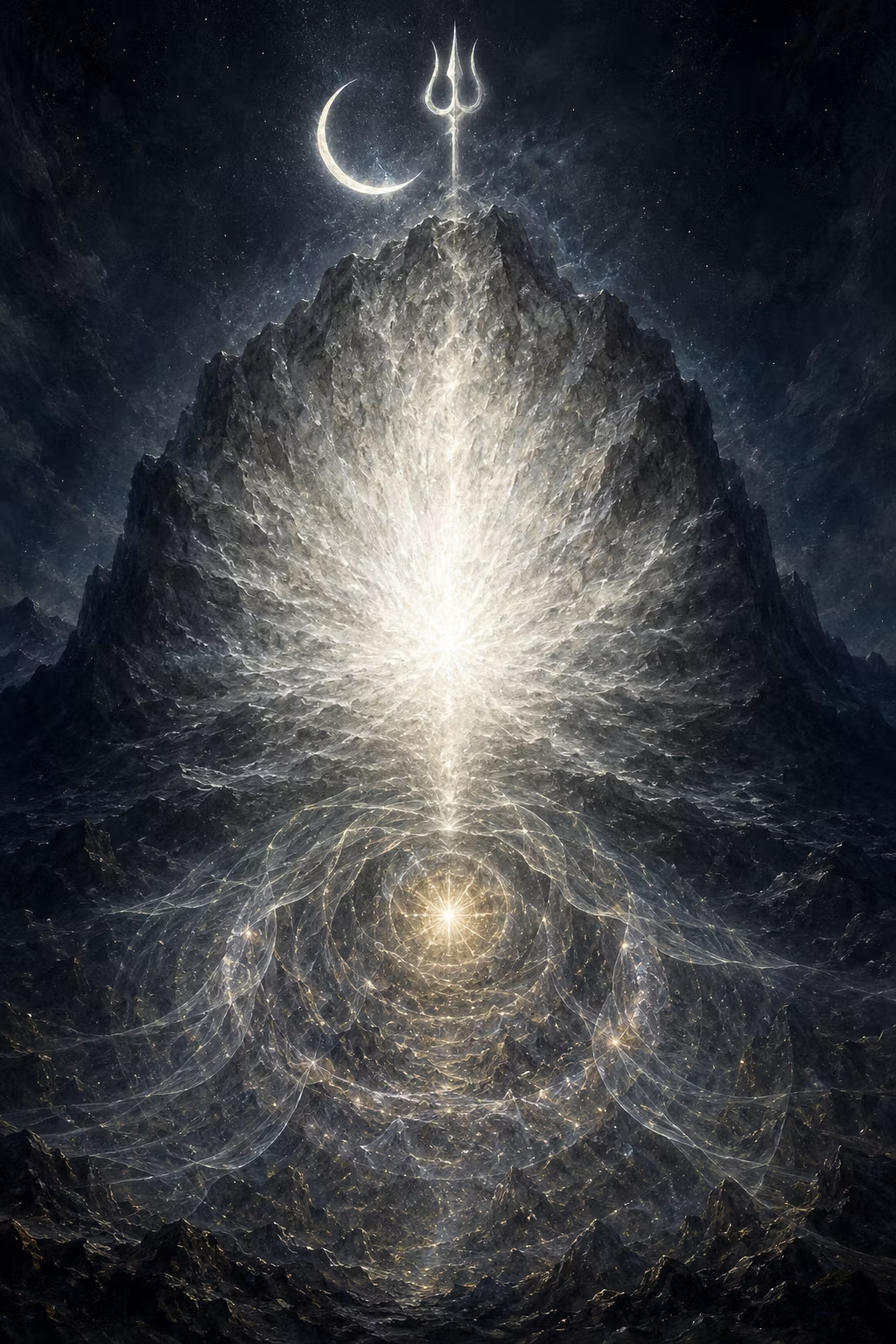
परम्परा कहती है — महादेव पर्वत पर शिव ने स्वप्न में वसुगुप्त को एक महाशिला की ओर संकेत किया; उसी पर ये सूत्र मिले। पहले तीन सूत्र पूरा मानचित्र रख देते हैं: आत्मा स्वयं चैतन्य है (१·१); सीमित ज्ञान ही बन्धन है (१·२); और कारणों का समूह सीमित देह-मन रचता है (१·३)। आगे का सब — तीन उन्मेष, तीन उपाय — इसी बीज से खुलता है।
On the Mahadeva mountain, the tradition says, Shiv appeared to the sage Vasugupta in a dream and pointed him to a great rock; on it were found these sutras. The first three set the whole map: the Self is consciousness itself (I.1); limited knowing is the bondage (I.2); and the manifold of causes builds the limited body-mind (I.3). Everything that follows — the three unmeshas, the three upayas — unfolds from this seed.
caitanyam ātmā ॥
चैतन्य ही आत्मा है — जो जानने की स्वतन्त्र शक्ति है, वही तुम्हारा स्वरूप है।
Consciousness — the free power of knowing — is the Self.
सरल अर्थ: पहला ही सूत्र उत्तर है, प्रश्न नहीं: तुम शरीर या मन नहीं — वह जानने वाली चेतना हो जिसमें दोनों प्रकट होते हैं। In simple words: The very first sutra is the answer, not a question: you are not the body or the mind — you are the knowing awareness in which both appear.
jñānaṁ bandhaḥ ॥
(सीमित) ज्ञान ही बन्धन है — 'मैं इतना ही हूँ' यह संकुचित जानना ही बाँधता है।
(Limited) knowing is the bondage — the contracted knowledge 'I am only this much' is itself what binds.
सरल अर्थ: क्षेमराज समझाते हैं: बन्धन कोई बाहरी ज़ंजीर नहीं — अपने अनन्त स्वरूप का संकुचित अनुभव ही बन्धन है। (पाठ-भेद: कुछ परम्पराएँ 'अज्ञानं बन्धः' पढ़ती हैं — अर्थ एक ही दिशा में जाता है।) In simple words: Kshemaraja explains: bondage is no outer chain — it is the contracted experience of your own boundless nature. (A variant reading gives 'ajñānaṁ bandhaḥ', ignorance is bondage — both point the same way.)
yonivargaḥ kalāśarīram ॥
कारणों का समूह (माया और उसकी शक्तियाँ) ही कला-शरीर — सीमित कर्तृत्व का देह — बनता है।
The manifold of generative causes — maya and her powers — forms the body of limited agency (kala).
सरल अर्थ: चेतना कैसे 'व्यक्ति' बनती है, उसका यन्त्र-विवरण: शक्तियों का एक वस्त्र ओढ़ लिया जाता है। आगे के सूत्र इसे उतारना सिखाते हैं। In simple words: The mechanics of how awareness becomes 'a person': a garment of limiting powers is put on. The sutras ahead teach its removal.
१·१ मानने का सिद्धान्त नहीं, देखने का तथ्य है: जो भी अनुभव होता है वह 'जाना' जाता है — और तुम वह जानना हो। यह अभ्यास उसका सरलतम स्वाद है।I.1 is not a doctrine to believe but a fact to notice: everything you experience is known — and you are the knowing. This practice is the simplest possible taste of it.
क्या देखें: What to notice: ध्यान दो कि जानी जाने वाली हर वस्तु बदलती रहती है, पर जानना स्वयं नहीं बदलता — वही अपरिवर्तित जानना १·१ का 'आत्मा' है।Notice that awareness itself never changes while everything known keeps changing — that unchanging knowing is what I.1 names the Self.
आज एक बार, किसी भी साधारण क्षण के बीच, मौन में पूछो: 'क्या मैं अभी सजग हूँ?' देखो — उत्तर में कभी सन्देह नहीं होता, कभी था ही नहीं। वही तत्काल निश्चय चैतन्य है, तुम्हारे ही दिन में मिला।
Today, once, in the middle of anything ordinary, ask silently: 'am I aware right now?' Notice that the answer is never in doubt — and never was. That immediate certainty is chaitanya, met in your own day.